

8 months 4 days ago
The liberating force of technology-the instrumentalization of things-turns into ... the instrumentalization of man.
▼
Source
source
p. 159
7 months 1 week ago
Learn to see in another's calamity the ills which you should avoid.
▼
Source
source
Maxim 120

9 months 3 weeks ago
The first-beginnings of things cannot be seen by the eyes.
▼
Source
source
Book I, line 268 (tr. Munro)

7 months 4 weeks ago
And he arrives at the cogito ergo sum, which St. Augustine had already anticipated... "I think therefore I am," can only mean "I think, therefore I am a thinker"; this being of "I am," which is deduced from "I think," is merely a knowing; this being is a knowledge, but not life. And the primary reality is not that I think, but that I live, for those also live who do not think. Although this living may not be a real living. God! what contradictions when we seek to join in wedlock life and reason!
7 months 3 weeks ago
It belongs to the self-respect of intellect to pursue every tangle of thought to its final unravelment.
▼
Source
source
Ch. 12: "Religion and Science", p. 258

9 months 1 week ago
It is one of the chief skills of the philosopher not to occupy himself with questions which do not concern him.
▼
Source
source
Journal entry
8 months 4 days ago
The living have never shown me how to live.
▼
Source
source
"On My Friendly Critics"
5 months 1 week ago
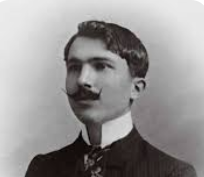
We do not struggle for ourselves, nor for our race, not even for humanity. We do not struggle for Earth, nor for ideas. All these are the precious yet provisional stairs of our ascending God, and they crumble away as soon as he steps upon them in his ascent. In the smallest lightning flash of our lives, we feel all of God treading upon us, and suddenly we understand: if we all desire it intensely, if we organize all the visible and invisible powers of earth and fling them upward, if we all battle together like fellow combatants eternally vigilant - then the Universe might possibly be saved. It is not God who will save us - it is we who will save God, by battling, by creating, and by transmuting matter into spirit.
7 months 2 weeks ago
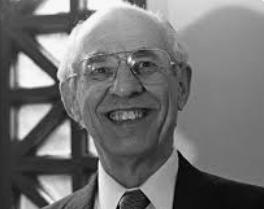
Analytic philosophers - both in the 'constructivist' camp and in the camp that studies 'the ordinary use of words' - are disturbingly unanimous in regarding 2-valued logic as having a privileged position: privileged, not just in the sense of corresponding to the way we do speak, but in the sense of having no serious rival for logical reasons. If the foregoing analysis is correct, this is a prejudice of the same kind as the famous prejudice in favor of a privileged status for Euclidean geometry (a prejudice that survives in the tendency to cite 'space has three dimensions' as some kind of 'necessary' truth). One can go over from a 2-valued to a 3-valued logic without totally changing the meaning of 'true' and 'false'; and not just in silly ways, like the ones usually cited (e.g. equating truth with high probability, falsity with low probability, and middlehood with 'in between' probability).
▼
Source
source
"Three-valued logic"
8 months 1 week ago
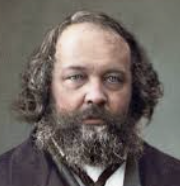
The peoples' revolution .... will arrange its revolutionary organisation from the bottom up and from the periphery to the centre, in keeping with the principle of liberty.


10 months 1 week ago
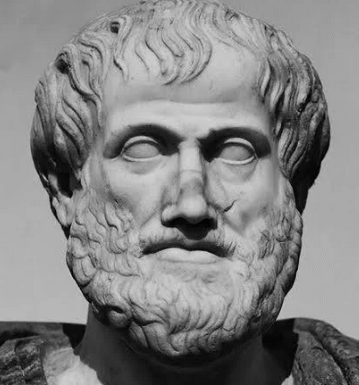
The essential nature (concerning the soul) cannot be corporeal, yet it is also clear that this soul is present in a particular bodily part, and this one of the parts having control over the rest (heart).
8 months 2 days ago
It would be wrong to suppose that the man of any particular period always looks upon past times as below the level of his own, simply because they are past. It is enough to recall that to the seeming of Jorge Manrique, "Any time gone by was better."... From A.D. 150 on, this impression of a shrinking of vitality, of a falling from position, of decay and loss of pulse shows itself increasingly in the Roman Empire. Had not Horace already sung: "Our fathers, viler than our grandfathers, begot us who are even viler, and we shall bring forth a progeny more degenerate still"?
▼
Source
source
Horace, Odes, III.6] Chap. III: The Height Of The Times

9 months 1 week ago
All war propaganda consists, in the last resort, in substituting diabolical abstractions for human beings. Similarly, those who defend war have invented a pleasant sounding vocabulary of abstractions in which to describe the process of mass murder.
▼
Source
source
"Pacifism and Philosophy", 1936
8 months 1 week ago
To say, therefore, that thought cannot happen in an instant, but requires a time, is but another way of saying that every thought must be interpreted in another, or that all thought is in signs.
▼
Source
source
Vol. V, par. 254
9 months 2 weeks ago
In every part of the universe we observe means adjusted with the nicest artifice to the ends which they are intended to produce; and in the mechanism of a plant, or animal body, admire how every thing is contrived for advancing the two great purposes of nature, the support of the individual, and the propagation of the species.
▼
Source
source
Section II, Chap. III.

7 months 3 weeks ago
Doubt must be no more than vigilance, otherwise it can become dangerous.
▼
Source
source
F 53
7 months 4 weeks ago
A man, in so far as he is an individual, may be very sharply detached from others, a sort of spiritual crustacean, and yet be very poor in differentiating content. And further, it is true on the other hand that the more personality a man has and the greater his interior riches and the more he is a society within himself, the less brusquely he is divided from his fellows.

9 months 2 weeks ago
When speaking of the spiritual nature or the soul, we are referring to that which is "inner" or "new." When speaking of the bodily nature, or that which is flesh and blood, we are referring to that which is called "sensual," "outward," or "old." Paul writes in 2 Corinthians 4:16: "Even though our outer nature is wasting away, our inner nature is being renewed day by day."
▼
Source
source
p. 51
7 months 1 week ago
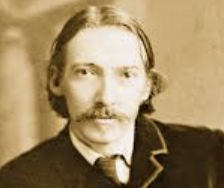
A happy man or woman is a better thing to find than a five-pound note. He or she is a radiating focus of goodwill; and their entrance into a room is as though another candle had been lighted. We need not care whether they could prove the forty-seventh proposition; they do a better thing than that, they practically demonstrate the great Theorem of the Liveableness of Life.
▼
Source
source
An Apology for Idlers.

7 months 3 weeks ago
The fear of being alone, or of being unloved, had caused women of all races to passively accept sexism and sexist oppression.
9 months 2 weeks ago
Every man is, no doubt, by nature, first and principally recommended to his own care; and as he is fitter to take care of himself than of any other person, it is fit and right that it should be so.
▼
Source
source
Section II, Chap. II.


9 months 1 week ago
Capitals accumulate faster than the population; thus wages; thus population; thus grain prices; thus the difficulty of production and hence the exchange values.
▼
Source
source
Notebook III, The Chapter on Capital, p. 271.
9 months 1 week ago
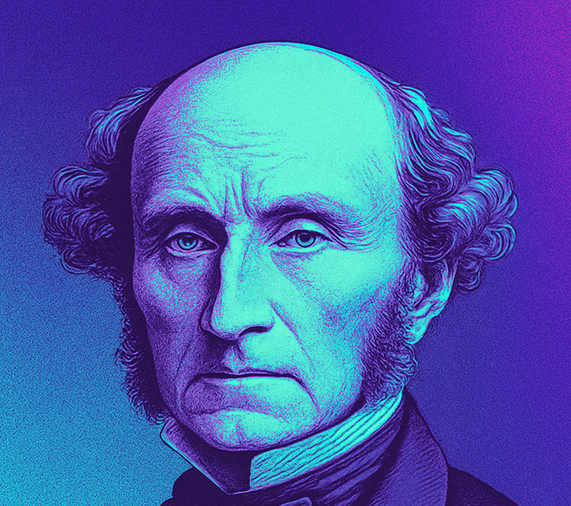
From the winter of 1821, when I first read Bentham, and especially from the commencement of the Westminster Review, I had what might truly be called an object in life; to be a reformer of the world. My conception of my own happiness was entirely identified with this object. The personal sympathies I wished for were those of fellow labourers in this enterprise. I endeavoured to pick up as many flowers as I could by the way; but as a serious and permanent personal satisfaction to rest upon, my whole reliance was placed on this...
▼
Source
source
(p. 132)

9 months 4 weeks ago
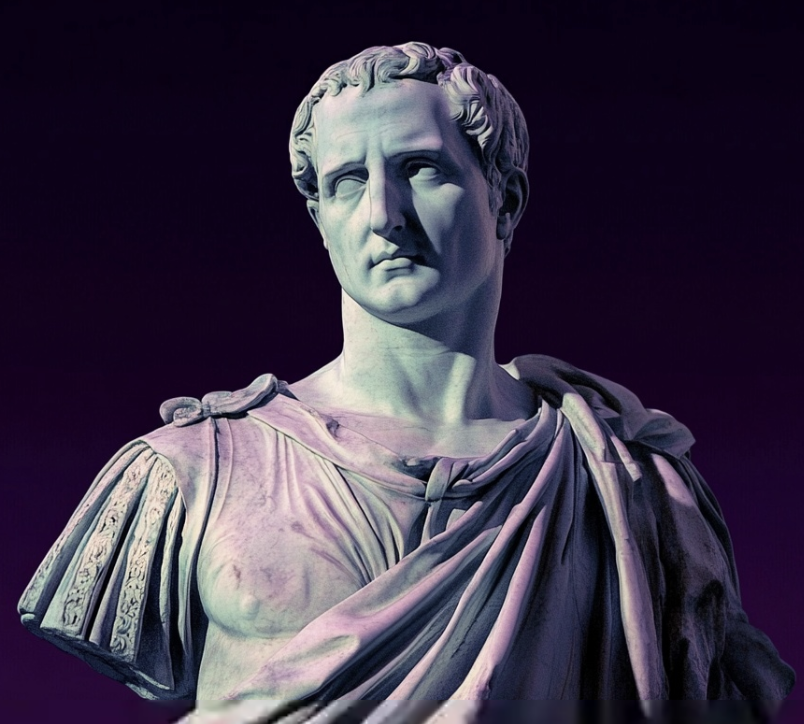
Study carefully, the character of the one you recommend, lest their misconduct bring you shame.
▼
Source
source
from Horace, Epistles I.xviii.76
5 months 1 day ago
It has often been said, and certainly not without justification, that the man of science is a poor philosopher. Why then should it not be the right thing for the physicist to let the philosopher do the philosophizing? Such might indeed be the right thing to do at a time when the physicist believes he has at his disposal a rigid system of fundamental laws which are so well established that waves of doubt can't reach them; but it cannot be right at a time when the very foundations of physics itself have become problematic as they are now. At a time like the present, when experience forces us to seek a newer and more solid foundation, the physicist cannot simply surrender to the philosopher the critical contemplation of theoretical foundations; for he himself knows best and feels more surely where the shoe pinches. In looking for an new foundation, he must try to make clear in his own mind just how far the concepts which he uses are justified, and are necessities.

10 months 1 week ago
God is not needed to create guilt or to punish. Our fellow men suffice, aided by ourselves.

8 months 1 week ago
Anyone who speaks in the name of others is always an impostor.

7 months 4 weeks ago
Our life is a hope which is continually converting itself into memory and memory in its turn begets hope. Give us leave to live! The eternity that is like an eternal present, without memory and without hope, is death. Thus do ideas exist in the God-Idea, but not thus do men live in the living God, in the God-Man.
10 months 1 week ago
Self-preservation has frequently knuckled under to that tremendous yearning to get even.

9 months 1 week ago
So long as antimilitarists propose no substitute for war's disciplinary function, no moral equivalent of war, analogous, as one might say, to the mechanical equivalent of heat, so long they fail to realize the full inwardness of the situation.
▼
Source
source
The Moral Equivalent of War

9 months 1 week ago
For the lesson of such stories [of resistance to Nazi atrocities] is simple and within everybody's grasp. Politically speaking, it is that under conditions of terror, most people will comply but some people will not, just as the lesson of the countries to which the Final Solution was proposed is that "it could happen" in most places but it did not happen everywhere. Humanly speaking, no more is required, and no more can reasonably be asked, for this planet to remain a place fit for human habitation.
▼
Source
source
Ch. XIV

5 months 1 week ago
Government is a true religion: it has its dogmas, its mysteries, and its ministers. To annihilate it or submit it to the discussion of each individual is the same thing; it lives only through national reason, that is to say through political faith, which is a creed.
▼
Source
source
p. 87
7 months 3 weeks ago
Philosophy finds religion, and modifies it; and conversely religion is among the data of experience which philosophy must weave into its own scheme. Religion is an ultimate craving to infuse into the insistent particularity of emotion that non-temporal generality which primarily belongs to conceptual thought alone. In the higher organisms the differences of tempo between the mere emotions and the conceptual experiences produce a life-tedium, unless this supreme fusion has been effected. The two sides of the organism require a reconciliation in which emotional experiences illustrate a conceptual justification, and conceptual experiences find an emotional illustration.
▼
Source
source
Pt. I, ch. 1, sec. 6.
5 months 1 day ago
Every man knows that in his work he does best and accomplishes most when he has attained a proficiency that enables him to work intuitively. That is, there are things which we come to know so well that we do not know how we know them. So it seems to me in matters of principle. Perhaps we live best and do things best when we are not too conscious of how and why we do them.
6 months 3 weeks ago
What is this wide-spread component of the surface of the earth? and whence did it come? You may think this no very hopeful inquiry. You may not unnaturally suppose that the attempt to solve such problems as these can lead to no result, save that of entangling the inquirer in vague speculations, incapable of refutation and of verification. If such were really the case, I should have selected some other subject than a "piece of chalk" for my discourse. But, in truth, after much deliberation, I have been unable to think of any topic which would so well enable me to lead you to see how solid is the foundation upon which some of the most startling conclusions of physical science rest.

8 months 1 week ago
Because half-a-dozen grasshoppers under a fern make the field ring with their importunate chink, whilst thousands of great cattle, reposed beneath the shadow of the British oak, chew the cud and are silent, pray do not imagine that those who make the noise are the only inhabitants of the field; that of course they are many in number; or that, after all, they are other than the little shrivelled, meagre, hopping, though loud and troublesome insects of the hour.
▼
Source
source
Volume iii, p. 344
5 months 1 week ago
We do not only free God by battling and subduing the visible world about us; we also create God. "Open your eyes," God shouts; "I want to see! Prick up your ears, I want to hear! March in the front ranks: you are my head!"

9 months 3 weeks ago
The philosophers who wished us to have the gods for our friends rank the friendship of the holy angels in the fourth circle of society, advancing now from the three circles of society on earth to the universe, and embracing heaven itself. And in this friendship we have indeed no fear that the angels will grieve us by their death or deterioration. But as we cannot mingle with them as familiarly as with men (which itself is one of the grievances of this life), and as Satan, as we read, sometimes transforms himself into an angel of light, to tempt those whom it is necessary to discipline, or just to deceive, there is great need of God's mercy to preserve us from making friends of demons in disguise, while we fancy we have good angels for our friends; for the astuteness and deceitfulness of these wicked spirits is equalled by their hurtfulness.
▼
Source
source
XIX, 9
9 months 1 week ago
Now in all of us, however constituted, but to a degree the greater in proportion as we are intense and sensitive and subject to diversified temptations, and to the greatest possible degree if we are decidedly psychopathic, does the normal evolution of character chiefly consist in the straightening out and unifying of the inner self. The higher and the lower feelings, the useful and the erring impulses, begin by being a comparative chaos within us - they must end by forming a stable system of functions in right subordination. Unhappiness is apt to characterize the period of order-making and struggle.
▼
Source
source
Lecture VIII, "The Divided Self, and the Process of its Unification"

5 months 1 week ago
Happy in the prospect of a restoration of primitive Christianity, I must leave to younger athletes to encounter and lop off the false branches which have been engrafted into it by the mythologists of the middle and modern ages.
▼
Source
source
Letter to Doctor Waterhouse
9 months 2 weeks ago
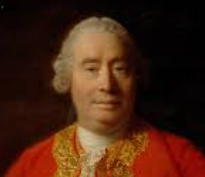
Nothing appears more surprising to those, who consider human affairs with a philosophical eye, than the easiness with which the many are governed by the few; and the implicit submission, with which men resign their own sentiments and passions to those of their rulers. When we enquire by what means this wonder is effected, we shall find, that, as Force is always on the side of the governed, the governors have nothing to support them but opinion. It is therefore, on opinion only that government is founded; and this maxim extends to the most despotic and most military governments, as well as to the most free and most popular.
▼
Source
source
Part I, Essay 4: Of The First Principles of Government
CivilSimian.com created by AxiomaticPanic, CivilSimian, Kalokagathia