
6 months 2 weeks ago
Friends are as companions on a journey, who ought to aid each other to persevere in the road to a happier life.
▼
Source
As quoted in Gems of Thought: Being a Collection of More Than a Thousand Choice Selections, Or Aphorisms, from Nearly Four Hundred and Fifty Different Authors, and on One Hundred and Forty Different Subjects (1888). p. 97 by Charles Northend
6 months 2 weeks ago
The states in which we infuse a transfiguration and a fullness into things and poetize about them until they reflect back our fullness and joy in life...three elements principally: sexuality, intoxication and cruelty — all belonging to the oldest festal joys.
▼
Source
Sec. 801 (Notebook W II 1. Fall 1887, KGW VIII, 2.57-8, KSA 12.393-4)
6 months 2 weeks ago
The real pioneers in ideas, in art and in literature have remained aliens to their time, misunderstood and repudiated. And if, as in the case of Zola, Ibsen and Tolstoy, they compelled their time to accept them, it was due to their extraordinary genius and even more so to the awakening and seeking of a small minority for new truths, to whom these men were the inspiration and intellectual support.
▼
Source
Emma Goldman [https://theanarchistlibrary.org/library/emma-goldman-intellectual-proletarians "Intellectual Proletarians"] (1914)

6 months 2 weeks ago
Fifth Theory.—This is our theory, or that of our Law. ...The theory of man's perfectly free will is one of the fundamental principles of the Law of our teacher Moses, and of those who follow the Law. According to this principle man does what is in his power to do, by his nature, his choice, and his will; and his action is not due to any faculty created for the purpose. All species of irrational animals likewise move by their own free will. This is the Will of God; that is to say, it is due to the eternal divine will that all living beings should move freely, and that man should have the power to act according to his will or choice within the limits of his capacity.
▼
Source
Ch.17
6 months 2 weeks ago
Fear not, then, thou child infirm, There's no god dare wrong a worm.
▼
Source
Compensation, st. 2
6 months 2 weeks ago
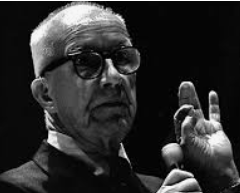
I am convinced that human continuance depends entirely upon: the intuitive wisdom of each and every individual . . . the individual's integrity of speaking and acting only on the individual's own within-self-intuited and reasoned initiative . . . the individual's never joining action with others as motivated only by crowd-engendered-emotionalism, or a sense of the crowd's power to overwhelm, or in fear of holding to the course indicated by one's own intellectual convictions.
▼
Source
6 months 2 weeks ago
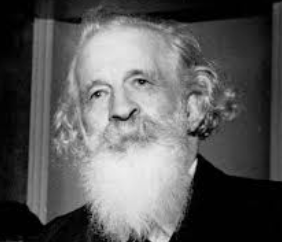
Even a minor event in the life of a child is an event of that child’s world and thus a world event.
▼
Source
The Phoenix, a Linguistic Phenomenon, ch. 1

6 months 2 weeks ago
Behind me was the magnificent power-house... furnishing not only the electrical energy which transformed the soda into sodium, but diffusing this energy for a multitude of other purposes over an entire district—a noble temple to the genius and prescience of Faraday. Surely one might here say, if you desire to see the monuments of these men, look around!
▼
Source
6 months 2 weeks ago
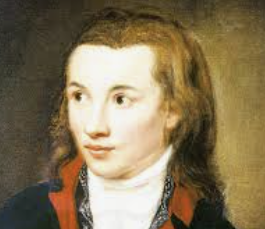
When we speak of the aim and Art observable in Shakespeare's works, we must not forget that Art belongs to Nature; that it is, so to speak, self-viewing, self-imitating, self-fashioning Nature. The Art of a well-developed genius is far different from the Artfulness of the Understanding, of the merely reasoning mind. Shakspeare was no calculator, no learned thinker; he was a mighty, many-gifted soul, whose feelings and works, like products of Nature, bear the stamp of the same spirit; and in which the last and deepest of observers will still find new harmonies with the infinite structure of the Universe; concurrences with later ideas, affinities with the higher powers and senses of man. They are emblematic, have many meanings, are simple and inexhaustible, like products of Nature; and nothing more unsuitable could be said of them than that they are works of Art, in that narrow mechanical acceptation of the word.
▼
Source
6 months 2 weeks ago
Know that death comes to everyone, and that wealth will sometimes be acquired, sometimes lost. Whatever griefs mortals suffer by divine chance, whatever destiny you have, endure it and do not complain. But it is right to improve it as much as you can, and remember this: Fate does not give very many of these griefs to good people.
▼
Source
As quoted in Divine Harmony: The Life and Teachings of Pythagoras by John Strohmeier and Peter Westbrook. (1999)
6 months 2 weeks ago
Most people are not seeking truth; they are searching for comfort in illusions.
▼
Source
6 months 2 weeks ago
It is not unreasonable to assume that the works of God, their existence and preceding non-existence, are the result of His wisdom, but we are unable to understand many of the ways of His Wisdom in His works. On this principle the whole Law of Moses is based; it begins with this principle: "And God saw all that He had made, and behold, it was very good" (Gen. i. 31); and it ends with this principle: "The Rock, perfect is His work" (Deut. xxxii. 4). Note it.
▼
Source
Ch.25
6 months 2 weeks ago
Everything in the universe goes by indirection. There are no straight lines.
▼
Source
Works and Days
6 months 2 weeks ago
Corporations are neither physical nor metaphysical phenomena. They are socioeconomic ploys — legally enacted game-playing — agreed upon only between overwhelmingly powerful socioeconomic individuals and by them imposed upon human society and its all unwitting members.
▼
Source
6 months 2 weeks ago
They also gave it the title of "opinion," because truth and falsity lie in opinion. And they called it "movement," "generation," "change," "division," "length," "multiplication," "addition," "kinship," "relativity," "the ratio in proportionality." For the relation of two numbers is of every conceivable form.
▼
Source
On the Dyad
6 months 2 weeks ago
If thy fellows hurt thee in small things, suffer it! and be as bold with them!
▼
Source
6 months 2 weeks ago
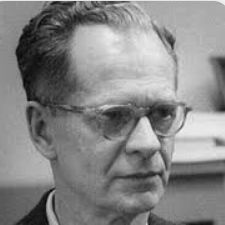
When you start thinking about art and creativity, rationality is not big enough to contain it all. Otherwise you end up at a B.F. Skinner hypothesis where it is all purely to do with stimulus and response. B. F. Skinner actually put forward — and this is a measure of scientific desperation over consciousness — the idea that consciousness was a weird vibrational by-product of the vocal cords. That we did not actually think. We thought we thought because of this weird vibration caused by the vocal cords. This shows the lengths that hard science will go to to banish the ghost from the machine.
▼
Source
Alan Moore, in [http://www.harrybravado.com/articles/alan-moore-interview/ "Alan Moore Interview" by Matthew De Abaitua (1998)], later published in Alan Moore: Conversations (2011) edited by Eric L. Berlatsky

6 months 2 weeks ago
What cannot be imagined cannot even be talked about.
▼
Source
Journal entry (12 October 1916), p. 84e

6 months 2 weeks ago
It must be understood that the silence referred to by the adjective ‘mystical’ is not external, esoteric silence, intended to conceal secret truths from the ‘uninitiated’, but rather inner silence, which consists in silencing one’s thoughts, however profound they may be, and therefore in detachment, especially from all our supposed knowledge. Detachment is the work of intelligence, which incessantly recognizes the finiteness of its own contents and, at the same time, of the will, which incessantly recognizes in those same contents the presence of egoism, of that amor sui that is truly the root of all evil.
▼
Source
6 months 2 weeks ago
The perception of the comic is a tie of sympathy with other men, a pledge of sanity, and protection from those perverse tendencies and gloomy insanities in which fine intellects sometimes lose themselves. A rogue alive to the ludicrous is still convertible.
▼
Source
The Comic
6 months 2 weeks ago
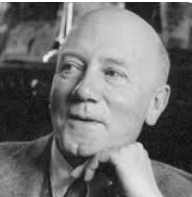
Broad was a wonderfully idiosyncratic lecturer. He always appeared with a carefully prepared script, and he read every sentence twice, except for the jokes, which he read three times. Although he spoke drearily, his content was compelling, jargon-free and spiked with witty references to Charles Dickens, Conan Doyle, Oscar Wilde and other literary figures.
▼
Source
Graham Farmelo: (2009). [https://books.google.com/books?id=qsodmIGD0fMC&pg=PA39The strangest man: the hidden life of Paul Dirac, quantum genius.] Faber & Faber. (p. 39)
6 months 2 weeks ago
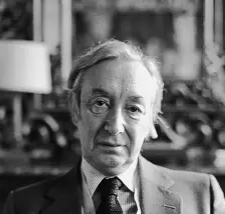
To make our position clearer, we may formulate it in another way. Let us call a proposition which records an actual or possible observation an experiential proposition. Then we may say that it is the mark of a genuine factual proposition, not that it should be equivalent to an experiential proposition, or any finite number of experiential propositions, but simply that some experiential propositions can be deduced from it in conjunction with certain other premises without being deducible from those other premises alone.
▼
Source
p. 20.

6 months 2 weeks ago
If it is my interest to have a farm, it is my interest to take it away from my neighbour; if it is my interest to have a cloak, it is my interest also to steal it from a bath. This is the source of wars, seditions, tyrannies, plots.
▼
Source
Book I, ch. 22, § 14.
6 months 2 weeks ago
Let us not link ourselves with the vilifiers of Plato and the persecutors of Confucius. They were oppressed by citizens who were considered the pride of the country. Thus has the world raised its hand against the great Servitors. Be assured that the Brotherhood formed by Pythagoras appeared dangerous in the eyes of the city guard. Paracelsus was a target for mockery and malignance. Thomas Vaughan seemed to be an outcast, and few wished to meet with him. Thus was the reign of darkness manifested.
▼
Source
Agni Yoga, Brotherhood (1937), 175.
6 months 2 weeks ago
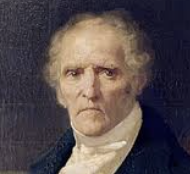
The familial union presents as well a mixture of inconvenient ages and characters that inhibit conversation. Morality engenders a frigid atmosphere, as in all places where it reigns.
▼
Source
Oeuvres completetes de Charles Fourier
6 months 2 weeks ago
The idea that in order to get clear about the meaning of a general term one had to find the common element in all its applications has shackled philosophical investigation; for it has not only led to no result, but also made the philosopher dismiss as irrelevant the concrete cases, which alone could have helped him understand the usage of the general term.
▼
Source
p. 19

6 months 2 weeks ago
The Way of the Warrior has been misunderstood. It is not a means to kill and destroy others. Those who seek to compete and better one another are making a terrible mistake. To smash, injure, or destroy is the worst thing a human being can do. The real Way of a Warrior is to prevent such slaughter — it is the Art of Peace, the power of love.
▼
Source
Speaking of a vision of the "Great Spirit of Peace" in 1942, during World War II, as quoted in Adjusting Though Reflex : Romancing Zen (2010) by Rodger Hyodo, p. 76
6 months 2 weeks ago
What is there in 'Paradise Lost' to elevate and astonish like Herschel or Somerville?
▼
Source
Quoted in Robert D. Richardson, Jr., Emerson, the Mind On Fire (Univ. of Calif Press 1995), p. 124
6 months 2 weeks ago
The management of a system has to deal with the generation of the plans for the system, i.e., consideration of all of the things we have discussed, the overall goals, the environment, the utilization of resources and the components. The management sets the component goals, allocates the resources, and controls the system performance.
▼
Source
p. 44
6 months 2 weeks ago
The highest form of vanity is love of fame.
▼
Source
6 months 2 weeks ago
A wise man's kingdom is his own breast: or, if he ever looks farther, it will only be to the judgment of a select few, who are free from prejudices, and capable of examining his work. Nothing indeed can be a stronger presumption of falsehood than the approbation of the multitude; and Phocion, you know, always suspected himself of some blunder when he was attended with the applauses of the populace.
▼
Source
Playfully ironic letter to Adam Smith regarding the positive reception of "The Theory of Moral Sentiments"
6 months 2 weeks ago
Two principles we should always have ready — that there is nothing good or evil save in the will; and that we are not to lead events, but to follow them.
▼
Source
Book III, ch. 10, § 18.
6 months 2 weeks ago
Pythagoras conceived that the first attention that should be given to men should be addressed to the senses, as when one perceives beautiful figures and forms, or hears beautiful rhythms and melodies. Consequently he laid down that the first erudition was that which subsists through music's melodies and rhythms, and from these he obtained remedies of human manners and passions, and restored the pristine harmony of the faculties of the soul.
▼
Source
Iamblichus of Chalcis in Life of Pythagoras
6 months 2 weeks ago
A good guide will take you through the more important streets more often than he takes you down side streets; a bad guide will do the opposite. In philosophy I'm a rather bad guide.
▼
Source
As quoted in Wittgenstein and the Philosophy of Information (2008) edited by Alois Pichler and Herbert Hrachovec, p. 140

6 months 2 weeks ago
The 'physical' does not mean any particular kind of reality, but a particular kind of denoting reality, namely a system of concepts in the natural sciences which is necessary for the cognition of reality. 'The physical' should not be interpreted wrongly as an attribute of one part of reality, but not of the other ; it is rather a word denoting a kind of conceptual construction, as, e.g., the markers 'geographical' or 'mathematical', which denote not any distinct properties of real things, but always merely a manner of presenting them by means of ideas.
▼
Source
p. 27 i. ; as cited in: Adam Schaff (1962). Introduction to semantics, p. 83
6 months 2 weeks ago
The activity of to-day and the assurance of to-morrow.
▼
Source
p. 215
6 months 2 weeks ago
I was an Editor-in-Chief of Philosophy of Science during its early years. Now, over a half century later, I have to admit that I was not very clear what the journal was about, except that it tried to reflect on the meaning of science and its relation to other human activities. At this time I am even less sure of its purposes.
▼
Source
C. West Churchman "Guest editorial: what is philosophy of science" In: Philosophy of Science Vol. 61, No. 1 (Mar., 1994), p. 132-141
6 months 2 weeks ago
Because the peculiarity of man is that his machinery for reaction on external things has involved an imaginative transcript of these things, which is preserved and suspended in his fancy; and the interest and beauty of this inward landscape, rather than any fortunes that may await his body in the outer world, constitute his proper happiness. By their mind, its scope, quality, and temper, we estimate men, for by the mind only do we exist as men, and are more than so many storage-batteries for material energy. Let us therefore be frankly human. Let us be content to live in the mind.
▼
Source
p. 64
6 months 2 weeks ago
Morality is a subject that interests us above all others: We fancy the peace of society to be at stake in every decision concerning it; and 'tis evident, that this concern must make our speculations appear more real and solid, than where the subject is, in a great measure, indifferent to us. What affects us, we conclude can never be a chimera; and as our passion is engag'd on the one side or the other, we naturally think that the question lies within human comprehension; which, in other cases of this nature, we are apt to entertain some doubt of. Without this advantage I never should have ventur'd upon a third volume of such abstruse philosophy, in an age, wherein the greatest part of men seem agreed to convert reading into an amusement, and to reject every thing that requires any considerable degree of attention to be comprehended.
▼
Source
Part 1, Section 1
6 months 2 weeks ago
Other people’s views and troubles can be contagious. Don’t sabotage yourself by unwittingly adopting negative, unproductive attitudes through your associations with others.
▼
Source
This quote is frequently attributed to Epictetus, e.g. by Brigid Delaney, [https://www.theguardian.com/lifeandstyle/2023/nov/22/stoicism-book-news-brigid-delaney Six ways to make your life easier and more peaceful – by using stoic principles], The Guardia
6 months 2 weeks ago
To inculcate a pure and a simple mode of subsistence was also an express object of pursuit to Pythagoras. He taught a total abstinence from every thing having had the property of animal life. … He taught temperance in all its branches, and a resolute subjection of the appetites of the body to contemplation and the exercises of the mind; and, by the unremitted discipline and authority he exerted over his followers, he caused his lessons to be constantly observed. There was therefore an edifying and an exemplary simplicity that prevailed as far as the influence of Pythagoras extended, that won golden opinions to his adherents at all times that they appeared, and in all places.
▼
Source

6 months 2 weeks ago
A famous student of history has bequeathed to us a definition of nationality which is worth attention: I refer to Ernest Renan, of whom George Meredith once said to me, while the great French critic was still living, that there was more in his head than in any other head in Europe. Renan tells us that "Man is enslaved neither by his race, nor by his language, nor by his religion, nor by the course of rivers, nor by the direction of mountain ranges. A great aggregation of men, sane of mind and warm of heart, creates a moral consciousness which is called a nation."
▼
Source
Lord Haldane, Higher Nationality: A Study in Law and Ethics: An Address Delivered Before the American Bar Association at Montreal on 1st September 1913 (1913), p. 35
6 months 2 weeks ago
206. If someone asked us 'but is that true?' we might say "yes" to him; and if he demanded grounds we might say "I can't give you any grounds, but if you learn more you too will think the same."
▼
Source

6 months 2 weeks ago
I am not my own light unto myself.
▼
Source
Dialogues on Metaphysics (1688) Dialogue III | Variant translation: I am not a light unto myself.
6 months 2 weeks ago
He is the most original mind America has hitherto produced.
▼
Source
George Gilfillan, A Gallery of Literary Portraits (1845), p. 301
6 months 2 weeks ago
It is difficult to estimate the misery inflicted upon thousands of persons, and the absolute pecuniary penalty imposed upon multitudes of intellectual workers by the loss of their time, destroyed by organ-grinders and other similar nuisances.
▼
Source
Passages from the Life of a Philosopher (1864), ch. 26 "Street Nuisances"
6 months 2 weeks ago
Animals are born and bred in litters. Solitude grows blessed and peaceful only in old age.
▼
Source
p. 61

6 months 2 weeks ago
It is from the shadow of a cloister that there emerges one of mankind's greatest very greatest scourges. Luther appears; Calvin follows him. The Peasants' Revolt; the Thirty Years' War; the civil war in France; the massacre of the Low Countries; the massacre of Ireland; the massacre of the Cévennes; St Bartholomew's Day; the murders of Henry II, Henry IV, Mary Stuart, and Charles I; and finally, in our day, from the same source, the French Revolution.
▼
Source
Chapter III, p. 27
6 months 2 weeks ago
To oppose the torrent of scholastic religion by such feeble maxims as these, that it is impossible for the same thing to be and not to be, that the whole is greater than a part, that two and three make five; is pretending to stop the ocean with a bullrush. Will you set up profane reason against sacred mystery? No punishment is great enough for your impiety. And the same fires, which were kindled for heretics, will serve also for the destruction of philosophers.
▼
Source
Part XI - With regard to reason or absurdity
6 months 2 weeks ago
Why was the Tetraktys so revered? Because to the eyes of the sixth century BC Pythagoreans, it seemed to outline the entire nature of the universe. In geometry — the springboard to the Greeks' epochal revolution in thought — the number 1 represented a point... 2 represented a line... 3 represented a surface... and 4 represented a three-dimensional tetrahedral solid... The Tetraktys, therefore appeared to encompass all the perceived dimensions of space.
▼
Source
Mario Livio, Is God a Mathematician? (2009)
CivilSimian.com created by AxiomaticPanic, CivilSimian, Kalokagathia