

3 months 1 week ago
Nationalism is always an effort in a direction opposite to that of the principle which creates nations. The former is exclusive in tendency, the latter inclusive. In periods of consolidation, nationalism has a positive value, and is a lofty standard. But in Europe everything is more than consolidated, and nationalism is nothing but a mania, a pretext to escape from the necessity of inventing something new, some great enterprise.
▼
Source
source
Chapter XIV: Who Rules The World?
2 months 2 weeks ago
We are not yet speaking about equality if we have not yet spoken about equal grievability, or the equal attribution of grievability. Grievability is a defining feature of equality. Those whose grievability is not assumed are those who suffer inequality-unequal value.
▼
Source
source
p. 108

3 months 2 weeks ago
I should not be surprized at seeing a French Army conveyed by a British Navy to an attack upon this Kingdom.
▼
Source
source
Letter to French Laurence (12 May 1797) after hearing of the mutinies in the Royal Navy, quoted in R. B. McDowell (ed.)

4 months 2 weeks ago
If the single man plant himself indomitably on his instincts, and there abide, the huge world will come round to him. 6. Nature, Addresses and Lectures.
▼
Source
source
The American Scholar
2 months 4 weeks ago
Of all the inventions of man I doubt whether any was more easily accomplished than that of a Heaven.
▼
Source
source
L 34
2 weeks 4 days ago
The Plan of the System, may aim at a Natural or an Artificial System. But no classes can be absolutely artificial, for if they were, no assertions could be made concerning them.

4 weeks 1 day ago
Did Romeo and Juliet have a ... "relationship"? The term "relationship" ... betokens a chaste egalitarianism leveling different ranks and degrees of attachment.
▼
Source
source
p. 14.
4 months 3 weeks ago
No proceeding is better than that which you have concealed from the enemy until the time you have executed it. To know how to recognize an opportunity in war, and take it, benefits you more than anything else. Nature creates few men brave, industry and training makes many. Discipline in war counts more than fury.
▼
Source
source
Book 7

3 months 2 weeks ago
Under the natural course of things each citizen tends towards his fittest function. Those who are competent to the kind of work they undertake, succeed, and, in the average of cases, are advanced in proportion to their efficiency; while the incompetent, society soon finds out, ceases to employ, forces to try something easier, and eventually turns to use.
▼
Source
source
Vol. 3, Ch. VII, Over-Legislation
3 months 2 weeks ago
Honour is the mysticism of legality.
▼
Source
source
Aphorism 77, of Ideas as translated in The Early Political Writings of the German Romantics (1996) edited by Frederick C. Beiser, p. 131

2 months 2 weeks ago
It is often better for a person to recognize a sin than to do a good deed. Recognizing a sin makes a person humble. Doing a good deed often can feed a person's pride.
▼
Source
source
p. 108

5 months 2 weeks ago
"What on earth prompted you to take a hand in this?""I don't know. My... my code of morals, perhaps.""Your code of morals. What code, if I may ask?" "Comprehension."

4 months 2 weeks ago
The facts of science, as they appeared to him [Heraclitus], fed the flame in his soul, and in its light, he saw into the depths of the world.
▼
Source
source
Ch. 1: Mysticism and Logic
3 months 2 weeks ago
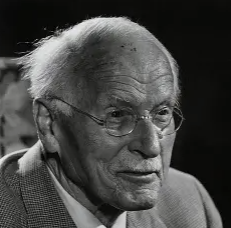
That higher and "complete" man is begotten by the "unknown" father and born from Wisdom, and it is he who, in the figure of the puer aeternus-"vultu mutabilis albus et ater"-represents our totality, which transcends consciousness. It was this boy into whom Faust had to change, abandoning his inflated onesidedness which saw the devil only outside. Christ's "Except ye become as little children" is a prefiguration of this, for in them the opposites lie close together; but what is meant is the boy who is born from the maturity of the adult man, and not the unconscious child we would like to remain.
▼
Source
source
Answer to Job, R. Hull, trans. (1984), pp. 157-158
2 months 2 weeks ago
There can be only one permanent revolution - a moral one; the regeneration of the inner man. How is this revolution to take place? Nobody knows how it will take place in humanity, but every man feels it clearly in himself. And yet in our world everybody thinks of changing humanity, and nobody thinks of changing himself.
▼
Source
source
"Three Methods Of Reform" in Pamphlets : Translated from the Russian (1900) as translated by Aylmer Maude, p. 29
2 weeks 2 days ago
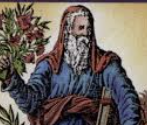
The Pythagoreans thought those who teach for the sake of reward show themselves worse than sculptors, or artists who perform the work sitting. For these, when someone orders wood to make a statue of Hermes, search for wood suited to receive the proper form; while those pretend that they can readily produce the works of virtue from every nature.
2 months 2 weeks ago
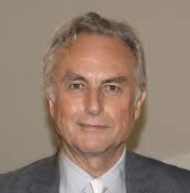
Mutation may be random, but selection definitely is not.
▼
Source
source
Chapter 3, "The Message from the Mountain" (p. 82)

4 months 3 weeks ago
Why may not a goose say thus: "All the parts of the universe I have an interest in: the earth serves me to walk upon, the sun to light me; the stars have their influence upon me; I have such an advantage by the winds and such by the waters; there is nothing that yon heavenly roof looks upon so favourably as me. I am the darling of Nature! Is it not man that keeps and serves me?"
▼
Source
source
Book II, Ch. 12. Apology for Raimond Sebond
3 months 1 week ago
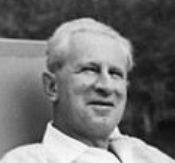
Such abstraction which refuses to accept the given universe of facts as the final context of validation, such "transcending" analysis of the facts in the light of their arrested and denied possibilities, pertains to the very structure of social theory.
▼
Source
source
p. xliii

2 months 2 weeks ago
Literacy affects the physiology as well as the psychic life of the African.
▼
Source
source
(p. 38)
2 months 4 days ago
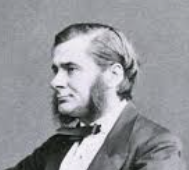
I really have no claim to rank myself among fatalistic, materialistic, or atheistic philosophers. Not among fatalists, for I take the conception of necessity to have a logical, and not a physical foundation; not among materialists, for I am utterly incapable of conceiving the existence of matter if there is no mind in which to picture that existence; not among atheists, for the problem of the ultimate cause of existence is one which seems to me to be hopelessly out of reach of my poor powers. Of all the senseless babble I have ever had occasion to read, the demonstrations of these philosophers who undertake to tell us all about the nature of God would be the worst, if they were not surpassed by the still greater absurdities of the philosophers who try to prove that there is no God.

5 months 2 weeks ago
Wonder is the feeling of a philosopher, and philosophy begins in wonder.
4 months 2 weeks ago
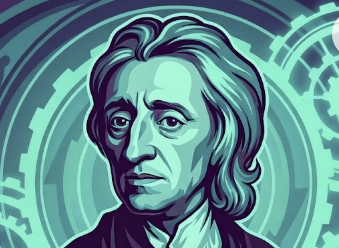
And if he be too forward to venture upon his own strength and skill, and perplexity and trouble of a misadventure now and then, that reaches not his innocence, his health, or reputation, may not be an ill way to teach him more caution.
▼
Source
source
Sec. 94

3 months 5 days ago
The truth is sum, ergo cogito - I am, therefore I think, although not everything that is thinks. Is not consciousness of thinking above all consciousness of being? Is pure thought possible, without consciousness of self, without personality? Can there exist pure knowledge without feeling, without that species of materiality which feelings lends to it? Do we not perhaps feel thought, and do we not feel ourselves in the act of knowing and willing? Could not the man in the stove [Descartes] have said: "I feel, therefore I am"? or "I will, therefore I am"? And to feel oneself, is it not perhaps to feel oneself imperishable?

3 months 1 day ago
The smartphone seems to be a playground, but it is a digital panopticon.
2 months 2 weeks ago
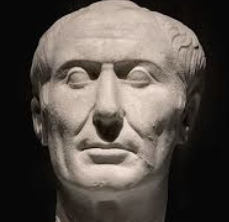
Patience is a remedy for every sorrow.
▼
Source
source
Maxim 170

1 month 3 days ago
The point is, not how long you live, but how nobly you live. And often this living nobly means that you cannot live long.
2 months 4 days ago
God give me strength to face a fact though it slay me.
▼
Source
source
As quoted in Nature Vol. 149 (Jan-Jun) 1942 p. 291, and A Philosophy for Our Time (1954) by Bernard Mannes Baruch, p. 13

4 months 2 weeks ago
The bluebird carries the sky on his back.
▼
Source
source
April 3, 1852
4 months 2 weeks ago
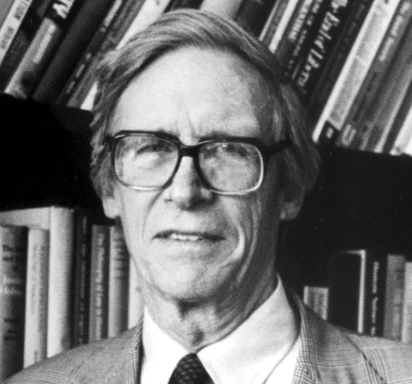
Ideal legislators do not vote their interests.
▼
Source
source
Chapter V, Section 43, p. 284
2 months 4 weeks ago
The great rule: If the little bit you have is nothing special in itself, at least find a way of saying it that is a little bit special.
▼
Source
source
E 55

5 months 2 weeks ago
Unpleasant, even dangerous, qualities can be found in every nation and every individual: it is cruel to demand that the Jew be an exception. In him, these qualities may even be dangerous and revolting to an unusual degree; and perhaps the young stock-exchange Jew is altogether the most disgusting invention of mankind.

2 weeks 1 day ago
In the case of most pains let this remark of Epicurus aid thee, that the pain is neither intolerable nor everlasting, if thou bear in mind that it has its limits, and if thou addest nothing to it in imagination…
▼
Source
source
VII, 64
4 months 2 weeks ago
A truer image of the world, I think, is obtained by picturing things as entering into the stream of time from an eternal world outside, than from a view which regards time as the devouring tyrant of all that is.
▼
Source
source
Ch. 1: Mysticism and Logic

5 months 2 weeks ago
Science doesn't purvey absolute truth. Science is a mechanism. It's a way of trying to improve your knowledge of nature. It's a system for testing your thoughts against the universe and seeing whether they match. And this works, not just for the ordinary aspects of science, but for all of life. I should think people would want to know that what they know is truly what the universe is like, or at least as close as they can get to it.

4 months 2 weeks ago
"Milton was right," said my Teacher. "The choice of every lost soul can be expressed in the words 'Better to reign in Hell than to serve in Heaven.' There is always something they insist on keeping even at the price of misery."
▼
Source
source
Ch. 9
3 weeks 5 days ago
In our opinion, the task of a far-sighted policy of the Third Reich ought to have been that of seeking every possible means to obtain at least the neutrality of the western nations so as to have free hands for a devestating attack exclusively against the Soviet Union-but that would have required the shrewdness and genius of a Metternich.
▼
Source
source
pp. 81-82
3 months ago
Optimism is an alienated form of faith, pessimism an alienated form of despair. If one truly responds to man and his future, ie, concernedly and "responsibly." one can respond only by faith or by despair. Rational faith as well as rational despair are based on the most thorough, critical knowledge of all the factors that are relevant for the survival of man.
▼
Source
source
p. 483
3 months 2 days ago
We cannot think first and act afterwards. From the moment of birth we are immersed in action, and can only fitfully guide it by taking thought.
▼
Source
source
Ch. 12: "Religion and Science", p. 261
2 weeks 3 days ago
The tax upon land values is, therefore, the most just and equal of all taxes. It falls only upon those who receive from society a peculiar and valuable benefit, and upon them in proportion to the benefit they receive. It is the taking by the community, for the use of the community, of that value which is the creation of the community. It is the application of the common property to common uses. When all rent is taken by taxation for the needs of the community, then will the equality ordained by Nature be attained. No citizen will have an advantage over any other citizen save as is given by his industry, skill, and intelligence; and each will obtain what he fairly earns. Then, but not till then, will labor get its full reward, and capital its natural return.
▼
Source
source
Book VIII, Ch. 3

3 months 2 weeks ago
All philosophers should end their days at Pythia's feet. There is only one philosophy, that of unique moments.
5 months 2 weeks ago
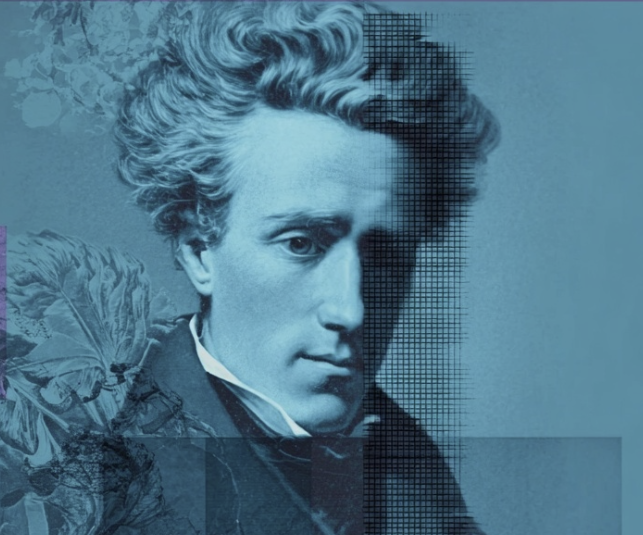
Oh, can I really believe the poet's tales, that when one first sees the object of one's love, one imagines one has seen her long ago, that all love like all knowledge is remembrance, that love too has its prophecies in the individual. ... it seems to me that I should have to possess the beauty of all girls in order to draw out a beauty equal to yours; that I should have to circumnavigate the world in order to find the place I lack and which the deepest mystery of my whole being points towards, and at the next moment you are so near to me, filling my spirit so powerfully that I am transfigured for myself, and feel that it's good to be here.
2 weeks 1 day ago
To be like the rock that the waves keep crashing over. It stands unmoved and the raging of the sea falls still around it.
▼
Source
source
IV, 49
3 months 2 days ago
The greatest invention of the nineteenth century was the invention of the method of invention.
▼
Source
source
Ch. 6: "The Nineteenth Century", p. 136
2 months 2 weeks ago
We look at the present through a rear-view mirror. We march backwards into the future.
2 weeks 1 day ago
"Earth loves the rain, the proud sky loves to give it." The whole world loves to create futurity. I say then to the world, "I share your love." Is this not the source of the phrase, "This loves to happen"?
▼
Source
source
X, 21

1 month 3 days ago
Of all these experiences that seem so frightful, none is insuperable. Separate trials have been over- come by many: fire by Mucius, crucifixion by Regulus, poison by Socrates, exile by Rutilius, and a sword-inflicted death by Cato; therefore, let us also overcome something.
1 month 3 days ago
You must die erect and unyielding.
CivilSimian.com created by AxiomaticPanic, CivilSimian, Kalokagathia