


5 months 3 weeks ago
It is easy to see that, even in the freedom of early youth, an American girl never quite loses control of herself; she enjoys all permitted pleasures without losing her head about any of them, and her reason never lets the reins go, though it may often seem to let them flap.
▼
Source
source
Book Three, Chapter IX.

2 months 3 weeks ago
The earth belongs to the living, not to the dead.
▼
Source
source
24 June 1813
4 months 2 weeks ago
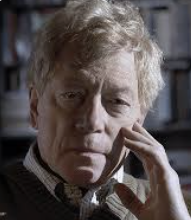
Conservatives believe that our identities and values are formed through our relations with other people, and not through our relation with the state. The state is not an end but a means. Civil society is the end, and the state is the means to protect it. The social world emerges through free association, rooted in friendship and community life. And the customs and institutions that we cherish have grown from below, by the 'invisible hand' of co-operation. They have rarely been imposed from above by the work of politics, the role of which, for a conservative, is to reconcile our many aims, and not to dictate or control them.
▼
Source
source
"Stand up for the real meaning of freedom," The Spectator


3 months 6 days ago
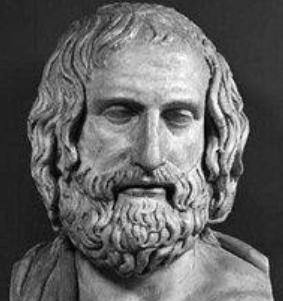
No easy way leads from the earth to heaven..
▼
Source
source
line 437; (Megara).
6 months 1 week ago
The sun provides the moon with its brightness.
▼
Source
source
Fragment in Plutarch De facie in orbe lunae, 929b, as quoted in The Riverside Dictionary of Biography (2005), p. 23

6 months 2 weeks ago
For what comes is Judgment: happy are those whom it finds labouring in their vocations, whether they were merely going out to feed the pigs or laying good plans to deliver humanity a hundred years hence from some great evil. The curtain has indeed now fallen. Those pigs will never in fact be fed, the great campaign against White Slavery or Governmental Tyranny will never in fact proceed to victory. No matter; you were at your post when the Inspection came.
6 months 2 weeks ago
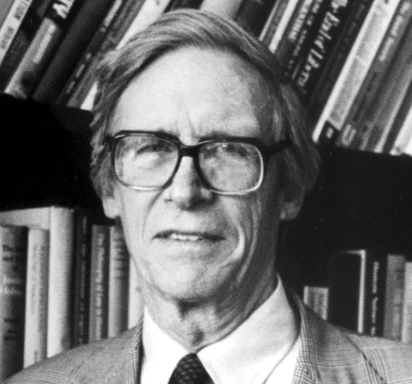
This is a long book, not only in pages.
▼
Source
source
Preface, pg. viii
5 months 2 weeks ago
I know of nothing more terrible than the poor creatures who have learned too much. Instead of the sound powerful judgement which would probably have grown up if they had learned nothing, their thoughts creep timidly and hypnotically after words, principles and formulae, constantly by the same paths. What they have acquired is a spider's web of thoughts too weak to furnish sure supports, but complicated enough to provide confusion.
▼
Source
source
On the Relative Educational Value of the Classics and the Mathematico-Physical Sciences in Colleges and High Schools, an address in (16 April 1886)

6 months 3 weeks ago
Whenever I have read any part of the Vedas, I have felt that some unearthly and unknown light illuminated me. In the great teaching of the Vedas, there is no touch of sectarianism. It is of all ages, climes and nationalities and is the royal road for the attainment of the Great Knowledge. When I am at it, I feel that I am under the spangled heavens of a summer night.
▼
Source
source
Quoted in Bansi Pandit, The Hindu Mind (B & V Enterprises, 1996) p. 307
2 months 3 weeks ago
"Fire is the first and final mask of my God. We dance and weep between two enormous pyres." Our thoughts and our bodies flash and glitter with reflected light. Between the two pyres I stand serenely, my brain unshaken amid the vertigo, and I say: "Time is most short and space most narrow between these two pyres, the rhythm of this life is most sluggish, and I have no time, nor a place to dance in. I cannot wait." Then all at once the rhythm of the earth becomes a vertigo, time disappears, the moment whirls, becomes eternity, and every point in space - insect or star or idea - turns into dance.
2 months 3 weeks ago
The Presbyterian clergy are loudest, the most intolerant of all sects, the most tyrannical, and ambitious; ready at the word of the lawgiver, if such a word could be now obtained, to put the torch to the pile, and to rekindle in this virgin hemisphere, the flames in which their oracle Calvin consumed the poor Servetus, because he could not find in his Euclid the proposition which has demonstrated that three are one, and one is three, nor subscribe to that of Calvin that magistrates have a right to exterminate all heretics to Calvinistic creed.
▼
Source
source
Letter to William Short

5 months 1 day ago
If people should ever start to do only what is necessary millions would die of hunger.
▼
Source
source
C 54 Variant translation: If all mankind were suddenly to practice honesty, many thousands of people would be sure to starve.
3 months ago
However, what is really required to defend 'the West' against the sudden rise of these barbaric and elemental forces is the strengthening, to an extent perhaps still unknown to Western man, of a heroic vision of life. Apart from the military-technical apparatus the world of the 'Westerners' has at its disposal only a limp and shapeless substance - and the cult of the skin, the myth of 'safety' and of 'war on war', and the ideal of the long, comfortable guaranteed, 'democratic' existence, which is preferred to the ideal of the fulfilment which can be grasped only on the frontiers between life and death in the meeting of the essence of living with the extreme of danger.
▼
Source
source
p. 152
5 months 3 days ago
Envy, jealousy, ambition, any kind of greed are passions; love is an action, the practice of human power, which can be practiced only in freedom and never as a result of compulsion. Love is an activity, not a passive affect; it is a "standing in," not a "falling for." In the most general way, the active character of love can be described by stating that love is primarily giving, not receiving.

5 months 6 days ago
Intelligence is quickness to apprehend as distinct from ability, which is capacity to act wisely on the thing apprehended.
▼
Source
source
p. 135; Ch. 17, December 15, 1939.

6 months 3 weeks ago
Poetry teaches the enormous force of a few words, and, in proportion to the inspiration, checks loquacity.
▼
Source
source
Parnassus (1874) Preface

2 months 3 weeks ago
When angry, count ten before you speak; if very angry, an hundred.

6 months 3 weeks ago
I dislike Communism because it is undemocratic, and capitalism because it favors exploitation.
▼
Source
source
Unarmed Victory (1963), p. 14
5 months 3 weeks ago
There are things I can't force. I must adjust. There are times when the greatest change needed is a change of my viewpoint.
▼
Source
source
As quoted in Cracking the Code of Our Physical Universe : The Key to a Whole New World of Enlightenment and Enrichment (2006) by Matthew M Radmanesh, p. 91

5 months 3 weeks ago
"You're a gentleman," they used to say to him. "You shouldn't have gone murdering people with a hatchet; that's no occupation for a gentleman."
5 months 3 days ago
I believe that the man choosing progress can find a new unity through the full development of all his human forces, which are produced in three orientations. These can be presented separately or together: biophilia, love for humanity and nature, and independence and freedom.

5 months 2 weeks ago
The fact that life has no meaning is a reason to live - moreover, the only one.
6 months 1 week ago
Once a word has been allowed to escape, it cannot be recalled.
▼
Source
source
Book I, epistle xviii, line 71
5 months 1 week ago
The teacher of love teaches struggle. The teacher of lifeless isolation from the world teaches peace.

11 months 6 days ago
We cannot stand by while the social contract is broken by those who chose conflict over equality. Those that want equal treatment for themselves have to treat others equally. They cannot lead with exclusion, then turn around and demand equal treatment. It is a double standard. If they are going to exclude first, then justice demands that we, the group that stands with universality, follow our duty to react and exclude those that exclude.

6 months 3 weeks ago
The immediate aim of the Communists is the same as that of all the other proletarian parties: Formation of the proletariat into a class, overthrow of the bourgeois supremacy, conquest of political power by the proletariat.
▼
Source
source
Section 2 paragraph 7.

4 months 3 weeks ago
People try to do all sorts of clever and difficult things to improve life instead of doing the simplest, easiest thing-refusing to participate in activities that make life bad.
▼
Source
source
p. 210

6 months 2 weeks ago
It's only by thinking even more crazily than philosophers do that you can solve their problems.
▼
Source
source
p. 75e

3 months 2 weeks ago
The final thing... the question of the nation, and the role of the nation in liberalism...There would seem to be a tension between liberalism's belief that all human beings enjoy... the same basic set of human rights, and the fact that we are divided up into nation states, in which the authority to enforce those rights is territorially limited. ...This contradiction can be bridged because... there is a liberal form of national identity which is not only possible, but... necessary if a liberal society is going to succeed.
▼
Source
source
23:22
3 months ago
No, the enjoyment of an idle life doesn't cost any money. The capacity for true enjoyment of idleness is lost in the moneyed class and can be found only among people who have a supreme contempt for wealth. It must come from an inner richness of the soul in a man who loves the simple ways of life and who is somewhat impatient with the business of making money.
▼
Source
source
p. 155

3 months 1 week ago
"Detect quacks"? Yes do, for Heaven's sake; but know withal the men that are to be trusted! Till we know that, what is all our knowledge; how shall we even so much as "detect"? For the vulpine sharpness, which considers itself to be knowledge, and "detects" in that fashion, is far mistaken. Dupes indeed are many: but, of all dupes, there is none so fatally situated as he who lives in undue terror of being duped.
3 months 1 week ago
And some others that I have seen, were perhaps among the first. There is no third rising. Time sweeps all away with it so fast at this epoch. The Scottish Church has been short-lived, and was late in reaching thither.
5 months 4 days ago
Enlightenment is an awakening to the everyday.
3 months 2 weeks ago
Sociology is the science which has the most methods and the least results.
▼
Source
source
Part I. Ch. 1 : The Selection of Facts, p. 19

4 months 2 weeks ago
The young are really the heirs to a generation of incompetence.

5 months 4 days ago
Its first ethical precept is the identity of means used and aims sought. The ultimate end of all revolutionary social change is to establish the sanctity of human life, the dignity of man, the right of every human being to liberty and wellbeing. Unless this be the essential aim of revolution, violent social changes would have no justification. For external social alterations can be, and have been, accomplished by the normal processes of evolution. Revolution, on the contrary, signifies not mere external change, but internal, basic, fundamental change. That internal change of concepts and ideas, permeating ever-larger social strata, finally culminates in the violent upheaval known as revolution.
6 months 2 weeks ago
I work quite diligently and wish that I were better and smarter. And these both are one and the same.
▼
Source
source
In a letter to Paul Engelmann (1917) as quoted in The Idea of Justice (2010) by Amartya Sen, p. 31

6 months 3 weeks ago
I had always heard it maintained by my father, and was myself convinced, that the object of education should be to form the strongest possible associations of the salutary class; associations of pleasure with all things beneficial to the great whole, and of pain with all things hurtful to it.
▼
Source
source
(p. 136)

7 months 1 week ago
Now, as the Word of God is the Son of God, so the love of God is the Holy Spirit.
▼
Source
source
Art. 8
7 months ago
States as great engines move slowly.
▼
Source
source
Book II
2 months 3 weeks ago
I am not the light, I am the night; but a flame stabs through my entrails and consumes me. I am the night devoured by light.

5 months 3 weeks ago
The rich in all societies may be thrown into two classes. The first is of those who are powerful as well as rich, and conduct the operations of the vast political machine. The other is of those who employ their riches wholly in the acquisition of pleasure. As to the first sort, their continual care and anxiety, their toilsome days and sleepless nights, are next to proverbial. These circumstances are sufficient almost to level their condition to that of the unhappy majority; but there are other circumstances which place them in a far lower condition. Not only their understandings labour continually, which is the severest labour, but their hearts are torn by the worst, most troublesome, and insatiable of all passions, by avarice, by ambition, by fear and jealousy. No part of the mind has rest. Power gradually extirpates from the mind every humane and gentle virtue. Pity, benevolence, friendship, are things almost unknown in high stations.
6 months 3 weeks ago
There is something feeble and a little contemptible about a man who cannot face the perils of life without the help of comfortable myths. Almost inevitably some part of him is aware that they are myths and that he believes them only because they are comforting. But he dare not face this thought! Moreover, since he is aware, however dimly, that his opinions are not rational, he becomes furious when they are disputed.
▼
Source
source
p. 219-220
5 months 2 weeks ago
In all probability, the proletarian revolution will transform existing society gradually and will be able to abolish private property only when the means of production are available in sufficient quantity. What will be the course of this revolution? Above all, it will establish a democratic constitution, and through this, the direct or indirect dominance of the proletariat.

6 months 1 week ago
I regard Peter as one of the great moralists, because I suspect that more than anyone he has helped to change the attitudes of very many people to the sufferings of animals. Peter is a utilitarian in normative ethics, and a humane attitude to animals is a natural corollary of utilitarianism. Utilitarian concern for animals goes back to Bentham, who, presumably alluding to the Kantians, said that the question was not whether animals can reason, but whether they can suffer.
▼
Source
source
J. J. C. Smart, Reply to Singer, in Philip Pettit, Richard Sylvan and Jean Norman (eds.), Metaphysics and Morality: Essays in Honour of J. J. C. Smart, Oxford, 1987, p. 192
4 months 3 weeks ago
Some teachers of mankind - as Plato... the first Christians, the orthodox Muslims, and the Buddhists - have gone so far as to repudiate art. ...[They consider it] so highly dangerous in its power to infect people against their wills, that mankind will lose far less by banishing all art than by tolerating each and every art. ...such people were wrong in repudiating all art, for they denied that which cannot be denied - one of the indispensable means of communication, without which mankind could not exist. ...Now there is only fear, lest we should be deprived of any pleasures art can afford, so any type of art is patronized. And I think the last error is much grosser than the first and that its consequences are far more harmful.
CivilSimian.com created by AxiomaticPanic, CivilSimian, Kalokagathia