


3 months 1 week ago
Fifth, in what measure this unification acts, seems to be regulated only by special rules; or, at least, we cannot in our present knowledge say how far it goes. But it may be said that, judging by appearances, the amount of arbitrariness in the phenomenon of human minds is neither altogether trifling nor very prominent.

5 months 1 week ago
Parmenides: If the one is not, nothing is. Then, and we may add, whether the one is or is not, the one and the others in relation to themselves and to each other all in every way are and are not and appear and do not appear.

4 months 2 weeks ago
The country that is more developed industrially only shows, to the less developed, the image of its own future.
▼
Source
source
Author's prefaces to the First Edition.
5 months 1 day ago
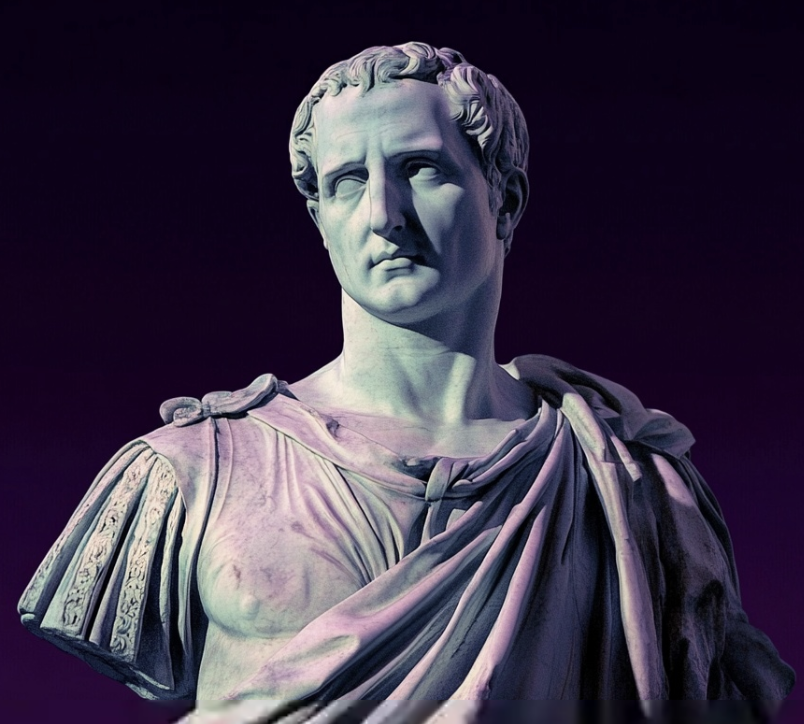
I am a Roman citizen.
▼
Source
source
Against Verres [In Verrem], part 2, book 5, section 57; reported in Cicero, The Verrine Orations, trans. L. H. G. Greenwood (1935), vol. 2, p. 629


3 days ago
Science is international but its success is based on institutions, which are owned by nations. If therefore, we wish to promote culture we have to combine and to organize institutions with our own power and means.
▼
Source
source
When asked the question, "Why a 'Jewish' University?" when Einstein was assisting Chaim Weizmann in fundraising for The Hebrew University of Jerusalem. | As quoted in [Albert Einstein, Letter "Einstein in Singapore." Manchester Guardian, October 12, 1929]

4 months 3 weeks ago
Riches are a good handmaid, but the worst mistress.
▼
Source
source
De Augmentis Scientiarum, Book II, "Antitheta"

5 months 2 weeks ago
Socialism itself can hope to exist only for brief periods here and there, and then only through the exercise of the extremest terrorism. For this reason it is secretly preparing itself for rule through fear and is driving the word 'justice' into the heads of the half-educated masses like a nail so as to rob them of their reason... and to create in them a good conscience for the evil game they are to play.

3 months ago
It has often been said that every man who has suffered misfortunes prefers to be himself, even with his misfortunes, rather than to be someone else without them. For unfortunate men, when they preserve their normality in their misfortune - that is to say, when they endeavor to persist in their own being - prefer misfortune to non-existence. For myself I can say that when a as a youth, and even as a child, I remained unmoved when shown the most moving pictures of hell, for even then nothing appeared to me quite so horrible as nothingness itself. It was a furious hunger of being that possessed me, an appetite for divinity, as one of our ascetics [San Juan de los Angeles] has put it.

3 months 2 weeks ago
And now once again I asked myself the question: do I love her? And once more I could not answer, that is to say, again, for the hundredth time, I answered that I hated her.

4 months 2 weeks ago
How can you worship leeks and onions? we shall suppose a SORBONNIST to say to a priest of SAIS. If we worship them, replies the latter; at least, we do not, at the same time, eat them. But what strange object of adoration are cats and monkeys? says the learned doctor. They are at least as good as the relics or rotten bones of martyrs, answers his no less learned antagonist. Are you not mad, insists the Catholic, to cut one another's throat about the preference of a cabbage or a cucumber? Yes, says the pagan; I allow it, if you will confess, that those are still madder, who fight about the preference among volumes of sophistry, ten thousand of which are not equal in value to one cabbage or cucumber.
▼
Source
source
Part XII - With regard to doubt or conviction
1 week 5 days ago
Every religious, moral, economic, ethical, or other antithesis transforms into a political one if it is sufficiently strong to group human beings effectively according to friend and enemy. The political does not reside in the battle itself, which. possesses its own technical, psychological, and military laws, but in the mode of behavior which is determined by this possibility, by clearly evaluating the concrete situation and thereby being able to distinguish correctly the real friend and the real enemy.
4 months 3 weeks ago
It is true that may hold in these things, which is the general root of superstition; namely, that men observe when things hit, and not when they miss; and commit to memory the one, and forget and pass over the other.
▼
Source
source
Sylva Sylvarum Century X, 1627

3 months 6 days ago
Verily I say unto you, All sins shall be forgiven unto the sons of men, and blasphemies wherewith soever they shall blaspheme: But he that shall blaspheme against the Holy Ghost hath never forgiveness, but is in danger of eternal damnation.
▼
Source
source
Mark 3:28-29 (KJV)
3 months 1 week ago
Till mankind be satisfied with the naked statement of what they really perceive, till they confess virtue to be then most illustrious, when she more disdains the aid of ornament, they will never arrive at that manly justice of sentiment at which they seem destined one day to arrive. By his scheme of naked virtue will be every day a gainer; every succeeding observer willl more fully do her justice, while vice, deprived of that varnish with which she delighted to glow her actions of that gaudy exhibition which may be made alike by every pretender will speedily sink into unheeded contempt.
▼
Source
source
Book V, Chapter 12, "Of Titles"

4 months 1 week ago
In the Greek conception of parrhesia... truth-having is guaranteed by the possession of... moral qualities... required... to know... and... convey such truth...

2 months 3 weeks ago
In its mad passion for power, the Communist State even sought to strengthen and deepen the very ideas and conceptions which the Revolution had come to destroy. It supported and encouraged all the worst antisocial qualities and systematically destroyed the already awakened conception of the new revolutionary values.The sense of justice and equality, the love of liberty and of human brotherhood - these fundamentals of the real regeneration of society - the Communist State suppressed to the point of extermination. Man's instinctive sense of equity was branded as weak sentimentality; human dignity and liberty became a bourgeois superstition; the sanctity of life, which is the very essence of social reconstruction, was condemned as unrevolutionary, almost counter-revolutionary. This fearful perversion of fundamental values bore within itself the seed of destruction.
4 months 3 days ago
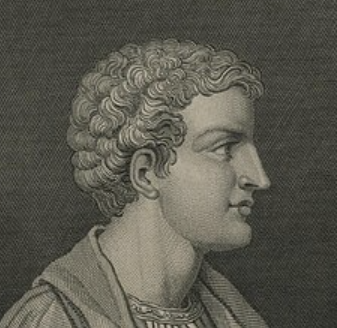
My cares and my inquiries are for decency and truth, and in this I am wholly occupied.
▼
Source
source
Book I, epistle i, line 11

1 week 3 days ago
Doth perfect beauty stand in need of praise at all? Nay; no more than law, no more than truth, no more than loving kindness, nor than modesty.
▼
Source
source
IV, 20

4 months 1 week ago
The militarily-patriotic and the romantic-minded everywhere, and especially the professional military class, refuse to admit for a moment that war may be a transitory phenomenon in social evolution. The notion of a sheep's paradise like that revolts, they say, our higher imagination. Where then would be the steeps of life? If war had ever stopped, we should have to re-invent it, on this view, to redeem life from flat degeneration. Reflective apologists for war at the present day all take it religiously. It is a sort of sacrament. It's profits are to the vanquished as well as to the victor; and quite apart from any question of profit, it is an absolute good, we are told, for it is human nature at its highest dynamic.
1 week 4 days ago
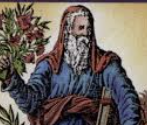
Likewise, they call it "Chaos," which is Hesiod's first generator, because Chaos gives rise to everything else, as the monad does. It is also thought to be both "mixture" and "blending," "obscurity" and "darkness" thanks to the lack of articulation and distinction of everything which ensues from it. Anatolius says that it is called "matrix" and "matter," on the grounds that without it there is no number. The mark which signifies the monad is the source of all things.
▼
Source
source
On the Monad
4 months 1 week ago
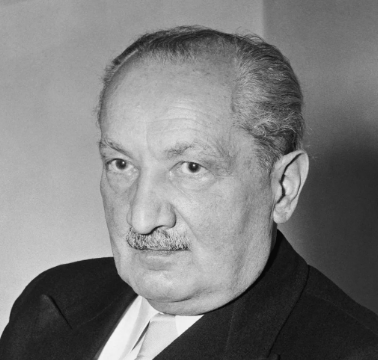
Nevertheless, the ultimate business of philosophy is to preserve the force of the most elemental words in which Dasein expresses itself, and to keep the common understanding from levelling them off to that unintelligibility which functions in turn as a source of pseudo-problems.
▼
Source
source
Macquarrie & Robinson translation

2 months 4 weeks ago
It is a profoundly erroneous truism, repeated by all copy-books and by eminent people when they are making speeches, that we should cultivate the habit of thinking of what we are doing. The precise opposite is the case. Civilization advances by extending the number of important operations which we can perform without thinking about them. Operations of thought are like cavalry charges in a battle - they are strictly limited in number, they require fresh horses, and must only be made at decisive moments.
▼
Source
source
ch. 5.
4 months 3 weeks ago
The human understanding is of its own nature prone to suppose the existence of more order and regularity in the world than it finds. And though there be many things in nature which are singular and unmatched, yet it devises for them parallels and conjugates and relatives which do not exist. Hence the fiction that all celestial bodies move in perfect circles, spirals and dragons being (except in name) utterly rejected.
▼
Source
source
Aphorism 45

3 months 1 week ago
We define only out of despair, we must have a formula... to give a facade to the void.

3 months 2 weeks ago
Difficulty is a severe instructor, set over us by the supreme ordinance of a parental Guardian and Legislator, who knows us better than we know ourselves, as he loves us better too. Pater ipse colendi haud facilem esse viam voluit. He that wrestles with us strengthens our nerves, and sharpens our skill. Our antagonist is our helper.
▼
Source
source
Volume iii, p. 453

4 months 4 days ago
Thou shouldst not become presumptuous through life; for death comes upon thee at last, and the perishable part falls to the ground.

4 months 2 weeks ago
Life is a task to be done. It is a fine thing to say defunctus est; it means that the man has done his task.
▼
Source
source
"On the Sufferings of the World"

1 month 3 weeks ago
When Bill Gates pours money into Africa for feeding the poor in Africa and preventing famine, he's pushing the failed Green Revolution, he's pushing chemicals, pushing GMOs, pushing patterns.
▼
Source
source
On Bill Gate's philanthropic activities, from "Bill Gates is continuing the work of Monsanto, Vandana Shiva tells France24" France24
1 week 6 days ago
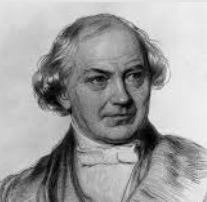
Facts are the materials of science, but all Facts involve Ideas. Since, in observing Facts, we cannot exclude Ideas, we must, for the purposes of science, take care that the Ideas are clear and rigorously applied.
1 month 4 weeks ago
From the point of view of the moralist the animal world is on about the same level as a gladiator's show. The creatures are fairly well treated, and set to fight-whereby the strongest, the swiftest and the cunningest live to fight another day. The spectator has no need to turn his thumbs down, as no quarter is given.
▼
Source
source
(February 1888) "The Struggle for Existence: A Programme". The Nineteenth Century 23: 161-180. (quote from p. 163)
1 month 4 weeks ago
A great chapter of the history of the world is written in the chalk. Few passages in the history of man can be supported by such an overwhelming mass of direct and indirect evidence as that which testifies to the truth of the fragment of the history of the globe, which I hope to enable you to read, with your own eyes, tonight. Let me add, that few chapters of human history have a more profound significance for ourselves. I weigh my words well when I assert, that the man who should know the true history of the bit of chalk which every carpenter carries about in his breeches-pocket, though ignorant of all other history, is likely, if he will think his knowledge out to its ultimate results, to have a truer, and therefore a better, conception of this wonderful universe, and of man's relation to it, than the most learned student who is deep-read in the records of humanity and ignorant of those of Nature.

4 months 2 weeks ago
Of all the things that are beyond my power, I value nothing more highly than to be allowed the honor of entering into bonds of friendship with people who sincerely love truth. For, of things beyond our power, I believe there is nothing in the world which we can love with tranquility except such men.
▼
Source
source
Spinoza, Correspondence, 146, Letter xix

4 months 2 weeks ago
Yes, if you happen to be interested in philosophy and good at it, but not otherwise - but so does bricklaying. Anything you're good at contributes to happiness. When asked "Does philosophy contribute to happiness?"
▼
Source
source
(SHM 76), as quoted in The quotable Bertrand Russell (1993), p. 149
5 months 2 weeks ago
.... In a word, acts of any kind produce habits or characters of the same kind. Hence we ought to make sure that our acts are of a certain kind; for the resulting character varies as they vary. It makes no small difference, therefore, whether a man be trained in his youth up in this way or that, but a great difference, or rather all the difference.
3 months 1 week ago
Isn't history ultimately the result of our fear of boredom?
1 month 3 weeks ago
[H]uman nature as encoded in our DNA isn't immutable. Mankind's barbaric track-record to date is an unreliable guide to the future. If Homo sapiens' nastier alleles and their more sinister combinations can be silenced or edited out of the genome, and new improved code-sequences inserted instead, then the pessimists will be confounded. A major discontinuity in the development of life lies ahead. Providentially, we've learned that the DNA-driven world isn't written in God-given proprietary code it would be hubris to tamper with, but in bug-ridden open source amenable to improvement.
▼
Source
source
Utopian Pharmacology: Mental Health in the Third Millennium MDMA and Beyond, BLTC Research, last updated 2020

4 months 2 weeks ago
It is better to risk sparing a guilty person than to condemn an innocent one.
▼
Source
source
Zadig, 1747
4 months 2 weeks ago
... it may be hoped that the white population of the world will soon cease to increase. The Asiatic races will be longer, and the negroes still longer, before their birth rate falls sufficiently to make their numbers stable without help of war and pestilence. But it is to be hoped that the religious prejudices which have hitherto hampered the spread of birth control will die out, and that ... the whole world will learn not to be unduly prolific. Until that happens, the benefits aimed at by socialism can only be partially realized, and the less prolific races will have to defend themselves against the more prolific by methods which are disgusting even if they are necessary.
3 months 4 days ago
In most cases, to be reasonable means not to be obstinate, which in turn points to conformity with reality as it is. The principle of adjustment is taken for granted. When the idea of reason was conceived, it was intended to achieve more than the mere regulation of the relation between means and ends: it was regarded as the instrument for understanding the ends, for determining them.
▼
Source
source
p. 10.

2 months 1 week ago
Prosperity makes friends, adversity tries them.
▼
Source
source
Maxim 872
2 months 4 weeks ago
In a certain sense, everything is everywhere at all times. For every location involves an aspect of itself in every other location. Thus every spatio-temporal standpoint mirrors the world.
▼
Source
source
Ch. 5: "The Romantic Reaction", p. 128
3 months 1 week ago
What a judgment upon the living, if it is true, as has been maintained, that what dies has never existed!

4 months 1 week ago
What do I care about Jupiter? Justice is a human issue, and I do not need a god to teach it to me.
▼
Source
source
Orestes, Act 2
3 months 5 days ago
To look at a work of art in order to see how well certain rules are observed and canons conformed to impoverished perception. But to strive to note the ways in which certain conditions are fulfilled, such as the organic means by which the media is made to express and carry definite parts, or how the problem of adequate individualization is solved, sharpens esthetic perception and enriches its content.
▼
Source
source
p. 213
2 months 4 weeks ago
Philosophy ... should not imagine that specialized work in epistemological theory, or whatever else prides itself on being research, is actually philosophy. Yet a philosophy forswearing all of that must in the end be irreconcilably at odds with the dominant consciousness. Nothing else raises it above the suspicion of apologetics. Philosophy that satisfies its own intention, and does not childishly skip behind its own history and the real one, has its lifeblood in the resistance against the common practices of today and what they serve, against the justification of what happens to be the case.
▼
Source
source
p. 6


4 weeks ago
What profit is there in crossing the sea and in going from one city to another? If you would escape your troubles, you need not another place but another personality. Perhaps you have reached Athens, or perhaps Rhodes; choose any state you fancy, how does it matter what its character may be? You will be bringing to it your own.
CivilSimian.com created by AxiomaticPanic, CivilSimian, Kalokagathia