


4 months 2 weeks ago
I have ever loved to repose myself, whether sitting or lying, with my heels as high or higher than my head.
▼
Source
source
Book III, Ch. 13. Of Experience

4 months 1 week ago
To the gross senses the chair seems solid and substantial. But the gross senses and be refined by means of instruments. Closer observations are made, as the result of which we are forced to conclude that the chair is "really" a swarm of electric charges whizzing about in empty space. ... While the substantial chair is an abstraction easily made from the memories of innumerable sensations of sight and touch, the electric charge chair is a difficult and far-fetched abstraction from certain visual sensations so excessively rare (they can only come to us in the course of elaborate experiments) that not one man in a million has ever been in the position to make it for himself. The overwhelming majority of us accept the electric-charge chair on authority, as good Catholics accept transubstantiation.
▼
Source
source
"One and Many," pp. 8-9
3 months 1 week ago
The word "God," so "capitalised" (as we Americans say), is the definable proper name, signifying Ens necessarium; in my belief Really creator of all three Universes of Experience. I, Ens necessarium is a latin expression which signifies "Necessary being, necessary entity"

1 month 2 days ago
Flimsy, desultory readers, who fly from foolish book to foolish book, and get good of none, and mischief of all-are not these as foolish, unhealthy eaters, who mistake their superficial false desire after spiceries and confectioneries for their real appetite, of which even they are not destitute, though it lies far deeper, far quieter, after solid nutritive food?
2 months 3 weeks ago
The bastard form of mass culture is humiliated repetition: content, ideological schema, the blurring of contradictions-these are repeated, but the superficial forms are varied: always new books, new programs, new films, news items, but always the same meaning.
▼
Source
source
Modern, in The Pleasure of the Text



4 months 1 week ago
Our aim is precisely to establish the human kingdom as a pattern of values in distinction from the material world. But the subjectivity which we thus postulate as the standard of truth is no narrowly individual subjectivism, for as we have demonstrated, it is not only one's own self that one discovers in the cogito, but those of others too. Contrary to the philosophy of Descartes, contrary to that of Kant, when we say "I think" we are attaining to ourselves in the presence of the other, and we are just as certain of the other as we are of ourselves. Thus the man who discovers himself directly in the cogito also discovers all the others, and discovers them as the condition of his own existence. He realizes that he can't be anything unless others recognize him as such. I cannot obtain any truth whatsoever about myself, except through the mediation of another. The other is indispensable to my existence, and equally so to any knowledge I can have of myself.
▼
Source
source
p. 45

5 months 1 week ago
The dullness of fact is the mother of fiction.

3 months 2 weeks ago
I cannot help fearing that men may reach a point where they look on every new theory as a danger, every innovation as a toilsome trouble, every social advance as a first step toward revolution, and that they may absolutely refuse to move at all.
▼
Source
source
Book Three, Chapter XXI.
1 week 1 day ago
Speech is insufficient to utter the last things; and this troubles it not, because the last things may be heard speaking for themselves. At last, after long delay the wondering soul gives form to that which is stirring within it and produces its works art and song and mighty deeds.
2 months 1 week ago
To spare the guilty is to injure the innocent.
▼
Source
source
Maxim 113

3 months 1 week ago
Religion, always a principle of energy, in this new people, is no way worn out or impaired; and their mode of professing it is also one main cause of this free spirit. The people are Protestants; and of that kind which is the most adverse to all implicit submission of mind and opinion. This is a persuasion not only favourable to liberty, but built upon it.
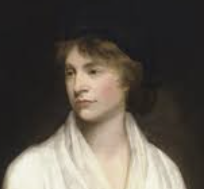
3 months 1 week ago
Virtue can only flourish amongst equals.
▼
Source
source
A Vindication of the Rights of Men

4 months 1 week ago
And now, at half-past ten o'clock, I hear the cockerels crow in Hubbard's barns, and morning is already anticipated. It is the feathered, wakeful thought in us that anticipates the following day.
▼
Source
source
July 11, 1851

3 months 1 week ago
Not one moment when I have not been conscious of being outside Paradise.

4 months 2 weeks ago
I make this chief distinction between religion and superstition, that the latter is founded on ignorance, the former on knowledge; this, I take it, is the reason why Christians are distinguished from the rest of the world, not by faith, nor by charity, nor by the other fruits of the Holy Spirit, but solely by their opinions, inasmuch as they defend their cause, like everyone else, by miracles, that is by ignorance, which is the source of all malice; thus they turn a faith, which may be true, into superstition.
▼
Source
source
Letter 21 (73) to Henry Oldenburg , November
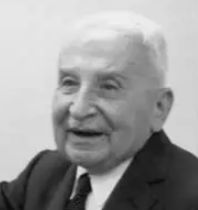
3 weeks 6 days ago
The state is God, deifies arms and prisons. The worship of the state is the worship of force. There is no more dangerous menace to civilization than a government of incompetent, corrupt, or vile men. The worst evils which mankind ever had to endure were inflicted by bad governments. The state can be and has often been in the course of history the main source of mischief and disaster.
▼
Source
source
Chapter III: Etatism

2 months 1 week ago
The ordinary person senses the greatness of the odds against him even without thought or analysis, and he adapts his attitudes unconsciously. A huge passivity has settled on industrial society. For people carried about in mechanical vehicles, earning their living by waiting on machines, listening much of the waking day to canned music, watching packaged movie entertainment and capsulated news, for such people it would require an exceptional degree of awareness and an especial heroism of effort to be anything but supine consumers of processed goods.
▼
Source
source
p. 21
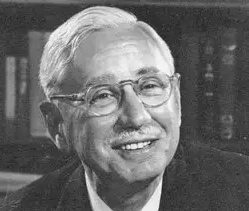
1 month 1 day ago
The principle of the family was mutual aid; but the principle of society is competition, the struggle for existence, the elimination of the weak and the survival of the strong.
▼
Source
source
Ch. 2 : On Youth
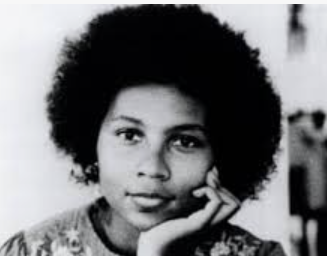
2 months 3 weeks ago
I have wanted them to have this simple definition to read again and again so they know: Feminism is a movement to end sexism, sexist exploitation, and oppression.
▼
Source
source
Feminism is for Everybody: Passionate Politics (2014), p.XII

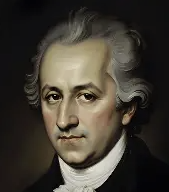
1 month 4 days ago
But among all the discoveries and corrections probably none has resulted in a deeper influence on the human spirit than the doctrine of Copernicus.... Possibly mankind has never been demanded to do more, for considering all that went up in smoke as a result of realizing this change: a second Paradise, a world of innocence, poetry and piety: the witness of the senses, the conviction of a poetical and religious faith. No wonder his contemporaries did not wish to let all this go and offered every possible resistance to a doctrine which in its converts authorized and demanded a freedom of view and greatness of thought so far unknown indeed not even dreamed of.
▼
Source
source
Zur Farbenlehre, Materialien zur Geschichte der Farbenlehre (1810), Frankfurt am Main, 1991, Seite 666.

4 months 1 week ago
To different minds, the same world is a hell, and a heaven.
▼
Source
source
December 20, 1822

4 months 6 days ago
The usage of the words "public" and "public sphere" betrays a multiplicity of concurrent meanings. Their origins go back to various historical phases and, when applied synchronically to the conditions of a bourgeois society that is industrially advanced and constituted as a social-welfare state, they fuse into a clouded amalgam. Yet the very conditions that make the inherited language seem inappropriate appear to require these words, however confused their employment.
▼
Source
source
p. 1 as cited in: Gandy, M (1997) "Ecology, modernity and the intellectual legacy of the Frankfurt School". In: Light, A and Smith, JM, (eds.) Space, Place and Environmental Ethics. p. 240
3 weeks 6 days ago
Credit expansion can bring about a temporary boom. But such a fictitious prosperity must end in a general depression of trade, a slump.

4 months 1 week ago
A testimony is sufficient when it rests on: 1st. A great number of very sensible witnesses who agree in having seen well. 2d. Who are sane, bodily and mentally. 3d. Who are impartial and disinterested. 4th. Who unanimously agree. 5th. Who solemnly certify to the fact.
▼
Source
source
As quoted by H. P. Blavatsky in Isis Unveiled, Vol. I, p. 108, 1877
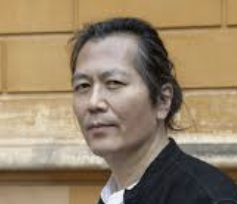
2 months 3 weeks ago
At the deepest level, the desire for complete union with God exhibits a narcissistic structure.
5 months 1 week ago
As for him who neither possesses nor can acquire them, let him take to heart the words of Hesiod: He is the best of all who thinks for himself in all things. He, too, is good who takes advice from a wiser (person). But he who neither thinks for himself, nor lays to heart another's wisdom, this is a useless man.

4 months 1 week ago
No production without a need. But consumption reproduces the need.
▼
Source
source
Introduction, p. 12.
1 month 2 days ago
I care little about the sword: I will allow a thing to struggle for itself in this world, with any sword or tongue or implement it has, or can lay hold of. We will let it preach, and pamphleteer, and fight, and to the uttermost bestir itself, and do, beak and claws, whatsoever is in it; very sure that it will, in the long-run, conquer nothing which does not deserve to be conquered. What is better than itself, it cannot put away, but only what is worse. In this great Duel, Nature herself is umpire, and can do no wrong: the thing which is deepest-rooted in Nature, what we call truest, that thing and not the other will be found growing at last.
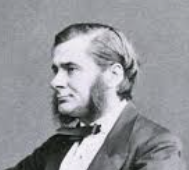
1 month 3 weeks ago
Only two suppositions seem to be open to us - Either each species of crocodile has been specially created, or it has arisen out of some pre-existing form by the operation of natural causes. Choose your hypothesis; I have chosen mine. I can find no warranty for believing in the distinct creation of a score of successive species of crocodiles in the course of countless ages of time.
1 month 3 days ago
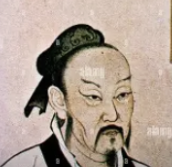
The way of learning is none other than finding the lost mind.
▼
Source
source
6A:11, as translated by Wing-tsit Chan in A Source Book in Chinese Philosophy (1963), p. 58

4 months 1 week ago
We thus have a kind of see-saw: first, pure persuasion leading to the conversion of a minority; then force exerted to secure that the rest of the community shall be exposed to the right propaganda; and finally a genuine belief on the part of the great majority, which makes the use of force again unnecessary.
▼
Source
source
Ch. 9: Power over opinion
3 months 1 week ago
Women becoming, consequently weaker, in mind and body, than they ought to be...have not sufficient strength to discharge the first duty of a mother; and sacrificing to lasciviousness the parental affection...either destroy the embryo in the womb, or cast if off when born. Nature in every thing demands respect, and those who violate her laws seldom violate them with impunity.
▼
Source
source
Ch. 8

4 months 1 week ago
100 per cent of us die, and the percentage cannot be increased.
4 months 1 week ago
Friendship is the greatest of worldly goods. Certainly to me it is the chief happiness of life. If I had to give a piece of advice to a young man about a place to live, I think I shd. say, 'sacrifice almost everything to live where you can be near your friends.
▼
Source
source
Letter to Arthur Greeves (29 December 1935) - in They Stand Together: The Letters of C. S. Lewis to Arthur Greeves (1914-1963) (1979), p. 477

4 months 1 week ago
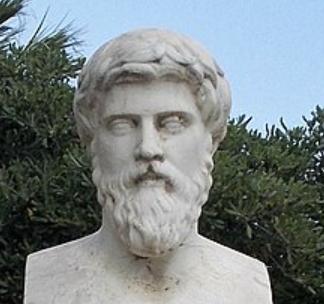
Boundless compassion for all living beings is the surest and most certain guarantee of pure moral conduct, and needs no casuistry. Whoever is filled with it will assuredly injure no one, do harm to no one, encroach on no man's rights; he will rather have regard for every one, forgive every one, help every one as far as he can, and all his actions will bear the stamp of justice and loving-kindness. ... In former times the English plays used to finish with a petition for the King. The old Indian dramas close with these words: "May all living beings be delivered from pain." Tastes differ; but in my opinion there is no more beautiful prayer than this.
▼
Source
source
Part III, Ch. VIII, 4, pp. 213-214 First line often paraphrased as: Compassion is the basis of all morality.
3 months 4 weeks ago
"Young men," said Cæsar, "hear an old man to whom old men hearkened when he was young."
▼
Source
source
Cæsar Augustus
3 months 1 week ago
An aphorism? Fire without flames. Understandable that no one tries to warm himself at it.
3 months 1 week ago
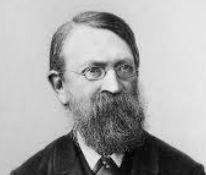
In the philosophy of Mach a world without matter is unthinkable. Matter in Mach's philosophy is not merely required as a test body to display properties of something already there ...it is an essential feature in causing those properties which it able to display, Inertia, for example, would not appear by the insertion of one test body in the world; in some way the presence of other matter is a necessary condition. It will be seen how welcome to such a philosophy is the theory that space and the inertial frame come into being with matter, and grow as it grows.
▼
Source
source
Arthur Eddington, Space, Time and Gravitation

2 months 3 weeks ago
Sexual activity is driven by the same aims and motives as reading poetry or listening to music: to escape the limitations imposed by the need for particularity in the consciousness.
▼
Source
source
p. 75

2 months 1 week ago
The vicomte was a nice-looking young man with soft features and polished manners, who evidently considered himself a celebrity but out of politeness modestly placed himself at the disposal of the circle in which he found himself. Anna Pávlovna was obviously serving him up as a treat to her guests. As a clever maître d'hôtel serves up as a specially choice delicacy a piece of meat that no one who had seen it in the kitchen would have cared to eat, so Anna Pávlovna served up to her guests, first the vicomte and then the abbé, as peculiarly choice morsels. The group about Mortemart immediately began discussing the murder of the Duc d'Enghien. The vicomte said that the Duc d'Enghien had perished by his own magnanimity, and that there were particular reasons for Buonaparte's hatred of him.
▼
Source
source
Bk. I, Ch. III
2 months 2 weeks ago
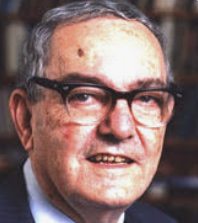
Since these questions lie in the future, imagination must supply the lack of experienced feeling in attaching value to them. But values can be only imperfectly anticipated.

4 months 2 weeks ago
It is not without good reason said, that he who has not a good memory should never take upon him the trade of lying.
▼
Source
source
Ch. 9. Of Liars, tr. Cotton, rev. W. Hazlitt, 1842

4 months 1 week ago
Make sure that your religion is a matter between you and God only.
▼
Source
source
Comment to Maurice O'Connor Drury, as quoted in Wittgenstein Reads Freud : The Myth of the Unconscious (1996) by Jacques Bouveresse, as translated by Carol Cosman, p. 14
2 months 3 weeks ago
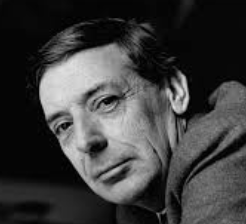
There continue to be complex debates about what Nietzsche understood truth to be. Quite certainly, he did not think, in pragmatist spirit, that beliefs are true if they serve our interests or welfare: we have just seen some of his repeated denials of this idea. The more recently fashionable view is that he was the first of the deniers, thinking that there is no such thing as truth, or that truth is what anyone thinks it is, or that it is a boring category that we can do without. This is also wrong, and more deeply so. Nietzsche did not think that the ideal of truthfulness went into retirement when its metaphysical origins were discovered, and he did not suppose, either, that truthfulness could be detached from a concern for the truth. Truthfulness as an ideal retains its power, and so far from his seeing truth as dispensable or malleable, his main question is how it can be made bearable.
▼
Source
source
p. 16
1 month 5 days ago
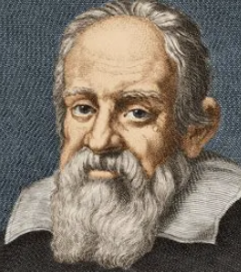
Copernicus never discusses matters of religion or faith, nor does he use argument that depend in any way upon the authority of sacred writings which he might have interpreted erroneously. ... He did not ignore the Bible, but he knew very well that if his doctrine were proved, then it could not contradict the Scriptures when they were rightly understood.
3 months 3 days ago
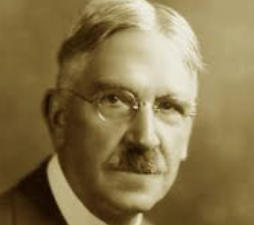
Genuine time, if it exists as anything else except the measure of motions in space, is all one with the existence of individuals as individuals, with the creative, with the occurrence of unpredictable novelties. Everything that can be said contrary to this conclusion is but a reminder that an individual may lose his individuality, for individuals become imprisoned in routine and fall to the level of mechanisms. Genuine time then ceases to be an integral element of their being. Our behavior becomes predictable, because it is but an external rearrangement of what went before.
1 week 3 days ago
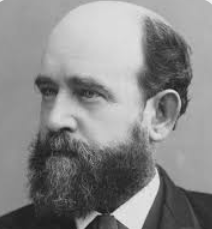
I am firmly convinced, as I have already said, that to effect any great social improvement, it is sympathy rather than self-interest, the sense of duty rather than the desire for self-advancement, that must be appealed to. Envy is akin to admiration, and it is the admiration that the rich and powerful excite which secures the perpetuation of aristocracies.
▼
Source
source
Ch. 21 : Conclusion
CivilSimian.com created by AxiomaticPanic, CivilSimian, Kalokagathia