


3 months 3 days ago
Sleep is a death; oh, make me try By sleeping what it is to die, And as gently lay my head On my grave as now my bed.
▼
Source
source
Section 12

2 months 2 weeks ago
Hegel made famous his aphorism that all the rational is real and all the real rational; but there are many of us who, unconvinced by Hegel, continue to believe that the real, the really real, is irrational, that reason builds upon irrationalities. Hegel, a great framer of definitions, attempted with definitions to reconstruct the universe, like that artillery sergeant who said that cannon were made by taking a hole and enclosing it with steel.

3 months 4 weeks ago
The South has conquered nothing - but a graveyard.
3 weeks ago
Now what is science? ...it is before all a classification, a manner of bringing together facts which appearances separate, though they are bound together by some natural and hidden kinship. Science, in other words, is a system of relations. ...it is in relations alone that objectivity must be sought. ...it is relations alone which can be regarded as objective.External objects... are really objects and not fleeting and fugitive appearances, because they are not only groups of sensations, but groups cemented by a constant bond. It is this bond, and this bond alone, which is the object in itself, and this bond is a relation.
3 months 2 weeks ago
We are responsible not only for what we do but also for what we could have prevented.
▼
Source
source
Introduction (p. xv)

1 week 5 days ago
Would you really know what philosophy offers to humanity? Philosophy offers counsel.

3 months 4 weeks ago
The only thing that will redeem mankind is co-operation, and the first step towards co-operation lies in the hearts of individuals.
▼
Source
source
p. 212
2 months 3 weeks ago
Just as man as a social being, cannot in the long run exist without a tie to the community, so the individual will never find the real justification for his existence, and his own spiritual and moral autonomy, anywhere except in an extramundane principle capable of relativizing the overpowering influence of external factors.
▼
Source
source
p 23
4 months 4 weeks ago
The science which has to do with nature clearly concerns itself for the most part with bodies and magnitudes and their properties and movements, but also with the principles of this sort of substance, as many as they may be.

2 months 2 weeks ago
I have compassion on the multitude, because they continue with me now three days, and have nothing to eat: and I will not send them away fasting, lest they faint in the way.
▼
Source
source
15:32 (KJV)
4 months ago
It is difficult for the isolated individual to work himself out of the immaturity which has become almost natural for him. He has even become fond of it and for the time being is incapable of employing his own intelligence, because he has never been allowed to make the attempt. Statutes and formulas, these mechanical tools of a serviceable use, or rather misuse, of his natural faculties, are the ankle-chains of a continuous immaturity. Whoever threw it off would make an uncertain jump over the smallest trench because he is not accustomed to such free movement. Therefore there are only a few who have pursued a firm path and have succeeded in escaping from immaturity by their own cultivation of the mind.
3 months 2 weeks ago
Everyone is entitled to commit murder in the imagination once in a while, not to mention lesser infractions.
▼
Source
source
Concealment and Exposure and Other Essays (1998).
2 months 1 week ago
People nowadays have such high hopes of America and the political conditions obtaining there that one might say the desires, at least the secret desires, of all enlightened Europeans are deflected to the west, like our magnetic needles.
▼
Source
source
G 2
1 week 1 day ago
May the men who hold the destiny of peoples in their hands, studiously avoid anything that might cause the present situation to deteriorate and become even more dangerous. May they take to heart the words of the Apostle Paul: "If it be possible, as much as lieth in you, live peaceably with all men." These words are valid not only for individuals, but for nations as well. May these nations, in their efforts to maintain peace, do their utmost to give the spirit time to grow and to act.

4 months 1 day ago
The more exquisite any good is, of which a small specimen is afforded us, the sharper is the evil, allied to it; and few exceptions are found to this uniform law of nature. The most sprightly wit borders on madness; the highest effusions of joy produce the deepest melancholy; the most ravishing pleasures are attended with the most cruel lassitude and disgust; the most flattering hopes make way for the severest disappointments. And, in general, no course of life has such safety (for happiness is not to be dreamed of) as the temperate and moderate, which maintains, as far as possible, a mediocrity, and a kind of insensibility, in every thing. As the good, the great, the sublime, the ravishing are found eminently in the genuine principles of theism; it may be expected, from the analogy of nature, that the base, the absurd, the mean, the terrifying will be equally discovered in religious fictions and chimeras.
▼
Source
source
Part XV - General corollary
4 months 2 weeks ago
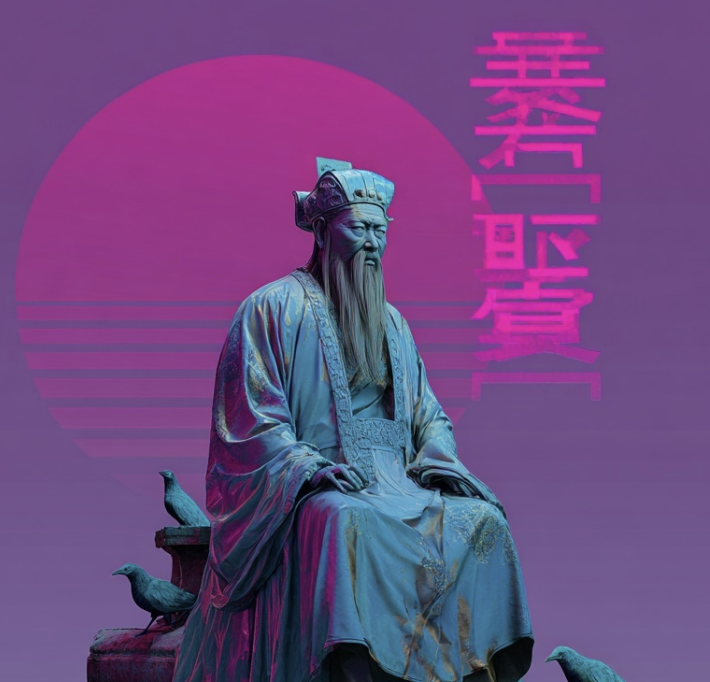
The man of perfect virtue is cautious and slow in his speech. When a man feels the difficulty of doing, can he be other than cautious and slow in speaking?

3 months 3 weeks ago
If a false thought is so much as expressed boldly and clearly, a great deal has already been gained.
▼
Source
source
p. 86e

3 months 4 weeks ago
The institution of religion exists only to keep mankind in order, and to make men merit the goodness of God by their virtue. Everything in a religion which does not tend towards this goal must be considered foreign or dangerous.
▼
Source
source
"The Ecclesiastical Ministry"

1 month 3 weeks ago
Love hinders death. Love is life. All, everything that I understand, I understand only because I love. Everything is, everything exists, only because I love. Everything is united by it alone. Love is God, and to die means that I, a particle of love, shall return to the general and eternal source.
▼
Source
source
Thoughts of Prince Andrew Bk XII, Ch. 16
5 days ago
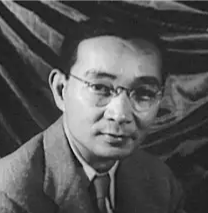
I am here to speak on freedom of speech. It is a great topic, and I am going to make my speech as free as possible. But you know that this cannot be done, for when anyone announces that he is going to speak his mind freely, everyone is frightened. This shows that there is no such thing as true freedom of speech. No one can afford to let his neighbors know what he is thinking about them. Society can exist only on the basis that there is some amount of polished lying and that no one says exactly what he thinks.
▼
Source
source
"Of Freedom of Speech", lecture given in China
3 months 4 weeks ago
It was in the reign of Charles II that they obtained the noble distinction of being exempted from giving their testimony on oath in a court of justice, and being believed on their bare affirmation. On this occasion the chancellor, who was a man of wit, spoke to them as follows: "Friends, Jupiter one day ordered that all the beasts of burden should repair to be shod. The asses represented that their laws would not allow them to submit to that operation. 'Very well,' said Jupiter; 'then you shall not be shod; but the first false step you make, you may depend upon being severely drubbed.'"
2 months 2 weeks ago
Take, eat; this is my body. And he took the cup, and gave thanks, and gave it to them, saying, Drink ye all of it; For this is my blood of the new testament, which is shed for many for the remission of sins. But I say unto you, I will not drink henceforth of this fruit of the vine, until that day when I drink it new with you in my Father's kingdom.
▼
Source
source
26:26-29 (KJV)
4 months ago
Even if a civil society were to be dissolved by the consent of all its members (e.g., if a people inhabiting an island decided to separate and disperse throughout the world), the last murderer remaining in prison would first have to be executed, so that each has done to him what his deeds deserve and blood guilt does not cling to the people for not having insisted upon this punishment; for otherwise the people can be regarded as collaborators in his public violation of justice.
▼
Source
source
Kt6:333

1 month 3 weeks ago
Without an understanding of causality there can be no theory of communication. What passes as information theory today is not communication at all, but merely transportation.
▼
Source
source
(p. 362)
2 months 5 days ago
To require that all of these must be reducible to a single version is to make the mistake of supposing that 'Which are the real objects?' is a question that makes sense independently of our choice of concepts.
▼
Source
source
Lecture I: Is There Still Anything to Say about Reality and Truth?

5 months ago
The liar is a person who uses the valid designations, the words, in order to make something which is unreal appear to be real. He says, for example, "I am rich," when the proper designation for his condition would be "poor." He misuses fixed conventions by means of arbitrary substitutions or even reversals of names. If he does this in a selfish and moreover harmful manner, society will cease to trust him and will thereby exclude him. What men avoid by excluding the liar is not so much being defrauded as it is being harmed by means of fraud. Thus, even at this stage, what they hate is basically not deception itself, but rather the unpleasant, hated consequences of certain sorts of deception. It is in a similarly restricted sense that man now wants nothing but truth: he desires the pleasant, life-preserving consequences of truth. He is indifferent toward pure knowledge which has no consequences; toward those truths which are possibly harmful and destructive he is even hostilely inclined.
1 month 6 days ago
The biology of suffering in intelligent agents is a deep underlying source of existential risk - and one that can potentially be overcome.
▼
Source
source
"Unsorted Postings", pre-2014

2 months 3 weeks ago
The mind that puts everything in question, reaches, after a thousand interrogations, an almost total inertia, a situation which the inert, in fact, knows from the start, by instinct. For what is inertia but a congenital perplexity?

3 months 4 weeks ago
The Grecian are youthful and erring and fallen gods, with the vices of men, but in many important respects essentially of the divine race. In my Pantheon, Pan still reigns in his pristine glory, with his ruddy face, his flowing beard, and his shaggy body, his pipe and his crook, his nymph Echo, and his chosen daughter Iambe; for the great god Pan is not dead, as was rumored. No god ever dies. Perhaps of all the gods of New England and of ancient Greece, I am most constant at his shrine.
3 months 4 weeks ago
The unity is brought about by force.
▼
Source
source
Notebook I, The Chapter on Money, p. 70.
1 month 6 days ago
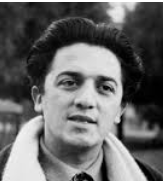
Even if I set out to make a film about a fillet of sole, it would be about me.
▼
Source
source
On the autobiographical nature of his films, in The Atlantic

3 months 3 weeks ago
There is no more miserable human being than one in whom nothing is habitual but indecision.
▼
Source
source
Ch. 4
1 month 2 weeks ago
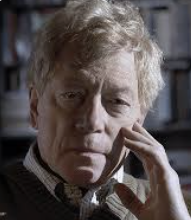
For we are social beings, who can exist and behave as autonomous agents only because we are supported in our ventures by that feeling of primal safety that the bond of society brings. We can envisage no project and no satisfaction on which the eyes of others do not shine. We are joined to those others, and even when they are strangers to us, they are also part of us. It is the indispensable need for membership that brings the national idea to our minds; and there is no rational argument that will expel it, once it is there. Without it, we are homeless; and even if our attitude to home is one of sour disaffection, home is no less necessary to our sense of who we are.
▼
Source
source
'The First Person Plural', in Ronald Beiner (ed.), Theorizing Nationalism (1999), p. 291

4 months 1 day ago
Good roads, canals, and navigable rivers, by diminishing the expence of carriage, put the remote parts of the country more nearly upon a level with those of the neighbourhood of the town. They are upon that the greatest of all improvements.
▼
Source
source
Chapter XI, Part I, p. 174.
1 month 4 days ago
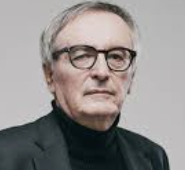
In the world as we find it, even the barest requirements of a life worth living cannot all be always met in full. Toppling a tyranny may trigger civil war. Protecting a broad range of liberal freedoms may result in the regime that guarantees them being short lived. At the same time, supporting a strong state as a bulwark against anarchy may worsen the abuse of power. Wise policy can temper these conflicts. It cannot hope to overcome them.
▼
Source
source
'Modus Vivendi' (p.28)



3 months 3 weeks ago
So much of our time is spent in preparation, so much in routine and so much in retrospect, that the amount of each person's genius is confined to a very few hours.
▼
Source
source
Quoted in Simon Brown (ed.) The New England Farmer, vol. 9 (January 1857) p. 18

4 months 6 days ago
Most Christians are superstitious rather than pious, and except for the name of Christ differ hardly at all from superstitious pagans.
▼
Source
source
The Erasmus Reader (1990), pp. 140-141.
4 months 3 weeks ago
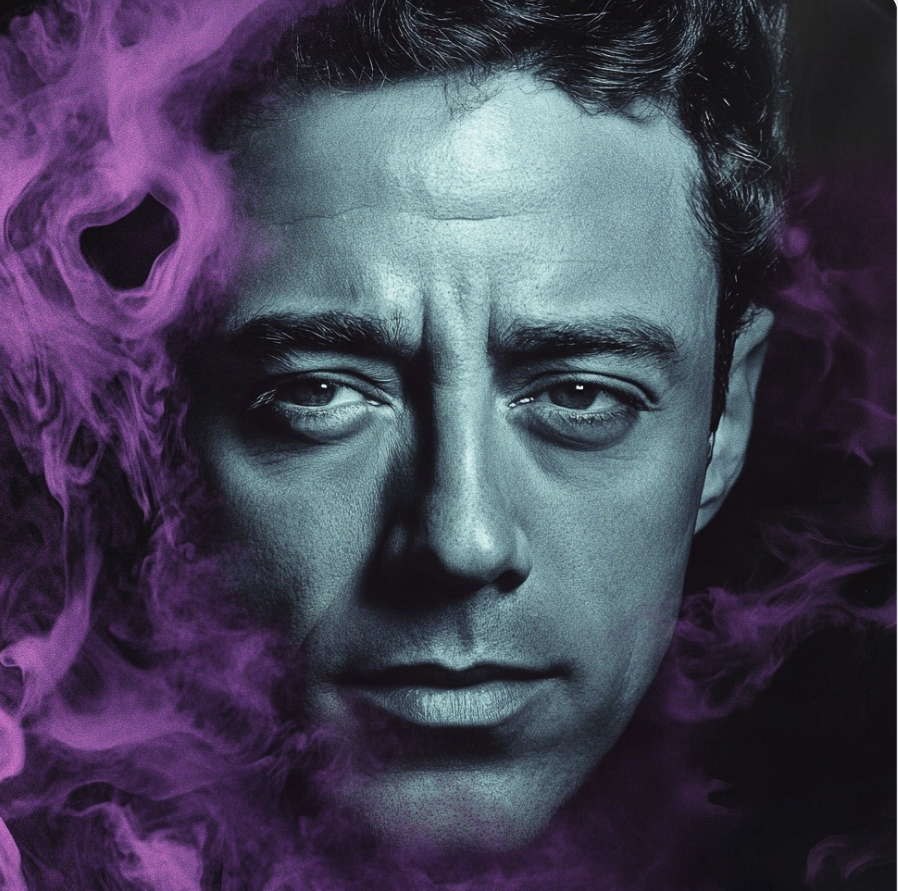
It happens that the stage sets collapse. Rising, streetcar, four hours in the office or the factory, meal, streetcar, four hours of work, meal, sleep and Monday Tuesday Wednesday Thursday Friday and Saturday according to the same rhythm this path is easily followed most of the time. But one day the "why" arises and everything begins in that weariness tinged with amazement.
2 months 2 weeks ago
As first a man cannot lay down the right of resisting them, that assault him by force, to take away his life; because he cannot be understood to ayme thereby, at any Good to himself.
▼
Source
source
The First Part, Chapter 14, p. 66
1 month 4 days ago
There are not two kinds of human being, savage and civilized. There is only the human animal, forever at war with itself.
▼
Source
source
An Old Chaos: Frozen Horses and Deserts of Brick (p. 25)
4 months 2 weeks ago
We know, that of all living beings man is the best formed, and, as the gods belong to this number, they must have a human form. ... I do not mean to say that the gods have body and blood in them; but I say that they seem as if they had bodies with blood in them. . . , Epicurus, for whom hidden things were as tangible as if he had touched them with his finger, teaches us that gods are not generally visible, but that they are intelligible; that they are not bodies having a certain solidity . . . but that we can recognize them by their passing images; that as there are atoms enough in the infinite space to produce such images, these are produced before us . . . and make us realize what are these happy, immortal beings.
▼
Source
source
Book I, Section 18
2 weeks 5 days ago
Most precious are the people; next come the spirits of land and grain; and last, the kings.
▼
Source
source
7B:14.
1 month 1 day ago
Is not the minimal state, the framework for utopia, an inspiring vision? The minimal state treats us as inviolate individuals, who may not be used in certain ways by others as means or tools or instruments or resources; it treats us as persons having individual right with the dignity this constitutes. Treating us with respect by respecting our rights, it allows us, individually or with whom we please, to choose our life and to realize our ends and our conception of ourselves, insofar as we can, aided by the voluntary cooperation of other individuals possessing the same dignity. How dare any state or group of individuals do more. Or less.
▼
Source
source
Ch. 10 : A Framework for Utopia; Utopia and the Minimal State, p. 333
1 month 3 weeks ago
Never did Christ utter a single word attesting to a personal resurrection and a life beyond the grave.
▼
Source
source
My Religion (1884), Ch. 8
4 months 1 week ago
If what the philosophers say be true,—that all men's actions proceed from one source; that as they assent from a persuasion that a thing is so, and dissent from a persuasion that it is not, and suspend their judgment from a persuasion that it is uncertain, so likewise they seek a thing from a persuasion that it is for their advantage.
▼
Source
source
Book I, ch. 18, 1.
3 months 3 weeks ago
Clichés, stock phrases, adherence to conventional, standardized codes of expression and conduct have the socially recognized function of protecting us against reality.
▼
Source
source
p. 4
3 months 4 weeks ago
Religion, which should most distinguish us from the beasts, and ought most particularly elevate us, as rational creatures, above brutes, is that wherein men often appear most irrational, and more senseless than beasts.
▼
Source
source
Book IV, Ch. 18
CivilSimian.com created by AxiomaticPanic, CivilSimian, Kalokagathia