


3 months 6 days ago
One grasps incomparably more things in boredom than by labor, effort being the mortal enemy of meditation.
3 months 1 week ago
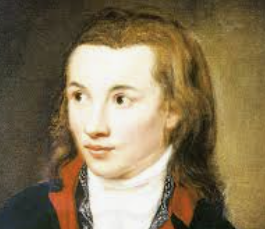
Before abstraction everything is one, but one like chaos; after abstraction everything is united again, but this union is a free binding of autonomous, self-determined beings. Out of a mob a society has developed, chaos has been transformed into a manifold world.
▼
Source
source
Fragment No. 95
1 week 1 day ago
Suppose that the organism is given the problem of determining the analysis of a stimulus at a certain level of representation- e.g., the problem of determining which sequence of words a given utterance encodes. Since, in the general case, transducer outputs underdetermine perceptual analyses, we can think of the solution of such problems as involving processes of non-demonstrative inference. In particular, we can think of each input system as a computational mechanism which projects and confirms a certain class of hypotheses on the basis of a certain body of data.
▼
Source
source
p. 126, partly cited in: Meredith Williams (2002) Wittgenstein, Mind, and Meaning: Toward a Social Conception of Mind. p. 104. Quote about the direction of information flow in perceptual and observer analysis.

4 months 2 weeks ago
In this present that God has made us, there is nothing unworthy our care; we stand accountable for it even to a hair; and is it not a commission to man, to conduct man according to his condition; 'tis express, plain, and the very principal one, and the Creator has seriously and strictly prescribed it to us. Authority has power only to work in regard to matters of common judgment, and is of more weight in a foreign language; therefore let us again charge at it in this place.
▼
Source
source
Ch. 13
3 months 1 week ago
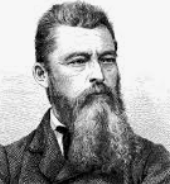
We have busied ourselves and contented ourselves long enough with speaking and writing; now at last we demand that the word become flesh, the spirit matter; we are as sick of political as we are of philosophical idealism; we are determined to become political materialists.
▼
Source
source
Lecture I, Occasion and Context

4 months 1 day ago
Thou shouldst not become presumptuous through much treasure and wealth; for in the end it is necessary for thee to leave all.

4 months 1 week ago
It is because we are predominantly purposeful beings that we are perpetually correcting our immediate sensations. But men are free not to be utilitarianly purposeful. They can sometime be artists, for example. In which case they may like to accept the immediate sensation uncorrected, because it happens to be beautiful.
▼
Source
source
"One and Many," p. 11
3 months 1 week ago
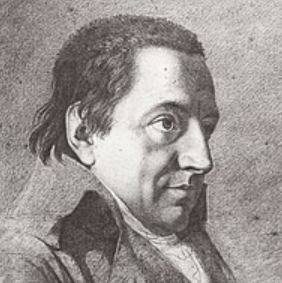
My immediate consciousness, my absolute perception, cannot go beyond myself, - I have immediate knowledge only of myself, whatever I know further I know only by reasoning, in the same manner in which I have come to those conclusions concerning the original powers of Nature, which certainly do not lie within the circle of my perceptions. I, however, - that which I call myself, - am not the man-forming power of Nature, but only one of its manifestations ; and only of this manifestation am I conscious, not of that power, whose existence I have only discovered from the necessity of explaining my own.
▼
Source
source
Jane Sinnett, trans 1846 p. 13
2 months 6 days ago
Sight-seeing is the art of disappointment.
▼
Source
source
Pt. I, ch. II.
1 month 1 week ago
The newspaper is in all its literalness the bible of democracy, the book out of which a people determines its conduct.
▼
Source
source
What Modern Liberty Means, p. 47. Essay first published in The Atlantic (November 1919).
4 months 1 week ago
We must frankly confess, then, using our empirical common sense and ordinary practical prejudices, that in the world that actually is, the virtues of sympathy, charity, and non-resistance may be, and often have been, manifested in excess. ... You will agree to this in general, for in spite of the Gospel, in spite of Quakerism, in spite of Tolstoi, you believe in fighting fire with fire, in shooting down usurpers, locking up thieves, and freezing out vagabonds and swindlers.
▼
Source
source
Lectures XIV and XV, "The Value of Saintliness"
3 months 6 days ago
There is only this swarm of dying creatures stricken with longevity, all the more hateful in that they are so good at organizing their agony. p. 120, first American edition
▼
Source
source
1970

2 months 1 week ago
It will be said, "Patriotism has welded mankind into states, and maintains the unity of states." But men are now united in states; that work is done; why now maintain exclusive devotion to one's own state, when this produces terrible evils for all states and nations? For this same patriotism which welded mankind into states is now destroying those same states. If there were but one patriotism say of the English only then it were possible to regard that as conciliatory, or beneficent. But when, as now, there is American patriotism, English, German, French, Russian, all opposed to one another, in this event, patriotism no longer unites, but disunites.
▼
Source
source
Patriotism and Government
4 months 1 week ago
Through laziness and cowardice a large part of mankind, even after nature has freed them from alien guidance, gladly remain immature. It is because of laziness and cowardice that it is so easy for others to usurp the role of guardians. It is so comfortable to be a minor!
3 months 1 day ago
The possibility of peace, on whose behalf many are working, might perhaps become actual because the technical advances in offensive weapons make the prospect of a European war so disastrous, and because, if the nations were at grips again, even the victorious aggressor would be ruined. But there still remains open the possibility of a new war which, more dreadful than any that have preceded it would make an end of contemporary Europeans.

5 months 1 week ago
It is impossible for motion to subsist without place, and void, and time.
1 week 3 days ago
'Intuitive' is opposed to 'discursive' reason. In intuition, we obtain our conclusions by dwelling upon 'one' aspect of the fundamental Idea; in discursive reasoning, we combine several aspects of the Idea
4 months 1 week ago
England and France, the two most civilized nations on earth, who are in contrast to each other because of their different characters, are, perhaps chiefly for that reason, in constant feud with one another. Also, England and France, because of their inborn characters, of which the acquired and artificial character is only the result, are probably the only nations who can be assumed to have a particular and, as long as both national characters are not blended by the force of war, unalterable characteristics. That French has become the universal language of conversation, especially in the feminine world, and that English is the most widely used language of commerce among tradesmen, probably reflects the difference in their continental and insular geographic situation.
▼
Source
source
Kant, Immanuel (1996), page 226

2 months 3 weeks ago
What the sorrowful Jew of Amsterdam called the essence of a thing, the effort that it makes to persist indefinitely in its own being, self-love, the longing for immortality, is it not perhaps the primal and fundamental condition of all reflective or human knowledge? And is it not therefore the true base, the real starting-point, of all philosophy, although the philosophers, perverted by intellectualism, do not recognize it?

1 month 5 days ago
In situations of de facto diversity, attempts to impose a single way of life on an entire population is a formula for dictatorship.
6 days ago
Marxism is a revolutionary worldview that must always struggle for new revelations. Marxism must abhor nothing so much as the possibility that it becomes congealed in its current form. It is at its best when butting heads in self-criticism, and in historical thunder and lightning, it retains its strength.
▼
Source
source
As quoted in Quote Junkie : Political Edition (2008) by Hagopian Institute


2 months 2 weeks ago
As the few adepts in such things well know, universal morality is to be found in little everyday penny-events just as much as in great ones. There is so much goodness and ingenuity in a raindrop that an apothecary wouldn't let it go for less than half-a-crown.
▼
Source
source
B 33

4 months 5 days ago
With a few glorious and glaring exceptions, the shadow of Jim Crow was cast in its new glittering form expressed in the language of superficial diversity... The disarray of a scattered curriculum, the disenchantment of talented yet deferential faculty, and the disorientation of precious students loom large... To witness a faculty enthusiastically support a candidate for tenure then timidly defer to a rejection based on the Harvard administration's hostility to the Palestinian cause was disgusting... We all know the mendacious reasons given had nothing to do with academic standards... This kind of narcissistic academic professionalism, cowardly deference to the anti-Palestinian prejudices of the Harvard administration, and indifference to my Mother's death constitutes an intellectual and spiritual bankruptcy of deep deaths...
▼
Source
source
Quoted in Civil rights activist Cornel West resigns from Harvard, By Jackie Salo, New York Post, July 13, 2021

4 months 1 week ago
This art is music. It stands quite apart from all the others. In it we do not recognize the copy, the repetition, of any Idea of the inner nature of the world. Yet it is such a great and exceedingly fine art, its effect on man's innermost nature is so powerful, and it is so completely and profoundly understood by him in his innermost being as an entirely universal language, whose distinctness surpasses even that of the world of perception itself, that in it we certainly have to look for more than that.
▼
Source
source
Vol. I, Ch. III, The World As Representation: Second Aspect, as translated by Eric F. J. Payne, 1958
1 month 6 days ago
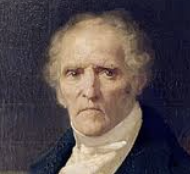
Nothing is more opposed to concord than the present condition of the domestic and salaried classes. By reducing this poor multitude to a condition very like slavery, civilization, on the rebound, imposes chains upon those who seem to dominate. Thus notables do not dare to amuse themselves openly at times when the people suffer from poverty. The rich are subject to individual as well as collective servitude. A wealthy man is often the slave of his valets. However in harmony the valet himself enjoys complete independence, while the rich are served with an assiduity and a devotion of which one sees not a trace in civilization.
▼
Source
source
Oeuvres completetes de Charles Fourier
2 months 3 days ago
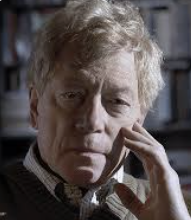
In all the areas of life where people have sought and found consolation through forbidding their desires-sex in particular, and taste in general-the habit of judgment is now to be stamped out.
▼
Source
source
"Rays of Hope" (p. 106)

3 weeks 4 days ago
A large part of mankind is angry not with the sins, but with the sinners.
▼
Source
source
De Ira (On Anger): Book 2, cap. 28, line 8
3 months 6 days ago
Philosophy: impersonal anxiety; refuge among anemic ideas.
2 months 3 weeks ago
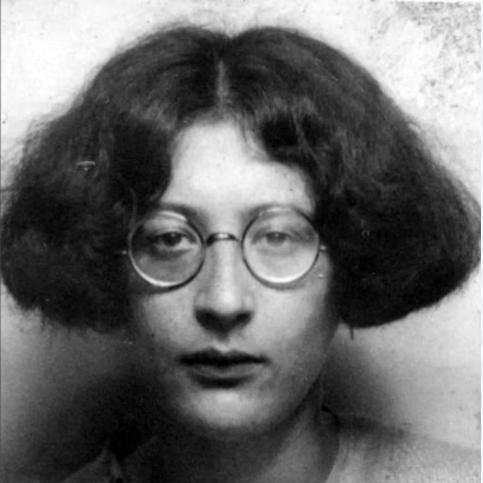
The miser deprives himself of his treasure because of his desire for it.
▼
Source
source
p. 260
3 months 6 days ago
One of the biggest paradoxes of our world: memories vanish when we want to remember, but fix themselves permanently in the mind when we want to forget.

4 months 1 week ago
Men remain in their present low and primitive condition; but if they should feel the influence of the spring of springs arousing them, they would of necessity rise to a higher and more ethereal life.
▼
Source
source
p. 49
1 week ago
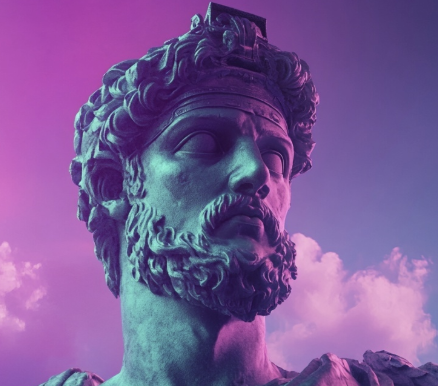
Whatever happens at all happens as it should; you will find this true, if you watch narrowly.
▼
Source
source
IV, 10
2 months 1 week ago
The need to speak, even if one has nothing to say, becomes more pressing when one has nothing to say, just as the will to live becomes more urgent when life has lost its meaning.
▼
Source
source
(p. 30)
4 months 1 week ago
The trouble with Eichmann was precisely that so many were like him, and that the many were neither perverted nor sadistic, that they were, and still are, terribly and terrifyingly normal. From the viewpoint of our legal institutions and of our moral standards of judgment, this normality was much more terrifying than all the atrocities put together, for it implied - as had been said at Nuremberg over and over again by the defendants and their counsels - that this new type of criminal, who is in actual fact hostis generis humani, commits his crimes under circumstances that make it well-nigh impossible for him to know or to feel that he is doing wrong.
▼
Source
source
Epilogue

1 month 1 day ago
And some others that I have seen, were perhaps among the first. There is no third rising. Time sweeps all away with it so fast at this epoch. The Scottish Church has been short-lived, and was late in reaching thither.
4 months 3 weeks ago
Some things are in our control and others not. Things in our control are opinion, pursuit, desire, aversion, and, in a word, whatever are our own actions. Things not in our control are body, property, reputation, command, and, in one word, whatever are not our own actions.
▼
Source
source
(1).

4 months 2 weeks ago
There are four classes of Idols which beset men's minds. To these for distinction's sake I have assigned names - calling the first class, Idols of the Tribe; the second, Idols of the Cave; the third, Idols of the Market-Place; the fourth, Idols of the Theater.
▼
Source
source
Aphorism 39
2 months 1 week ago
Such delusions of grandeur to think that a God with a hundred billion galaxies on his mind would give a tuppenny damn who you sleep with, or indeed whether you believe in him.
▼
Source
source
Richard Dawkins debates Rowan Williams
5 months 1 week ago
The truly good and wise man will bear all kinds of fortune in a seemly way, and will always act in the noblest manner that the circumstances allow.

4 months 1 week ago
According to Christian teachers, the essential vice, the utmost evil, is Pride. Unchastity, anger, greed, drunkenness, and all that, are mere fleabites in comparison: it was through Pride that the devil became the devil: Pride leads to every other vice: it is the complete anti-God state of mind.
▼
Source
source
Book III, Chapter 8, "The Great Sin"
2 months 2 weeks ago
When Nietzsche praises egoism it is always in an aggressive or polemical way, against the virtues, against the virtue of disinterestedness. But in fact egoism is a bad interpretation of the will, just as atomism is a bad interpretation of force. In order for there to be egoism it is necessary for there to be an ego.
▼
Source
source
p. 7

4 months ago
Men in their prayers beg the gods for health, not knowing that this is a thing they have in their own power. Through their incontinence undermining it, they themselves become, because of their passions, the betrayers of their own health.
1 week 1 day ago
Opinion is so powerful in war that it can alter the nature of the same event and give it two different names, for no reason other than its own whim. A general throws his men between two enemy armies and he writes to his king, I have split him, he has lost. His opponent writes to his king, He has put himself between two fires, he is lost. Which of the two is mistaken? Whoever is seized by the cold goddess. Assuming that all things, especially size, are at least approximately equal, the only difference between the two positions is a purely moral one. It is imagination that loses battles.
▼
Source
source
"Seventh Dialogue," p. 221

2 months 3 weeks ago
The deliberate aim at Peace very easily passes into its bastard substitute, Anesthesia.
▼
Source
source
p. 284.
1 week ago
Whatsoever any man either doth or saith, thou must be good; not for any man's sake, but for thine own nature's sake; as if either gold, or the emerald, or purple, should ever be saying to themselves, Whatsoever any man either doth or saith, I must still be an emerald, and I must keep my colour.
▼
Source
source
VII, 12
1 month 3 weeks ago
The improver of natural knowledge absolutely refuses to acknowledge authority, as such. For him, scepticism is the highest of duties; blind faith the one unpardonable sin. And it cannot be otherwise, for every great advance in natural knowledge has involved the absolute rejection of authority, the cherishing of the keenest scepticism, the annihilation of the spirit of blind faith; and the most ardent votary of science holds his firmest convictions, not because the men he most venerates hold them; not because their verity is testified by portents and wonders; but because his experience teaches him that whenever he chooses to bring these convictions into contact with their primary source, Nature - whenever he thinks fit to test them by appealing to experiment and to observation - Nature will confirm them. The man of science has learned to believe in justification, not by faith, but by verification. On the advisableness of improving natural knowledge
▼
Source
source
1866
2 months 2 weeks ago
It is a question whether, when we break a murderer on the wheel, we do not fall into the error a child makes when it hits the chair it has bumped into.
▼
Source
source
J 146

4 months 1 week ago
One of the ideas I had discussed in The Poverty of Historicism was the influence of a prediction upon the event predicted. I had called this the "Oedipus effect", because the oracle played a most important role in the sequence of events which led to the fulfilment of its prophecy. ... For a time I thought that the existence of the Oedipus effect distinguished the social from the natural sciences. But in biology, too-even in molecular biology-expectations often play a role in bringing about what has been expected.
▼
Source
source
Page 29
CivilSimian.com created by AxiomaticPanic, CivilSimian, Kalokagathia