

4 months 2 weeks ago
In judging policies we should consider the results that have been achieved through them rather than the means by which they have been executed.
▼
Source
source
From an undated letter to Piero Soderini (translated here by Dr. Arthur Livingston), in The Living Thoughts of Machiavelli, by Count Carlo Sforza, published by Cassell, London (1942), p. 85
1 week 3 days ago
You will recollect that before the Revolution, Coke Littleton was the universal elementary book of law students, and a sounder Whig never wrote, nor of profounder learning in the orthodox doctrines of the British constitution, or in what were called English liberties. You remember also that our lawyers were then all Whigs. But when his black-letter text, and uncouth, but cunning learning got out of fashion, and the honeyed Mansfieldism of Blackstone became the students' hornbook, from that moment, that profession (the nursery of our Congress) began to slide into toryism, and nearly all the young brood of lawyers now are of that hue. They suppose themselves, indeed, to be Whigs, because they no longer know what Whigism or republicanism means.
▼
Source
source
Letter to James Madison (February 17, 1826), quoted in The Writings of Thomas Jefferson, Vol. XVI (1905; 1907), p. 156

2 months 3 weeks ago
Seek, therefore, thyself! But in finding oneself, does not one find one's own nothingness? ...Carlyle answers (Past and Present, book iii, chap. xi.). "The latest Gospel in the world is, Know thy work and do it. Know thyself: long enough has that poor self of thine tormented thee; thou wilt never get to know it, I believe! Think it thy business, this of knowing thyself; thou art an unknowable individual: know what thou canst work at; and work at it, like Hercules. That will be thine better plan." ...and what is my work? - without thinking about myself, is to love God. ...And on the other hand, in loving God in myself, am I not loving myself more than God, am I not loving myself in God?
4 months 1 week ago
Money is the password, and all doors, which are closed to the man of lesser means, fly open to those whom Plutus favors. The invention of money, which has no other usefulness (or at least it should not have any) except for the commercial exchange of the products of man's industry, now serves all that is physically good among men. Especially after money was represented by metal, it has produced avarice which, finally, without indulgence, but by its mere possession, and even with the resolution (of the stingy) not to spend it, still contains a power which people believe can sufficiently compensate for the lack of any other power.
▼
Source
source
Kant, Immanuel (1996), pages 181-182

1 month 1 day ago
Literary men are...a perpetual priesthood.
▼
Source
source
The State of German Literature.
1 week 2 days ago
We hear only ourselves.

4 months 1 week ago
Pretend what we may, the whole man within us is at work when we form our philosophical opinions. Intellect, will, taste, and passion co-operate just as they do in practical affairs; and lucky it is if the passion be not something as petty as a love of personal conquest over the philosopher across the way.

2 months 3 weeks ago
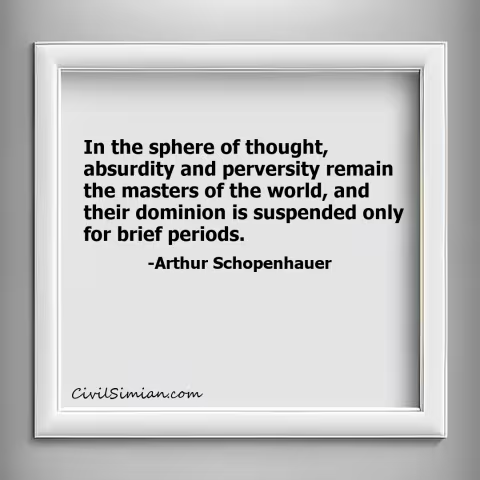
The Americans have always been more open to my ideas. In fact, I could earn a living in America just by lecturing. One of my brightest audiences, incidentally, were the prisoners in a Philadelphia gaol - brighter than my students at university.
▼
Source
source
Interview with Paul Newman in Abraxas Unbound #7


5 months 1 week ago
I simply don't think it is reasonable to use IQ tests to produce results of questionable value, which may then serve to justify racists in their own minds and to help bring about the kinds of tragedies we have already witnessed earlier in this century.

4 months 1 week ago
Neither a man nor a crowd nor a nation can be trusted to act humanely or to think sanely under the influence of a great fear.

4 months 1 week ago
A totally unmystical world would be a world totally blind and insane.
▼
Source
source
Grey Eminence, 1940
4 months 3 weeks ago
What does love look like? It has the hands to help others. It has the feet to hasten to the poor and needy. It has eyes to see misery and want. It has the ears to hear the sighs and sorrows of men. That is what love looks like.
▼
Source
source
As quoted in Quote, Unquote (1977) by Lloyd Cory, p. 197
1 week ago
Many the lumps of frankincense on the same altar; one falls there early and another late, but it makes no difference.
▼
Source
source
IV, 15
6 days ago
Granting, as Lenin wants, such absolute powers of a negative character to the top organ of the party, we strengthen, to a dangerous extent, the conservatism inherent in such an organ.
1 week 4 days ago
The highest point a man can obtain is not Knowledge, or Virtue, or Goodness, or Victory, but something even greater, more heroic and more despairing: Sacred Awe!
▼
Source
source
Ch. 24
2 months 3 weeks ago
Temperament refers to the mode of reaction and is constitutional and not changeable; character is essentially formed by a person's experiences, especially of those in early life, and changeable, to some extent, by insights and new kinds of experiences. If a person has a choleric temperament, for instance, his mode of reaction is "quick and strong." But what he is quick or strong about depends on his kind of relatedness, his character. If he is a productive, just, loving person he will react quickly and strongly when he loves, when he is enraged by injustice, and when he is impressed by a new idea. If he is a destructive or sadistic character, he will be quick and strong in his destructiveness or in his cruelty. The confusion between temperament and character has had serious consequences for ethical theory. Preferences with regard to differences in temperament are mere matters of subjective taste. But differences in character are ethically of the most fundamental importance.
▼
Source
source
Ch. 3

4 months 1 week ago
Night is falling: at dusk, you must have good eyesight to be able to tell the Good Lord from the Devil.
▼
Source
source
Act 10, sc. 2

4 months 1 week ago
It was in the reign of Charles II that they obtained the noble distinction of being exempted from giving their testimony on oath in a court of justice, and being believed on their bare affirmation. On this occasion the chancellor, who was a man of wit, spoke to them as follows: "Friends, Jupiter one day ordered that all the beasts of burden should repair to be shod. The asses represented that their laws would not allow them to submit to that operation. 'Very well,' said Jupiter; 'then you shall not be shod; but the first false step you make, you may depend upon being severely drubbed.'"
3 months 1 week ago
Nothing could be more natural than the developement of the passions, nor more striking than the views of the human heart. What delicate struggles! and uncommonly pretty turns of thought!
▼
Source
source
Mary: A Fiction
3 months 3 days ago
... I once shook hands with Longfellow at a garden party in 1881; and I often saw Dr. Holmes, who was our neighbor in Beacon Street: but Emerson I never saw.
▼
Source
source
p. 50
2 months 2 weeks ago
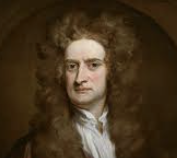
Idolatry is a more dangerous crime because it is apt by the authority of Kings & under very specious pretenses to insinuate it self into mankind. Kings being apt to enjoyn the honour of their dead ancestors: & it seeming very plausible to honour the souls of Heroes & Saints & to believe that they can heare us & help us & are mediators between God & man & reside & act principally in the temples & statues dedicated to their honour & memory? And yet this being against the principal part of religion is in scripture condemned & detested above all other crimes. The sin consists first in omitting the service of the true God.
▼
Source
source
Of Idolatry
1 month 1 day ago
Love is ever the beginning of Knowledge as fire is of light.
▼
Source
source
Essays, Death of Goethe.

4 months 2 weeks ago
Tis only from the selfishness and confin'd generosity of men, along with the scanty provision nature has made for his wants, that justice derives its origin.
▼
Source
source
Part 2, Section 2
4 months 3 weeks ago
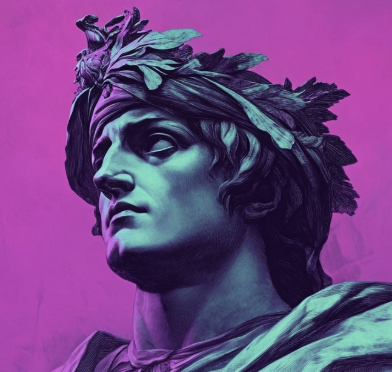
Love with delight discourses in my mind Upon my lady's admirable gifts...Beyond the range of human intellect.
▼
Source
source
Trattato Terzo, line 1.
5 months 1 week ago
The Autarch maintained his indifferent calm, but a certain lack of certainty was gathering, and he did not like to experience a lack of certainty. He liked nothing which made him aware of limitations. An Autarch should have no limitations, and on Lingane he had none that natural law did not impose.
3 months 4 weeks ago
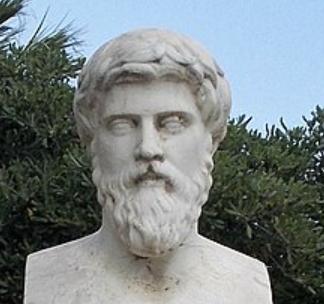
For many, as Cranton tells us, and those very wise men, not now but long ago, have deplored the condition of human nature, esteeming life a punishment, and to be born a man the highest pitch of calamity; this, Aristotle tells us, Silenus declared when he was brought captive to Midas.

4 months 1 week ago
Gentlemen, there is a sublime and friendly Destiny by which the human race is guided, - the race never dying, the individual never spared, - to results affecting masses and ages. Men are narrow and selfish, but the Genius or Destiny is not narrow, but beneficent. It is not discovered in their calculated and voluntary activity, but in what befalls, with or without their design. Only what is inevitable interests us, and it turns out that love and good are inevitable, and in the course of things. That Genius has infused itself into nature. It indicates itself by a small excess of good, a small balance in brute facts always favorable to the side of reason.

1 month 2 weeks ago
Echoing the Christian faith in free will, humanists hold that human beings are - or may someday become - free to choose their lives. They forget that the self that does the choosing has not itself been chosen.
▼
Source
source
Beyond the Last Thought: Freud's cigars and the long way round to Nirvana (p. 86)
2 months 1 week ago
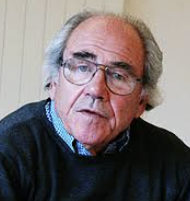
Never would the humanities or psychoanalysis have existed if it had been miraculously possible to reduce man to his "rational" behaviors.
▼
Source
source
"The Animals: Territory and Metamorphoses," p. 132
Just now
I have only two rules which I regard as principles of conduct. The first is: Have no rules. The second is: Be independent of the opinion of others.
1 month 2 days ago
Before a man can do things there must be things he will not do.
▼
Source
source
Eugene H. Peterson, A Long Obedience in the Same Direction (IVP, 1980), Ch 2

3 months 3 days ago
Do not be afraid. I am the First and the Last, and the living one, and I became dead, but look! I am living forever and ever, and I have the keys of death and of the Grave.
▼
Source
source
Revelation 1:17-18, NWT

2 months 1 week ago
Art is a human activity consisting in this, that one consciously, by means of certain external symbols, conveys to others the feelings one has experienced, whereby people so infected by these feelings, also experience them.

4 months 1 week ago
This is the terrible fix we are in. If the universe is not governed by an absolute goodness, then all our efforts are in the long run hopeless. But if it is, then we are making ourselves enemies to that goodness every day, and are not in the least likely to do any better tomorrow, and so our case is hopeless again....God is the only comfort, He is also the supreme terror: the thing we most need and the thing we most want to hide from.
▼
Source
source
Book I, Chapter 5, "We Have Cause to Be Uneasy"
5 months 1 week ago
After these matters we ought perhaps next to discuss pleasure. For it is thought to be most intimately connected with our human nature, which is the reason why in educating the young we steer them by the rudders of pleasure and pain; it is thought, too, that to enjoy the things we ought and to hate the things we ought has the greatest bearing on virtue of character. For these things extend right through life, with a weight and power of their own in respect both to virtue and to the happy life, since men choose what is pleasant and avoid what is painful; and such things, it will be thought, we should least of all omit to discuss, especially since they admit of much dispute.
4 months 1 week ago
Nothing is yet in its true form.

4 months 2 weeks ago
The world thought well of my schoolmaster guardian, because he was neither a liar, nor a scamp, nor a gambler; but he was coarse, avaricious, and ignorant; he knew nothing beyond the confused lessons which he taught to his classes. He imagined that in forcing a youth to become a monk he would be offering a sacrifice acceptable to God. He used to boast of the many victims which he devoted annually to Dominic and Francis and Benedict.
▼
Source
source
As quoted in Life and Letters of Erasmus: Lectures Delivered at Oxford 1893-4 (1899) by James Anthony Froude
1 week ago
In a sense, people are our proper occupation. Our job is to do them good and put up with them. But when they obstruct our proper tasks, they become irrelevant to us--like sun, wind, and animals. Our actions may be impeded by them, but there can be no impeding our intentions or our dispositions. Because we can accommodate and adapt. The mind adapts and converts to its own purposes the obstacle to our acting. The impediment to action advances action. What stands in the way becomes the way.
▼
Source
source
(Hays translation) V.20
5 months 1 week ago
Every ideology is contrary to human psychology.
4 months 3 weeks ago
Don't hold yourselves cheap, seeing that the creator of all things and of you estimates your value so high, so dear, that he pours out for you every day the most precious blood of his only-begotten Son.
▼
Source
source
216:3:1
4 months 1 week ago
Make yourself necessary to somebody. Do not make life hard to any.
▼
Source
source
Considerations by the Way

4 months 1 week ago
He was often, and much beyond reason, provoked by my failures in cases where success could not have been expected; but in the main his method was right, and it succeeded. I do not believe that any scientific teaching ever was more thorough, or better fitted for training the faculties, than the mode in which logic and political economy were taught to me by my father. Striving, even in an exaggerated degree, to call forth the activity of my faculties, by making me find out everything for myself, he gave his explanations not before, but after, I had felt the full force of the difficulties; and not only gave me an accurate knowledge of these two great subjects, as far as they were then understood, but made me a thinker on both.
▼
Source
source
(pp. 28-29)
2 months 3 weeks ago
Modern empiricism has been conditioned in large part by two dogmas. One is a belief in some fundamental cleavage between truths which are analytic, or grounded in meanings independently of matters of fact, and truths which are synthetic, or grounded in fact. The other dogma is reductionism: the belief that each meaningful statement is equivalent to some logical construct upon terms which refer to immediate experience. Both dogmas, I shall argue, are ill-founded. One effect of abandoning them is, as we shall see, a blurring of the supposed boundary between speculative metaphysics and natural science. Another effect is a shift toward pragmatism.
▼
Source
source
"Two dogmas of Empiricism"
4 months 1 week ago
It is generally admitted that most grown-up people, however regrettably, will try to have a good time.
2 months 6 days ago
A man, Mr. Scrymgeour, may fall into a thousand perplexities, but if his heart be upright and his intelligence unclouded, he will issue from them all without dishonour.
▼
Source
source
The Rajah's Diamond, Story of the House with the Green Blinds.
CivilSimian.com created by AxiomaticPanic, CivilSimian, Kalokagathia