


5 months 2 weeks ago
We must not always judge of the generality of the opinion by the noise of the acclamation.
▼
Source
source
No. 1

7 months 1 week ago
Never let your sense of morals prevent you from doing what is right.

5 months 2 weeks ago
The hatred that men bear to privilege increases in proportion as privileges become fewer and less considerable, so that democratic passions would seem to burn most fiercely just when they have least fuel. I have already given the reason for this phenomenon. [all conditions are unequal, no inequality is so great as to offend the eye, whereas the slightest dissimilarity is odious in the midst of general uniformity; the more complete this uniformity is, the more insupportable the sight of such a difference becomes.] Hence it is natural that the love of equality should constantly increase together with equality itself, and that it should grow by what it feeds on.
▼
Source
source
Chapter III.

3 months 3 weeks ago
We share this planet, our home, with millions of species. Justice and sustainability both demand that we do not use more resources than we need. Restraint in resource use and living within nature's limits are preconditions for social justice. The commons are where justice and sustainability converge, where ecology and equity meet. The survival of pastures and forests as community property, or of a common good like a stable ecosystem, is only possible with social organizations with checks and controls on the use of resources built into their principles. The breakdown of a community, with the associated erosion of concepts of joint ownership and responsibility, can trigger the degradation of common resources.
▼
Source
source
(p.50)

6 months 1 week ago
We will not go to Heaven,Goetz, and even if we both entered it, we would not have eyes to see each other, nor hands to touch each other. Up there, God gets all the attention.... We can only love on this earth and against God.
▼
Source
source
Acts 8 & 9

7 months 2 weeks ago
She has forgotten speech and language and the restlessness of thoughts, has forgotten what is even greater restlessness, this self, has forgotten herself-she, the lost woman, who is now lost in her Savior, who, lost in him, rests at his feet-like a picture. He speaks about her; he says: Her many sins are forgiven her, because she loved much. Although she is present, it is almost as if she were absent; it is almost as if he changed her into a picture, a parable.



4 months 3 weeks ago
Today's mic-hogging, fast-talking, contentious young (and old) lefties continue to hawk little books and pamphlets on revolution, always with choice words or documents from Marx, Mao, even Malcolm. But I've never seen a broadside with "A Black Feminist Statement or even the writings of Angela Davis or June Jordan or Barbara Omolade or Flo Kennedy or Audre Lorde or bell hooks or Michelle Wallace, at least not from the groups who call themselves leftist. These women's collective wisdom has provided the richest insights into American radicalism's most fundamental questions: How can we build a multiracial movement? Who are the working class and what do they desire? How do we resolve the Negro Question and the Woman Question? What is freedom?
▼
Source
source
Robin Kelley Freedom Dreams

2 months 4 weeks ago
Remember, however, before all else, to strip things of all that disturbs and confuses, and to see what each is at bottom; you will then comprehend that they contain nothing fearful except the actual fear.
▼
Source
source
Line 12

4 months 1 week ago
What ideas individuals may attach to the term "Millennium" I know not; but I know that society may be formed so as to exist without crime, without poverty, with health greatly improved, with little, if any misery, and with intelligence and happiness increased a hundredfold; and no obstacle whatsoever intervenes at this moment except ignorance to prevent such a state of society from becoming universal.

6 months 1 week ago
I work quite diligently and wish that I were better and smarter. And these both are one and the same.
▼
Source
source
In a letter to Paul Engelmann (1917) as quoted in The Idea of Justice (2010) by Amartya Sen, p. 31

2 months 1 week ago
Believing that the happiness of mankind is best promoted by the useful pursuits of peace, that on these alone a stable prosperity can be founded, that the evils of war are great in their endurance, and have a long reckoning for ages to come, I have used my best endeavors to keep our country uncommitted in the troubles which afflict Europe, and which assail us on every side. Letter to the Young Republicans of Pittsburg and its vicinities
▼
Source
source
2 December 1808
5 months 1 week ago
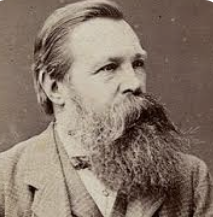
Democratic socialists are either proletarians who are not yet sufficiently clear about the conditions of the liberation of their class, or they are representatives of the petty bourgeoisie, a class which, prior to the achievement of democracy and the socialist measures to which it gives rise, has many interests in common with the proletariat. It follows that, in moments of action, the communists will have to come to an understanding with these democratic socialists, and in general to follow as far as possible a common policy with them - provided that these socialists do not enter into the service of the ruling bourgeoisie and attack the communists. It is clear that this form of co-operation in action does not exclude the discussion of differences.

5 months 6 days ago
To the degree to which they correspond to the given reality, thought and behavior express a false consciousness, responding to and contributing to the preservation of a false order of facts. And this false consciousness has become embodied in the prevailing technical apparatus which in turn reproduces it.
▼
Source
source
p. 145

6 months 2 weeks ago
The people who are regarded as moral luminaries are those who forego ordinary pleasures themselves and find compensation in interfering with the pleasures of others.
▼
Source
source
Ch. 8: Eastern and Western Ideals of Happiness


6 months 2 weeks ago
The foundation of irreligious criticism is: Man makes religion, religion does not make man.

6 months 2 weeks ago
Life is a task to be done. It is a fine thing to say defunctus est; it means that the man has done his task.
▼
Source
source
"On the Sufferings of the World"
7 months 1 week ago
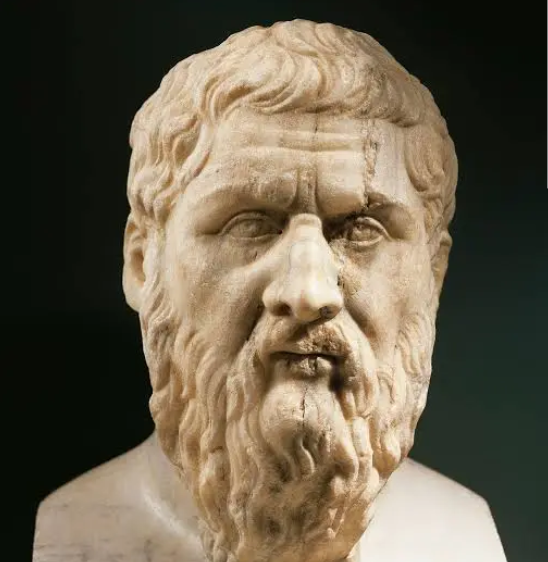
Those who purge the soul believe that the soul can receive no benefit from any teachings offered to it until someone by cross-questioning reduces him who is cross-questioned to an attitude of modesty, by removing the opinions that obstruct the teachings, and thus purges him and makes him think that he knows only what he knows, and no more.
2 months 3 weeks ago
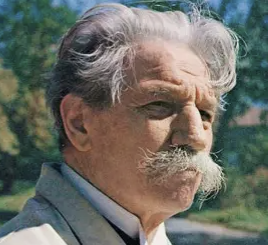
The man who has become a thinking being feels a compulsion to give every will-to-live the same reverence for life that he gives to his own. He experiences that other life in his own.
5 months 4 days ago
The blessing that the market does not ask about birth is paid for in the exchange society by the fact that the possibilities conferred by birth are molded to fit the production of goods that can be bought on the market.
▼
Source
source
E. Jephcott, trans., p. 9.

4 months 3 weeks ago
The case is a good example of what Van Vogt came to call "the violent man" or the "Right Man." He is a man driven by a manic need for self-esteem - to feel that he is a "somebody." He is obsessed by the question of "losing face," so will never, under any circumstances, admit that he might be in the wrong.
▼
Source
source
p. 211
6 months 2 weeks ago
Money is human happiness in the abstract: he, then, who is no longer capable of enjoying human happiness in the concrete devotes his heart entirely to money.
▼
Source
source
Vol. 2, Ch. 26, § 320

5 months ago
The cult of the Virgin, Mariolatry, which by the gradual elevation of the divine element in the Virgin has led almost to her deification, answers merely to the feeling that God should be a perfect man, that God should include in his nature the feminine element. The progressive exaltation of the Virgin Mary, the work of Catholic piety, having its beginning in the expression Mother of God, ...has culminated in attributing to her the status of co-redeemer and in the dogmatic declaration of her conception without the stain of original sin. Hence she now occupies a position between Humanity and Divinity and nearer Divinity than Humanity. And it has been surmised that in course of time she may perhaps even come to be regarded as yet another personal manifestation of the Godhead.

3 months 4 days ago
Europe has made much; great cities, great empires, encyclopaedias, creeds, bodies of opinion and practice: but it has made little of the class of Dante's Thought.

4 months 3 weeks ago
The Orient that appears in Orientalism, then, is a system of representations framed by a whole set of forces that brought the Orient into Western learning, Western consciousness, and later, Western empire. ... The Orient is the stage on which the whole East is confined. On this stage will appear the figures whose role it is to represent the larger whole from which they emanate. The Orient then seems to be, not an unlimited extension beyond the familiar European world, but rather a closed field, a theatrical stage affixed to Europe.

4 months 1 week ago
The nuclear bomb will turn warfare into the juggling of images.
▼
Source
source
(p. 360)
2 months 1 week ago
The various philosophies of life presented themselves as a conquest of materialism, or in any case, they readily claimed it. That does not change anything: their valuations, revaluations, and explanations of disvalue have been emptied into the over-all secularization stream, where they have only hastened the tendency to unlearn, which is a neutralizing process, after all.

4 months 3 weeks ago
Christianity is most admirably adapted to the training of slaves, to the perpetuation of a slave society; in short, to the very conditions confronting us to-day.... The rulers of the earth have realized long ago what potent poison inheres in the Christian religion. That is the reason they foster it; that is why they leave nothing undone to instill it into the blood of the people. They know only too well that the subtleness of the Christian teachings is a more powerful protection against rebellion and discontent than the club or the gun.

2 months 2 weeks ago
You are not a miserable and momentary body; behind your fleeting mask of clay, a thousand-year-old face lies in ambush. Your passions and your thoughts are older than your heart or brain.

2 months 1 week ago
I come into the presence of still water. And I feel above me the day-blind stars waiting with their light. For a time I rest in the grace of the world, and am free.
▼
Source
source
The Peace of Wild Things in Green River Review, No. 1
5 months 3 weeks ago
There is geometry in the humming of the strings, there is music in the spacing of the spheres.
▼
Source
source
As quoted in The Mystery of Matter (1965) edited by Louise B. Young, p. 113

6 months 4 days ago
For a thinking man is where Wisdom is at home.
▼
Source
source
Ahunuvaiti Gatha; Yasna 30, 9.
2 months 1 week ago
Let what will be said or done, preserve your sang-froid immovably, and to every obstacle, oppose patience, perseverance, and soothing language.
▼
Source
source
Letter to William Short

6 months 3 weeks ago
The Idols of the Cave are the idols of the individual man. For everyone (besides the errors common to human nature in general) has a cave or den of his own, which refracts and discolors the light of nature, owing either to his own proper and peculiar nature; or to his education and conversation with others; or to the reading of books, and the authority of those whom he esteems and admires; or to the differences of impressions, accordingly as they take place in a mind preoccupied and predisposed or in a mind indifferent and settled; or the like. So that the spirit of man (according as it is meted out to different individuals) is in fact a thing variable and full of perturbation, and governed as it were by chance. Whence it was well observed by Heraclitus that men look for sciences in their own lesser worlds, and not in the greater or common world.
▼
Source
source
Aphorism 42

5 months 1 week ago
In order to deceive melancholy, you must keep moving. Once you stop, it wakens, if in fact it has ever dozed off.
4 months 1 week ago
Success makes some crimes honorable.
▼
Source
source
Maxim 326

6 months 3 weeks ago
Man is certainly stark mad; he cannot make a worm, and yet he will be making gods by dozens.
▼
Source
source
Book II, Ch. 12. Apology for Raimond Sebond

2 months 1 week ago
Let us not limit the resources of nature; they are infinite, especially when reinforced by great art.
5 months 6 days ago
The range of socially permissible and desirable satisfaction is greatly enlarged, but through this satisfaction, the Pleasure Principle is reduced-deprived of the claims which are irreconcilable with the established society. Pleasure, thus adjusted, generates submission.
▼
Source
source
p. 75
2 months 1 week ago
Paper is poverty,... it is only the ghost of money, and not money itself.
▼
Source
source
Letter to Colonel Edward Carrington (27 May 1788) ME 7:36

6 months 2 weeks ago
He that denies any of the doctrines that Christ has delivered, to be true, denies him to be sent from God, and consequently to be the Messiah; and so ceases to be a Christian.
▼
Source
source
§ 232
5 months 2 weeks ago
Parliament is not a congress of ambassadors from different and hostile interests; which interests each must maintain, as an agent and advocate, against other agents and advocates; but parliament is a deliberative assembly of one nation, with one interest, that of the whole; where, not local purposes, not local prejudices ought to guide, but the general good, resulting from the general reason of the whole. You choose a member indeed; but when you have chosen him, he is not a member of Bristol, but he is a member of parliament.
▼
Source
source
Speech to the Electors of Bristol (3 November 1774); as published in The Works of the Right Hon. Edmund Burke
6 months 2 weeks ago
The ancient Egyptians had a superstitious antipathy to the sea; a superstition nearly of the same kind prevails among the Indians; and the Chinese have never excelled in foreign commerce.
▼
Source
source
Chapter V, p. 402.
6 months 1 week ago
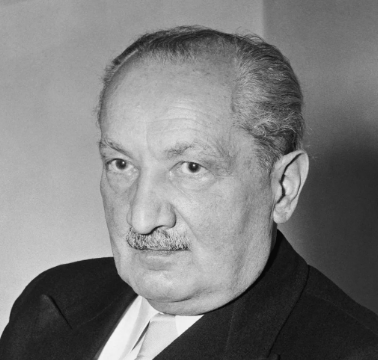
Nevertheless, the ultimate business of philosophy is to preserve the force of the most elemental words in which Dasein expresses itself, and to keep the common understanding from levelling them off to that unintelligibility which functions in turn as a source of pseudo-problems.
▼
Source
source
Macquarrie & Robinson translation

6 months 2 weeks ago
...an intellectual concept abstracts from everything sensuous, it is not abstracted from sensuous things, and perhaps would be more correctly called abstracting than abstract. Intellectual concepts it is more cautious, therefore, to call pure ideas, and concepts given only empirically, abstract ideas.
6 months 2 weeks ago
Perseus wore a magic cap that the monsters he hunted down might not see him.We draw the magic cap down over eyes and ears as a make-believe that there are no monsters.
▼
Source
source
Author's prefaces to the First Edition.
5 months 2 weeks ago
When any work seems to have required immense force and labor to affect it, the idea is grand. Stonehenge, neither for disposition nor ornament, has anything admirable; but those huge rude masses of stone, set on end, and piled each on other, turn the mind on the immense force necessary for such a work. Nay, the rudeness of the work increases this cause of grandeur, as it excludes the idea of art and contrivance; for dexterity produces another sort of effect, which is different enough from this.
▼
Source
source
Part II Section XII
6 months 3 days ago
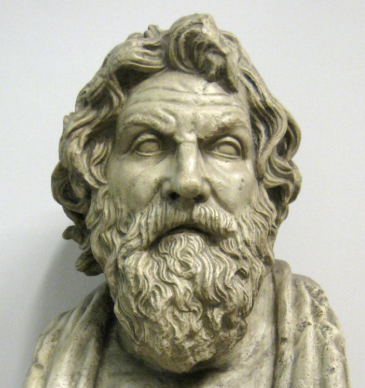
It is a royal privilege to do good and be ill spoken of.
▼
Source
source
§ 3; quoted also by Marcus Aurelius, vii. 36
6 months 2 weeks ago
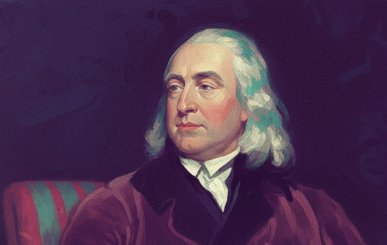
Of corruption, the principal and direct use is, to engage the representatives of the people to betray their trust, and sell themselves and the people to the universal corrupter-the monarch, in his capacity of corrupter-general.
▼
Source
source
Constitutional Code (written between 1820 and 1832), quoted in The Works of Jeremy Bentham, Vol. XVII (1841), p. 76
CivilSimian.com created by AxiomaticPanic, CivilSimian, Kalokagathia