


2 months 1 week ago
Short-lived are both the praiser and the praised, and rememberer and the remembered: and all this in a nook of this part of the world; and not even here do all agree, no, not any one with himself: and the whole earth too is a point.
▼
Source
source
VIII, 21
7 months 3 days ago
What the great learning teaches, is to illustrate illustrious virtue; to renovate the people; and to rest in the highest excellence. The point where to rest being known, the object of pursuit is then determined; and, that being determined, a calm unperturbedness may be attained to. To that calmness there will succeed a tranquil repose. In that repose there may be careful deliberation, and that deliberation will be followed by the attainment of the desired end.
4 months 2 days ago
A life of action, if it is to be useful, must be a life of compromise. But speculation admits of no compromise. A public-man is often under the necessity of consenting to measures which he dislikes, lest he should endanger the success of measures which he thinks of vital importance.
▼
Source
source
War of the Succession in Spain', The Edinburgh Review (January 1833), quoted in T. B. Macaulay, Critical and Historical Essays Contributed to The Edinburgh Review, Vol. II (1843), p. 91
5 months 1 week ago
No psychic value can disappear without being replaced by another of equivalent intensity.
▼
Source
source
p. 209



6 months 2 weeks ago
Whoever heard me assert that the grey cat playing just now in the yard is the same one that did jumps and tricks there five hundred years ago will think whatever he likes of me, but it is a stranger form of madness to imagine that the present-day cat is fundamentally an entirely different one.
▼
Source
source
Quoted by Jorge Luis Borges in his essay "A History of Eternity"

3 months 1 week ago
Every identity, such (third) critics say, even the multitude, must be defined by its remained, those outside of it, call them excluded, the abject, or the subaltern. ... There can certainly be points or nodes outside a network but none are necessarily outside. Its boundaries are indefinite and open. ... None is necessarily excluded but this inclusion is not guaranteed: the expansion of the common is a practical, political manner.
▼
Source
source
226

4 months 3 weeks ago
A child might be overawed by a great city, but a civil engineer knows that he might demolish it and rebuild it himself. Husserl's philosophy has the same aim: to show us that, although we may have been thrust into this world without a 'by your leave,' we are mistaken to assume that it exists independently of us. It is true that reality exists apart from us; but what we mistake for the world is actually a world constituted by us, selected from an infinitely complex reality.
▼
Source
source
p. 63
7 months 2 weeks ago
It is the mark of an educated mind to be able to entertain a thought without accepting it.

6 months 1 week ago
A thing is important if anyone think it important.
▼
Source
source
Ch. 28, Note 35
2 months 2 weeks ago
With clarity and quiet, I look upon the world and say: All that I see, hear, taste, smell, and touch are the creations of my mind. The sun comes up and the sun goes down in my skull. Out of one of my temples the sun rises, and into the other the sun sets. The stars shine in my brain; ideas, men, animals browse in my temporal head; songs and weeping fill the twisted shells of my ears and storm the air for a moment.

6 months 3 weeks ago
For as when much superfluous matter has gathered in simple bodies, nature makes repeated efforts to remove and purge it away, thereby promoting the health of these bodies, so likewise as regards that composite body the human race, when every province of the world so teems with inhabitants that they can neither subsist where they are nor remove elsewhere, every region being equally crowded and over-peopled, and when human craft and wickedness have reached their highest pitch, it must needs come about that the world will purge herself in one or another of these three ways, to the end that men, becoming few and contrite, may amend their lives and live with more convenience.
▼
Source
source
Book 1 Ch. 5 (as translated by Ninian Hill Thomson)
4 months 4 weeks ago
There remains the final reflection, how shallow, puny, and imperfect are efforts to sound the depths in the nature of things. In philosophical discussion, the merest hint of dogmatic certainty as to finality of statement is an exhibition of folly.
▼
Source
source
Preface, p. 16 (Corrected Edition)
2 months 4 weeks ago
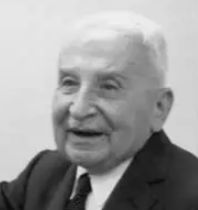
From a correct Marxian point of view ... all measures designed to restrain, to regulate and to improve capitalism were simply "petty-bourgeois" nonsense ... True socialists should not place any obstacles in the way of capitalist evolution. For only the full maturity of capitalism could bring about socialism. It is not only vain, but harmful to the interests of the proletarians to resort to such measures.

5 months ago
Just as eunuchs will never know aesthetics as applied to the selection of beautiful women, so neither will pure rationalists ever know ethics, nor will they ever succeed in defining happiness, for happiness is a thing that is lived and felt, not a thing that is reasoned or defined.

2 months 1 week ago
We must admit, with the same frankness, that we are ignorant whether matter has in itself the faculty of feeling, or only the power of acquiring it by those modifications or forms to which matter is susceptible; for it is true that this faculty of feeling appears only in organic bodies.This is then another new faculty which might exist only potentially in matter, like all the others which have been mentioned; and this was the hypothesis of the ancients, whose philosophy, full of insight and penetration, deserves to be raised above the ruins of the philosophy of the moderns.
▼
Source
source
Ch. VI Concerning the Sensitive Faculty of Matter
7 months 1 week ago
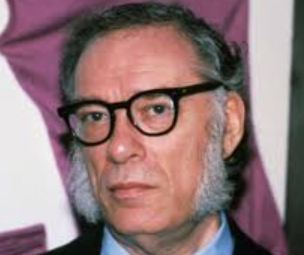
Trantor could win even such a war, but perhaps not without paying a price that would make victory only a pleasanter name for defeat.
3 months 1 week ago
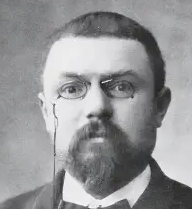
We should like to represent... the... universe, and... feel... we understood it. We... never can attain this representation: our weakness is too great. But... we desire... to conceive an infinite intelligence... which should see all, and... classify all in its time, as we classify, in our time, the little we see. ...This supreme intelligence would be only a demigod; infinite in one sense... limited in another, since it would have... imperfect recollection of the past... otherwise all recollections would be equally present... and for it there would be no time.
5 months 3 weeks ago
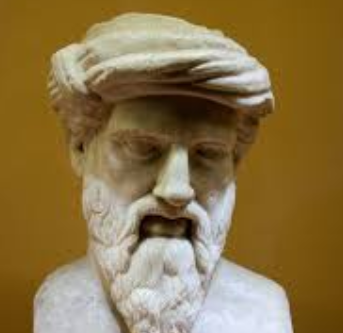
Rest satisfied with doing well, and leave others to talk of you as they please.
▼
Source
source
As quoted in The World's Laconics: Or, The Best Thoughts of the Best Authors (1853) by Everard Berkeley Variant: Rest satisfied with doing well, and leave others to talk of you as they will.

2 months 1 week ago
Some have made the love of God the foundation of morality. This, too, is but a branch of our moral duties, which are generally divided into duties to God and duties to man. If we did a good act merely from the love of God and a belief that it is pleasing to Him, whence arises the morality of the Atheist? It is idle to say, as some do, that no such being exists. We have the same evidence of the fact as of most of those we act on, to-wit: their own affirmations, and their reasonings in support of them. I have observed, indeed, generally, that while in protestant countries the defections from the Platonic Christianity of the priests is to Deism, in catholic countries they are to Atheism. Diderot, D'Alembert, D'Holbach, Condorcet, are known to have been among the most virtuous of men. Their virtue, then, must have had some other foundation than the love of God.
▼
Source
source
Letter to Thomas Law

6 months 2 weeks ago
We are apt to imagine that this hubbub of Philosophy, Literature, and Religion, which is heard in pulpits, lyceums, and parlors, vibrates through the universe, and is as catholic a sound as the creaking of the earth's axle. But if a man sleeps soundly, he will forget it all between sunset and dawn.
▼
Source
source
January 6, 1842
7 months 3 days ago
It is the way of the superior man to prefer the concealment of his virtue, while it daily becomes more illustrious, and it is the way of the mean man to seek notoriety, while he daily goes more and more to ruin. It is characteristic of the superior man, appearing insipid, yet never to produce satiety; while showing a simple negligence, yet to have his accomplishments recognized; while seemingly plain, yet to be discriminating. He knows how what is distant lies in what is near. He knows where the wind proceeds from. He knows how what is minute becomes manifested. Such a one, we may be sure, will enter into virtue.
5 months 1 week ago
The capitalists soon had everything in their hands and nothing remained to the workers.

6 months 4 weeks ago
Will is to grace as the horse is to the rider.
4 months 3 weeks ago
I've always believed that a writer has got to remain an outsider. If I was offered anything like the Nobel Prize for Literature, I'd find it an extremely difficult conflict because I'd be basically disinclined to accept.
▼
Source
source
Interview with Paul Newman in Abraxas Unbound #7
7 months 2 weeks ago
A thinker sees his own actions as experiments and questions as attempts to find out something. Success and failure are for him answers above all.
2 months 3 weeks ago
Life after all is made up of eating and sleeping, of meeting and saying good-by to friends, of reunions and farewell parties, of tears and laughter, of having a haircut once in two weeks, of watering a potted flower and watching one's neighbor fall off his roof.
▼
Source
source
p. 202

6 months 3 weeks ago
Nature forms us for ourselves, not for others; to be, not to seem.
▼
Source
source
Book II, Ch. 37. Of the Resemblance of Children to their Brothers

5 months 6 days ago
And this Feare of things invisible, is the naturall Seed of that, which every one in himself calleth Religion; and in them that worship, or feare that Power otherwise than they do, Superstition.
▼
Source
source
The First Part, Chapter 11, p. 51
5 months 6 days ago
Oblivious of Democritus, the unwilling materialists of our day have generally been awkwardly intellectual and quite incapable of laughter. If they have felt anything, they have felt melancholy. Their allegiance and affection were still fixed on those mythical sentimental worlds which they saw to be illusory. The mechanical world they believed in could not please them, in spite of its extent and fertility. Giving rhetorical vent to their spleen and prejudice, they exaggerated nature's meagreness and mathematical dryness. When their imagination was chilled they spoke of nature, most unwarrantably, as dead, and when their judgment was heated they took the next step and called it unreal.
▼
Source
source
Ch. 3 "Mechanism"
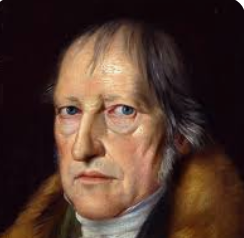
6 months 2 weeks ago
The external embodiment of an act is composed of many parts, and may be regarded as capable of being divided into an infinite number of particulars. An act may be looked on as in the first instance coming into contact with only one of these particulars. But the truth of the particular is the universal. A definite act is not confined in its content to one isolated point of the varied external world, but is universal, including these varied relations within itself. The purpose, which is the product of thought and embraces not the particular only but also the universal side, is intention.
▼
Source
source
Georg Wilhelm Friedrich Hegel, Philosophy of Right translated by SW Dyde Queen's University Canada 1896 p. 114-115
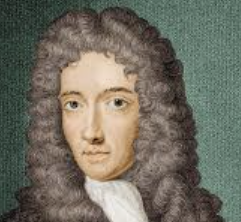
2 months 1 week ago
And therefore I think you have done very wisely to make it your business to consider the Phœnomena relating to the present question, which have been afforded by experiments, especially since it might seem injurious to our senses, by whose mediation we acquire so much of the knowledge we have of things corporal, to have recourse to far-fetched and abstracted Ratiocination, to know what are the sensible ingredients of those sensible things that we daily see and handle, and are supposed to have the liberty to untwist (if I may so speak) into the primitive bodies they consist of.

3 months 4 days ago
To a shower of gold most things are penetrable.
▼
Source
source
Pt. I, Bk. III, ch. 7.

5 months 2 weeks ago
If he is not Nature herself, he is certainly the nature of Nature, and is the soul of the Soul of the world, if he is not the soul herself.
▼
Source
source
As translated by Arthur Imerti

5 months 6 days ago
Ye know not what manner of spirit ye are of. For the Son of man is not come to destroy men's lives, but to save them. (KJV) 9:55-56 Rebuking James and John for asking if he would command fire to come down from heaven, to consume a village of Samaritans for not receiving them, because they seemed to be headed for Jerusalem.
▼
Source
source
Jesus on usury from the Sermon on the Mount, Luke 6:34-35

4 months 1 week ago
We cannot pretend that we do not see the armed policeman who marches up and down beneath our window to guarantee our security while we eat our luxurious dinner, or look at the new piece at the theater, or that we are unaware of the existence of the soldiers who will make their appearance with guns and cartridges directly our property is attacked.
▼
Source
source
Chapter XII, Conclusion-Repent Ye, for the Kingdom of Heaven is at Hand

5 months 2 weeks ago
Whenever a separation is made between liberty and justice, neither, in my opinion, is safe.
▼
Source
source
Letter to M. de Menonville

2 months 1 week ago
What we do need to worry about is the possibility that we will be reduced, in the face of the enormities of our time, to silence or to mere protest.
▼
Source
source
A Poem of Difficult Hope
3 months 4 days ago
He who would write heroic poems should make his whole life a heroic poem.
▼
Source
source
Life of Schiller.

6 months 1 week ago
What point of morals, of manners, of economy, of philosophy, of religion, of taste, of the conduct of life, has he not settled? What mystery has he not signified his knowledge of? What office, or function, or district of man's work, has he not remembered? What king has he not taught state, as Talma taught Napoleon? What maiden has not found him finer than her delicacy? What lover has he not outloved? What sage has he not outseen? What gentleman has he not instructed in the rudeness of his behavior?
▼
Source
source
Shakespeare; or, The Poet
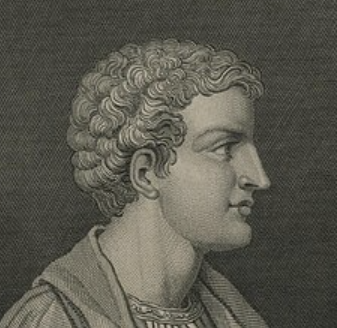
6 months 3 days ago
To have a great man for an intimate friend seems pleasant to those who have never tried it; those who have, fear it.
▼
Source
source
Book I, epistle xviii, line 86
2 months 1 week ago
Anybody interested in solving, rather than profiting from, the problems of food production and distribution will see that in the long run the safest food supply is a local food supply, not a supply that is dependent on a global economy. Nations and regions within nations must be left free - and should be encouraged - to develop the local food economies that best suit local needs and local conditions.
▼
Source
source
"A Bad Big Idea"
3 months 1 week ago
Do not imagine that there is any bird more easily caught by decoy, nor any fish sooner fixed on the hook by wormy bait, than are all these poor fools neatly tricked into servitude by the slightest feather passed, so to speak, before their mouths. Truly it is a marvelous thing that they let themselves be caught so quickly at the slightest tickling of their fancy. Plays, farces, spectacles, gladiators, strange beasts, medals, pictures, and other such opiates, these were for ancient peoples the bait toward slavery, the price of their liberty, the instruments of tyranny. By these practices and enticements the ancient dictators so successfully lulled their subjects under the yoke, that the stupefied peoples, fascinated by the pastimes and vain pleasures flashed before their eyes, learned subservience as naïvely, but not so creditably, as little children learn to read by looking at bright picture books.
▼
Source
source
Part 2
2 months 1 week ago
We took the liberty to make some enquiries concerning the ground of their pretentions to make war upon nations who had done them no injury, and observed that we considered all mankind as our friends who had done us no wrong, nor had given us any provocation.
3 months 4 days ago
For this also we will honour the poor Manchester Insurrection, and augur well of it. A deep unspoken sense lies in these strong men,- inconsiderable, almost stupid, as all they can articulate of it is. Amid all violent stupidity of speech, a right noble instinct of what is doable and what is not doable never forsakes them: the strong inarticulate men and workers, whom Fact patronises; of whom, in all difficulty and work whatsoever, there is good augury!
5 months 4 days ago
Men have been released from concentration camps who have taken over the jargon of their jailers and with cold reason and mad consent (the price, as it were, of their survival) tell their story as if it could not have been otherwise than it was, contending that they have not been treated so badly after all.
▼
Source
source
p. 45.
6 months 1 day ago
"Young men," said Cæsar, "hear an old man to whom old men hearkened when he was young."
▼
Source
source
Cæsar Augustus
CivilSimian.com created by AxiomaticPanic, CivilSimian, Kalokagathia