


4 months 1 week ago
With Gutenberg Europe enters the technological phase of progress, when change itself becomes the archetypal norm of social life.
▼
Source
source
(p. 177)

6 months 3 weeks ago
An armed insurrection ... would hinder and bring into disrepute this spiritual insurrection.
▼
Source
source
p. 68
5 months 1 week ago
Government was intended to suppress injustice, but its effect has been to embody and perpetuate it.
▼
Source
source
"Summary of Principles" 2.7
6 months 1 week ago
A paradise of inward tranquility seems to be faith's usual result.
▼
Source
source
Lectures XI, XII, and XIII, "Saintliness"
6 months 3 days ago
Wealth and poverty do not lie in a person's estate, but in their souls.
▼
Source
source
iv. 34

6 months 4 weeks ago
The verdict of the world is conclusive.
▼
Source
source
III, 24

6 months 1 week ago
Society undergoes continual changes; it is barbarous, it is civilized, it is Christianized, it is rich, it is scientific; but this change is not amelioration. For everything that is given something is taken. Society acquires new arts, and loses old instincts. The civilized man has built a coach, but has lost the use of his feet; he has a fine Geneva watch, but cannot tell the hour by the sun.
▼
Source
source
p. 243
6 months 2 weeks ago
The concept of space is not abstracted from external sensations.
2 months 3 weeks ago
Not one of us knows what effect his life produces, and what he gives to others; that is hidden from us and must remain so, though we are often allowed to see some little fraction of it, so that we may not lose courage.
▼
Source
source
p. 164

6 months 2 weeks ago
I do not know but it is too much to read one newspaper a week. I have tried it recently, and for so long it seems to me that I have not dwelt in my native region. The sun, the clouds, the snow, the trees say not so much to me. You cannot serve two masters. It requires more than a day's devotion to know and to possess the wealth of a day.
▼
Source
source
p. 491
3 months 4 weeks ago
The life, the fortune, and the happiness of every one of us, and, more or less, of those who are connected with us, do depend upon our knowing something of the rules of a game infinitely more difficult and complicated than chess. It is a game which has been played for untold ages, every man and woman of us being one of the two players in a game of his or her own. The chessboard is the world, the pieces are the phenomena of the universe, the rules of the game are what we call the laws of Nature. The player on the other side is hidden from us. We know that his play is always fair, just, and patient. But also we know, to our cost, that he never overlooks a mistake, or makes the smallest allowance for ignorance. To the man who plays well, the highest stakes are paid, with that sort of overflowing generosity with which the strong shows delight in strength. And one who plays ill is checkmated - without haste, but without remorse.
3 months 6 days ago
A certain degree of blindness as to the absoluteness of one's own values may be indispensable to extract the valuable qualities from the world, the qualities whose value is believed to be the highest. It is possible that in order to realize one's values one must have faith in their exclusive character.
▼
Source
source
Chapter Eight, Logical Empiricism, p. 202-203

5 months 2 weeks ago
We scarce ever had a prince, who by fraud, or violence, had not made some infringement on the constitution. We scarce ever had a parliament which knew, when it attempted to set limits to the royal authority, how to set limits to its own. Evils we have had continually calling for reformation, and reformations more grievous than any evils. Our boasted liberty sometimes trodden down, sometimes giddily set up, and ever precariously fluctuating and unsettled; it has only been kept alive by the blasts of continual feuds, wars, and conspiracies.

5 months 6 days ago
Can the children of the bridechamber mourn, as long as the bridegroom is with them? but the days will come, when the bridegroom shall be taken from them, and then shall they fast. No man putteth a piece of new cloth unto an old garment, for that which is put in to fill it up taketh from the garment, and the rent is made worse. Neither do men put new wine into old bottles: else the bottles break, and the wine runneth out, and the bottles perish: but they put new wine into new bottles, and both are preserved.
▼
Source
source
9:15-17 (KJV)
6 months 2 weeks ago
China has been long one of the richest, that is, one of the most fertile, best cultivated, most industrious, and most populous countries in the world. It seems, however, to have been long stationary. Marco Polo, who visited it more than five hundred years ago, describes its cultivation, industry, and populousness, almost in the same terms in which they are described by travellers in the present times.
▼
Source
source
Chapter VIII, p. 86.

5 months 1 week ago
A marvel that has nothing to offer, democracy is at once a nation's paradise and its tomb.
5 months 1 week ago
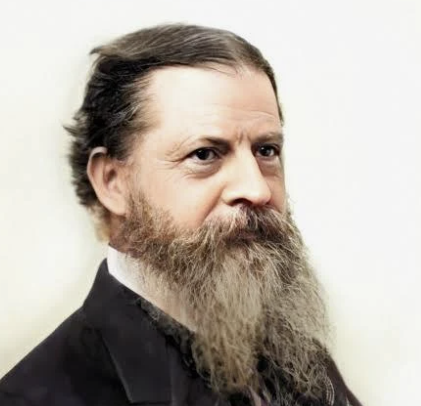
The third category of which I come now to speak is precisely that whose reality is denied by nominalism. For although nominalism is not credited with any extraordinarily lofty appreciation of the powers of the human soul, yet it attributes to it a power of originating a kind of ideas the like of which Omnipotence has failed to create as real objects, and those general conceptions which men will never cease to consider the glory of the human intellect must, according to any consistent nominalism, be entirely wanting in the mind of Deity.
▼
Source
source
Lecture II : The Universal Categories, §3. Laws: Nominalism, CP 5.62
2 months 1 week ago
On bourgeois ground ... change is impossible anyway even if it were desired. In fact, bourgeois interest would like to draw every other interest opposed to it into its own failure; so, in order to drain the new life, it makes its own agony apparently fundamental, apparently ontological. The futility of bourgeois existence is extended to be that of the human situation in general, of existence per se.
▼
Source
source
The Principle of Hope (1959), N. Plaice, trans. (1986), p. 4
5 months 1 week ago
This very second has vanished forever, lost in the anonymous mass of the irrevocable. It will never return. I suffer from this and I do not. Everything is unique - and insignificant.
6 months 3 weeks ago
Man is by nature unable to want God to be God. Indeed, he himself wants to be God, and does not want God to be God.
▼
Source
source
Thesis 17

6 months 2 weeks ago
We may define "faith" as a firm belief in something for which there is no evidence. Where there is evidence, no one speaks of "faith". We do not speak of faith that two and two are four or that the earth is round. We only speak of faith when we wish to substitute emotion for evidence. The substitution of emotion for evidence is apt to lead to strife, since different groups substitute different emotions.
▼
Source
source
p. 215
6 months 2 weeks ago
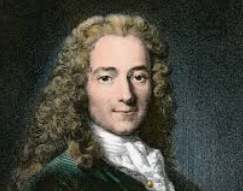
While loving glory so much how can you persist in a plan which will cause you to lose it?
▼
Source
source
Letters of Voltaire and Frederick the Great (New York: Brentano's, 1927), transl. Richard Aldington, letter 130 from Voltaire to Frederick II of Prussia, October 1757.

5 months ago
What the sorrowful Jew of Amsterdam called the essence of a thing, the effort that it makes to persist indefinitely in its own being, self-love, the longing for immortality, is it not perhaps the primal and fundamental condition of all reflective or human knowledge? And is it not therefore the true base, the real starting-point, of all philosophy, although the philosophers, perverted by intellectualism, do not recognize it?
6 months 3 weeks ago
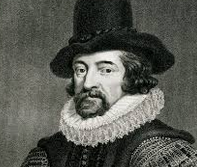
My Lord St. Albans said that Nature did never put her precious jewels into a garret four stories high, and therefore that exceeding tall men had ever very empty heads.
▼
Source
source
No. 17
7 months 1 week ago
He tried to recall what he had read about the disease. Figures floated across his memory, and he recalled that some thirty or so great plagues known to history had accounted for nearly a hundred million deaths. But what are a hundred million deaths? When one has served in a war, one hardly knows what a dead man is, after a while. And since a dead man has no substance unless one actually sees him dead, a hundred million corpses broadcast through history are no more than a puff of smoke in the imagination.
6 months 1 week ago
If we remembered everything, we should on most occasions be as ill off as if we remembered nothing. It would take as long for us to recall a space of time as it took the original time to elapse, and we should never get ahead with our thinking. All recollected times undergo, accordingly, what M. Ribot calls foreshortening; and this foreshortening is due to the omission of an enormous number of the facts which filled them.
▼
Source
source
Ch. 16


2 months 1 week ago
The proletarian revolution ought now, by a little ray of kindness, to illuminate the gloomy life of prisoners, shorten Draconian sentences, abolish barbarous punishments - the use of manacles and whippings - improve, as far as possible, the medical attention, the food allowance, and the conditions of labor. That is a duty of honor.
▼
Source
source
Against Capital Punishment (1918), Rosa Luxemburg Speaks
4 months 1 week ago
No feats of heroism are needed to achieve the greatest and most important changes in the existence of humanity; neither the armament of millions of soldiers, nor the construction of new roads and machines, nor the arrangement of exhibitions, nor the organization of workmen's unions, nor revolutions, nor barricades, nor explosions, nor the perfection of aerial navigation; but a change in public opinion. And to accomplish this change no exertions of the mind are needed, nor the refutation of anything in existence, nor the invention of any extraordinary novelty; it is only needful that we should not succumb to the erroneous, already defunct, public opinion of the past, which governments have induced artificially; it is only needful that each individual should say what he really feels or thinks, or at least that he should not say what he does not think.
▼
Source
source
Ch. 17

5 months 1 week ago
Evolution is definable as a change from an incoherent homogeneity to a coherent heterogeneity, accompanying the dissipation of motion and integration of matter.
▼
Source
source
Pt. II, The Knowable; Ch. XV, The Law of Evolution (continued)
7 months 2 weeks ago
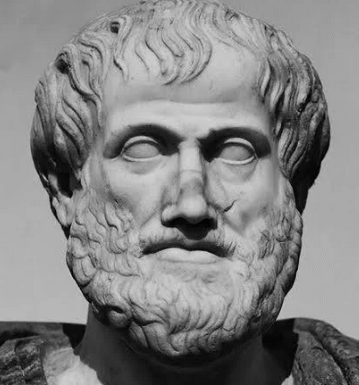
The bodies of which the world is composed are solids, and therefore have three dimensions. Now, three is the most perfect number, it is the first of numbers, for of one we do not speak as a number, of two we say both, but three is the first number of which we say all. Moreover, it has a beginning, a middle, and an end.
4 months 2 weeks ago
Our entire linear and accumulative culture collapses if we cannot stockpile the past in plain view. "
▼
Source
source
The Precession of Simulacra," p. 10
6 months 2 weeks ago
When the intensity of emotional conviction subsides, a man who is in the habit of reasoning will search for logical grounds in favour of the belief which he finds in himself.
▼
Source
source
Ch. 1: Mysticism and Logic
5 months 1 week ago
If there is anything that we wish to change in the child, we should first examine it and see whether it is not something that could better be changed in ourselves.
▼
Source
source
p. 285
4 months 1 week ago
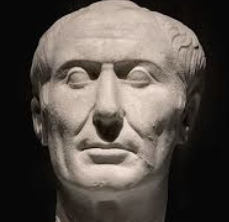
Never promise more than you can perform.
▼
Source
source
Maxim 528
4 months 1 week ago
The error arises from the learned jurists deceiving themselves and others, by asserting that government is not what it really is, one set of men banded together to oppress another set of men, but, as shown by science, is the representation of the citizens in their collective capacity.
▼
Source
source
Chapter VI, Attitude of Men of the Present Day to War Variant translation: Government is an association of men who do violence to the rest of us.
6 months 2 weeks ago
The first who was king was a fortunate soldier: Who serves his country well has no need of ancestors.
▼
Source
source
Mérope, act I, scene III (1743). Borrowed from Lefranc de Pompignan's "Didon"
4 months 1 week ago
Technologies themselves, regardless of content, produce a hemispheric bias in the users.
▼
Source
source
p. 71
5 months 1 week ago
Death poses a problem which replaces all the others. What is deadly to philosophy, to the naive belief in the hierarchy of perplexities.

2 months 1 week ago
I never will, by any word or act, bow to the shrine of intolerance, or admit a right of inquiry into the religious opinions of others.
▼
Source
source
Letter to Edward Dowse
3 months 4 weeks ago
My convictions, positive and negative, on all the matters of which you speak, are of long and slow growth and are firmly rooted. But the great blow which fell on me seemed to stir them to their foundation, and had I lived a couple of centuries earlier I could have fancied a devil scoffing at me and them - and asking me what profit it was to have stripped myself of the hopes and consolations of the mass of mankind? To which my only reply was and is - Oh devil! Truth is better than much profit. I have searched over the grounds of my belief, and if wife and child and name and fame were all to be lost to me one after the other as the penalty, still I will not lie.

5 months 3 weeks ago
But after these, Pythagoras changed that philosophy, which is conversant about geometry itself, into the form of a liberal doctrine, considering its principles in a more exalted manner; and investigating its theorems immaterially and intellectually; who likewise invented a treatise of such things as cannot be explained in geometry, and discovered the constitution of the mundane figures.
▼
Source
source
Chap. IV.
2 months 3 weeks ago
[Successful meditation brings about realizations:] That we are no longer this poor little stranger and afraid in a world it never made. But that you are this universe and you are creating it in every moment... Because you see it starts now, it didn't begin in the past, there was no past. See, if the universe began in the past when that happened it was now; see, but it's still now - and the universe is still beginning now, and it's trailing off like the wake of a ship from now, and that wake fades out so does the past. You can look back there to explain things, but the explanation disappears. You'll never find it there. ... Things are not explained by the past, they are explained by what Happens Now. That Creates the past, and it begins here... That's the birth of responsibility.
▼
Source
source
On deep meditation and enlightenment that transcends temporal experiences and most notions of selfhoody
4 months 1 week ago
The wheel may be one of those cases where the engineering solution can be seen in plain view, yet be unattainable in evolution because it lies on the other side of a deep valley, cutting unbridgeably across the massif of Mount Improbable.
▼
Source
source
Dawkins, Richard (24 November 1996). "Why don't animals have wheels?". The Sunday Times. Retrieved on 29 October 2008.
6 months 2 weeks ago
Any fool can make a ruleAnd every fool will mind it.
▼
Source
source
February 3, 1860

2 months 4 weeks ago
That which Fortune has not given, she cannot take away.
6 months 2 weeks ago
The greatest compliment that was ever paid me was when one asked me what I thought, and attended to my answer. I am surprised, as well as delighted, when this happens, it is such a rare use he would make of me, as if he were acquainted with the tool.
▼
Source
source
p. 484
4 months 3 weeks ago
Broadly stated, the task is to replace the global rationality of economic man with a kind of rational behavior that is compatible with the access to information and the computational capacities that are actually possessed by organisms, including man, in the kinds of environments in which such organisms exist.
▼
Source
source
Simon (1955) "A behavioral model of rational choice", The Quarterly Journal of Economics, Vol. 69 (1); As cited in: Gustavo Barros (2010, p. 462).
CivilSimian.com created by AxiomaticPanic, CivilSimian, Kalokagathia