




4 months 3 weeks ago
Virtue by premeditation isn't worth much.
▼
Source
source
H 13
5 months 1 week ago
The pistol and dagger may as easily be made the auxiliaries of vice, as of virtue.
▼
Source
source
Book IV, "Of Tyrannicide"
7 months 2 weeks ago
That immense framework and planking of concepts to which the needy man clings his whole life long in order to preserve himself is nothing but a scaffolding and toy for the most audacious feats of the liberated intellect. And when it smashes this framework to pieces, throws it into confusion, and puts it back together in an ironic fashion, pairing the most alien things and separating the closest, it is demonstrating that it has no need of these makeshifts of indigence and that it will now be guided by intuitions rather than by concepts. There is no regular path which leads from these intuitions into the land of ghostly schemata, the land of abstractions. There exists no word for these intuitions; when man sees them he grows dumb, or else he speaks only in forbidden metaphors and in unheard of combinations of concepts. He does this so that by shattering and mocking the old conceptual barriers he may at least correspond creatively to the impression of the powerful present intuition.
3 months 1 week ago
Mathematics have a triple aim. They must furnish an instrument for the study of nature. But that is not all: they have a philosophic aim and, I dare maintain, an esthetic aim. They must aid the philosopher to fathom the notions of number, of space, of time. And above all, their adepts find therein delights analogous to those given by painting and music. They admire the delicate harmony of numbers and forms; they marvel when a new discovery opens to them an unexpected perspective; and has not the joy they thus feel the esthetic character, even though the senses take no part therein? Only a privileged few are called to enjoy it fully, it is true, but is not this the case for all the noblest arts?This is why I do not hesitate to say that mathematics deserve to be cultivated for their own sake, and the theories inapplicable to physics as well as the others. Even if the physical aim and the esthetic aim were not united, we ought not to sacrifice either.
▼
Source
source
Ch. 5: Analysis and Physics
2 months 4 weeks ago
Practice humility at first with man and only then before God. He who despises man, has also no respect for God.

5 months 6 days ago
In the form of the oeuvre, the actual circumstances are placed in another dimension where the given reality shows itself as that which it is. Thus it tells the truth about itself; its language ceases to be that of deception, ignorance, and submission. Fiction calls the facts by their name and their reign collapses; fiction subverts everyday experience and shows it to be mutilated and false.
▼
Source
source
p. 62

5 months 2 weeks ago
In the interval between his campaigns Agricola was employed in the great labours of peace. He knew that the general must be perfected by the legislator; and that the conquest is neither permanent nor honourable, which is only an introduction to tyranny... In short, he subdued the Britons by civilizing them; and made them exchange a savage liberty for a polite and easy subjection. His conduct is the most perfect model for those employed in the unhappy, but sometimes necessary, task of subduing a rude and free people.
▼
Source
source
An Essay towards an Abridgment of English History (1757-c. 1763)
2 months 3 weeks ago
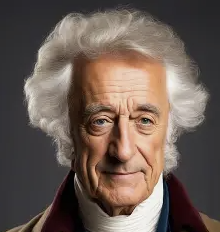
Were I to pray for a taste which should stand me in stead under every variety of circumstances, and be a source of happiness and cheerfulness to me during life, and a shield against its ills, however things might go amiss and the world frown upon me, it would be a taste for reading... Give a man this taste, and the means of gratifying it, and you can hardly fail of making him a happy man; unless, indeed, you put into his hands a most perverse selection of books. You place him in contact with the best society in every period of history,-with the wisest, the wittiest, the tenderest, the bravest, and the purest characters who have adorned humanity. You make him a denizen of all nations, a contemporary of all ages. The world has been created for him.
▼
Source
source
Address on the opening of the Eton Library (1833) as quoted in A History of Inventions, Discoveries and Origins (1846) by John Beckmann, Tr. William Johnston, Vol. 1, frontispiece.

2 months 1 week ago
It is not by the consolidation or concentration, of powers, but by their distribution that good government is effected.
▼
Source
source
Memoirs, Correspondence and Private Papers of Thomas Jefferson (1829) edited by Thomas Jefferson Randolph, p. 70
2 months 3 weeks ago
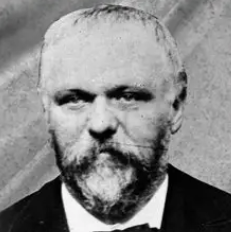
Mussolini is not an ordinary socialist. You will perhaps see him one day as a leader of a consecrated battalion, saluting the flags of Italy with his sword. He is an Italian of the fifteenth century, a condottiere. He is the only man with the strength to correct the weakness of the government.
▼
Source
source
As quoted in The Genesis of Georges Sorel, James H. Meisel, Ann Arbor, Wahr (1951), p. 220, n.21
4 months 1 week ago
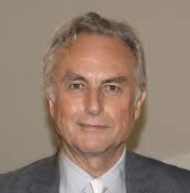
Such delusions of grandeur to think that a God with a hundred billion galaxies on his mind would give a tuppenny damn who you sleep with, or indeed whether you believe in him.
▼
Source
source
Richard Dawkins debates Rowan Williams

5 months 1 week ago
For a writer, to change languages is to write a love letter with a dictionary.

5 months 6 days ago
He that is without sin among you, let him first cast a stone at her.
▼
Source
source
8:7 (King James Version)
4 months 3 weeks ago
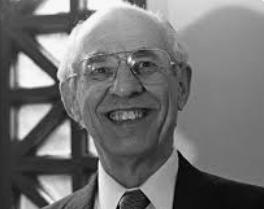
In conclusion, then, no satisfactory interpretation of quantum mechanics exists today. The questions posed by the confrontation between the Copenhagen interpretation and the hidden variable theorists go to the very foundations of microphysics, but the answers given by hidden variable theorists and Copenhagenists are alike unsatisfactory. Human curiosity will not rest until those questions are answered, but whether they will be answered by conceptual innovations within the framework of the present theory or only within the framework of an as yet unforeseen theory is unknown. The first step toward answering them has been attempted here. It is the modest but essential step of becoming clear on the nature and magnitude of the difficulties.
▼
Source
source
A philosopher looks at quantum mechanics

4 months 1 week ago
The only significance of life consists in helping to establish the kingdom of God; and this can be done only by means of the acknowledgment and profession of the truth by each one of us. Chapter XII, Conclusion-Repent Ye, for the Kingdom of Heaven is at Hand Variant translation: The sole meaning of life is to serve humanity by contributing to the establishment of the kingdom of God, which can only be done by the recognition and profession of the truth by every man.
4 months 1 week ago
Old and young, we are all on our last cruise.
▼
Source
source
Crabbed Age and Youth.
5 months 1 week ago
Every other art,-as poetry, music, painting,-may be practised without the process showing forth the rules according to which it is conducted ;-but in the self-cognizant art of the philosopher, no step can be taken without declaring the grounds upon which it proceeds.
▼
Source
source
p. 14
5 months 6 days ago
Keep on, then, seeking first the Kingdom and his righteousness, and all these other things will be added to you. So never be anxious about the next day, for the next day will have its own anxieties. Each day has enough of its own troubles.
▼
Source
source
Matthew 6:33-34, New World Translation of the Holy Scriptures

4 months 1 week ago
What began as a "Romantic reaction" towards organic wholeness may or may not have hastened the discovery of electro-magnetic waves. But certainly the electro-magnetic discoveries have recreated the simultaneous "field" in all human affairs so that the human family now exists under conditions of a "global village." We live in a single constricted space resonant with tribal drums. So that concern with the "primitive" today is as banal as nineteenth-century concern with "progress," and as irrelevant to our problems. The new electronic interdependence recreates the world in the image of a global village.
▼
Source
source
(p. 36)

6 months 2 weeks ago
For each new class which puts itself in the place of one ruling before it, is compelled, merely in order to carry through its aim, to represent its interests the common interest of all the members of society, that is, sality, and represent them as the only rational, universally valid ones. The class making a revolution appears from the very start, if only because it is opposed to a class, not as a class but as the representative of the whole of society; it appears as the whole mass of society confronting the one ruling class.
▼
Source
source
"Concerning the production of Consciousness"

2 months 3 weeks ago
There is obviously a place in life for a religious attitude for awe and astonishment at existence. That is also a basis for respect for existence. We don't have much of it in this culture, even though we call it materialistic. In this culture we call materialistic, today we are of course bent on the total destruction of material and its conversion into junk and poisonous gases. This is of course not a materialistic culture because it has no respect for material. And respect is in turn based on wonder.
▼
Source
source
Images of God

6 months 1 week ago
Hitch your wagon to a star.
▼
Source
source
Civilization
4 months 3 weeks ago
Organizations and institutions provide the general stimuli and attention-directors that channelize the behaviors of the members of the group, and that provide those members with the intermediate objectives that stimulate action.
▼
Source
source
p. 100.

6 months 1 week ago
This aristocratic thesis is... the demos, the people, are the most numerous... also comprised of the most ordinary, and... even the worst, citizens. Therefore... what is best for the demos cannot be what is best for the polis... the city.
5 months 1 week ago
I want to proclaim a truth that would forever exile me from among the living. I know only the conditions but not the words that would allow me to formulate it.
5 months 1 week ago
Only those are happy who never think or, rather, who only think about life's bare necessities, and to think about such things means not to think at all. True thinking resembles a demon who muddies the spring of life or a sickness which corrupts its roots. To think all the time, to raise questions, to doubt your own destiny, to feel the weariness of living, to be worn out to the point of exhaustion by thoughts and life, to leave behind you, as symbols of your life's drama, a trail of smoke and blood - all this means you are so unhappy that reflection and thinking appear as a curse causing a violent revulsion in you.
7 months 2 weeks ago
The roots of education ... are bitter, but the fruit is sweet.
6 months 4 weeks ago
Men are disturbed, not by things, but by the principles and notions which they form concerning things.
▼
Source
source
(5). (Enchiridion 5)
7 months 1 week ago
Scientific theories can always be improved and are improved. That is one of the glories of science. It is the authoritarian view of the Universe that is frozen in stone and cannot be changed, so that once it is wrong, it is wrong forever.
2 months 2 weeks ago
This is the Supreme Duty of the man who struggles - to set out for the lofty peak which Christ, the first-born sone of salvation, attained. How can we begin? If we are to follow him we must have a profound knowledge of his conflict, we must relive his anguish: his victory over the blossoming snares of the earth, his sacrifice of the great and small joys of men and his ascent from sacrifice to sacrifice, exploit to exploit, to martyrdom's summit, the Cross.

5 months 2 weeks ago
To prove the Gospels by a miracle is to prove an absurdity by something contrary to nature.
▼
Source
source
As quoted in The Anchor Book of French Quotations with English Translations (1963) by Norbert Gutermam
2 months 3 weeks ago
Violence, less and less embarrassed by the limits imposed by centuries of lawfulness, is brazenly and victoriously striding across the whole world, unconcerned that its infertility has been demonstrated and proved many times in history. What is more, it is not simply crude power that triumphs abroad, but its exultant justification. The world is being inundated by the brazen conviction that power can do anything, justice nothing.
6 months 1 week ago
When I was a student in the 1950s, I read Husserl, Sartre, Merleau-Ponty. When you feel an overwhelming influence, you try to open a window. Paradoxically enough, Heidegger is not very difficult for a Frenchman to understand. When every word is an enigma, you are in a not-too-bad position to understand Heidegger. Being and Time is difficult, but the more recent works are clearer. Nietzsche was a revelation to me. I felt that there was someone quite different from what I had been taught. I read him with a great passion and broke with my life, left my job in the asylum, left France: I had the feeling I had been trapped. Through Nietzsche, I had become a stranger to all that.
▼
Source
source
Truth, Power, Self : An Interview with Michel Foucault

6 months 1 week ago
Is it just I who cannot found a school, or can a philosopher never do so?
▼
Source
source
p. 69e

6 months 4 days ago
People do not feel in any way ashamed or guilty about spending money on new clothes or a new car instead of giving it to famine relief. (Indeed, the alternative does not occur to them.) This way of looking at the matter cannot be justified. When we buy new clothes not to keep ourselves warm but to look "well-dressed" we are not providing for any important need. We would not be sacrificing anything significant if we were to continue to wear our old clothes, and give the money to famine relief. By doing so, we would be preventing another person from starving. It follows from what I have said earlier that we ought to give money away, rather than spend it on clothes which we do not need to keep us warm. To do so is not charitable, or generous. Nor is it the kind of act which philosophers and theologians have called "supererogatory" - an act which it would be good to do, but not wrong not to do. On the contrary, we ought to give the money away, and it is wrong not to do so.

6 months 1 week ago
We are born helpless. As soon as we are fully conscious we discover loneliness. We need others physically, emotionally, intellectually; we need them if we are to know anything, even ourselves.
▼
Source
source
Introduction

3 months 3 weeks ago
Life itself is always pulling you away from the understanding of life.

2 months 1 week ago
In general, the form and the structure of the brains of quadrupeds are almost the same as those of the brain of man...
4 months 1 week ago
The anger of lovers renews the strength of love.
▼
Source
source
Maxim 24
4 months 1 week ago
The imagination loves to trifle with what is not.
▼
Source
source
The Sea Fogs
5 months 1 week ago
Science raises itself above all Ages and all Times, embracing and apprehending the ONE UNCHANGING TIME as the higher source of all Ages and Epochs, and grasping that vast idea in its free, unbounded comprehension.
▼
Source
source
p. 11

6 months 3 weeks ago
Do not mistake yourself by believing that your being has something in it more exalted than that of others.
5 months 2 weeks ago
Because half-a-dozen grasshoppers under a fern make the field ring with their importunate chink, whilst thousands of great cattle, reposed beneath the shadow of the British oak, chew the cud and are silent, pray do not imagine that those who make the noise are the only inhabitants of the field; that of course they are many in number; or that, after all, they are other than the little shrivelled, meagre, hopping, though loud and troublesome insects of the hour.
▼
Source
source
Volume iii, p. 344
6 months 1 week ago
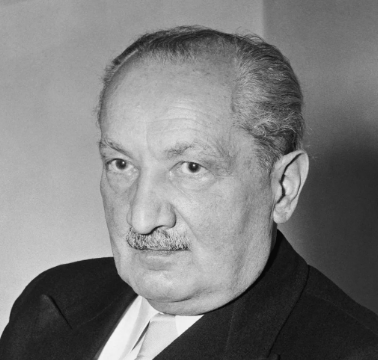
We ourselves are the entities to be analyzed.
▼
Source
source
Macquarrie & Robinson translation
CivilSimian.com created by AxiomaticPanic, CivilSimian, Kalokagathia