

5 months 3 weeks ago
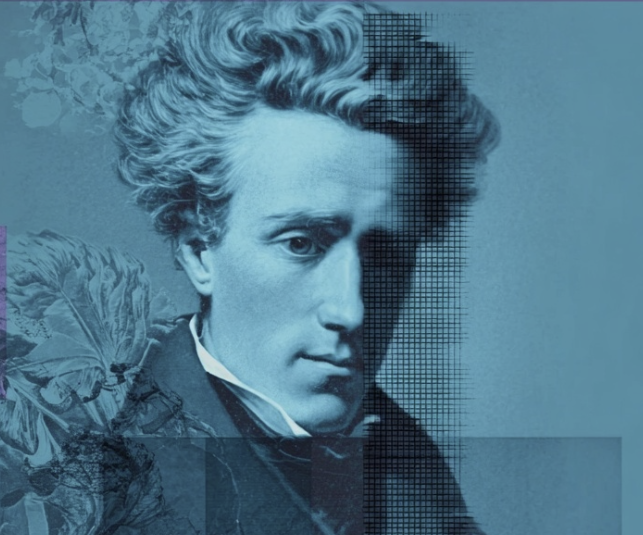
To become sober is: to come to oneself in self-knowledge and before God as nothing before him, yet infinitely, unconditionally engaged.
1 month 6 days ago
The fact is that in order to do any thing in this world worth doing, we must not stand shivering on the bank thinking of the cold and the danger, but jump in and scramble through as well as we can.
▼
Source
source
Lecture IX : On the Conduct of the Understanding

4 months 3 weeks ago
I do like clarity and exact thinking and I believe that very important to mankind because when you allow yourself to think inexactly your prejudices, your bias, your self interest comes in in ways you don't notice and you do bad things without knowing that you are doing them: self deception is very easy. So that I do think clear thinking immensely important.
▼
Source
source
Television interview ("On clarity and exact thinking" - available on youtube)

1 month 6 days ago
It would be some consolation for the feebleness of ourselves and our works, if all things should perish as slowly as they come into being; but as it is, increases are of sluggish growth, but the way to ruin is rapid.
▼
Source
source
Letters to Lucilius, letter 91, page 294.

4 months 4 weeks ago
You're either excluding the right people or including the wrong people.
▼
Source
source
ComfortDragon
1 month 1 week ago
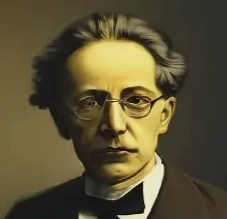
History seeks for man: but he is I, you, we. Sought as a mysterious essence, as the divine, first as God, then as man (humanity, humaneness, and mankind), he is found as the individual, the finite, the unique one.
▼
Source
source
Cambridge 1995, p. 217

5 months 1 week ago
The highest manifestation of life consists in this: that a being governs its own actions. A being that is always subject to the direction of another is somewhat of a dead thing. Variant translation: Now slavery has a certain likeness to death, hence it is also called civil death. For life is most evident in a thing's moving itself, while what can only be moved by another, seems to be as if dead. But it is manifest that a slave is not moved by himself, but only at his master's command.
▼
Source
source
Chapter 14

3 months 1 week ago
Might is that which makes a thing of anybody who comes under its sway. When exercised to the full, it makes a thing of man in the most literal sense, for it makes him a corpse.
▼
Source
source
in The Simone Weil Reader, p. 153
2 months 2 weeks ago
Moral philosophers say things like, 'What is actually wrong with cannibalism?' There are two ways of responding to that: one is to shrink back in horror and say, 'Cannibalism! Cannibalism! We can't talk about cannibalism!' The other is to say, 'Well, actually, what is wrong with cannibalism?' Then you work it out and you tease it out and you decide yes, actually, cannibalism is wrong, but for the following reasons. So I'd like to think that my moral values at least partly come from reasoning. Trying to suppress the gut reaction as much as possible.
▼
Source
source
Interview with Sophie Elmhirst (2015),
3 months 1 week ago
The masses are our masters; and for every one who looks facts in the face his existence has become dependent on them, so that the thought of them must control his doings, his cares, and his duties. Even an articulated mass always tends to become unspiritual and inhuman. It is life without existence, superstitions without faith. It may stamp all flat; it is disinclined to tolerate independence and greatness, but prone to constrain people to become as automatic as ants.
4 months 1 week ago
To flee vice is the beginning of virtue, and to have got rid of folly is the beginning of wisdom.
▼
Source
source
Book I, epistle i, line 41
2 months 2 weeks ago
[Asked "Do you still favour English independence?"] No, I don't think I've ever really favoured English independence. My view is that if the Scots want to be independent then we should aim for the same thing. Scottish independence, I don't think the Welsh want independence, the Northern Irish certainly don't. The Scottish desire for independence is, to some extent, a fabrication. They want to identify themselves as Scots but still to be part of a,[sic] to enjoy the subsidy they get from being part of the kingdom. I can see there are Scottish nationalists who envision something more than that, but if that becomes a real political force then yeah, we should try for independence too. As it is, as you know, the Scots have two votes: they can vote for their own parliament and vote to put their people into our parliament, who come to our parliament with no interest in Scotland but an interest in bullying us.
5 months 2 weeks ago
Zeus, the god of gods, who rules according to law, and is able to see into such things, perceiving that an honourable race was in a woeful plight, and wanting to inflict punishment on them, that they might be chastened and improve, collected all the gods into their most holy habitation, which, being placed in the centre of the world, beholds all created things.
3 months 2 weeks ago
Society is eliminating the prerogatives and privileges of feudal. aristocratic culture together with its content. The fact that the transcending truths of the fine arts, the aesthetics of life and thought, were accessible only to the few wealthy and educated was the fault of a repressive society. But this fault is not corrected by paperbacks, general education, long-playing records, and the abolition of formal dress in the theater and concert hall. The cultural privileges expressed the injustice of freedom, the contradiction between ideology and reality, the separation of intellectual from material productivity; but they also provided a protected realm in which the tabooed truths could survive in abstract integrity-remote from the society which suppressed them.
▼
Source
source
pp. 64-65
1 week 4 days ago
We may assume the existence of an aether; only we must give up ascribing a definite state of motion to it, i.e. we must by abstraction take from it the last mechanical characteristic which Lorentz had still left it. ... But this ether may not be thought of as endowed with the quality characteristic of ponderable media, as consisting of parts which may be tracked through time. The idea of motion may not be applied to it.

3 months 3 days ago
That man and woman have an equality of duties and rights is accepted by woman even less than by man. Behind his destiny woman must annihilate herself, must be only his complement. A woman dedicates herself to the vocation of her husband; she fills up and performs the subordinate parts in it. But if she has any destiny, any vocation of her own, she must renounce it, in nine cases out of ten.
1 month 6 days ago
He knows his own strength; he knows that he was born to carry burdens.

3 months 4 days ago
Jung believed that he was proceeding scientifically, but most Freudians remain convinced that he was inventing his own underground realm, rather as Tolkien invented Middle Earth. There is at least an element of truth in this view.
▼
Source
source
p. 126
1 month 6 days ago
No man can suffer both severely and for a long time; Nature, who loves us most tenderly, has so constituted us as to make pain either endurable or short.
3 months 1 day ago
We accumulate our opinions at an age when our understanding is at its weakest.
▼
Source
source
H 4

4 months 3 weeks ago
In our reasonings concerning matter of fact, there are all imaginable degrees of assurance, from the highest certainty to the lowest species of moral evidence. A wise man, therefore, proportions his belief to the evidence.
▼
Source
source
Section X: Of Miracles; Part I. 87

5 months ago
They [theologians] will explain to you how Christ was formed in the Virgin's womb; how accident subsists in synaxis without domicile in place. The most ordinary of them can do this. Those more fully initiated explain further whether there is an instans in Divine generation; whether in Christ there is more than a single filiation; whether 'the Father hates the Son' is a possible proposition; whether God can become the substance of a woman, of an ass, of a pumpkin, or of the devil, and whether, if so, a pumpkin could preach a sermon, or work miracles, or be crucified. And they can discover a thousand other things to you besides these. They will make you understand notions, and instants, formalities, and quiddities, things which no eyes ever saw, unless they were eyes which could see in the dark what had no existence.
▼
Source
source
as quoted by Froude ibid.,

4 months 3 weeks ago
At least two thirds of our miseries spring from human stupidity, human malice, and those great motivators and justifiers of malice and stupidity, idealism, dogmatism and proselytizing zeal on behalf of religious or political idols.
▼
Source
source
Tomorrow and Tomorrow and Tomorrow, 1952
2 months 5 days ago
The ideology of development has implied the globalization of the priorities, patterns, and prejudices of the West. Instead of self-generated, development is imposed. Instead of coming from within, it is externally guided. Instead of contributing to the maintenance of diversity, development has created homogeneity...
▼
Source
source
Monocultures of the Mind: Perspectives on Biodiversity and Biotechnology
3 months 2 weeks ago
All religions are cruel, all founded on blood; for all rest principally on the idea of sacrifice - that is, on the perpetual immolation of humanity to the insatiable vengeance of divinity.

4 months 3 weeks ago
Act as if what you do makes a difference. It does.
▼
Source
source
Correspondence with Helen Keller, 1908, in The Correspondence of William James: April 1908-August 1910, Vol. 12
3 months 1 week ago
I do not think that the dancing and singing of even little children can be explained wholly on the basis of unlearned and unformed responses to then existing objective conditions. Clearly there must be something in the present to evoke happiness. But the act is expressive only a there is in it a unison of something stored from past experience, something therefore generalized, with present conditions. In the case of expressions of happy children the marriage of past values and present incidents takes place easily; there are few obstructions to be overcome, few wounds to heal, few conflicts to resolve. With maturer persons, the reverse is the case. Accordingly the achievement of complete unison is rare; but when it occurs it is so on a deeper level and with a fuller content of meaning. And then, even though after long incubation and after precedent pangs of labor, the final expression may issue with the spontaneity of the cadenced speech or rhythmic movement of happy childhood.
▼
Source
source
p. 74
3 weeks ago
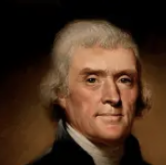
Whether the succeeding generation is to be more virtuous than their predecessors, I cannot say; but I am sure they will have more worldly wisdom, and enough, I hope, to know that honesty is the first chapter in the book of wisdom.
▼
Source
source
Letter to Nathaniel Macon

4 months 3 weeks ago
I cannot read a sentence in the book of the Hindoos without being elevated as upon the table-land of the Ghauts. It has such a rhythm as the winds of the desert, such a tide as the Ganges, and seems as superior to criticism as the Himmaleh Mounts. Even at this late hour, unworn by time with a native and inherent dignity it wears the English dress as indifferently as the Sanscrit.
▼
Source
source
August 6, 1841

1 month 2 weeks ago
The so-called communism of capital, that is, its drive toward an ever more extensive socialization of labor, points ambiguously toward the communism of the multitude.
2 months 2 weeks ago
Darwin made it possible to be an intellectually fulfilled atheist.
▼
Source
source
Chapter 1 "Explaining the Very Improbable" (p. 6)
2 weeks 4 days ago
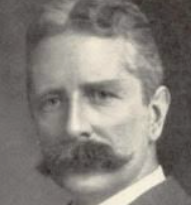
Philosophy has been called the search for the Permanent amid the changing. With this account of philosophy there is no need to quarrel. But having accepted it, a distinction remains to be observed, a distinction of capital importance, which we are in constant danger of forgetting. It is one thing to find the Permanent; it is another thing to find a form of words in which the Permanent shall stand permanently expressed. It is one thing to experience something fixed and changeless; it is another thing to fix this something by a changeless definition. The first may be possible, while the second remains impossible for ever.
4 months 2 weeks ago
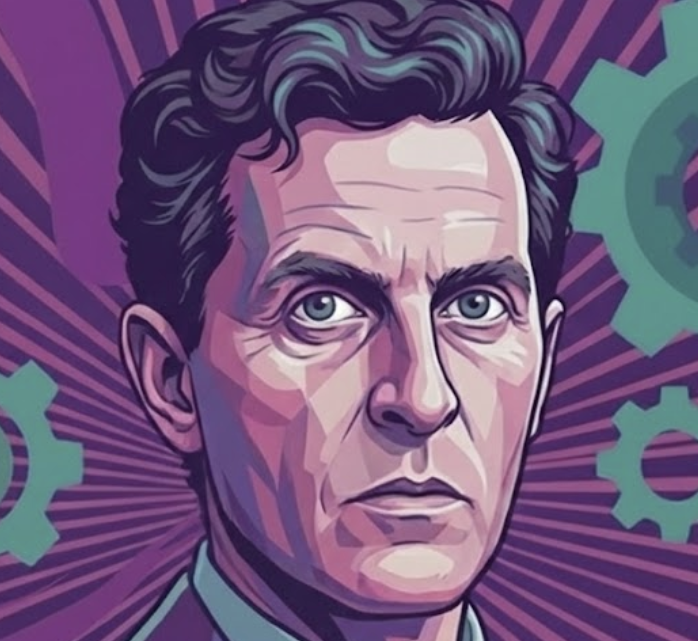
Philosophy hasn't made any progress?-If someone scratches where it itches, do we have to see progress? Is it not genuine scratching otherwise, or genuine itching?
▼
Source
source
p. 98e

3 months 3 weeks ago
In their nomination to office they will not appoint to the exercise of authority as to a pitiful job, but as to a holy function.
▼
Source
source
Volume iii, p. 356

4 months 2 weeks ago
In doing Good, I lose myself in Being, I abandon my particularity, I become a universal subject.
▼
Source
source
p. 77
3 months 2 weeks ago
Beauty as we feel it is something indescribable: what it is or what it means can never be said.
▼
Source
source
Pt. IV, Expression; § 67: "Conclusion.", p. 267
4 months 3 weeks ago
The merits of democracy are negative: it does not insure good government, but it prevents certain evils.
▼
Source
source
Ch. 18: The Taming of Power PT311 books.google
3 months 3 days ago
Psychoanalysis is essentially a theory of unconscious strivings, of resistance, of falsification of reality according to one's subjective needs and expectations.
▼
Source
source
p. 109
4 months 3 weeks ago
The secret of happiness is this: let your interests be as wide as possible, and let your reactions to the things and persons that interest you be as far as possible friendly rather than hostile.
4 months 2 weeks ago
The claims of existing social arrangements and of self interest have been duly allowed for. We cannot at the end count them a second time because we do not like the result.
▼
Source
source
Chapter III, Section 23, pg. 135
3 months 1 week ago
Wrong life cannot be lived rightly.
▼
Source
source
E. Jephcott, trans. (1974), § 18

4 months 3 weeks ago
How many people ruin themselves by laying out money on trinkets of frivolous utility? What pleases these lovers of toys is not so much the utility, as the aptness of the machines which are fitted to promote it. All their pockets are stuffed with little conveniences. They contrive new pockets, unknown in the clothes of other people, in order to carry a greater number. They walk about loaded with a multitude of baubles, in weight and sometimes in value not inferior to an ordinary Jew's-box, some of which may sometimes be of some little use, but all of which might at all times be very well spared, and of which the whole utility is certainly not worth the fatigue of bearing the burden.
▼
Source
source
Chap. I.
2 months 1 week ago
What a singular destiny has been that of this remarkable man! To be regarded in his own age as a classic, and in ours as a companion! To receive from his contemporaries that full homage which men of genius have in general received only from posterity! To be more intimately known to posterity than other men are known to their contemporaries!
▼
Source
source
'Samuel Johnson', The Edinburgh Review (September 1831), quoted in T. B. Macaulay, Critical and Historical Essays Contributed to The Edinburgh Review, Vol. I (1843), p. 407
5 months 3 weeks ago
A genius and an Apostle are qualitatively different, they are definitions which each belong in their own spheres: the sphere of immanence, and the sphere of transcendence.
3 months 3 days ago
By mortifying vanity we do ourselves no good. It is the want of interest in our life which produces it; by filling up that want of interest in our life we can alone remedy it. And, did we even see this, how can we make the difference? How obtain the interest which society declares she does not want, and we cannot want?

3 months 2 weeks ago
I was walking late one night along a tree-lined path; a chestnut fell at my feet. The noise it made as it burst, the resonance it provoked in me, and an upheaval out of all proportion to this insignificant event thrust me into miracle, into the rapture of the definitive, as if there were no more questions - only answers. I was drunk on a thousand unexpected discoveries, none of which I could make use of. This is how I nearly reached the Supreme. But instead I went on with my walk.
3 months 1 week ago
Scientific truth is characterized by its exactness and the certainty of its predictions. But these admirable qualities are contrived by science at the cost of remaining on a plane of secondary problems. leaving intact the ultimate and decisive questions. ... Yet science is but a small part of the human mind and organism. Where it stops, man does not stop.
▼
Source
source
p. 13
CivilSimian.com created by AxiomaticPanic, CivilSimian, Kalokagathia