


2 weeks 4 days ago
Whatever the virtue may be, from whatever source it may come, it is worthy of esteem... Mind, beauty, wealth, nobility, although the children of chance, all have their own value, as skill, learning and virtue have theirs.

4 months 3 weeks ago
Whenever the legislature attempts to regulate the differences between masters and their workmen, its counsellors are always the masters. When the regulation, therefore, is in favor of the workmen, it is always just and equitable; but it is sometimes otherwise when in favor of the masters.
▼
Source
source
Chapter x, Part II, p. 168.

4 months 2 weeks ago
And all the time - such is the tragi-comedy of our situation - we continue to clamor for those very qualities we are rendering impossible. You can hardly open a periodical without coming across the statement that what our civilization needs is more "drive", or dynamism, or self-sacrifice, or "creativity". In a sort of ghastly simplicity we remove the organ and demand the function. We make men without chests and expect of them virtue and enterprise. We laugh at honour and are shocked to find traitors in our midst. We castrate and bid the geldings be fruitful.

4 months 4 weeks ago
To turn one's eyes away from Jesus means to turn them to the Law.
▼
Source
source
Chapter 2

3 months 2 weeks ago
Consciousness is nature's nightmare.

4 months 3 weeks ago
The circulation of commodities is the original precondition of the circulation of money.
▼
Source
source
Notebook I, The Chapter on Money, p. 107.
5 months 2 weeks ago
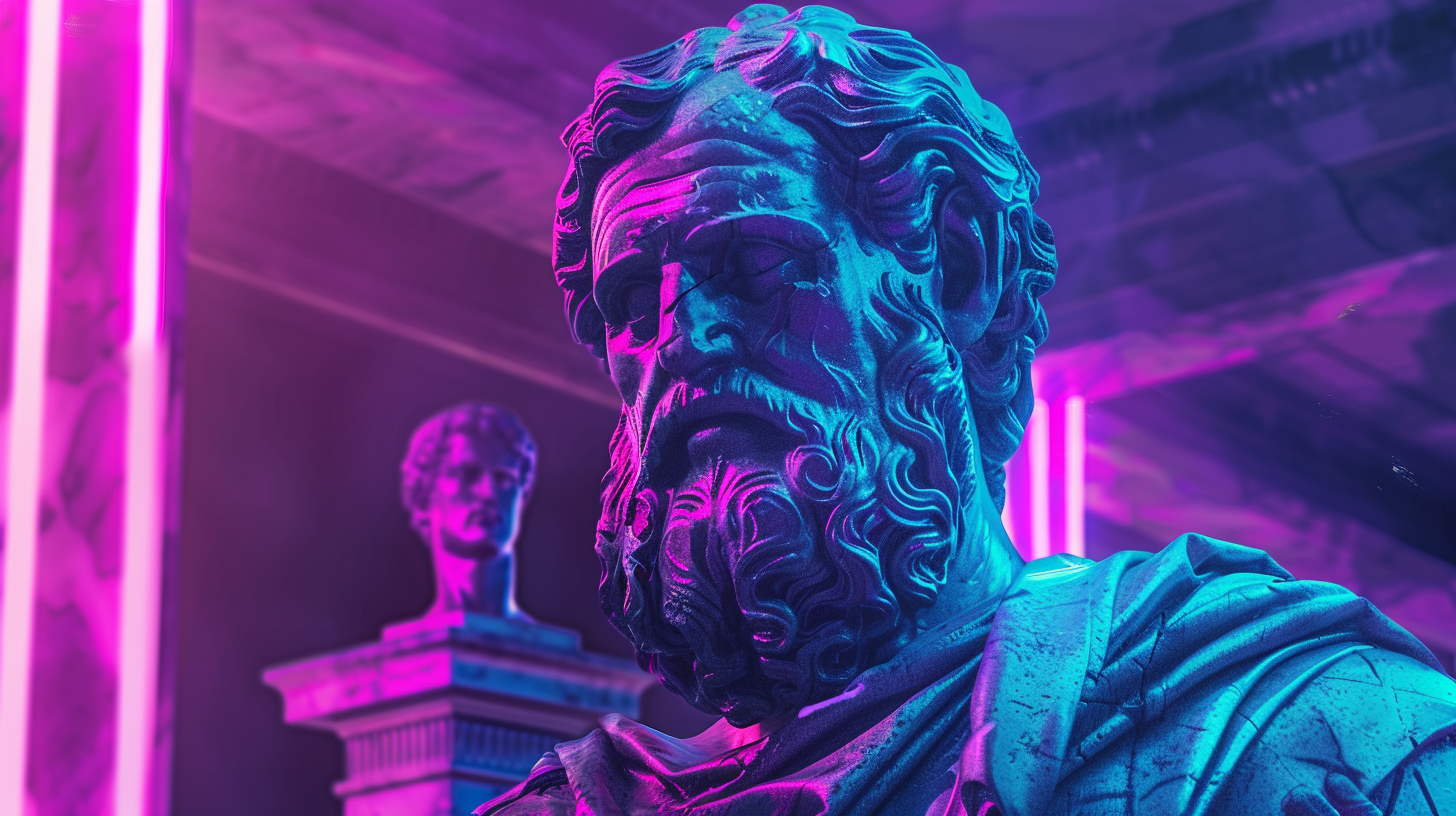
Some say that the body is the "tomb" of the soul, their notion being that the soul is buried in the present life; and again, because by its means the soul gives any signs which it gives, it is for this reason also properly called "sign". But I think it most likely that the Orphic poets gave this name, with the idea that the soul is undergoing punishment for something; they think it has the body as an enclosure to keep it safe, like a prison, and this is, as the name itself denotes, the "safe" for the soul, until the penalty is paid, and not even a letter needs to be changed.

3 months 2 weeks ago
I: My consciousness of the object is only a yet unrecognised consciousness of my production of the representation of an object. Of this production I know no more than that it is I who produce, and thus is all consciousness no more than a consciousness of myself, and so far perfectly comprehensible. Am I in the right? Spirit. Perfectly so ; but whence then is derived the necessity and universality thou hast ascribed to these propositions, to that of causality for instance?
▼
Source
source
Jane Sinnett, trans 1846 p. 47

3 months 1 week ago
Torn in this way from its normal connection with contemplation, with being within one's self, pure action permits and produces only a chain of stupidities which we might better call "stupidity unchained." So we see today that an absurd attitude justifies the appearance of an opposing attitude no more reasonable; at least, reasonable enough, and so on indefinitely. Such is the extreme to which political affairs in the West have come!
▼
Source
source
p. 34

3 months 1 week ago
We have reached the point where the Objective Logic turns into the Subjective Logic, or, where subjectivity emerges as the true form of objectivity. We may sum up Hegel's analysis in the following schema: The true form of reality requires freedom. Freedom requires self-consciousness and knowledge of the truth. Self-consciousness and knowledge of the truth are the essentials of the subject. The form of reality must be conceived as subject.
▼
Source
source
P. 154-155

3 months 3 weeks ago
There is no man alone, because every man is a Microcosm, and carries the whole world about him.
▼
Source
source
Section 10
4 months 3 weeks ago
Neither of us cares a straw for popularity. A proof of this is for example, that, because of aversion to any personality cult, I have never permitted the numerous expressions of appreciation from various countries with which I was pestered during the existence of the International to reach the realm of publicity, and have never answered them, except occasionally by a rebuke. When Engels and I first joined the secret Communist Society we made it a condition that everything tending to encourage superstitious belief in authority was to be removed from the statutes.
▼
Source
source
Remarks against personality cults from a letter to W. Blos (10 November 1877).

4 months 3 weeks ago
A man fits out a ship at a great expense and sends it to the West Indies with a crew of men and boys, and after six months or a year, it comes back with a load of pine-apples; now, if no more gets accomplished than the speculator commonly aims at, if it simply turns out what is called a successful venture, I am less interested in this expedition than in some child's first excursions a-huckleberrying, in which it is introduced into a new world, experiences a new development, though it brings home only a gill of berries in its basket.
3 months 1 week ago
There is another significant involution of time and movement in space. It is constituted not only by directional tendencies-up and down for example-but by mutual approaches and retreatings. Near and far, close and distant, are qualities of pregnant, often tragic, import-that is, as they are experienced, not just stated by measurement of science. They signify loosening and tightening, expanding and contracting, separating and compacting, soaring and drooping, rising and falling; the dispersive, scattering, and the hovering and brooding, unsubstantial lightness and massive blow. Such actions and reaction are the very stuff out if which the objects and events we experience are made.
▼
Source
source
p. 215
4 months 3 weeks ago
The establishment of any new manufacture, of any new branch of commerce, or any new practice in agriculture, is always a speculation, from which the projector promises himself extraordinary profits. These profits sometimes are very great, and sometimes, more frequently, perhaps, they are quite otherwise; but in general they bear no regular proportion to those of other older trades in the neighbourhood. If the project succeeds, they are commonly at first very high. When the trade or practice becomes thoroughly established and well known, the competition reduces them to the level of other trades.
▼
Source
source
Chapter X, Part I, p. 136 (tendency of the rate of profit to fall).
2 weeks 5 days ago
The equation state = politics becomes erroneous and deceptive at exactly the moment when state and society penetrate each other.

3 months 2 weeks ago
To become properly acquainted with a truth, we must first have disbelieved it, and disputed against it.

3 months 1 week ago
My soul is exceeding sorrowful, even unto death: tarry ye here, and watch with me.
▼
Source
source
26:38 (KJV)
3 months 1 week ago
But everyone who hears these sayings of Mine, and does not do them, will be like a foolish man who built his house on the sand: and the rain descended, the floods came, and the winds blew and beat on that house; and it fell. And great was its fall.
▼
Source
source
Matthew 7:24-27 (NKJV) (Also Luke 6:47-49)

5 months 3 weeks ago
The reasons and purposes for habits are always lies that are added only after some people begin to attack these habits and to ask for reasons and purposes. At this point the conservatives of all ages are thoroughly dishonest: they add lies.
1 month 6 days ago
If historical experience could teach us anything, it would be that private property is inextricably linked with civilization.
▼
Source
source
Chapter XV. The Market, § 4 The Scope and Method of Catallactics

1 month 3 weeks ago
The basis of science is the empirical method, which uses the senses to build up a picture of the world; but science tells us that our senses have evolved to help us get by, not to show us the world as it is. Science is only a systematic examination of our impressions, and in the end all each of us has left are our own sensations ... The end-result of the empirical method, then, is that each individual is left alone with their own experiences. We can escape this solitude, Balfour suggested, only if we accept that there is a divine mind.
▼
Source
source
Cross-correspondences (p. 69-70)

4 months 4 weeks ago
Live as long as you please, you will strike nothing off the time you will have to spend dead.
▼
Source
source
Ch. 20. Of the Force of Imagination
3 months 2 weeks ago
A people represents not so much an aggregate of ideas and theories as of obsessions.

4 months 2 weeks ago
We have ...as M. Ribot says, not memory so much as memories. The visual... tactile... muscular... auditory memory may all vary independently... and different individuals may have them developed in different degrees. As a rule, a man's memory is good in the departments in which his interest is strong; but those departments are apt to be those in which his discriminative sensibility is high. ...[D]ifferences in men's imagining power... the machinery of memory must be largely determined thereby.
▼
Source
source
Ch. 16

4 months 4 weeks ago
Men never do good unless necessity drives them to it; but when they are free to choose and can do just as they please, confusion and disorder become rampant.
▼
Source
source
Book 1, Ch. 3 (as translated by LJ Walker and B Crick)
3 months 3 weeks ago
That some have never dreamed is as improbable as that some have never laughed.
3 months 2 weeks ago
To think we could have spared ourselves from living all that we have lived!
3 months 2 weeks ago
I ask myself; Why is it that only some people suffer? Why are only some selected from the ranks of normal people and put on the torture rack? Some religions maintain that God is trying us through suffering, or that we expiate evil and unbelief through it. If such an explanation can satisfy the religious man, it is not sufficient for anyone who notices that suffering is arbitrary and unjust, because the innocent often suffer most. There is no valid justification for suffering. Suffering has no hierarchy of values.
▼
Source
source
in essay: the monopoly of suffering
2 months 2 weeks ago
As men, we are all equal in the presence of death.
▼
Source
source
Maxim 1

3 months 3 weeks ago
...no legislator, at any period of the world, has willingly placed the seat of active power in the hands of the multitude: Because there it admits of no control, no regulation; no steady direction whatsoever. The people are the natural control on authority; but to exercise and to control together is contradictory and impossible.
▼
Source
source
p. 441
4 months 1 week ago
When one told Plistarchus that a notorious railer spoke well of him, "I 'll lay my life," said he, "somebody hath told him I am dead, for he can speak well of no man living."
▼
Source
source
Of Plistarchus

4 months 3 weeks ago
Go into the London Stock Exchange - a more respectable place than many a court - and you will see representatives from all nations gathered together for the utility of men. Here Jew, Mohammedan and Christian deal with each other as though they were all of the same faith, and only apply the word infidel to people who go bankrupt. Here the Presbyterian trusts the Anabaptist and the Anglican accepts a promise from the Quaker.
▼
Source
source
Letters on England, letter 6, "On the Presbyterians" as quoted in Trust and Tolerance, Richard H. Dees, Routledge, London and New York, (2004) p. 92, published first in English in 1733.

4 months 2 weeks ago
Give all to love; Obey thy heart; Friends, kindred, days, Estate, good fame, Plans, credit, and the muse; Nothing refuse.
▼
Source
source
Give All to Love, st. 1

2 months 2 weeks ago
A king is history's slave.
▼
Source
source
Bk. IX, ch. 1
1 month 2 weeks ago
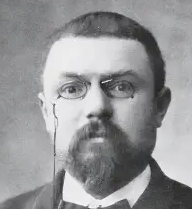
Scientists believe there is a hierarchy of facts and that among them may be made a judicious choice. They are right, since otherwise there would be no science...
4 months 2 weeks ago
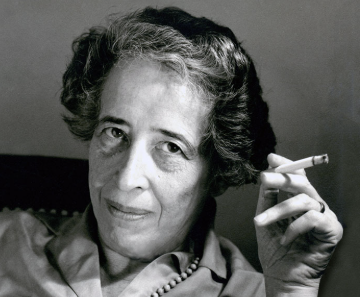
Man's urge for change and his need for stability have always balanced and checked each other, and our current vocabulary, which distinguishes between two factions, the progressives and the conservatives, indicates a state of affairs in which this balance has been thrown out of order. No civilization - the man-made artifact to house successive generations - would ever have been possible without a framework of stability, to provide the wherein for the flux of change. Foremost among the stabilizing factors, more enduring than customs, manners and traditions, are the legal systems that regulate our life in the world and our daily affairs with each other.
▼
Source
source
"Civil Disobedience"
2 months 3 weeks ago
The simulacrum is never what hides the truth-it is truth that hides the fact that there is none. The simulacrum is true.
▼
Source
source
- Ecclesiastes "The Precession of Simulacra," p. 1

3 months 1 week ago
If a philosopher is not a man, he is anything but a philosopher; he is above all a pedant, and a pedant is a caricature of a man. The cultivation of any branch of science - of chemistry, of physics, of geometry, of philology - may be a work of differentiated specialization, and even so, only within very narrow limits and restrictions; but philosophy, like poetry, is a work of integration and synthesis, or else it is merely pseudo-philosophical erudition.
4 months 3 weeks ago
The force of mind is only as great as its expression; its depth only as deep as its power to expand and lose itself.
▼
Source
source
Preface (J. B. Baillie translation), § 10

4 months 3 weeks ago
The merits of democracy are negative: it does not insure good government, but it prevents certain evils.
▼
Source
source
Ch. 18: The Taming of Power PT311 books.google
3 months 1 week ago
If thou wilt be perfect, go and sell that thou hast, and give to the poor, and thou shalt have treasure in heaven: and come and follow me.
▼
Source
source
19:21 (KJV)
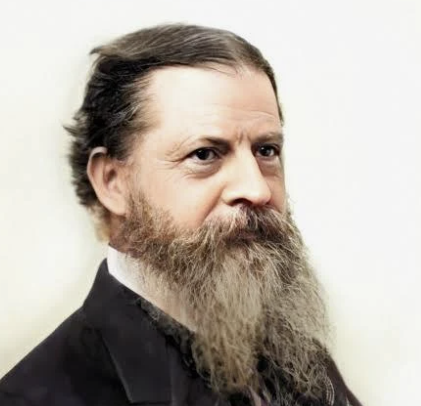
3 months 2 weeks ago
The tendency to regard continuity, in the sense in which I shall define it, as an idea of prime importance in philosophy conveniently may be be termed synechism. The present paper is intended chiefly to show what synechism is, and what it leads to.
4 months 4 weeks ago
No circumstance is ever so desperate that one cannot nurture some spark of hope.
▼
Source
source
Act I, scene i

4 months 3 weeks ago
We are not so absurd as to propose that the teacher should not set forth his own opinions as the true ones and exert his utmost powers to exhibit their truth in the strongest light. To abstain from this would be to nourish the worst intellectual habit of all, that of not finding, and not looking for, certainty in any teacher. But the teacher himself should not be held to any creed; nor should the question be whether his own opinions are the true ones, but whether he is well instructed in those of other people, and, in enforcing his own, states the arguments for all conflicting opinions fairly.
▼
Source
source
"Civilization," London and Westminster Review, April 1836
4 months 2 weeks ago
I hung my verse in the wind Time and tide their faults will find.
▼
Source
source
"The Test", as quoted in Emerson As A Poet (1883) by Joel Benton, p. 40
4 months 3 weeks ago
In every country it always is and must be the interest of the great body of the people to buy whatever they want of those who sell it cheapest. The proposition is so very manifest that it seems ridiculous to take any pains to prove it; nor could it ever have been called in question had not the interested sophistry of merchants and manufacturers confounded the common sense of mankind. Their interest is, in this respect, directly opposite to that of the great body of the people.
▼
Source
source
Chapter III, Part II, p. 531.

4 months 1 week ago
Men in their prayers beg the gods for health, not knowing that this is a thing they have in their own power. Through their incontinence undermining it, they themselves become, because of their passions, the betrayers of their own health.
CivilSimian.com created by AxiomaticPanic, CivilSimian, Kalokagathia