


6 months 3 weeks ago
I never knew a writer's wife who wasn't beautiful.
▼
Source
source
Preface (p. xi)
4 months 1 week ago
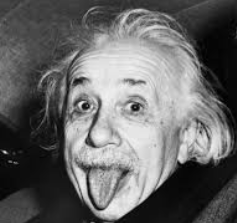
I refuse to make money out of my science. My laurel is not for sale like so many bales of cotton.
7 months 1 day ago
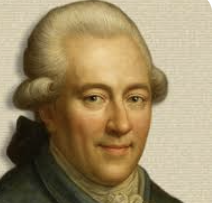
There is no greater impediment to progress in the sciences than the desire to see it take place too quickly.
▼
Source
source
K 72
7 months 3 weeks ago
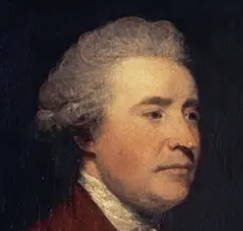
So to be patriots as not to forget we are gentlemen.


9 months 2 weeks ago
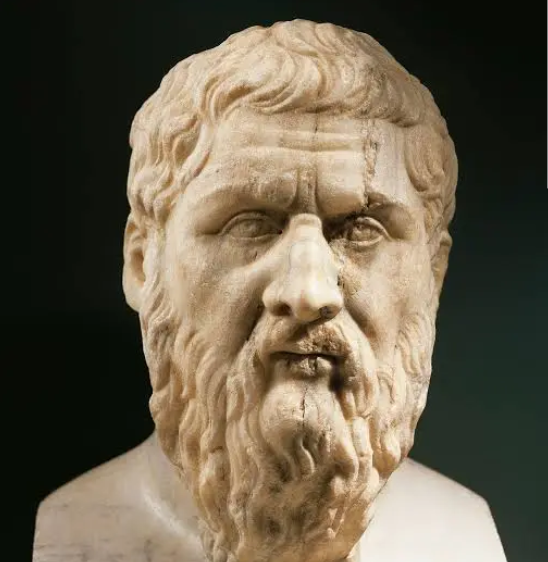
I do see one large and grievous kind of ignorance, separate from the rest, and as weighty as all the other parts put together. Thinking that one knows a thing when one does not know it. Through this, I believe, all the mistakes of the mind are caused in all of us.

9 months 2 weeks ago
The direction of the world overwhelms me at this time. In the long run, all the continents (yellow, black and brown) will spill over onto Old Europe. They are hundreds and hundreds of millions. They are hungry and they are not afraid to die. We no longer know how to die or how to kill. We could preach, but Europe believes in nothing. So, we must wait for the year 1000 or a miracle. For my part, I find it harder and harder to live before a wall.
9 months 1 week ago
The man of virtue makes the difficulty to be overcome his first business, and success only a subsequent consideration: this may be called perfect virtue.

5 months 2 weeks ago
The limits of this strategy were evident as the century drew to a close.
▼
Source
source
The Marxist left had to confront the fact that actual Communist societies in the Soviet Union and China had turned into grotesque and oppressive dictatorships. p. 112

8 months 2 weeks ago
The soul is the prison of the body.
▼
Source
source
Discipline and Punish (1977) as translated by Alan Sheridan, p. 30

5 months 1 week ago
Before a man can do things there must be things he will not do.
▼
Source
source
Eugene H. Peterson, A Long Obedience in the Same Direction (IVP, 1980), Ch 2
5 months 6 days ago
"You will have less money." Yes, and less trouble. "Less influence." Yes, and less envy.
9 months 1 week ago
To rank the effort above the prize may be called love.

7 months 3 weeks ago
I know of no country, indeed, where the love of money has taken stronger hold on the affections of men, and where the profounder contempt is expressed for the theory of the permanent equality of property.
▼
Source
source
Chapter III, Part I.

8 months 3 weeks ago
The state of society is one in which the members have suffered amputation from the trunk, and strut about so many walking monsters,-a good finger, a neck, a stomach, an elbow, but never a man.
▼
Source
source
par. 5

8 months 4 weeks ago
Let us give Nature a chance; she knows her business better than we do.
▼
Source
source
Ch. 13
7 months 1 week ago
We are sorely deficient in talking with each other and listening to each other. We lack mobility, criticism and self-criticism. We incline to doctrinism. What makes it worse is that so many people do not really want to think. They want only slogans and obedience. They ask no questions and they give no answers, except by repeating drilled-in phrases. They can only assert and obey, neither probe nor apprehend. Thus they cannot be convinced, either. How shall we talk with people who will not go where others probe and think, where men seek independence in insight and conviction?
6 months 4 weeks ago
The similarity between Marxism and neoconservativism might be expressed in the following way: both perspectives say that certain injustices can't be cured under our present system of political democracy and mixed economy. The Marxist concludes that we have to overthrow the present system and the neoconservative concludes that we have to live with the injustices. But they are both wrong.
▼
Source
source
How Not to Solve Ethical Problems
4 months 3 weeks ago
This ultimate stage of our spiritual exercise is called Silence. Not because its contents are the ultimate inexpressible despair or the ultimate inexpressible joy and hope. Nor because it is the ultimate knowledge which does not condescend to speak, or the ultimate ignorance which cannot. Silence means: Every person, after completing his service in all labors, reaches finally the highest summit of endeavor, beyond every labor, where he no longer struggles or shouts, where he ripens fully in silence, indestructibly, eternally, with the entire Universe.
8 months 3 weeks ago
Divorce is probably of nearly the same age as marriage. I believe, however, that marriage is some weeks the more ancient.
▼
Source
source
"Divorce", 1771
4 months 4 weeks ago
It is important that man dreams, but it is perhaps equally important that he can laugh at his own dreams.
▼
Source
source
Ch. I : The Awakening, pp. 4-5
8 months 3 weeks ago
II. The tax which each individual is bound to pay ought to be certain, and not arbitrary.
▼
Source
source
Chapter II, Part II, p. 892.

8 months 2 weeks ago
It is also the becoming-space of the spoken chain - which has been called temporal or linear; a becoming-space which makes possible both writing and every correspondence between speech and writing, every passage from one to the other.The activity or productivity connoted by the a of différance refers to the generative movement in the play of differences. The latter are neither fallen from the sky nor inscribed once and for all in a closed system, a static structure that a synchronic and taxonomic operation could exhaust. Differences are the effects of transformations, and from this vantage the theme of différance is incompatible with the static, synchronic, taxonomic, ahistoric motifs in the concept of structure.
▼
Source
source
p. 28
6 months 3 weeks ago
Someday, someday, this crazy world will have to end, And our God will take things back that He to us did lend. And if, on that sad day, you want to scold our God, Why go right ahead and scold Him. He'll just smile and nod.
8 months 3 weeks ago
Alcohol, hashish, prussic acid, strychnine are weak dilutions. The surest poison is time.
▼
Source
source
Poetry and Imagination
7 months 1 week ago
If the awareness of our limitations begins to limit or to dim our value consciousness as well-as happens, for instance, in old age with regard to the values of youth-then we have already started the movement of devaluation which will end with the defamation of the world and all its values. Only a timely act of resignation can deliver us from this tendency toward self-delusion.
▼
Source
source
L. Coser, trans. (1973), p. 59

4 months 2 weeks ago
The leadership has failed. Even so, the leadership can and must be recreated from the masses and out of the masses. The masses are the decisive element, they are the rock on which the final victory of the revolution will be built. The masses were on the heights; they have developed this 'defeat' into one of the historical defeats which are the pride and strength of international socialism. And that is why the future victory will bloom from this 'defeat'. 'Order reigns in Berlin!' You stupid henchmen! Your 'order' is built on sand. Tomorrow the revolution will already 'raise itself with a rattle' and announce with fanfare, to your terror: I was, I am, I will be!
▼
Source
source
"Order reigns in Berlin", Last written words. Collected Works 4

5 months 1 week ago
Fire is the best of servents; but what a master!
▼
Source
source
Bk. II, ch. 9.

7 months 1 week ago
Rousseau has said in his Emile (book iv.): "Even though philosophers should be in a position to discover the truth, which of them would take any interest in it? Each one knows well that his system is not better founded than the others, but he supports it because it is his. ...The essential thing is to think differently from others. With believers he is an atheist; with atheists he is a believer." How much substantial truth there is in these gloomy confessions of this man of painful sincerity.

8 months 3 weeks ago
This life affords no solid satisfaction, but in the consciousness of having done well, and the hopes of another life.
▼
Source
source
Letter to Anthony Collins (23 August 1704), in The Works of John Locke, Vol. X (London, 1823), p. 298; quoted by William Julius Mickle in Voltain in the Shades (London, 1770), p. 7

9 months 1 week ago
My mother spoke of Christ to my father, by her feminine and childlike virtues, and, after having borne his violence without a murmur or complaint, gained him at the close of his life to Christ.
▼
Source
source
Reported in Josiah Hotchkiss Gilbert, Dictionary of Burning Words of Brilliant Writers (1895), p. 351
4 months 2 weeks ago
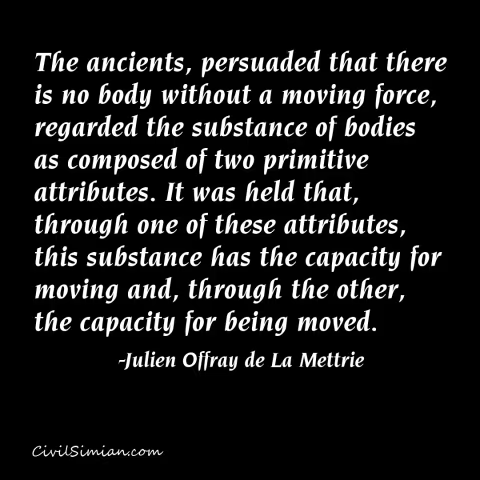
Those hypotheses do not a little hinder the progress of Humane knowledge, that introduce Morals and Politicks into the Explications of Corporeal Nature, where all things are indeed transacted according to Laws Mechanical.
▼
Source
source
Reflections upon the Hypothesis of Alcali and Acidum (1675) p. 33.

8 months 1 week ago
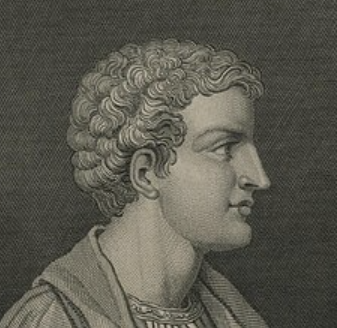
Struggling to be brief I become obscure.
▼
Source
source
Line 25
7 months 2 weeks ago
Gentile himself call his doctrine 'absolute formalism': there is no; 'matter' apart from the pure 'form' of acting. 'The only matter there is in the spiritual act is the form itself, as activity.'
▼
Source
source
P. 407
8 months 3 weeks ago
If I could put my hand on the north star, would it be as beautiful? The sea is lovely, but when we bathe in it, the beauty forsakes all the near water. For the imagination and senses cannot be gratified at the same time.
▼
Source
source
Beauty

5 months 1 week ago
In looking at this wreck of Governments in all European countries, there is one consideration that suggests itself, sadly elucidative of our modern epoch. These Governments, we may be well assured, have gone to anarchy for this one reason inclusive of every other whatsoever, That they were not wise enough; that the spiritual talent embarked in them, the virtue, heroism, intellect, or by whatever other synonyms we designate it, was not adequate,-probably had long been inadequate, and so in its dim helplessness had suffered, or perhaps invited falsity to introduce itself; had suffered injustices, and solecisms, and contradictions of the Divine Fact, to accumulate in more than tolerable measure; whereupon said Governments were overset, and declared before all creatures to be too false.
6 months 4 weeks ago
To require that all of these must be reducible to a single version is to make the mistake of supposing that 'Which are the real objects?' is a question that makes sense independently of our choice of concepts.
▼
Source
source
Lecture I: Is There Still Anything to Say about Reality and Truth?

5 months 4 weeks ago
With other beliefs crumbling, many seek to return to what they piously describe as "Enlightenment values". But these values were not as unambiguously benign as is nowadays commonly supposed.
▼
Source
source
2015

6 months 3 weeks ago
The Churches as Churches-as institutions affirming their own infallibility-are anti-Christian institutions. Between the Churches as such and Christianity, not only is there nothing in common except the name, but they are two quite opposite and opposing principles. The one represents pride, violence, self-assertion, immobility and death: the other humility, penitence, meekness, progress, and life.
▼
Source
source
Chapter III, Christianity Misunderstood by Believers

8 months 4 weeks ago
A person must take care to exercise moderate discipline over the body and subject it to the Spirit by means of fasting, vigils, and labor. The goal is to have the body obey and conform - and not hinder - the inner person and faith. Unless it is held in check, we know it is the nature of the body to undermine faith and the inner person.
▼
Source
source
pp. 71-72
4 months 3 weeks ago
A woman's body is a dark and monstrous mystery;between her supple thighs a heavy whirlpool swirls,two rivers crash, and woe to him who slips and falls!
▼
Source
source
Odysseus, Book II, line 1017
8 months 3 weeks ago
Announced by all the trumpets of the sky Arrives the snow, and, driving o'er the fields, Seems nowhere to alight: the whited air Hides hills and woods, the river and the heaven, And veils the farm-house at the garden's end.
▼
Source
source
The Snow-Storm
6 months 2 weeks ago
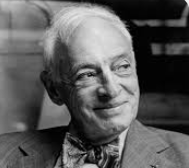
All a writer has to do to get a woman is to say he's a writer. It's an aphrodisiac.
▼
Source
source
As quoted in "Dailer's Choice" by Harriet Van Horne, in New York Magazine Vol. 10, No. 13 (28 March 1977), p. 80
8 months 1 week ago
To flee vice is the beginning of virtue, and to have got rid of folly is the beginning of wisdom.
▼
Source
source
Book I, epistle i, line 41

8 months 1 week ago
If it is in our power to prevent something bad from happening, without thereby sacrificing anything of comparable moral importance, we ought, morally, to do it.

CivilSimian.com created by AxiomaticPanic, CivilSimian, Kalokagathia