

5 months 2 weeks ago
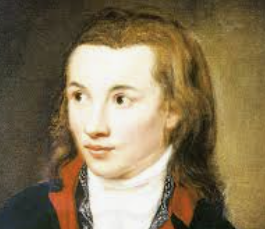
Blood will stream over Europe until the nations become aware of the frightful madness which drives them in circles. And then, struck by celestial music and made gentle, they approach their former altars all together, hear about the works of peace, and hold a great celebration of peace with fervent tears before the smoking altars.
▼
Source
source
As quoted in the Fourth Leaflet of the White Rose
4 months 3 weeks ago
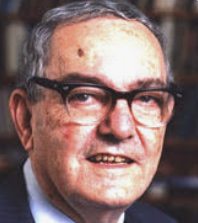
Roughly speaking, rationality is concerned with the selection of preferred behavior alternatives in terms of some system of values, whereby the consequences of behavior can be evaluated.
▼
Source
source
p. 84.
5 months 1 week ago
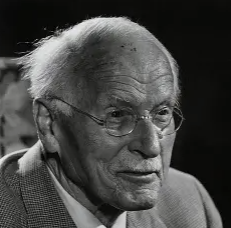
The bigger the crowd, the more negligible the individual.
▼
Source
source
p 14


6 months 2 weeks ago
For those who want 'to change life", 'to reinvent love,' God is nothing but a hindrance.
▼
Source
source
p. 500
5 months 1 week ago
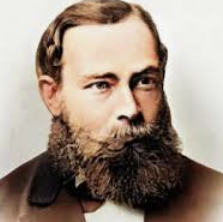
Often it is only after immense intellectual effort, which may have continued over centuries, that humanity at last succeeds in achieving knowledge of a concept in its pure form, by stripping off the irrelevant accretions which veil it from the eye of the mind.
▼
Source
source
Translation J. L. Austin (Oxford, 1950) as quoted by Stephen Toulmin, Human Understanding: The Collective Use and Evolution of Concepts (1972) Vol. 1, p. 56.

5 months 1 week ago
A person who wakes up after a night of unbroken sleep has the illusion of beginning something new. When one instead remains awake the whole night long, nothing new begins.

5 months 2 weeks ago
Public life is a situation of power and energy; he trespasses against his duty who sleeps upon his watch, as well as he that goes over to the enemy.

6 months 1 week ago
Beneath the humanization of the penalties, what one finds are all those rules that authorize, or rather demand, 'leniency', as a calculated economy of the powder to punish. But they also provoke a shift in the point of application of this power: it is no longer the body, with the ritual play of excessive pains, spectacular branding in the ritual of the public execution; it is the mind or rather a play of representations and sings circulating discreetly but necessarily and evidently in the minds of all. It is no longer the body, but the soul, said Mably. And we see very clearly what he meant by this term: the correlative of a technique of power. Old 'anatomies' of punishment are abandoned, But have we really entered the age of non-corporal punishment?
▼
Source
source
Chapter Two, Generalized Punishment, pp. 101
5 months 1 week ago
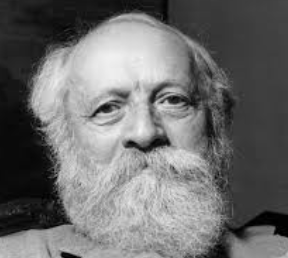
So long as you "have" yourself, have yourself as an object, your experience of man is only as of a thing among things.
▼
Source
source
p. 148
4 months 2 weeks ago
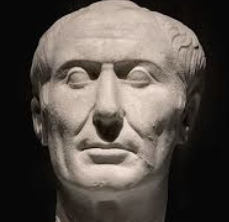
Every one excels in something in which another fails.
▼
Source
source
Maxim 17
2 months 2 weeks ago
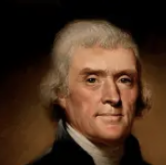
I read no newspaper now but Ritchie's, and in that chiefly the advertisments, for they contain the only truths to be relied on in a newspaper.
▼
Source
source
Letter to Nathaniel Macon

2 months 2 weeks ago
The dyad gets its name from passing through or asunder; for the dyad is the first to have separated itself from the monad, whence also it is called "daring." For when the monad manifests unification, the dyad steals in and manifests separation.
▼
Source
source
On the Dyad
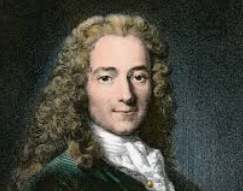
6 months 2 weeks ago
Do not most of us resemble that old general of ninety who, having come upon some young officers debauching some girls, said to them angrily: "Gentlemen, is that the example I give you?" "Character"
▼
Source
source
1764

5 months 1 day ago
Fertilisation of the soul is the reason for the necessity of art.
▼
Source
source
Ch. 13: "Requisites for Social Progress", p. 283
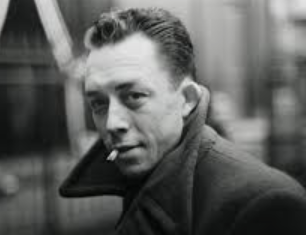
7 months 1 week ago
No human being, even the most passionately loved and passionately loving, is ever in our possession.
3 months 1 week ago
Unless our ideas are questioned, they become part of the furniture of eternity.
▼
Source
source
Ch. IV: "The Line of Least Resistance", p. 51
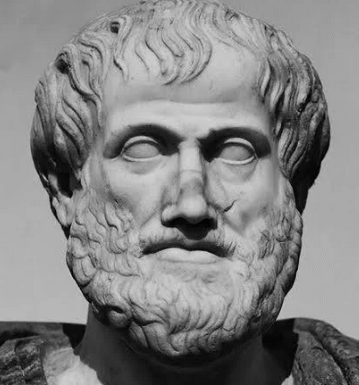
7 months 2 weeks ago
I have gained this by philosophy ... I do without being ordered what some are constrained to do by their fear of the law.
2 months 3 weeks ago
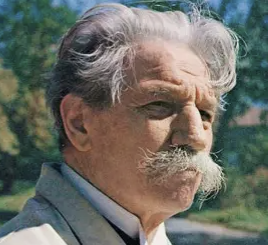
I do not want to frighten you by telling you about the temptations life will bring. Anyone who is healthy in spirit will overcome them. But there is something I want you to realize. It does not matter so much what you do. What matters is whether your soul is harmed by what you do. If your soul is harmed, something irreparable happens, the extent of which you won't realize until it will be too late.
4 months 3 weeks ago
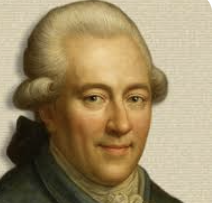
We are obliged to regard many of our original minds as crazy - at least until we have become as clever as they are.
▼
Source
source
D 97
5 months 1 day ago
There are no whole truths; all truths are half-truths. It is trying to treat them as whole truths that plays the devil.
▼
Source
source
Prologue.
5 months 2 weeks ago
My Lords, to obtain empire is common; to govern it well has been rare indeed. To chastise the guilt of those who have been instruments of imperial sway over other nations by the high superintending justice of the sovereign state has not many striking examples among any people.
▼
Source
source
Speech in opening the impeachment of Warren Hastings (16 February 1788), quoted in The Works of the Right Honourable Edmund Burke, Volume the Ninth (1899), p. 398


5 months 3 days ago
From whatever side the matter is regarded, it is always found that reason confronts our longing for personal immortality and contradicts it. And the truth is, in all strictness, that reason is the enemy of life.

6 months 1 week ago
This is not for me, I want an entirely rural spot.
▼
Source
source
C 1920, expressing displeasure at a village that had a park with a fountain.
7 months 2 weeks ago
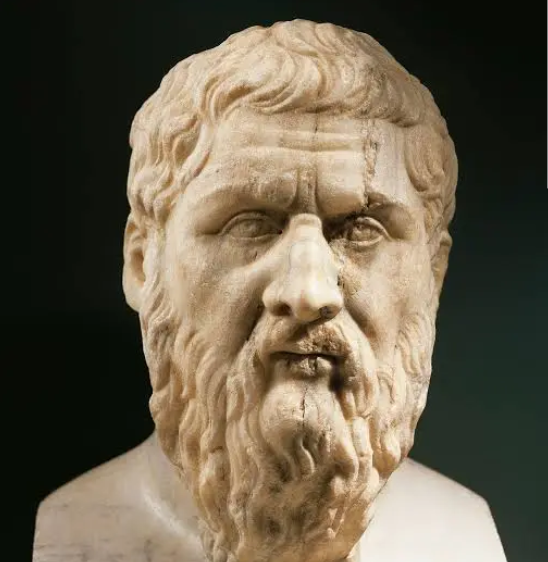
Since those who rule in the city do so because they own a lot, I suppose they're unwilling to enact laws to prevent young people who've had no discipline from spending and wasting their wealth, so that by making loans to them, secured by the young people's property, and then calling those loans in, they themselves become even richer and more honored.

6 months 2 weeks ago
As the variable capital always stays in the hands of the capitalist in some form or other, it cannot be claimed in any way that it converts itself into revenue for anyone.
▼
Source
source
Vol. II, Ch. XX, p. 452.
6 months 6 days ago
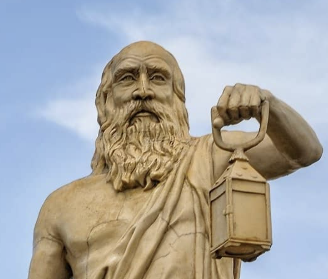
Once he saw the officials of a temple leading away some one who had stolen a bowl belonging to the treasurers, and said, "The great thieves are leading away the little thief."
▼
Source
source
Diogenes Laërtius, vi. 45

5 months 2 weeks ago
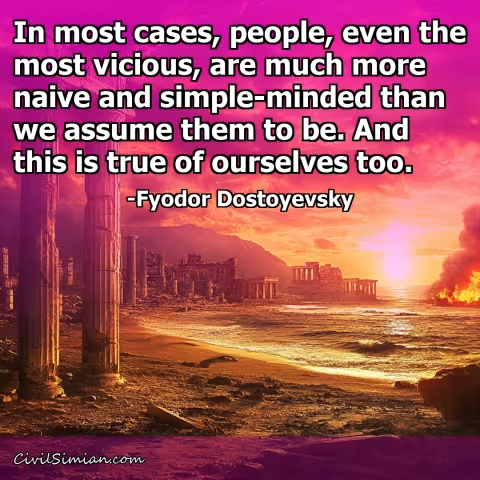
Every man has some reminiscences which he would not tell to everyone, but only to his friends. He has others which he would not reveal even to his friends, but only to himself, and that in secret. But finally there are still others which a man is even afraid to tell himself, and every decent man has a considerable number of such things stored away. That is, one can even say that the more decent he is, the greater the number of such things in his mind.
▼
Source
source
Part 1, Chapter 11

6 months 4 weeks ago
Morality is the beauty of Philosophy.
▼
Source
source
Trattato Terzo, Ch. 15.
2 months 2 weeks ago
The question will be asked and ought to be looked at, what is to be the resource if loans cannot be obtained? There is but one, "Carthago delenda est." Bank paper must be suppressed, and the circulating medium must be restored to the nation to whom it belongs. It is the only fund on which they can rely for loans; it is the only resource which can never fail them, and it is an abundant one for every necessary purpose. Treasury bills, bottomed on taxes, bearing or not bearing interest, as may be found necessary, thrown into circulation will take the place of so much gold and silver, which last, when crowded, will find an efflux into other countries, and thus keep the quantum of medium at its salutary level. Let banks continue if they please, but let them discount for cash alone or for treasury notes.
▼
Source
source
11 September 1813, ME 13:361
5 months 2 weeks ago
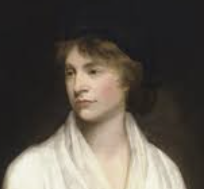
It is impossible for any man, when the most favourable circumstances concur, to acquire sufficient knowledge and strength of mind to discharge the duties of a king, entrusted with uncontrolled power; how then must they be violated when his very elevation is an insuperable bar to the attainment of either wisdom or virtue; when all the feelings of a man are stifled by flattery, and reflection shut out by pleasure! Surely it is madness to make the fate of thousands depend on the caprice of a weak fellow creature, whose very station sinks him NECESSARILY below the meanest of his subjects! But one power should not be thrown down to exalt another--for all power intoxicates weak man; and its abuse proves, that the more equality there is established among men, the more virtue and happiness will reign in society.
▼
Source
source
Ch. 1

6 months 3 weeks ago
There is no conversation more boring than the one where everybody agrees.
3 months 6 days ago
Life is that which can hold a purpose for three thousand years and never yield. The individual fails, but life succeeds. The individual is foolish, but life holds in its blood and seed the wisdom of generations. The individual dies, but life, tireless and undiscourageble, goes on, wondering, longing, planning, trying, mounting, longing.
▼
Source
source
Ch. 5 : On Death
5 months 1 week ago
Reason as an organ for perceiving the true nature of reality and determining the guiding principles of our lives has come to be regarded as obsolete.
▼
Source
source
p. 18.

4 months 4 weeks ago
Once again, I experienced that overwhelming joy in the universe that I had felt in London outside the V and A. But this time, my consciousness of the world seemed larger, more complex. It was the mystic's sensation of oneness, of everything blending into everything else. Everything I looked at reminded me of something else, which also became present to my consciousness, as if I were simultaneously seeing a million worlds and smelling a million scents and hearing a million sounds-- not mixed up, but each separate and clear. I was overwhelmed with a sense of my smallness in the face of this vast, beautiful, objective universe, this universe whose chief miracle is that it exists, as well as myself. It is no dream, but a great garden in which life is trying to obtain a foothold. I experienced a desire to burst into tears of gratitude; then I controlled it, and the feeling subsided into a calm sense of immense, infinite beauty.
▼
Source
source
pp. 237-238

6 months 1 week ago
I am a utilitarian. I am also a vegetarian. I am a vegetarian because I am a utilitarian.
▼
Source
source
Utilitarianism and Vegetarianism, Philosophy & Public Affairs, 9(4): 325 (1980).

6 months 2 weeks ago
Nature paints the best part of a picture, carves the best parts of the statue, builds the best part of the house, and speaks the best part of the oration.
▼
Source
source
Art
2 months 6 days ago
The longing for guidance, for love and succor, provides the stimulus for the growth of a social or moral conception of God. This is the God of Providence, who protects, decides, rewards and punishes. This is the God who, according to man's widening horizon, loves and provides for the life of the race, or of mankind, or who even loves life itself. He is the comforter in unhappiness and in unsatisfied longing, the protector of the souls of the dead. This is the social or moral idea of God.

6 months 2 weeks ago
It is not to be supposed that she was, or that any one, at the age at which I first saw her, could be, all that she afterwards became. Least of all could this be true of her, with whom self-improvement, progress in the highest and in all senses, was a law of her nature; a necessity equally from the ardour with which she sought it, and from the spontaneous tendency of faculties which could not receive an impression or an experience without making it the source or the occasion of an accession of wisdom. Up to the time when I first saw her, her rich and powerful nature had chiefly unfolded itself according to the received type of feminine genius. To her outer circle she was a beauty and a wit, with an air of natural distinction, felt by all who approached her: to the inner, a woman of deep and strong feeling, of penetrating and intuitive intelligence, and of an eminently meditative and poetic nature.
▼
Source
source
(p. 185)
7 months 1 day ago
To the rational being only the irrational is unendurable, but the rational is endurable.
▼
Source
source
Variant translation: To a reasonable creature, that alone is insupportable which is unreasonable; but everything reasonable may be supported. Book I, ch. 2,1.
6 months 2 weeks ago
Things added to things, as statistics, civil history, are inventories. Things used as language are inexhaustibly attractive.
▼
Source
source
Plato; or, The Philosopher
6 months 2 weeks ago
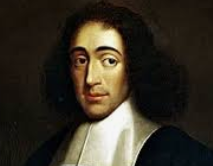
We feel and know that we are eternal.
▼
Source
source
Part V, Prop. XXIII, Scholium
2 months 2 weeks ago
I regret that I am now to die in the belief, that the useless sacrifice of themselves by the generation of 1776, to acquire self- government and happiness to their country, is to be thrown away by the unwise and unworthy passions of their sons, and that my only consolation is to be, that I live not to weep over it. If they would but dispassionately weigh the blessings they will throw away, against an abstract principle more likely to be effected by union than by scission, they would pause before they would perpetrate this act of suicide on themselves, and of treason against the hopes of the world. To yourself, as the faithful advocate of the Union, I tender the offering of my high esteem and respect.
▼
Source
source
Letter to John Holmes

2 months 2 weeks ago
My religious reading has long been confined to the moral branch of religion, which is the same in all religions; while in that branch which consists of dogmas, all differ.
▼
Source
source
Letter to Thomas Leiper (21 January 1809).
6 months 2 weeks ago
People seem not to see that their opinion of the world is also a confession of character.
▼
Source
source
Worship
CivilSimian.com created by AxiomaticPanic, CivilSimian, Kalokagathia