


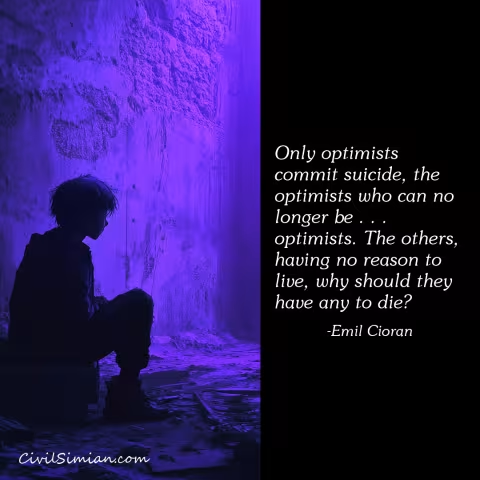

5 months 5 days ago
Pleasant it is, when over a great sea the winds trouble the waters, to gaze from shore upon another's great tribulation: not because any man's troubles are a delectable joy, but because to perceive from what ills you are free yourself is pleasant.
▼
Source
source
Book II, lines 1-4 (tr. Rouse)
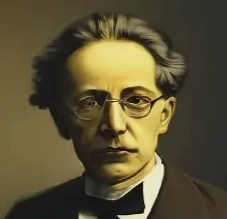
1 month 6 days ago
If a concept lacks an essence, nothing will ever be found that completely fits that concept. If you are lacking in the concept of human being, it will immediately expose that you are something individual, something that cannot be expressed by the term human being, thus, in every instance, an individual human being.
▼
Source
source
Landstreicher, p. 16
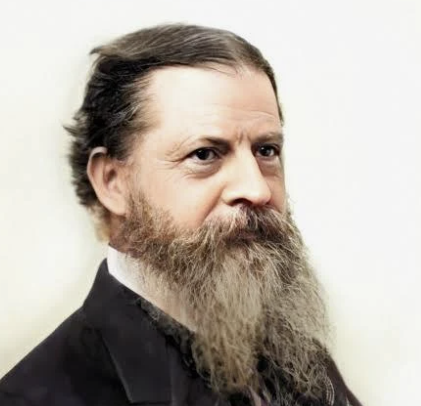
3 months 2 weeks ago
Now, let there be an indefinite succession of these inferential acts of comparative perception; and it is plain that the last moment will contain objectively the whole series. Let there be, not merely an indefinite succession, but a continuous flow of inference through a finite time; and the result will be a mediate objective consciousness of the whole time in the last moment. In this last moment, the whole series will be recognized, or known as known before.

1 month 1 week ago
All the gifted souls, of every rank, who are born to you in this generation. These are appointed, by the true eternal "divine right" which will never become obsolete, to be your governors and administrators; and precisely as you employ them, or neglect to employ them, will your State be favored of Heaven or disfavored. This noble young soul, you can have him on either of two conditions; and on one of them, since he is here in the world, you must have him. As your ally and coadjutor; or failing that, as your natural enemy: which shall it be? I consider that every Government convicts itself of infatuation and futility, or absolves and justifies itself before God and man, according as it answers this question.
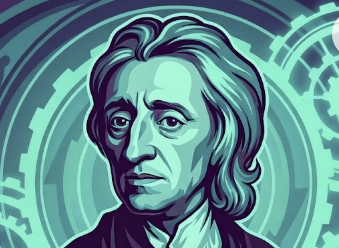
4 months 3 weeks ago
Of all the ways whereby children are to be instructed, and their manners formed, the plainest, easiest, and most efficacious, is, to set before their eyes the examples of those things you would have them do, or avoid; which, when they are pointed out to them, in the practice of persons within their knowledge, with some reflections on their beauty and unbecomingness, are of more force to draw or deter their imitation, than any discourses which can be made to them.
▼
Source
source
Sec. 82

1 month 2 weeks ago
It is a commonplace of the classical literature on Empire, from Polybius to Montesquieu and Gibbon, that Empire is from its inception decadent and corrupt.
▼
Source
source
201

3 months 2 weeks ago
We say: he has no talent, only tone. But tone is precisely what cannot be invented - we're born with it. Tone is an inherited grace, the privilege some of us have of making our organic pulsations felt - tone is more than talent, it is its essence.

3 months 1 week ago
In that very hour he became overjoyed in the holy spirit and said: “I publicly praise you, Father, Lord of heaven and earth, because you have carefully hidden these things from wise and intellectual ones and have revealed them to young children. Yes, O Father, because this is the way you approved.
▼
Source
source
Luke 10:21, New World Translation of the Holy Scriptures

4 months 2 weeks ago
I should as soon think of swimming across Charles River when I wish to go to Boston, as of reading all my books in originals when I have them rendered for me in my mother tongue.
▼
Source
source
Books
5 months 2 weeks ago
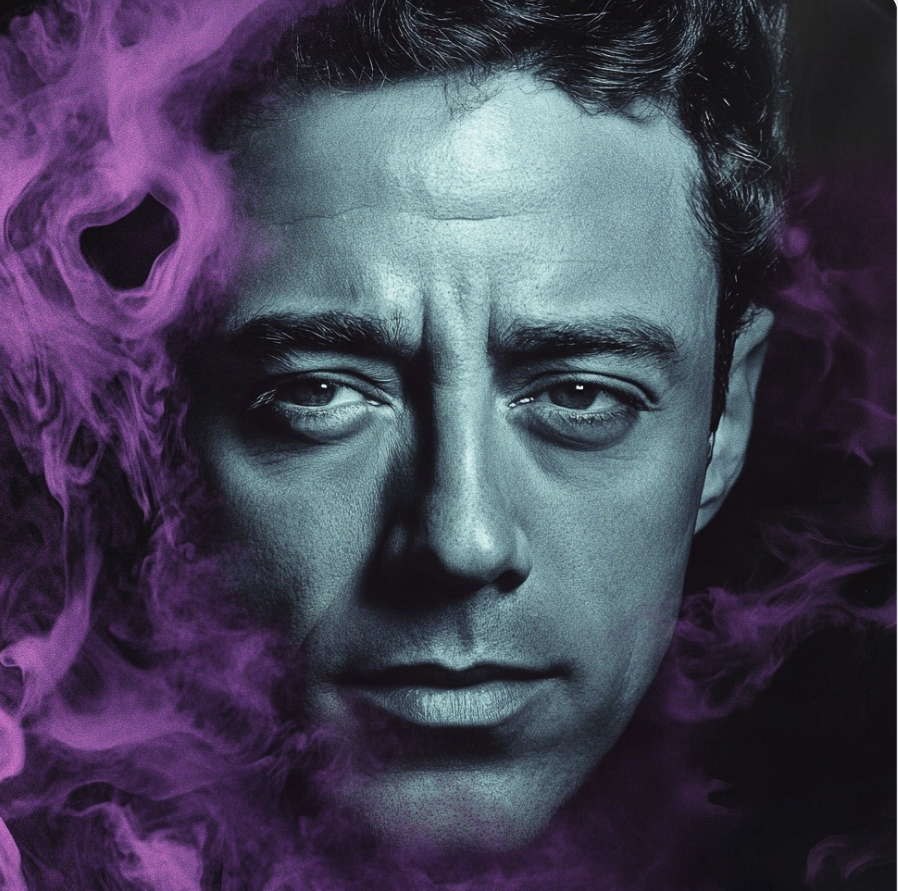
Whatever we may do, excess will always keep its place in the heart of man, in the place where solitude is found. We all carry within us our places of exile, our crimes and our ravages. But our task is not to unleash them on the world; it is to fight them in ourselves and in others.
8 months 3 weeks ago
I believe in clear-cut positions. I think that the most arrogant position is this apparent, multidisciplinary modesty of "what I am saying now is not unconditional, it is just a hypothesis," and so on. It really is a most arrogant position. I think that the only way to be honest and expose yourself to criticism is to state clearly and dogmatically where you are. You must take the risk and have a position.

4 months 1 week ago
There are many who know many things, yet are lacking in wisdom.


1 month 2 weeks ago
I can die when I wish to: that is my elixir of life.
▼
Source
source
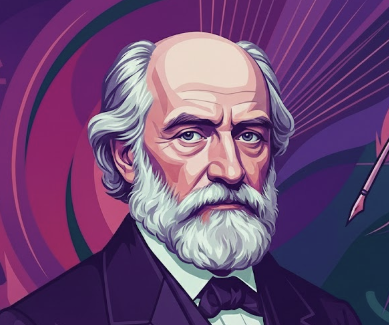
The Republic.
4 months 3 weeks ago
It is the courage to make a clean breast of it in the face of every question that distinguishes the philosopher. He must be like Sophocles' Oedipus, who, seeking enlightenment concerning his terrible fate, pursues his indefatigable inquiry even though he divines that appalling horror awaits him in the answer. But most of us carry with us the Jocasta in our hearts, who begs Oedipus, for God's sake, not to inquire further.
▼
Source
source
Letter to Johann Wolfgang von Goethe (November 1815)

4 months 2 weeks ago
"If a nation expects to be ignorant and free," said Jefferson, "it expects what never was and never will be."
▼
Source
source
Chapter 4 (p. 34)

5 months 1 week ago
It is impossible for a man who secretly violates the terms of the agreement not to harm or be harmed to feel confident that he will remain undiscovered, even if he has already escaped ten thousand times; for until his death he is never sure that he will not be detected.
4 weeks ago
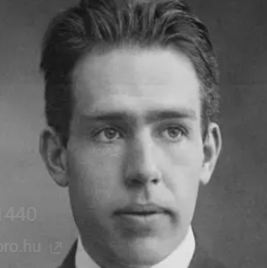
Never express yourself more clearly than you are able to think.
▼
Source
source
As quoted in Values of the Wise : Humanity's Highest Aspirations (2004) by Jason Merchey, p. 63
4 months 2 weeks ago
You can never do a kindness too soon, for you never know how soon it will be too late.
▼
Source
source
Culture

4 months 2 weeks ago
The more we learn about the world, and the deeper our learning, the more conscious, specific, and articulate will be our knowledge of what we do not know, our knowledge of our ignorance. For this, indeed, is the main source of our ignorance - the fact that our knowledge can be only finite, while our ignorance must necessarily be infinite. Variant translation: The more we learn about the world, and the deeper our learning, the more conscious, clear, and well-defined will be our knowledge of what we do not know, our knowledge of our ignorance. The main source of our ignorance lies in the fact that our knowledge can only be finite, while our ignorance must necessarily be infinite.

3 months 3 days ago
For Jung, the 'psychic world' (i.e. the world of the mind) was an independent reality, and it was possible to travel there and make the acquaintance of its inhabitants.
▼
Source
source
p. 164
3 months 3 days ago
Jung believed that alchemy is about the transmutation of the mind and the discovery of the self. Inevitably, he saw the male and female elements of the prima materia -- the king and queen of alchemy -- as the animus and anima; this seemed to indicate the (sic) alchemy is about psychological processes.
▼
Source
source
p. 103

4 months 3 weeks ago
III. Every tax ought to be levied at the time, or in the manner, in which it is most likely to be convenient for the contributor to pay it.
▼
Source
source
Chapter II Part II, p. 893.
3 months 2 weeks ago
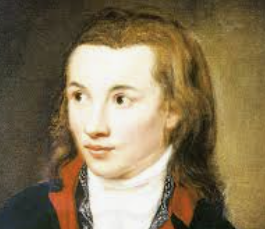
The true Poet is all-knowing; he is an actual world in miniature.
1 week 3 days ago
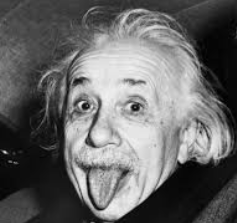
The state of mind which enables a man to do work of this kind is akin to that of the religious worshiper or the lover; the daily effort comes from no deliberate intention or program, but straight from the heart.
4 months 3 weeks ago
Marriage is encouraged in China, not by the profitableness of children, but by the liberty of destroying them.
▼
Source
source
Chapter VIII, p. 87.
2 months 1 week ago
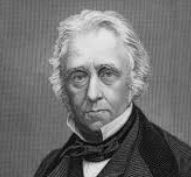
The ambassador of Russia and the grandees who accompanied him were so gorgeous that all London crowded to stare at them, and so filthy that nobody dared to touch them. They came to the court balls dropping pearls and vermin.
▼
Source
source
Vol. V, ch. 23
3 months 3 days ago
The Outsider is always unhappy, but he is an agent that ensures the happiness for millions of 'Insiders'.
▼
Source
source
Chapter Seven, The Great Synthesis…
5 months 1 week ago
To worship to other than one's own ancestral spirits is brown-nosing. If you see what is right and fail to act on it, you lack courage. Variant: To see what is right, and not to do it, is want of courage or of principle.
1 month 5 days ago
What maintains the marriage and what is it? Only the knowledge of the hearts, that is its beginning and end.
5 months 1 week ago
All teems with symbol; the wise man is the man who in any one thing can read another.
4 months 2 weeks ago
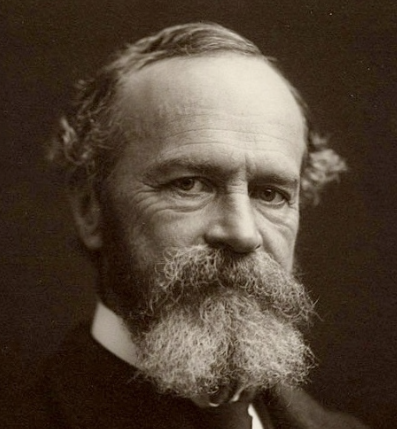
We must frankly confess, then, using our empirical common sense and ordinary practical prejudices, that in the world that actually is, the virtues of sympathy, charity, and non-resistance may be, and often have been, manifested in excess. ... You will agree to this in general, for in spite of the Gospel, in spite of Quakerism, in spite of Tolstoi, you believe in fighting fire with fire, in shooting down usurpers, locking up thieves, and freezing out vagabonds and swindlers.
▼
Source
source
Lectures XIV and XV, "The Value of Saintliness"
4 months 3 weeks ago
It is a matter of perfect indifference where a thing originated; the only question is: "Is it true in and for itself?" Many think that by pronouncing a doctrine to be Neo-Platonic, they have ipso facto banished it from Christianity. Whether a Christian doctrine stands exactly thus or thus in the Bible, the point to which the exegetical scholars of modern times devote all their attention is not the only question. The Letter kills, the Spirit makes alive: this they say themselves, yet pervert the sentiment by taking the Understanding for the Spirit.
▼
Source
source
Pt. III, sec. 3, ch. 2 Lectures on the History of History Vol 1 p. 344 John Sibree translation (1857), 1914
4 months 3 weeks ago
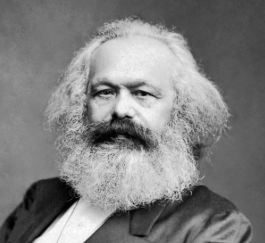
Communism differs from all previous movements in that it overturns the basis of all earlier relations of production and intercourse, and for the first time consciously treats all natural premises as the creatures of hitherto existing men, strips them of their natural character and subjugates them to the power of the united individuals. Its organisation is, therefore, essentially economic, the material production of the conditions of this unity; it turns existing conditions into conditions of unity. The reality, which communism is creating, is precisely the true basis for rendering it impossible that anything should exist independently of individuals, insofar as reality is only a product of the preceding intercourse of individuals themselves.
▼
Source
source
Vol. I, Part 4.
2 months 2 weeks ago
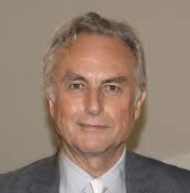
What worries me about religion is that it teaches people to be satisfied with not understanding the world they live in.
▼
Source
source
Heart Of The Matter: God Under The Microscope | BBC

5 months 1 week ago
One who liberates his country by killing a tyrant is to be praised and rewarded.
▼
Source
source
Trans. J.G. Dawson (Oxford, 1959), 44, 2 in O’Donovan, pp. 329-30
2 weeks 2 days ago
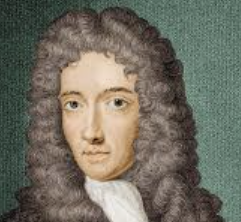
I consider, that as generally as Chymists are wont to appeal to Experience, and as confidently as they use to instance the several substances separated by the Fire from a Mixt Body, as a sufficient proof of their being its component Elements: Yet those differing Substances are many of them farr enough from Elementary simplicity, and may be yet look'd upon as mixt Bodies, most of them also retaining, somewhat... of the Nature of those Concretes whence they were forc'd.
3 months 5 days ago
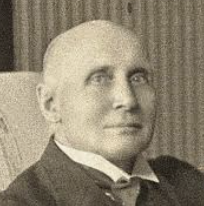
Familiar things happen, and mankind does not bother about them. It requires a very unusual mind to undertake the analysis of the obvious.
▼
Source
source
Ch. 1: "The Origins of Modern Science", p. 6
1 month 1 week ago
No Dilettantism in this Mahomet; it is a business of Reprobation and Salvation with him, of Time and Eternity: he is in deadly earnest about it! Dilettantism, hypothesis, speculation, a kind of amateur-search for Truth, toying and coquetting with Truth: this is the sorest sin. The root of all other imaginable sins. It consists in the heart and soul of the man never having been open to Truth; - "living in a vain show." Such a man not only utters and produces falsehoods, but is himself a falsehood. The rational moral principle, spark of the Divinity, is sunk deep in him, in quiet paralysis of life-death.
1 month 1 day ago
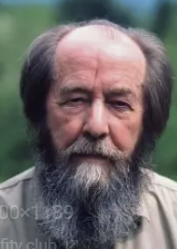
It is almost always impossible to evaluate at the time events which you have already experienced, and to understand their meaning with the guidance of their effects. All the more unpredictable and surprising to us will be the course of future events.
▼
Source
source
Autobiographical sketch (1970), at Nobelprize.org
1 month 1 week ago
This worthy man, whose nephew is still minister of Eskdalemuir (and author of a book on the Jews), proved the greatest blessing to that household. My father would, in any case, have saved himself. Of the other brothers, it may be doubted whether William Brown was not the primary preserver. They all learned to he masons from him, or from one another; instead of miscellaneous laborers and hunters, became regular tradesmen, the best in all their district, the skilfullest and faithfullest, and the best-rewarded every way. Except my father, none of them attained a decisive religiousness. But they all had prudence and earnestness, love of truth, industry, and the blessings it brings.

3 months 3 weeks ago
I have often admired the mystical way of Pythagoras, and the secret Magic of numbers.
▼
Source
source
Section 12
4 months 2 weeks ago
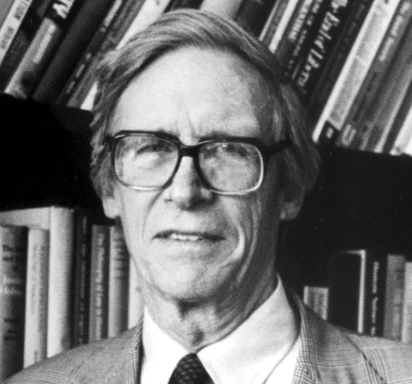
Justice as fairness provides what we want.
▼
Source
source
Chapter III, Section 30, pg. 190
1 week 3 days ago
As an eminent pioneer in the realm of high frequency currents... I congratulate you on the great successes of your life's work.
▼
Source
source
[http://www.teslasociety.com/einsteinletter.jpg Einstein's letter] to Nikola Tesla for Tesla's 75th birthday (1931)
4 months 2 weeks ago
Never have so many been manipulated so much by so few.
▼
Source
source
Chapter 3 (pp. 19-20)
1 month 4 weeks ago
To say that all philosophy is writing is, minimally, to say that it is never the transparent expression of thought.
▼
Source
source
Chapter 3, Deconstruction and Criticism, p. 46
2 weeks 6 days ago
He who made us would have been a pitiful bungler, if he had made the rules of our moral conduct a matter of science. For one man of science, there are thousands who are not. What would have become of them? Man was destined for society. His morality, therefore, was to be formed to this object. He was endowed with a sense of right and wrong, merely relative to this.
CivilSimian.com created by AxiomaticPanic, CivilSimian, Kalokagathia