


3 months 6 days ago
I am dreaming ...? Let me dream, if this dream is my life. Do not awaken me from it. I believe in the immortal origin of this yearning for immortality, which is the very substance of my soul. But do I really believe in it ...? And wherefore do you want to be immortal? you ask me, wherefore? Frankly, I do not understand the question, for it is to ask the reason of the reason, the end of the end, the principle of the principle.
3 months 1 week ago
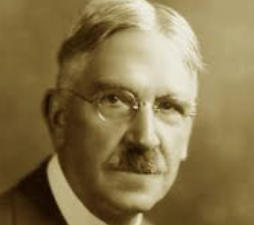
The artist in realizing his own individuality reveals potentialities hitherto unrealized. The revelation is the inspiration of other individuals to make the potentialities real, for it is not sheer revolt against things as they are which stirs human endeavor to its depth, but vision of what might be and is not. Subordination of the artists to any special cause no matter how worthy does violence not only to the artist but to the living source of a new and better future.
4 months 2 weeks ago
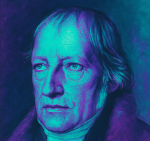
With Leibnitz the extent to which thoughts advance is the extent of the universe; where comprehension ceases, the universe ceases, and God begins: so that later it was even maintained that to be comprehended was derogatory to God, because He was thus degraded into finitude. In that procedure a beginning is made from the determinate, this and that are stated to be necessary; but since in the next place the unity of these moments is not comprehended, it is transferred to God. God is therefore, as it were, the waste channel into which all contradictions flow: Leibnitz's Théodicée is just a popular summing up such as this.
▼
Source
source
Third division, Chapter I. - The Metaphysics of the Understanding Alternate translation: "God is, as it were, the sewer into which all contradictions flow."

2 weeks 2 days ago
Because most of what we say and do is not essential. If you can eliminate it, you'll have more time, and more tranquillity. Ask yourself at every moment, "Is this necessary?" But we need to eliminate unnecessary assumptions as well. To eliminate the unnecessary actions that follow.
▼
Source
source
(Hays translation) IV, 24

2 weeks 3 days ago
In the Koran as in the Bible, politics is divinized, and human reason, crushed by the religious ascendancy, cannot insinuate its isolating and corrosive poison into the mechanisms of government, so that citizens are believers whose loyalty is exalted to faith, and obedience to enthusiasm and fanaticism.
▼
Source
source
p. 78

4 months 3 weeks ago
I perfectly agree with your Lordship too, that to crush the Industry of so great and so fine a province of the empire, in order to favour the monopoly of some particular towns in Scotland or England, is equally unjust and impolitic. The general opulence and improvement of Ireland might certainly, under proper management, afford much greater resources to the Government, than can ever be drawn from a few mercantile or manufacturing towns.
▼
Source
source
Letter to Henry Dundas (1 November 1779), quoted in Adam Smith, The Correspondence of Adam Smith, eds. E. C. Mossner and I. S. Ross (1987), p. 241

3 months 2 weeks ago
I believe in the salvation of humanity, in the future of cyanide . . .

4 months 2 weeks ago
Kierkegaard was by far the most profound thinker of the last century. Kierkegaard was a saint.
▼
Source
source
As quoted in "Wittgenstein and Kierkegaard on the ethico-religious" by Roe Fremstedal in Ideas in History Vol. 1
1 month 1 week ago
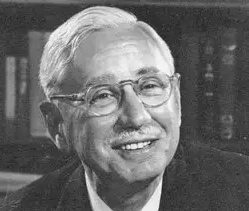
See him, the newborn, dirty but marvelous, ridiculous in actuality, infinite in possibility, capable of that ultimate miracle, growth.
▼
Source
source
Ch. 1 : Our life begins

4 months 3 weeks ago
The very port and gait of a swan, or turkey, or peacock show the high idea he has entertain'd of himself; and his contempt of all others. This is the more remarkable, that in the two last species of animals, the pride always attends the beauty, and is discover'd in the male only. The vanity and emulation of nightingales in singing have been commonly remark'd [...] All these are evident proofs, that pride and humility are not merely human passions, but extend themselves over the whole animal creation.
▼
Source
source
Part 1, Section 12

4 months 2 weeks ago
The only possible solution which will preserve Germany's honor and Germany's interest is, we repeat, a war with Russia.
▼
Source
source
Marx-Engels Gesamt-Ausgabe, Erste Abteilung, Volume 7, March to December 1848, p. 304.
1 month 1 day ago
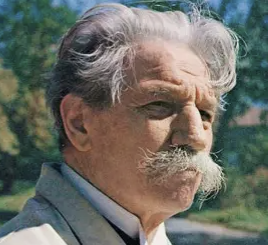
Until he extends the circle of his compassion to all living things, man will not himself find peace.
▼
Source
source
Variant translation: Until he extends his circle of compassion to include all living things, man will not himself find peace.
4 months 2 weeks ago
The commodity is first of all, an external object, a thing which through its qualities satisfies human needs of whatever kind. The nature of these needs, whether they arise, for example, from the stomach, or the imagination, makes no difference. Nor does it matter here how the thing satisfies man's need, whether directly as a means of subsistence, i.e. an object of consumption, or indirectly as a means of production.
▼
Source
source
Vol. I, Ch. 1, Section 1, pg. 41.

2 weeks 6 days ago
The abolition of the evil is not impossible; it ought never therefore to be despaired of. Every plan should be adopted, every experiment tried, which may do something towards the ultimate object.

4 months 2 weeks ago
Nothing more strikingly betrays the credulity of mankind than medicine. Quackery is a thing universal, and universally successful. In this case it becomes literally true that no imposition is too great for the credulity of men.
▼
Source
source
Pearls of Thought (1881) p. 218
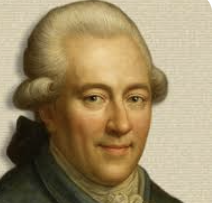
2 months 4 weeks ago
We can see nothing whatever of the soul unless it is visible in the expression of the countenance; one might call the faces at a large assembly of people a history of the human soul written in a kind of Chinese ideograms.
▼
Source
source
B 11

5 months 3 weeks ago
Style ought to prove that one believes in an idea; not only that one thinks it but also feels it.

4 months 3 weeks ago
We all look for happiness, but without knowing where to find it: like drunkards who look for their house, knowing dimly that they have one.
▼
Source
source
Notebooks (c.1735-c.1750)
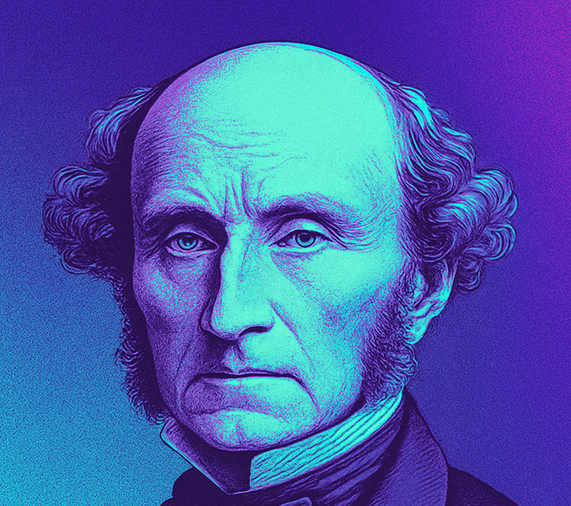
4 months 2 weeks ago
A general State education is a mere contrivance for molding people to be exactly like one another; and as the mold in which it casts them is that which pleases the dominant power in the government, whether this be a monarch, an aristocracy, or a majority of the existing generation; in proportion as it is efficient and successful, it establishes a despotism over the mind, leading by a natural tendency to one over the body.
▼
Source
source
Ch. V: Applications

4 months 3 weeks ago
Human reason has this peculiar fate that in one species of its knowledge it is burdened by questions which, as prescribed by the very nature of reason itself, it is not able to ignore, but which, as transcending all its powers, it is also not able to answer.
▼
Source
source
Preface, A vii
3 months 1 week ago
The total victimization of the individual that takes place is encouraged for the specific benefit of the industrial and political bureaucracy. It therefore cannot be justified on the ground of the individual's true interest. National Socialist ideology simply states that true human existence consists in unconditional sacrifice, that it is of the essence of the individual's life to abbey and to serve-'service which never comes to an end because service and life coincide.'
▼
Source
source
P. 416

3 months 3 days ago
Sadism is plainly connected with the need for self-assertion. At the same time it cannot be separated from the idea of defeat. A sadist is a man, who, in some sense, has his back to the wall. Nothing is further from sadism, for example, than the cheerful, optimistic mentality of a Shaw or Wells.
▼
Source
source
p. 158
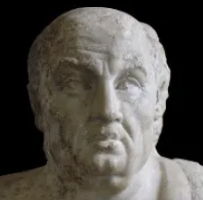
1 month 5 days ago
Don't ask for what you'll wish you hadn't got.
▼
Source
source
Line 1 Seneca himself states that he is quoting a 'common saying' here.


2 weeks 2 days ago
Art thou angry with him whose arm-pits stink? art thou angry with him whose mouth smells foul? What good will this anger do thee?
▼
Source
source
V, 28
5 months 3 weeks ago
Not one of these nobly equipped young men has escaped the restless, exhausting, confusing, debilitating crisis of education. ... He feels that he cannot guide himself, cannot help himself, and then he dives hopelessly into the world of everyday life and daily routine, he is immersed in the most trivial activity possible, and his limbs grow weak and weary.

4 months 2 weeks ago
I'm afraid of losing my obscurity. Genuineness only thrives in the dark. Like celery.
▼
Source
source
Those Barren Leaves, 1925
2 months 2 weeks ago
Youth instinctively understand the present environment - the electric drama. It lives mythically and in depth.

4 months 3 weeks ago
One thing I have frequently observed in children, that when they have got possession of any poor creature, they are apt to use it ill: they often torment, and treat it very roughly, young birds, butterflies, and such other poor animals which fall into their hands, and that with a seeming kind of pleasure. This I think should be watched in them, and if they incline to any such cruelty, they should be taught the contrary usage. For the custom of tormenting and killing of beasts, will, by degrees, harden their minds even towards men; and they will delight in the suffering and destruction of inferior creatures, will not be apt to be very compassionate or benign to those of their own kind. Our practice takes notice of this in the exclusion of butchers from juries of life and death.
▼
Source
source
Sec. 116
3 months 2 weeks ago
Freedom can be manifested only in the void of beliefs, in the absence of axioms, and only where the laws have no more authority than a hypothesis.

3 months 1 day ago
What is Mysticism? Is it not the attempt to draw near to God, not by rites or ceremonies, but by inward disposition? Is it not merely a hard word for " The Kingdom of Heaven is within"? Heaven is neither a place nor a time. There might be a Heaven not only here but now. It is true that sometimes we must sacrifice not only health of body, but health of mind (or, peace) in the interest of God; that is, we must sacrifice Heaven. But "thou shalt be like God for thou shalt see Him as He is": this may be here and now, as well as there and then. And it may be for a time - then lost - then recovered - both here and there, both now and then.
4 months 3 weeks ago
Life is a task to be done. It is a fine thing to say defunctus est; it means that the man has done his task.
▼
Source
source
"On the Sufferings of the World"

4 months 3 weeks ago
It seems to me that science has a much greater likelihood of being true in the main than any philosophy hitherto advanced (I do not, of course, except my own). In science there are many matters about which people are agreed; in philosophy there are none. Therefore, although each proposition in a science may be false, and it is practically certain that there are some that are false, yet we shall be wise to build our philosophy upon science, because the risk of error in philosophy is pretty sure to be greater than in science. If we could hope for certainty in philosophy, the matter would be otherwise, but so far as I can see such a hope would be chimerical.
▼
Source
source
Logical Atomism, 1924

3 months 3 days ago
The moment we choose to love we begin to move against domination, against oppression. The moment we choose to love we begin to move towards freedom, to act in ways that liberate ourselves and others.

4 months 1 week ago
Do you count your birthdays with gratitude?
▼
Source
source
Book II, epistle ii, line 210

1 month 2 weeks ago
The regular rhythms of factory production and its clear divisions of work time and nonwork time tend to decline in the realm of immaterial labor. Think how at the high end of labor market companies like Microsoft try to make the office more like home, offering free meals and exercise programs to keep employees in the office as many of their waking hours as possible. At the low end of the labor market workers have to juggle several job to make ends meet. Such practices always existed, but today, with the passage from Fordism to post-Fordism, the increased flexibility and mobility imposed on workers, and the decline of the stable, long-term employment typical of factory work, this tends to become the norm. At both the high end and low ends or labor market the new paradigm undermines the division between work time and the time of life.
▼
Source
source
145
2 months 2 weeks ago
By doing nothing men learn to do ill.
▼
Source
source
Maxim 318 Compare Ecclesiasticus 33:27 (KJV): "idleness teacheth much evil".
3 months 1 week ago
The species with eyes appears suddenly, capriciously as it were, and it is this species which changes the environment by creating its visible aspect. The eye does not come into being because it is needed. Just the contrary; because the eye appears it can henceforth be applied as a serviceable instrument. Each species builds up its stock of useful habits by selecting among, and taking advantage of, the innumerable useless actions which a living being performs out of sheer exuberance.
▼
Source
source
p. 17
1 month 5 days ago
Withdraw into yourself, as far as you can. Associate with those who will make a better man of you. Welcome those whom you yourself can improve. The process is mutual; for men learn while they teach.
▼
Source
source
Line 8.
3 months 6 days ago
By reducing any quality to quantity, myth economizes intelligence: it understands reality more cheaply.
▼
Source
source
p. 153
3 months 1 week ago
A naturall foole that could never learn by heart the order of numerall words, as one, two, and three, may observe every stroak of the Clock, and nod to it, or say one, one, one; but can never know what houre it strikes.
▼
Source
source
The First Part, Chapter 4, p. 14

4 months 4 weeks ago
Origen, of course, is also a great advocate of the allegorical approach. Yet I think you will have to admit that our modem theologians either despise this method of interpretation or are completely ignorant of it. As a matter of fact they surpass the pagans of antiquity in the subtlety of their distinctions.
▼
Source
source
p. 63
1 month ago
Engels feared that the Socialists, in order to gain adherents in the electoral struggles rapidly, would make promises which were contrary to Marxist doctrine. The antisemites told the peasants and the small shopkeepers that they would protect them from the development of capitalism. Engels thought that an imitation of this procedure would be dangerous, since, in his opinion, the social revolution could only be realised when capitalism had almost completely destroyed the small proprietors and small industries; if the Socialists, then, endeavoured to hinder this evolution, they would ultimately compromise their own cause.
▼
Source
source
Reflections on Violence, London: UK, George Allen & Unwin, (reprinted in Saxony 1925) p. 180
4 months 2 weeks ago
If you want to go down deep you do not need to travel far; indeed, you don't have to leave your most immediate and familiar surroundings.
▼
Source
source
p. 50e
3 months 3 weeks ago
A common monetary standard will be established, with the consent of the various governments, by which industrial transactions will be greatly facilitated. Three spheres made respectively of gold, silver, and platinum, and each weighing fifty grammes, would differ sufficiently in value for the purpose. The sphere should have a small flattened base, and on the great circle parallel to it the Positivist motto would be inscribed. At the pole would be the image of the immortal Charlemagne, the founder of the Western Republic, and round the image his name would be engraved, in its Latin form, Carolus; that name, respected as it is by all nations of Europe alike, would be the common appellation of the universal monetary standard.
▼
Source
source
p. 430
3 months 2 weeks ago
When we are young, we take a certain pleasure in our infirmities. They seem so new, so rich! With age, they no longer surprise us, we know them too well. Now, without anything unexpected in them, they do not deserve to be endured.

2 months 2 weeks ago
There is no single speech nor article in which it is not said that the purpose of all these orgies is the peace of Europe. At a dinner given by the representatives of French literature, all breathe of peace. M. Zola, who, a short time previously, had written that war was inevitable, and even serviceable; M. de Vogue, who more than once has stated the same in print, say, neither of them, a word as to war, but speak only of peace. The sessions of Parliament open with speeches upon the past festivities; the speakers mention that such festivities are an assurance of peace to Europe. It is as if a man should come into a peaceful company, and commence energetically to assure everyone present that he has not the least intention to knock out anyone's teeth, blacken their eyes, or break their arms, but has only the most peaceful ideas for passing the evening.
▼
Source
source
Ch. 1
4 months 3 weeks ago
It is one of the superstitions of the human mind to have imagined that virginity could be a virtue.
▼
Source
source
Notebooks (c.1735-c.1750) Note: This quotation and the three that follow directly below are from the so-called Leningrad Notebook, also known as Le Sottisier; it is one of several posthumously published notebooks of Voltaire.
CivilSimian.com created by AxiomaticPanic, CivilSimian, Kalokagathia