


6 months 3 weeks ago
The concessions of the weak are the concessions of fear.

7 months 3 weeks ago
A living dog is better than a dead lion. Shall a man go and hang himself because he belongs to the race of pygmies, and not be the biggest pygmy that he can? Let every one mind his own business, and endeavor to be what he was made. Why should we be in such desperate haste to succeed, and in such desperate enterprises? If a man does not keep pace with his companions, perhaps it is because he hears a different drummer. Let him step to the music which he hears, however measured or far away.
▼
Source
source
pp. 366-67
4 months 2 weeks ago
The cultural atmosphere of Russia in those years had an adolescent quality, common to all periods of revolution: the belief that life is just beginning, that the future is unlimited, and that mankind is no longer bound by the shackles of history.
▼
Source
source
(pg. 47)
7 months 3 weeks ago
An early morning walk is a blessing for the whole day.
▼
Source
source
April 20, 1840

6 months 3 weeks ago
"You're a gentleman," they used to say to him. "You shouldn't have gone murdering people with a hatchet; that's no occupation for a gentleman."


7 months 4 weeks ago
It is difficult for the isolated individual to work himself out of the immaturity which has become almost natural for him. He has even become fond of it and for the time being is incapable of employing his own intelligence, because he has never been allowed to make the attempt. Statutes and formulas, these mechanical tools of a serviceable use, or rather misuse, of his natural faculties, are the ankle-chains of a continuous immaturity. Whoever threw it off would make an uncertain jump over the smallest trench because he is not accustomed to such free movement. Therefore there are only a few who have pursued a firm path and have succeeded in escaping from immaturity by their own cultivation of the mind.

8 months 4 days ago
She [virtue] requires a rough and stormy passage; she will have either outward difficulties to wrestle with, ... or internal difficulties.
▼
Source
source
Book II, Ch. 11. Of Cruelty

5 months 3 weeks ago
The peculiar and amusing nature of those answers stems from the fact that modern history is like a deaf person who is in the habit of answering questions that no one has put to them. If the purpose of history be to give a description of the movement of humanity and of the peoples, the first question - in the absence of a reply to which all the rest will be incomprehensible - is: what is the power that moves peoples? To this, modern history laboriously replies either that Napoleon was a great genius, or that Louis XIV was very proud, or that certain writers wrote certain books. All that may be so and mankind is ready to agree with it, but it is not what was asked.
▼
Source
source
Vol 2, pt 5, p 236 - Selected Works, Moscow, 1869
6 months 3 weeks ago
Should it seem to me that truth has been put to silence, and virtue trampled under foot, and that folly and vice will certainly triumph; should it happen, when all hearts were filled with hope for the human race, that the horizon should suddenly darken around them as it had never done before; should the work, well and happily begun, on which all eyes were fixed with joyous expectation, suddenly and unexpectedly be turned into a deed of shame, - yet will I not be dismayed; nor if the good cause should appear to grow and flourish, the lights of freedom and civilization be diffused, and peace and good-will amongst men be extended, shall yet my efforts be relaxed.
▼
Source
source
Jane Sinnett, trans 1846 p.123

6 months 2 weeks ago
I have cast fire upon the world, and see, I am guarding it until it blazes.
6 months 3 weeks ago
He had no failings which were not owing to a noble cause; to an ardent, generous, perhaps an immoderate passion for fame; a passion which is the instinct of all great souls.
▼
Source
source
The reference is to Charles Townshend

6 months 3 weeks ago
Not to be born is undoubtedly the best plan of all. Unfortunately, it is within no one's reach.

3 months 3 weeks ago
The naturalists, you know, distribute the history of nature into three kingdoms or departments: zoology, botany, mineralogy. Ideology, or mind, however, occupies so much space in the field of science, that we might perhaps erect it into a fourth kingdom or department. But inasmuch as it makes a part of the animal construction only, it would be more proper to subdivide zoology into physical and moral.
▼
Source
source
Thomas Jefferson, Letter (24 Mar 1824) to Mr. Woodward. Collected in The Writings of Thomas Jefferson: Correspondence (1854), 339.
8 months 3 weeks ago
The vices respectively fall short of or exceed what is right in both passions and actions, while virtue both finds and chooses that which is intermediate.
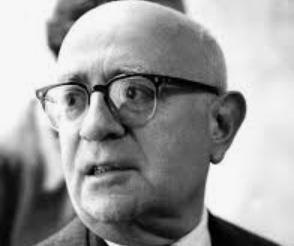
6 months 1 week ago
Philosophy ... should not imagine that specialized work in epistemological theory, or whatever else prides itself on being research, is actually philosophy. Yet a philosophy forswearing all of that must in the end be irreconcilably at odds with the dominant consciousness. Nothing else raises it above the suspicion of apologetics. Philosophy that satisfies its own intention, and does not childishly skip behind its own history and the real one, has its lifeblood in the resistance against the common practices of today and what they serve, against the justification of what happens to be the case.
▼
Source
source
p. 6
6 months 3 weeks ago
Good health is the best weapon against religion. Healthy bodies and healthy minds have never been shaken by religious fears.

7 months 2 weeks ago
Science does not stand still, and neither does philosophy, although the latter has a tendency to walk in circles.
▼
Source
source
Afterword To The 2011 Edition, p. 187
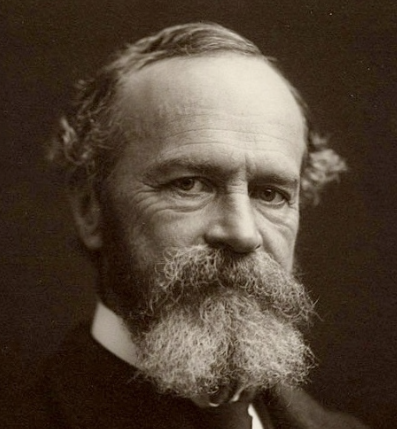
7 months 3 weeks ago
Romeo wants Juliet as the filings want the magnet; and if no obstacles intervene he moves towards her by as straight a line as they. But Romeo and Juliet, if a wall be built between them, do not remain idiotically pressing their faces against its opposite sides like the magnet and the filings with the card. Romeo soon finds a circuitous way, by scaling the wall or otherwise, of touching Juliet's lips directly. With the filings the path is fixed; whether it reaches the end depends on accidents. With the lover it is the end which is fixed, the path may be modified indefinitely.
▼
Source
source
Ch. 1 : The Scope of Psychology
6 months 3 weeks ago
To make more plans than an explorer or a crook, yet to be infected at the will's very root.

7 months 3 weeks ago
Wherever Macdonald sits, there is the head of the table.
▼
Source
source
par. 37
7 months 1 week ago
Time is the wisest of all things that are; for it brings everything to light.
▼
Source
source
As quoted in Diogenes Laërtius, The Lives and Opinions of Eminent Philosophers, I, 35

8 months 3 weeks ago
He marveled at the strange blindness by which men, though they are so alert to what changes in themselves, impose on their friends an image chosen for them once and for all. He was being judged by what he had been. Just as dogs don't change character, men are dogs to one another.

7 months 4 weeks ago
A sound mind in a sound body, is a short but full description of a happy state in this world.
▼
Source
source
Sec. 1
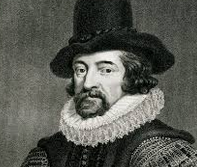
8 months 5 days ago
The law of nature teaches me to speak in my own defence: With respect to this charge of bribery I am as innocent as any man born on St. Innocents Day. I never had a bribe or reward in my eye or thought when pronouncing judgment or order. I am ready to make an oblation of myself to the King.
▼
Source
source
(17 April 1621) Quoted by Baron John Campbell (1818), J. Murray in "The Lives of the Lord Chancellors and Keepers of the Great Seal of England"

6 months 2 weeks ago
I think being a woman is like being Irish... Everyone says you're important and nice, but you take second place all the same.
▼
Source
source
The Red and the Green (1965), ch. 2, p. 30.

6 months 5 days ago
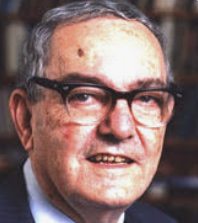
At the time of its initial publication, Public Administration helped to define this field of study and practice by introducing two major new emphases: an orientation toward human behavior and human relations in organizations, and an emphasis on the interaction between administration, politics, and policy. Without neglecting more traditional concerns with organization structure, Simon, Thompson, and Smithburg viewed administration in its behavioral and political contexts. The viewpoints they express still are at the center of public administration's concerns.
▼
Source
source
Book abstract, 1991
7 months 3 weeks ago
For many years I was self-appointed inspector of snowstorms and rainstorms, and did my duty faithfully, though I never received one cent for it.
▼
Source
source
After February 22, 1846

6 months 1 week ago
It is obvious that many women have appropriated feminism to serve their own ends, especially those white women who have been at the forefront of the movement; but rather than resigning myself to this appropriation I choose to re-appropriate the term "feminism," to focus on the fact that to be "feminist" in any authentic sense of the term is to want for all people, female and male, liberation from sexist role patterns, domination, and oppression.

5 months 1 week ago
Biopiracy is biological theft; illegal collection of indigenous plants by corporations who patent them for their own use.
▼
Source
source
On biopiracy, from the booklet "No Patents on Seeds: A Handbook For Activists"
4 months 3 weeks ago
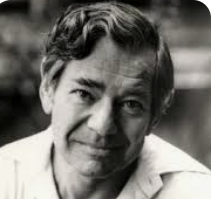
If it does not upset, it is not philosophy.


5 months 3 weeks ago
The future masters of technology will have to be lighthearted and intelligent. The machine easily masters the grim and the dumb.
▼
Source
source
(p. 55)

7 months 3 weeks ago
We have been given free will, in order that we may will our self-will out of existence and so come to live continuously in a 'state of grace.' All our actions must be directed, in the last analysis, to making ourselves passive in relation to the activity and the being of divine reality. We are, as it were, aeolian harps, endowed with the power either to expose themselves to the wind of the Spirit or to shut themselves away from it.
5 months 3 weeks ago
Genuine religion is not about speculating about God or the soul or about what happened in the past or will happen in the future; it cares only about one thing-finding out exactly what should or should not be done in this lifetime.
▼
Source
source
p. 3

4 months 2 weeks ago
For being a man worth any thousand men, the response your Knox, your Cromwell gets, is an argument for two centuries whether he was a man at all. God's greatest gift to this Earth is sneeringly flung away.

6 months 1 week ago
We Americans claim to be a peace-loving people. We hate bloodshed; we are opposed to violence. Yet we go into spasms of joy over the possibility of projecting dynamite bombs from flying machines upon helpless citizens. We are ready to hang, electrocute, or lynch anyone, who, from economic necessity, will risk his own life in the attempt upon that of some industrial magnate. Yet our hearts swell with pride at the thought that America is becoming the most powerful nation on earth, and that it will eventually plant her iron foot on the necks of all other nations. Such is the logic of patriotism.

7 months 3 weeks ago
When I obey a rule, I do not choose. I obey the rule blindly.
▼
Source
source
§ 219
8 months 3 weeks ago
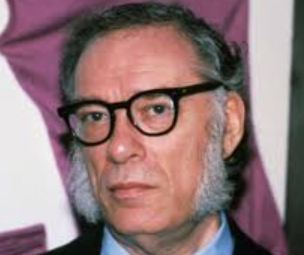
I believe that only scientists can understand the universe. It is not so much that I have confidence in scientists being right, but that I have so much in nonscientists being wrong.

8 months 1 week ago
For this too is a very pleasant strand woven into the Cynic's pattern of life; he must needs be flogged like an ass, and while he is being flogged he must love the men who flog him, as though he were the father or brother of them all.
▼
Source
source
Book III, ch. 22, 54
4 months 3 weeks ago
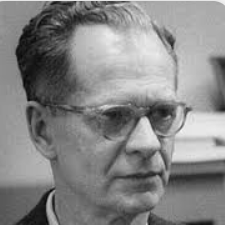
It has always been the task of formal education to set up behavior which would prove useful or enjoyable later in a student's life.
▼
Source
source
As quoted in Performance-based Assessment for Middle and High School Physical Education (2002) by Jacalyn Lea Lund and Mary Fortman Kirk, p. 165
4 months 3 weeks ago
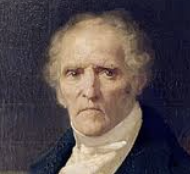
This miracle of social concord would result not from direct conciliation, which would be impossible, but from the development of new interests, and especially from the amazement with which the minds of men would be filled on being convinced of the radical falseness of the civilized social order by comparison with the associative or combined, and of the errors in which the social world has been so long plunged - misled by speculative philosophy, which upholds and extols this order with all its defects to the entire neglect of the study of association.
▼
Source
source
The Theory of Social Organization. Harmonian Man: Selected Writings of Charles Fourier, p. 5.

6 months 3 weeks ago
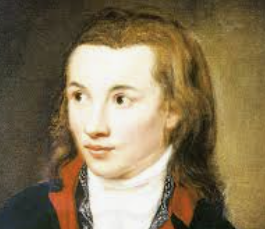
Poets and priests were one in the beginning, and they only separated in later times. But the real poet is always a priest, just as the real priest always remains a poet.
▼
Source
source
Fragment No. 71
6 months 3 weeks ago
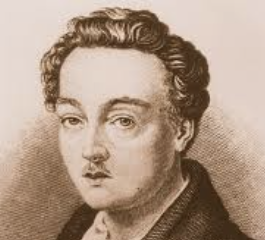
People like us are unhappy in this world and in the next, I guess if we made it to heaven, we'd have to help make it thunder.
▼
Source
source
Scene VI.
6 months 3 weeks ago
Once we begin to want, we fall under the jurisdiction of the Devil.
7 months 4 weeks ago
This freedom from absolute, arbitrary power, is so necessary to, and closely joined with a man's preservation, that he cannot part with it, but by what forfeits his preservation and life together: for a man, not having the power of his own life, cannot, by compact, or his own consent, enslave himself to any one, nor put himself under the absolute, arbitrary power of another, to take away his life, when he pleases.
▼
Source
source
Second Treatise of Civil Government, Ch. IV, sec. 23
3 months 3 weeks ago
There is no act, however virtuous, for which ingenuity may not find some bad motive.
▼
Source
source
Letter to Edward Dowse
7 months 2 weeks ago
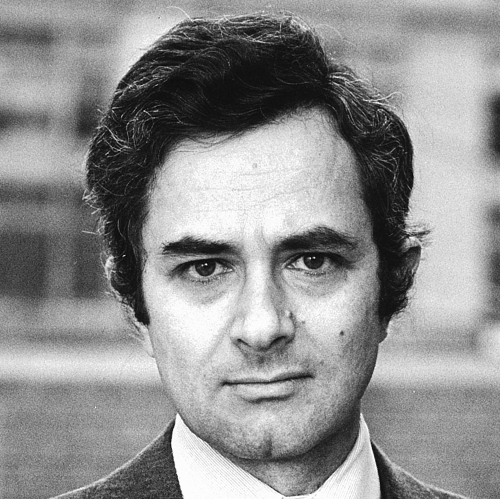
When the objective gaze is turned on human beings and other experiencing creatures, who are undeniably parts of the world, it can reveal only what they are like in themselves. And if the way things are for these subjects is not part of the way things are in themselves, an objective account, whatever it shows, will omit something. So reality is not just objective reality, and the pursuit of objectivity is not an equally effective method of reaching the truth about everything.
▼
Source
source
"Subjective and Objective" (1979), pp. 212-213.
CivilSimian.com created by AxiomaticPanic, CivilSimian, Kalokagathia