

6 months 4 weeks ago
When you close your doors, and make darkness within, remember never to say that you are alone, for you are not alone; nay, God is within, and your genius is within. And what need have they of light to see what you are doing?
▼
Source
source
Book I, ch. 14, 13, 14.

4 months 4 weeks ago
It is in literature that the concrete outlook of humanity receives its expression.
▼
Source
source
Ch. 5: "The Romantic Reaction", p. 106

6 months 1 week ago
Suso has even left a diagrammatic picture of the relations subsisting between Godhead, triune God and creatures. In this very curious and interesting drawing a chain of manifestation connects the mysterious symbol of the Divine Ground with the three Persons of the Trinity, and the Trinity in turn is connected in a descending scale with angels and human beings. These last, as the drawing vividly shows, may make one of two choices. They can either live the life of the outer man, the life of the separative selfhood; in which case they are lost (for, in the words of the Theologia Germanica, "nothing burns in hell but the self"). Or else they can identify themselves with the inner man, in which case it becomes possible for them, as Suso shows, to ascend again, through unitive knowledge, to the Trinity and even, beyond the Trinity, to the ultimate Unity of the Divine Ground.
2 months 3 weeks ago
Objectivity may also be defined as freedom: the objective individual is bound by no commitments which could prejudice his perception, understanding, and evaluation of the given.
▼
Source
source
p. 403

6 months 3 weeks ago
An untempted woman cannot boast of her chastity.

5 months 6 days ago
The guiding question of Marx's analysis was, How does capitalist society supply its members with the necessary use-values? And the answer disclosed a process of blind necessity, chance, anarchy and frustration. The introduction of the category of use-value was the introduction of a forgotten factor, forgotten, that is, by the classical political economy which was occupied only with the phenomenon of exchange value. In the Marxian theory, this factor becomes an instrument that cuts through the mystifying reification of the commodity world.
▼
Source
source
P. 304

6 months 4 weeks ago
If you believe what you like in the gospels, and reject what you don't like, it is not the gospel you believe, but yourself.
▼
Source
source
Earliest attribution found in Who Said That?: More than 2,500 Usable Quotes and Illustrations (1995) by George Sweeting. Online sources always attribute the quote to Augustine, but never specify in which of his works it is to be found.
6 months 2 weeks ago
In the "fulfillment" of both the laws and duty, ... the moral disposition ceases to be the universal, opposed to inclination, and inclination ceases to be particular, opposed to the law.
5 months 1 week ago
Since it cannot be overlooked by the Doctrine of Knowledge that Actual Knowledge does by no means present itself as a Unity, such as is assumed above but as a multiplicity, there is consequently a second task imposed upon it, - that of setting forth the ground of this apparent Multiplicity. It is of course understood that this ground is not to be derived from any outward source, but must be shown to be contained in the essential Nature of Knowledge itself as such; - and that therefore this problem, although apparently two-fold, is yet but one and the same, - namely, to set forth the essential Nature of Knowledge.

6 months 3 weeks ago
A faithful and good servant is a real godsend; but truly 'tis a rare bird in the land.
▼
Source
source
156

6 months 1 week ago
He chooses the most feared, most hated man in order to worship him as a god, feeling sure that he is alone in perceiving the god's secret virtues.
▼
Source
source
p. 165

6 months 2 weeks ago
It would be worth the while to look closely into the eye which has been open and seeing at such hours, and in such solitudes, its dull, yellowish, greenish eye. Methinks my own soul must be a bright invisible green.
7 months 1 week ago
Printing will tell you such useful things and such interesting things that not being able to read would be as bad as not being able to see.

4 months 3 weeks ago
The characteristic of the really great writer is the ability of his mind to to suddenly leap beyond his ordinary human values, into sudden perception of universal values.
▼
Source
source
p. 33

6 months 1 week ago
Resting on your laurels is as dangerous as resting when you are walking in the snow. You doze off and die in your sleep.
▼
Source
source
p. 35e
5 months 2 weeks ago
Power acquired by violence is only a usurpation, and lasts only as long as the force of him who commands prevails over that of those who obey.
▼
Source
source
Article on Political Authority, Vol. 1
5 months 5 days ago
The chief requirement of the good life... is to live without any image of oneself.
▼
Source
source
The Bell (1958), ch. 9; 2001, p. 119.
6 months 4 days ago
... our maturation has consisted in the gradual realization that, if we can rely on one another, we need not rely on anything else. In religious terms, this is the Feuerbachian thesis that God is just a projection of the best, and sometimes the worst, of humanity. In philosophical terms, it is the thesis that anything that talk of objectivity can do to make our practices intelligible can be done equally well by talk of intersubjectivity.
▼
Source
source
"John Searle on Realism and Relativism." Truth and Progress: Philosophical Papers, Volume 3 (1998).

2 months 4 weeks ago
You see that man can endure toil: Cato, on foot, led an army through African deserts. You see that thirst can be endured: he marched over sun-baked hills, dragging the remains of a beaten army and with no train of supplies, undergoing lack of water and wearing a heavy suit of armour; always the last to drink of the few springs which they chanced to find. You see that honour, and dishonour too, can be despised: for they report that on the very day when Cato was defeated at the elections, he played a game of ball. You see also that man can be free from fear of those above him in rank: for Cato attacked Caesar and Pompey simultaneously, at a time when none dared fall foul of the one without endeavouring to oblige the other. You see that death can be scorned as well as exile: Cato inflicted exile upon himself and finally death, and war all the while.
6 months 1 week ago
It makes a tremendous emotional and practical difference to one whether one accepts the universe in the drab discolored way of stoic resignation to necessity, or with the passionate happiness of Christian saints.
▼
Source
source
Lecture II, "Circumscription of the Topic"

6 months 2 weeks ago
"I don't want to! Why should I?" "Because more people will be happier if you do than if you don't." "So what? I don't care about other people." "You should." "But why?" "Because more people will be happier if you do than if you don't."
▼
Source
source
Dialogue between Russell and his daughter Katharine, as quoted in My Father - Bertrand Russell, 1975
2 months 2 weeks ago
I am a mariner of Odysseus with heart of fire but with mind ruthless and clear.
▼
Source
source
Toda Raba
2 months 2 weeks ago
I possess no weapon but love. With that I have come to do battle. Help me!
5 months 5 days ago
This idea is that laws which purport to be statements of what actually occurs are statistical in character as distinct from so-called dynamic laws that are abstract and mathematical, and disguised definitions. Recognition of the statistical nature of physical laws was first effected in the case of gases when it became evident that generalizations regarding the behavior of swarms of molecules were not descriptions or predictions of the behavior of any individual particle. A single molecule is not and cannot be a gas. It is consequently absurd to suppose that a scientific law is about the elementary constituents of a gas. It is a statement of what happens when a large number of such constituents interact with one another under certain conditions.

2 months 1 week ago
From Antisthenes: It is royal to do good and be abused.
▼
Source
source
VII, 36
5 months 2 weeks ago
In any country where talent and virtue produce no advancement, money will be the national god. Its inhabitants will either have to possess money or make others believe that they do. Wealth will be the highest virtue, poverty the greatest vice. Those who have money will display it in every imaginable way. If their ostentation does not exceed their fortune, all will be well. But if their ostentation does exceed their fortune they will ruin themselves. In such a country, the greatest fortunes will vanish in the twinkling of an eye. Those who don't have money will ruin themselves with vain efforts to conceal their poverty. That is one kind of affluence: the outward sign of wealth for a small number, the mask of poverty for the majority, and a source of corruption for all.

5 months 2 weeks ago
Even to have come forth is something, since I see that being able to conquer is placed in the hands of fate. However, there was in me, whatever I was able to do, that which no future century will deny to be mine, that which a victor could have for his own: Not to have feared to die, not to have yielded to any equal in firmness of nature, and to have preferred a courageous death to a noncombatant life.
6 months 4 weeks ago
In order to understand the Scriptures, it is absolutely necessary to know the whole, complete Christ, that is, Head and members. For sometimes Christ speaks in the name of the Head alone, sometimes in the name of His body, which is the holy Church spread over the entire earth. And we are in His body, and we hear ourselves speaking in it, for the Apostle tells us: We are members of His body (Eph. 5:30). In many places does the Apostle tell us this.
▼
Source
source
p. 419

6 months 1 week ago
Daughters of Time, the hypocritic Days, Muffled and dumb like barefoot dervishes, And marching single in an endless file, Bring diadems and fagots in their hands.
▼
Source
source
Days
3 months 3 weeks ago
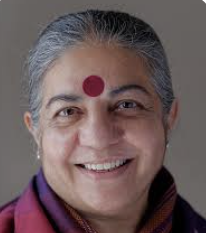
Economic reforms based on the idea of limitless growth in a limited world, can only be maintained by the powerful grabbing the resources of the vulnerable. The resource grab that is essential for "growth" creates a culture of rape-the rape of the earth, of local self-reliant economies, and of women.
▼
Source
source
On economic reforms in India and rape in India, from "Vandana Shiva: Our Violent Economy is Hurting Women " article in Yes Magazine
4 months 3 weeks ago
Steiner goes further than this -- and this is his own central contribution to modern thought. He states that once we have made a habit of remembering Mozart and the stars, we shall find ourselves developing powers of 'spiritual vision.' We shall never again feel ourselves to be helpless victims of the external world.
▼
Source
source
p. 169
4 months 3 weeks ago
However, the disappearance of domination does not entail freedom. Instead, it makes freedom and constraint coincide. Thus, the achievement-subject gives itself over to compulsive freedom--that is, to the free constraint of maximizing achievement. Excess work and performance escalate into auto-exploitation.
▼
Source
source
Source: Page 11

6 months 2 weeks ago
There are two things which make it impossible to believe that this world is the successful work of an all-wise, all-good, and, at the same time, all-powerful Being; firstly, the misery which abounds in it everywhere; and secondly, the obvious imperfection of its highest product, man, who is a burlesque of what he should be.
▼
Source
source
"On the Sufferings of the World"
2 months 1 week ago
Man, servant and interpreter of Nature, does and understands only as much as he has observed of the order of Nature, either in reality or in mind; he neither knows nor can do more.
6 months 2 weeks ago
The origin of our passions, the root and spring of all the rest, the only one which is born with man, which never leaves him as long as he lives, is self-love; this passion is primitive, instinctive, it precedes all the rest, which are in a sense only modifications of it. In this sense, if you like, they are all natural. But most of these modifications are the result of external influences, without which they would never occur, and such modifications, far from being advantageous to us, are harmful. They change the original purpose and work against its end; then it is that man finds himself outside nature and at strife with himself.
2 months 1 week ago
When governments fear the people, there is liberty. When the people fear the government, there is tyranny.
▼
Source
source
Thomas Jefferson Encyclopedia. It first appears in 1914, in Barnhill, John Basil (1914). "Indictment of Socialism No. 3" (PDF). Barnhill-Tichenor Debate on Socialism. Saint Louis, Missouri: National Rip-Saw Publishing. pp. p. 34. Retrieved on 2008-10-16.

4 months 3 weeks ago
I do not mean to deny the biologic, physiologic, or psychologic factors in creating crime; but there is hardly an advanced criminologist who will not concede that the social and economic influences are the most relentless, the most poisonous germs of crime.
7 months 1 week ago
Religion is more conservative than any other aspect of human life.
2 months 3 days ago
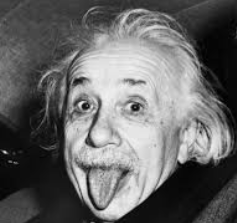
In the temple of science are many mansions, and various indeed are they that dwell therein and the motives that have led them thither. Many take to science out of a joyful sense of superior intellectual power; science is their own special sport to which they look for vivid experience and the satisfaction of ambition; many others are to be found in the temple who have offered the products of their brains on this altar for purely utilitarian purposes. Were an angel of the Lord to come and drive all the people belonging to these two categories out of the temple, the assemblage would be seriously depleted, but there would still be some men, of both present and past times, left inside. Our Planck is one of them, and that is why we love him. I am quite aware that we have just now lightheartedly expelled in imagination many excellent men who are largely, perhaps chiefly, responsible for the buildings of the temple of science; and in many cases, our angel would find it a pretty ticklish job to decide. But of one thing I feel sure: if the types we have just expelled were the only types there were, the temple would never have come to be, any more than a forest can grow which consists of nothing but creepers. For these people any sphere of human activity will do if it comes to a point; whether they become engineers, officers, tradesmen, or scientists depends on circumstances.Now let us have another look at those who have found favor with the angel. Most of them are somewhat odd, uncommunicative, solitary fellows, really less like each other, in spite of these common characteristics, than the hosts of the rejected. What has brought them to the temple? That is a difficult question and no single answer will cover it.
5 months 2 weeks ago
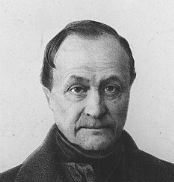
Every attempt to refer chemical questions to mathematical doctrines must be considered, now and always, profoundly irrational, as being contrary to the nature of the phenomena. . . . but if the employment of mathematical analysis should ever become so preponderant in chemistry (an aberration which is happily almost impossible) it would occasion vast and rapid retrogradation....

6 months 4 weeks ago
The steady drip of water causes stone to hollow and yield.
▼
Source
source
Book I, line 313 (tr. Stallings) Variant translation: Continual dropping wears away a stone. Compare: "The soft droppes of rain pierce the hard marble; many strokes overthrow the tallest oaks", John Lyly, Euphues, 1579 (Arber's reprint), p. 81

3 months 4 days ago
Who would govern that can get along without governing? He that is fittest for it, is of all men the unwillingest unless constrained.


4 months 3 weeks ago
The reward in heaven is the perpetual bait, a bait that has caught man in an iron net, a strait-jacket which does not let him expand or grow. All pioneers of truth have been, and still are, reviled; they have been, and still are, persecuted. But did they ask humanity to pay the price? Did they seek to bribe mankind to accept their ideas? They knew too well that he who accepts a truth because of the bribe, will soon barter it away to a higher bidder...Proud and self-reliant characters prefer hatred to such sickening artificial love. Not because of any reward does a free spirit take his stand for a great truth, nor has such a one ever been deterred because of fear of punishment.
6 months 3 days ago
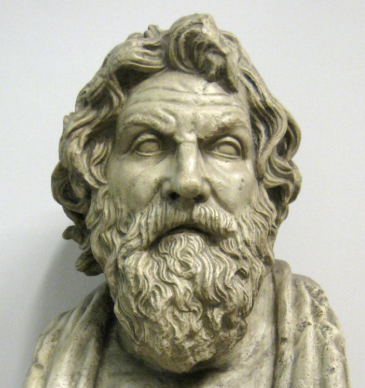
Pay attention to your enemies, for they are the first to discover your mistakes.
▼
Source
source
§ 12

5 months 6 days ago
For Appetite with an opinion of attaining, is called HOPE.
7 months 3 days ago
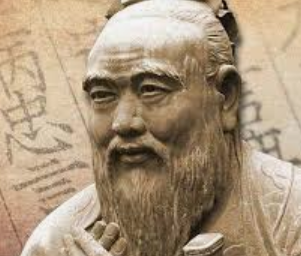
To entire sincerity there belongs ceaselessness. Not ceasing, it continues long. Continuing long, it evidences itself. Evidencing itself, it reaches far. Reaching far, it becomes large and substantial. Large and substantial, it becomes high and brilliant. Large and substantial; this is how it contains all things. High and brilliant; this is how it overspreads all things. Reaching far and continuing long; this is how it perfects all things. So large and substantial, the individual possessing it is the co-equal of Earth. So high and brilliant, it makes him the co-equal of Heaven. So far-reaching and long-continuing, it makes him infinite. Such being its nature, without any display, it becomes manifested; without any movement, it produces changes; and without any effort, it accomplishes its ends.
6 months 3 weeks ago
The most profound joy has more of gravity than of gaiety in it.
▼
Source
source
Book II, Ch. 20
5 months 6 days ago
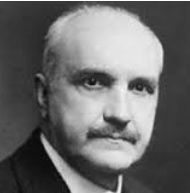
Although a poem be not made by counting of syllables upon the fingers, yet "numbers" is the most poetical synonym we have for verse, and "measure" the most significant equivalent for beauty, for goodness, and perhaps even for truth. Those early and profound philosophers, the followers of Pythagoras, saw the essence of all things in number, and it was by weight, measure, and number, as we read in the Bible, that the Creator first brought Nature out of the void.
▼
Source
source
Interpretations of Poetry and Religion (1900), p. 251

3 months 2 weeks ago
In ancient Europe, Stoics asserted that a slave could be freer than a master who suffers from self-division. In China, Daoists imagined a type of sage who responded to the flow of events without weighing alternatives. Disciples of monotheistic faiths have believed something similar: freedom, they say, is obeying God's will. What those who follow these traditions want most is not any kind of freedom of choice. Instead, what they long for is freedom from choice.
▼
Source
source
The Faith of Puppets: The Freedom of the Marionette (p. 6-7)
CivilSimian.com created by AxiomaticPanic, CivilSimian, Kalokagathia