

2 weeks 1 day ago
Poetry can be written only because it has been written.
▼
Source
source
"The Responsibility of the Poet"

5 months 4 days ago
If we admit the existence of the prophetic mission, by putting the idea of possibility, which is in fact ignorance, in place of certainty, and make miracles a proof of the truth of man who claims to be a prophet it becomes necessary that they should not be used by a person, who says that they can be performed by others than prophets, as the Mutakallimun do.

1 week 5 days ago
Remember that all is opinion.
3 months 1 week ago
What has been shown by Machiavelli, who is often (like Nietzsche) congratulated for tearing off hypocritical masks, brutally revealing the truth, and so on, is not that men profess one thing and do another (although no doubt he shows this too) but that when they assume that the two ideals are compatible, or perhaps are even one and the same ideal, and do not allow this assumption to be questioned, they are guilty of bad faith (as the existentialists call it, or of "false consciousness," to use a Marxist formula) which their actual behavior exhibits. Machiavelli calls the bluff not just of official morality-the hypocrisies of ordinary life-but of one of the foundations of the central Western philosophical tradition, the belief in the ultimate compatibility of all genuine values. His own withers are unwrung. He has made his choice. He seems wholly unworried by, indeed scarcely aware of, parting company with traditional Western morality.

4 months 5 days ago
Those who have a well-ordered character lead also a well-ordered life.

4 months 2 weeks ago
That of beaver skins, of beaver wool, and of gum Senega, has been subjected to higher duties; Great Britain, by the conquest of Canada and Senegal, having got almost the monopoly of those commodities.
▼
Source
source
Chapter II, Part II, Article IV, p. 954-955.

3 months 1 week ago
To act is to anchor in the imminent future.
4 months 2 weeks ago
I am particularly grateful to Nozick for his unfailing help and encouragement during the last stages.
▼
Source
source
Preface, pg. xii
1 week 5 days ago
Drama, combat, terror, numbness, and subservience - every day these things wipe out your sacred principles, whenever your mind entertains them uncritically or lets them slip in.
▼
Source
source
X. 9
3 months 1 week ago
On fact, the whole machinery of our intelligence, our general ideas and laws, fixed and external objects, principles, persons, and gods, are so many symbolic, algebraic expressions. They stand for experience; experience which we are incapable of retaining and surveying in its multitudinous immediacy. We should flounder hopelessly, like the animals, did we not keep ourselves afloat and direct our course by these intellectual devices.
▼
Source
source
Theory helps us to bear our ignorance of fact. Pt. III, Form; § 30: "The average modified in the direction of pleasure.", p. 125

4 months 1 week ago
If it recedes one day, leaving behind its works and signs on the shores of our civilization, the structuralist invasion might become a question or the historian of ideas, or perhaps even an object. But the historian would be deceived if he came to this pass: by the very act of considering the structuralist invasion as an object he would forget its meaning and would forget that what is at stake, first of all, is an adventure of vision, a conversion of the way of putting questions to any object posed before us, to historical objects-his own- in particular. And, unexpectedly among these, the literary objects.
▼
Source
source
Force and Signification

1 month ago
No man can suffer both severely and for a long time; Nature, who loves us most tenderly, has so constituted us as to make pain either endurable or short.

2 weeks 2 days ago
Two equally steep and bold paths may lead to the same peak. To act as if death did not exist, or to act thinking every minute of death, is perhaps the same thing.
▼
Source
source
Ch. 3

4 months 2 weeks ago
I remembered the way out suggested by a great princess when told that the peasants had no bread: "Well, let them eat cake".
▼
Source
source
This passage contains a statement Qu'ils mangent de la brioche that has usually come to be attributed to Marie Antoinette; this was written in 1766, when Marie Antoinette was 10

4 months 2 weeks ago
Revolutions are the locomotives of history.
▼
Source
source
Chapter 3, The Class Struggles in France, 1848 to 1850, 1850
5 days ago
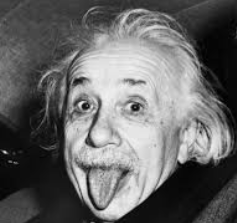
In America, more than anywhere else, the individual is lost in the achievements of the many. America is beginning to be the world leader in a scientific investigation. American scholarship is both patient and inspiring. The Americans show an unselfish devotion to science, which is the very opposite of the conventional European view of your countrymen. Too many of us look upon Americans as dollar chasers. This is a cruel libel, even if it is reiterated thoughtlessly by the Americans themselves. It is not true that the dollar is an American fetish. The American student is not interested in dollars, not even in success as such, but in his task, the object of the search. It is his painstaking application to the study of the infinitely little and the infinitely large which accounts for his success in astronomy.

3 months 1 week ago
Such abstraction which refuses to accept the given universe of facts as the final context of validation, such "transcending" analysis of the facts in the light of their arrested and denied possibilities, pertains to the very structure of social theory.
▼
Source
source
p. xliii
2 months 2 weeks ago
Descartes may have made a lot of mistakes, but he was right about this: you cannot doubt the existence of your own consciousness. That's the first feature of consciousness, it's real and irreducible. You cannot get rid of it by showing that it's an illusion in a way that you can with other standard illusions.
1 month ago
Would you really know what philosophy offers to humanity? Philosophy offers counsel.
3 months 1 week ago
The bourgeoisie is charitable out of self-interest; it gives nothing outright, but regards its gifts as a business matter, makes a bargain with the poor, saying: "If I spend this much upon benevolent institutions, I thereby purchase the right not to be troubled any further, and you are bound thereby to stay in your dusky holes and not to irritate my tender nerves by exposing your misery. You shall despair as before, but you shall despair unseen."
3 weeks 2 days ago
The purpose of the magnanimous is to be found in procuring benefits for the world and eliminating its calamities. ... Mutual attacks among states, mutual usurpation among houses, mutual injuries among individuals; the lack of grace and loyalty between ruler and ruled, the lack of affection and filial piety between father and son, the lack of harmony between elder and younger brothers - these are the major calamities in the world.
▼
Source
source
Book 4; Universal Love II

3 months 1 week ago
One of the most difficult tasks men can perform, however much others may despise it, is the invention of good games and it cannot be done by men out of touch with their instinctive selves.
▼
Source
source
Jung and the Story of Our Time, Laurens van der Post

4 months 1 week ago
The constitution of madness as mental illness, at the end of the eighteenth century, bears witness to a rupture in a dialogue, gives the separation as already enacted, and expels from the memory all those imperfect words, of no fixed syntax, spoken falteringly, in which the exchange between madness and reason was carried out. The language of psychiatry, which is a monologue by reason about madness, could only have come into existence in such a silence.
▼
Source
source
Preface to 1961 edition

2 months 3 weeks ago
Give us back our suffering, we cry to Heaven in our hearts - suffering rather than indifferentism; for out of nothing comes nothing. But out of suffering may come the cure. Better have pain than paralysis! A hundred struggle and drown in the breakers. One discovers the new world. But rather, ten times rather, die in the surf, heralding the way to that new world, than stand idly on the shore!
2 weeks 1 day ago
Philological analogies are to be preserved if possible, but modified according to scientific convenience.
3 months 1 day ago
We are really no longer ourselves a part of nature at the moment when we notice, when we recognize, that we are a part of nature.
▼
Source
source
Probleme der Moralphilosophie (Frankfurt: Suhrkamp, 1996), p. 154; as quoted in Andrew Bowie, Adorno and the Ends of Philosophy (Cambridge: Polity, 2013), p. 94

5 months 1 week ago
You want to know whether I can make a long speech, such as you are in the habit of hearing; but that is not my way. Socrates speaking to Alcibiades

2 months 1 week ago
All human accomplishment has the same origin, identically. Imagination is a force of nature. Is this not enough to make a person full of ecstasy? Imagination, imagination, imagination. It converts to actual. It sustains, it alters, it redeems!
▼
Source
source
Henderson the Rain King (1959) [Viking/Penguin, 1984, ISBN 0-140-07269-1], ch. XVIII, p. 271
1 month 3 weeks ago
Language steps in where the angels of experience fear to tread.
▼
Source
source
Chapter 1, The Faces of Silence, p. 5
5 days ago
Man tries to make for himself in the fashion that suits him best a simplified and intelligible picture of the world; he then tries to some extent to substitute this cosmos of his for the world of experience, and thus to overcome it. This is what the painter, the poet, the speculative philosopher, and the natural scientist do, each in his own fashion. Each makes this cosmos and its construction the pivot of his emotional life, in order to find in this way the peace and security which he cannot find in the narrow whirlpool of personal experience.

5 months 1 week ago
Earth is a ball that is over 12,000 kilometres in diameter, and if it were modelled into an object the size of a billiard ball, with all its surface unevenness reproduced exactly to scale, the model would be smoother than an ordinary billiard ball and the ocean would be an all but unnoticeable mist of dampness over 70 percent of its surface.
3 months 1 week ago
From whence it follows, that were the publique and private interest are most closely united, there is the publique most advanced.
▼
Source
source
The Second Part, Chapter 19, p. 97

2 weeks 1 day ago
Whereas, our tenet ever was, and, indeed, it is almost the only landmark which now divides the federalists from the republicans, that Congress had not unlimited powers to provide for the general welfare, but were restrained to those specifically enumerated;...

5 months 3 days ago
For creation is not a change, but that dependence of the created existence on the principle from which it is instituted, and thus is of the genus of relation; whence nothing prohibits it being in the created as in the subject. Creation is thus said to be a kind of change, according to the way of understanding, insofar as our intellect accepts one and the same thing as not existing before and afterwards existing.
▼
Source
source
II, 18, 2 (see also Summa Theologica I, q. 45, art. 3 ad 2)
5 months 1 week ago
Consider the most famous pure dystopian tale of modern times, 1984, by George Orwell (1903-1950), published in 1948 (the same year in which Walden Two was published). I consider it an abominably poor book. It made a big hit (in my opinion) only because it rode the tidal wave of cold war sentiment in the United States.

4 months 3 weeks ago
I speak the truth, not my fill of it, but as much as I dare speak; and I dare to do so a little more as I grow old.
▼
Source
source
Ch. 2

4 months 2 weeks ago
The highest compact we can make with our fellow, is, - "Let there be truth between us two forevermore".
▼
Source
source
Behavior
2 weeks 1 day ago
There are extraordinary situations which require extraordinary interposition. An exasperated people, who feel that they possess power, are not easily restrained within limits strictly regular.

1 month 6 days ago
Men's hearts ought not to be set against one another; but set with one another, and all against the Evil Thing only.

4 months 1 week ago
Critical social science attempts to determine when theoretical statements grasp invariant regularities of social action as such and when they express ideologically frozen relations of dependence that can in principle be transformed.
▼
Source
source
p. 310 as cited in: Dominick LaCapra (1983) Rethinking Intellectual History: Texts, Contexts, Language. p. 170

4 months 2 days ago
Lycurgus the Lacedæmonian brought long hair into fashion among his countrymen, saying that it rendered those that were handsome more beautiful, and those that were deformed more terrible. To one that advised him to set up a democracy in Sparta, "Pray," said Lycurgus, "do you first set up a democracy in your own house."
▼
Source
source
57 Lycurgus

5 months 5 days ago
Cornered vessel without corners, strange cornered vessel, strange cornered vessel.
3 months 1 week ago
Read day and night, devour books - these sleeping pills - not to know but to forget! Through books you can retrace your way back to the origins of spleen, discarding history and its illusions.

1 month 1 week ago
The poor are thought to be dangerous, either morally dangerous because they are unproductive social parasites - thieves, prostitutes, drug addicts, and the like - or potentially dangerous because they are disorganized, unpredictable, and tendentially reactionary. In fact the term lumpenproletariat (or rad proletariat) has functioned for times to demonize the poor as a whole. ... The industrial reserve army is a constant threat hanging over the heads of the existing working class because, first of all, its misery serves as a terrifying example to workers of what could happen to them, and, second, the excess supply of labor it represents lowers the costs of labor and undermines workers' power against employers (by serving potentially as strike breakers, for example).
▼
Source
source
130
3 weeks 5 days ago
Do you suppose that God takes himself seriously? I know a Zen master, Joshu Sasaki, who has let it be known that the best form of meditation is to stand up with your hands on your hips and roar with laughter for ten minutes every morning. I have heard of a sophisticated shaman-type fellow who used to cure ringworm on cows just by pointing at the scars and laughing. Truly religious people always make jokes about their religion; their faith is so strong that they can afford it. Much of the secret of life consists in knowing how to laugh, and also how to breathe.
▼
Source
source
p. 6
5 months 1 week ago
Parnenides: When there is a number of things which seem to you to be great, you may think, as you look at them all, that there is one and the same idea in them, and hence you think the great is one. But if with your mind's eye you regard the absolute great and these many great things in the same way, will not another great appear beyond, by which all these must appear to be great?
3 months 1 week ago
If instead of expanding you, putting you in a state of energetic euphoria, your ordeals depress and embitter you, you can be sure you have no spiritual vocation.
2 months 2 weeks ago
Quite apart from assiduous efforts to restrict the use of violence as means rather than an end, the actualization of violence as a means can inadvertently become its own end, producing new violence, producing violence anew, reiterating the license, and licensing further violence. Violence does not exhaust itself in the realization of a just end; rather, it renews itself in directions that exceed both deliberate intention and instrumental schemes. In other words, by acting as if the use of violence can be a means to achieve a nonviolent end, one imagines that the practice of violence does not in the act posit violence as its own end. The technē is undermined by the praxis, and the use of violence only makes the world into a more violent place, by bringing more violence into the world.
▼
Source
source
p. 20
CivilSimian.com created by AxiomaticPanic, CivilSimian, Kalokagathia