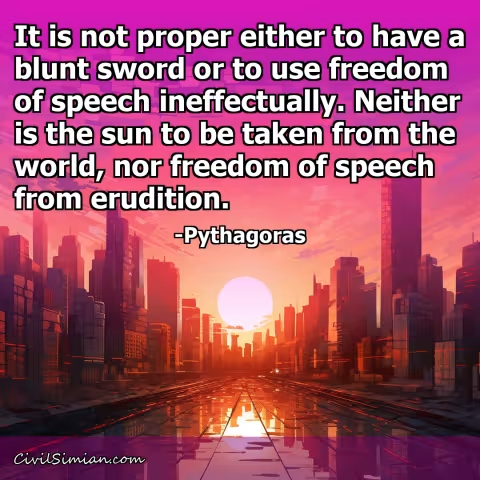
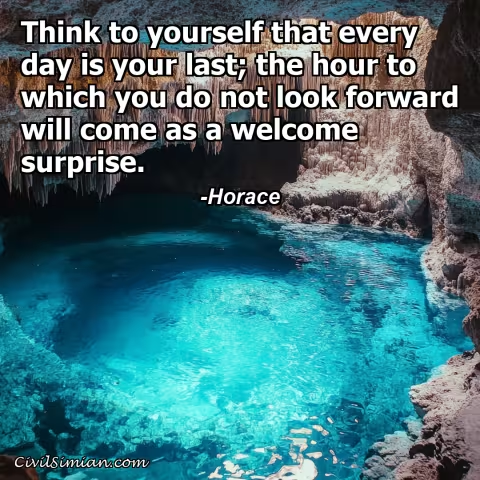
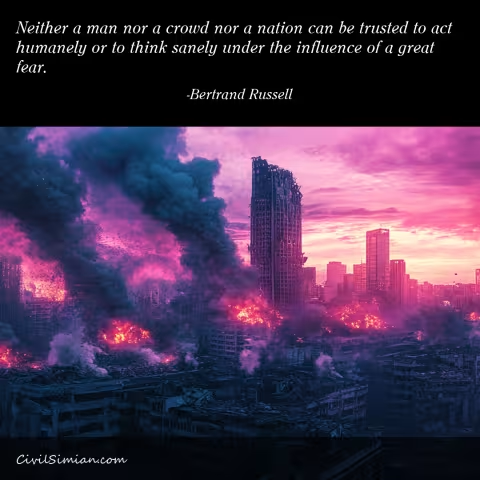
Nationality, class, race, religion, culture....subgroup identity particularity does not supersede universality and humanity.



Ancient histories, as one of our wits has said, are but fables that have been agreed upon.
There are circumstances in which even the least energetic of mankind learn to behave with vigour and decision; and the most cautious forget their prudence and embrace foolhardy resolutions.
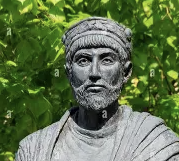
A very weighty argument is this - namely, that neither does the light which descends from thence, chiefly upon the world, mix itself with anything, nor admit of dirtiness or pollution, but remains entirely, and in all things that are, free from defilement, admixture, and suffering. Besides, we must pay attention to the other kinds of phenomena, both to the Intelligible, and yet more to the Sensible - whatever are connected with matter, or will manifest themselves in relation to our subject.
An honest man nearly always thinks justly.

Physicians have this advantage: the sun lights their success and the earth covers their failures.
As also the great number of Corporations; which are as it were many lesser Common-wealths in the bowels of a greater, like wormes in the entrayles of a natural man.

I was once being interviewed by Barbara Walters [...] In between two of the segments she asked me [...] "But what would you do if the doctor gave you only six months to live?" I said, "Type faster." This was widely quoted, but the "six months" was changed to "six minutes," which bothered me. It's "six months."

The baby, assailed by eyes, ears, nose, skin, and entrails at once, feels it all as one great blooming, buzzing confusion; and to the very end of life, our location of all things in one space is due to the fact that the original extents or bignesses of all the sensations which came to our notice at once, coalesced together into one and the same space.
When we hear news, we should always wait for the sacrament of confirmation.

Mahomet was only fourteen; had no language but his own: much in Syria must have been a strange unintelligible whirlpool to him. But the eyes of the lad were open; glimpses of many things would doubtless be taken in, and lie very enigmatic as yet, which were to ripen in a strange way into views, into beliefs and insights one day. These journeys to Syria were probably the beginning of much to Mahomet. One other circumstance we must not forget: that he had no school-learning; of the thing we call school-learning none at all.
I love liberty, and I loathe constraint, dependence, and all their kindred annoyances. As long as my purse contains money it secures my independence, and exempts me from the trouble of seeking other money, a trouble of which I have always had a perfect horror; and the dread of seeing the end of my independence, makes me proportionately unwilling to part with my money. The money that we possess is the instrument of liberty, that which we lack and strive to obtain is the instrument of slavery.

When a war breaks out, people say: "It's too stupid; it can't last long." But though the war may well be "too stupid," that doesn't prevent its lasting. Stupidity has a knack of getting its way; as we should see if we were not always so much wrapped up in ourselves.

Whenever I have read any part of the Vedas, I have felt that some unearthly and unknown light illuminated me. In the great teaching of the Vedas, there is no touch of sectarianism. It is of all ages, climes and nationalities and is the royal road for the attainment of the Great Knowledge. When I am at it, I feel that I am under the spangled heavens of a summer night.
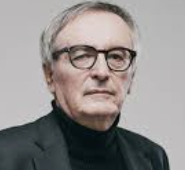
What I liked was Thatcherism's Bolshevik aspect, which was to shake up the whole of Britain quite fundamentally, and if you read what I wrote in those years I think you might agree that in taking the view that I did then - that this was necessary and desirable - I never subscribed to the main delusion of the Thatcherites, which was that you could change everything and everything would remain the same. If what you wanted was a very anarchic, globalised, polyglot, mixed-up society in which most of the structures which had somehow been renewed from the Edwardian period to the Sixties were destroyed, then Thatcherism was what would do the job.
Now precisely because Galilean science is, in the formation of its concepts, the technic of a specific Lebenswelt, it does not and cannot transcend this Lebenswelt. It remains essentially within the basic experiential framework and within the universe of ends set by this reality.
Money is everywhere but so is poetry. What we lack are the poets.
They say in the grave there is peace, and peace and the grave are one and the same.
If I was not a physicist, I would probably be a musician. I often think in music. I live my daydreams in music. I see my life in terms of music. ... I cannot tell if I would have done any creative work of importance in music, but I do know that I get most joy in life out of my violin.
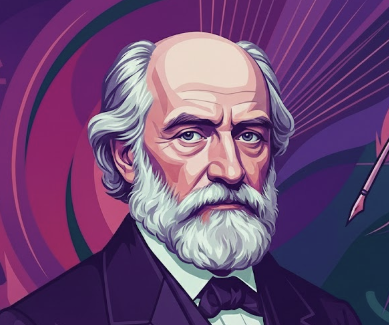
We forfeit three-fourths of ourselves in order to be like other people.
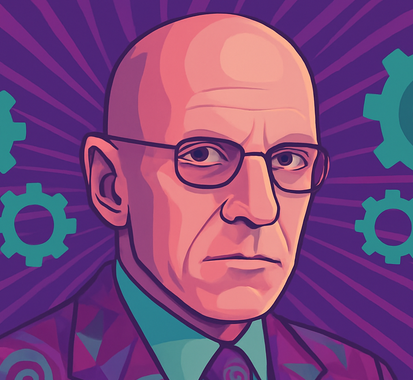
I'm very proud that some people think that I'm a danger for the intellectual health of students. When people start thinking of health in intellectual activities, I think there is something wrong. In their opinion I am a dangerous man, since I am a crypto-Marxist, an irrationalist, a nihilist.
Spirit is never an object; nor a spiritual reality an objective one. In the so-called objective world there's no such nature, thing, or objective reality as spirit. Hence it is easy to deny the reality of spirit. God is spirit because he is not object, because he is subject.
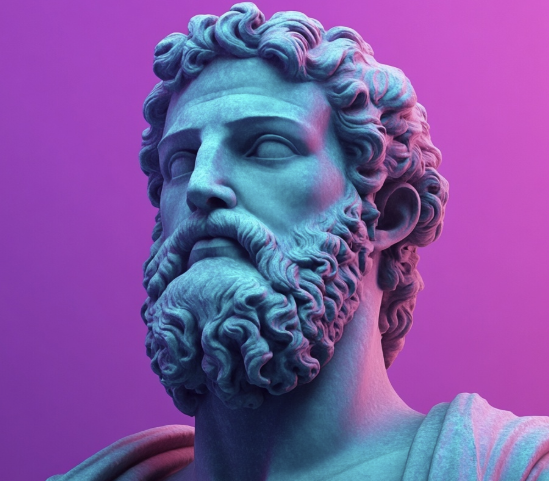
The propositions which are true and evident must of necessity be employed even by those who contradict them.
Man tries to make for himself in the fashion that suits him best a simplified and intelligible picture of the world; he then tries to some extent to substitute this cosmos of his for the world of experience, and thus to overcome it. This is what the painter, the poet, the speculative philosopher, and the natural scientist do, each in his own fashion. Each makes this cosmos and its construction the pivot of his emotional life, in order to find in this way the peace and security which he cannot find in the narrow whirlpool of personal experience.

...You could take up the line that some of the gnostics took up - a line which I often thought was a very plausible one - that as a matter of fact this world that we know was made by the devil at a moment when God was not looking. There is a good deal to be said for that, and I am not concerned to refute it.

The King that followeth Truth, and ruleth according to Justice, shall reign quietly: but he that doth the contrary, seeketh another to reign for him.

Men without their choice derive benefits from that association; without their choice they are subjected to duties in consequence of these benefits; and without their choice they enter into a virtual obligation as binding as any that is actual. Look through the whole of life and the whole system of duties. Much the strongest moral obligations are such as were never the results of our option. I allow, that if no supreme ruler exists, wise to form, and potent to enforce, the moral law, there is no sanction to any contract, virtual or even actual, against the will of prevalent power. On that hypothesis, let any set of men be strong enough to set their duties at defiance, and they cease to be duties any longer.

Judge not, and ye shall not be judged: condemn not, and ye shall not be condemned: forgive, and ye shall be forgiven: Give, and it shall be given unto you; good measure, pressed down, and shaken together, and running over, shall men give into your bosom. For with the same measure that ye mete withal it shall be measured to you again.

The refusal of work and authority, or really the refusal of voluntary servitude, is the beginning of liberatory politics.

This great increase of the quantity of work which, in consequence of the division of labour, the same number of people are capable of performing, is owing to three different circumstances; first, to the increase of dexterity in every particular workman; secondly, to the saving of the time which is commonly lost in passing from one species of work to another; and lastly, to the invention of a great number of machines which facilitate and abridge labour, and enable one man to do the work of many.
As for one-party rule, it was questioned neither by the Left Opposition nor by the Right [wing of the Communist party]. All were prisoners of their own doctrine and their own past: all had worked with a will to create the apparatus of violence that crushed them. Bukharin's hopeless attempt to form a league with Kamenev was no more than a pitiful epilogue to his career. In November 1929 the deviationists performed a public act of penance, but even this did not save them. Stalin's victory was complete; the collapse of the Bukharinite opposition meant the triumph of autocracy in the party and in the country. In December 1929 Stalin's fiftieth birthday was celebrated as a major historical event, and from this point we may date the "cult of personality". Trotsky's prophecy of 1903 had come true: party rule had become Central Committee rule, and this in turn had becorne the personal tyranny of a dictator.

Philosophy offers an antidote to melancholy. And many still believe in the depth of philosophy!
Only charity admitteth no excess. For so we see, aspiring to be like God in power, the angels transgressed and fell.

All the thoughts of a turtle are turtle.

The Communist Party has one objective: the creation of a socialist economy; and one means: the utilization of the class struggle.
There can be no freedom in the large sense of the word, no harmonious development, so long as mercenary and commercial considerations play an important part in the determination of personal conduct.
And hereby it comes to passe, that Intemperance, is naturally punished with Diseases; Rashness, with Mischance; Injustice; with Violence of Enemies; Pride, with Ruine; Cowardice, with Oppression; Negligent government of Princes, with Rebellion; and Rebellion with Slaughter.
There is no more lovely, friendly and charming relationship, communion or company than a good marriage.
On the whole, ought I not to rejoice that God was pleased to give me such a father; that from earliest years I had the example of a real man of God's own making continually before me? Let me learn of him. Let me write my books as he built his houses, and walk as blamelessly through this shadow world; if God so will, to rejoin him at last. Amen.
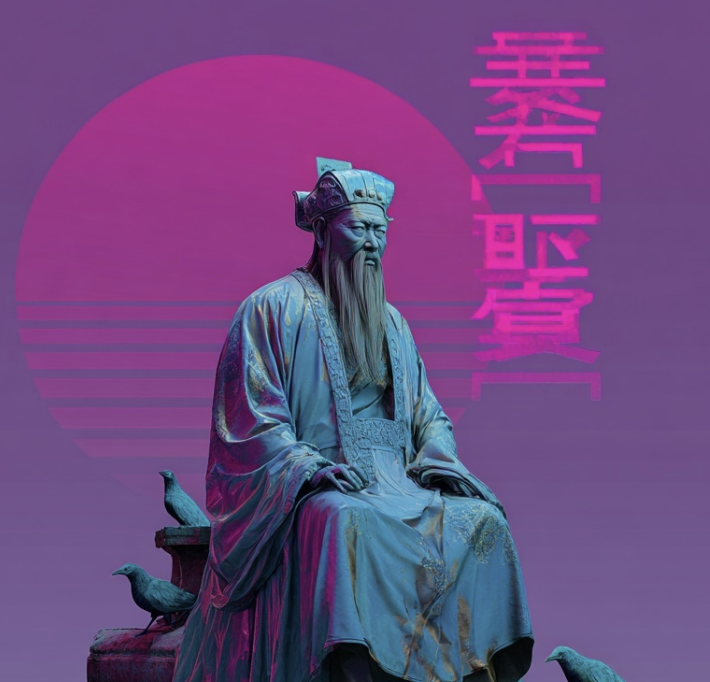
The administration of government lies in getting proper men. Such men are to be got by means of the ruler's own character. That character is to be cultivated by his treading in the ways of duty. And the treading those ways of duty is to be cultivated by the cherishing of benevolence.
Man is the creature of circumstances.
We have an enemy, to whose virtues we can owe nothing; but on this occasion we are infinitely obliged to one of his vices. We owe more to his insolence than to our own precaution.

God can make good use of all that happens, but the loss is real.

Of course I base my characters partly on the people I know-one can't escape it-but fictional characters are oversimplified; they're much less complex than the people one knows.
Even after his conversion, the true 'apostate' is not primarily committed to the positive contents of his new belief and to the realization of its aims. He is motivated by the struggle against the old belief and lives on for its negation. The apostate does not affirm his new convictions for their own sake; he is engaged in a continuous chain of acts of revenge against his own spiritual past. In reality he remains a captive of this past, and the new faith is merely a handy frame of reference for negating and rejecting the old. As a religious type, the apostate is therefore at the opposite pole from the 'resurrected,' whose life is transformed by a new faith which is full of intrinsic meaning and value.

The vocation of every man and woman is to serve other people.
Go further, and require each of them to make a contribution: you will see how many things are still missing, and you will be obliged to get the assistance of a large number of men who belong to different classes, priceless men, but to whom the gates of the academies are nonetheless closed because of their social station. All the members of these learned societies are more than is needed for a single object of human science; all the societies together are not sufficient for a science of man in general.
CivilSimian.com created by AxiomaticPanic, CivilSimian, Kalokagathia