


8 months 3 weeks ago
In obedience to the feeling of reality, we shall insist that, in the analysis of propositions, nothing "unreal" is to be admitted. But, after all, if there is nothing unreal, how, it may be asked, could we admit anything unreal? The reply is that, in dealing with propositions, we are dealing in the first instance with symbols, and if we attribute significance to groups of symbols which have no significance, we shall fall into the error of admitting unrealities, in the only sense in which this is possible, namely, as objects described.
▼
Source
source
Ch. 16: Descriptions

8 months 3 weeks ago
All those to whom I looked up, were of opinion that the pleasure of sympathy with human beings, and the feelings which made the good of others, and especially of mankind on a large scale, the object of existence, were the greatest and surest sources of happiness. Of the truth of this I was convinced, but to know that a feeling would make me happy if I had it, did not give me the feeling.
▼
Source
source
(p. 138)

8 months 2 weeks ago
... in such a matter he would never have been guided by his first thoughts (which would probably have been right) nor even by his twenty-first (which would have at least been explicable). Beyond doubt he would have prolonged deliberation till his hundred-and-first; and they would be infallibly and invincibly wrong. This is what always happens to the deliberations of a simple man who thinks he is a subtle one.

6 months 2 weeks ago
Attention spans get very weak at the speed of light, and that goes along with a very weak identity.

7 months 2 weeks ago
By what aberration has suicide, the only truly normal action, become the attribute of the flawed?



8 months 4 weeks ago
Is Christ only to be adored? Or is the holy Mother of God rather not to be honoured? This is the woman who crushed the Serpent's head. Hear us. For your Son denies you nothing.
▼
Source
source
Weimar edition of Martin Luther's Works, English translation edited by J. Pelikan [Concordia: St. Louis], Vol. 51, 128-129
8 months 2 weeks ago
Gratitude looks to the past and love to the present; fear, avarice, lust, and ambition look ahead.
▼
Source
source
Letter XVI

7 months 1 week ago
Love is a contradiction if there is no God.

6 months 2 weeks ago
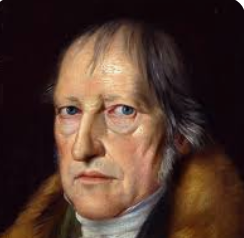
Nature is not cruel, only pitilessly indifferent. This is one of the hardest lessons for humans to learn. We cannot admit that things might be neither good nor evil, neither cruel nor kind, but simply callous - indifferent to all suffering, lacking all purpose.

8 months 3 weeks ago
The Few assume to be the deputies, but they are often only the despoilers of the Many.
▼
Source
source
Pt. IV, sec. 3, ch. 3

8 months 2 weeks ago
But your crime will be there, one hundred times denied, always there, dragging itself behind you. Then you will finally know that you have committed your life with one throw of the die, once and for all, and there is nothing you can do but tug our crime along until your death. Such is the law, just and unjust, of repentance. Then we will see what will become of your young pride.
▼
Source
source
Clytemnestra to her daughter Electra, Act 1

7 months 1 week ago
Ask, and it will be given to you; seek, and you will find; knock, and it will be opened to you. For everyone who asks receives, and he who seeks finds, and to him who knocks it will be opened.
▼
Source
source
Matthew 7:7-8 (NKJV) (Also Luke 11:9-13)

8 months 3 weeks ago
The facts of science, as they appeared to him [Heraclitus], fed the flame in his soul, and in its light, he saw into the depths of the world.
▼
Source
source
Ch. 1: Mysticism and Logic
9 months 2 weeks ago
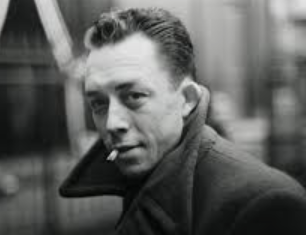
Perhaps we cannot prevent this world from being a world in which children are tortured. But we can reduce the number of tortured children. And if you don't help us, who else in the world can help us do this?
9 months 1 week ago
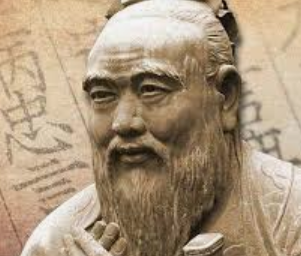
It is said in the Book of Poetry, "In silence is the offering presented, and the spirit approached to; there is not the slightest contention." Therefore the superior man does not use rewards, and the people are stimulated to virtue. He does not show anger, and the people are awed more than by hatchets and battle-axes.

7 months 5 days ago
There is a greatness in the lives of those who build up religious systems, a greatness in action, in idea and in self-subordination, embodied in instance after instance through centuries of growth. There is a greatness in the rebels who destroy such systems: they are the Titans who storm heaven, armed with passionate sincerity. It may be that the revolt is the mere assertion by youth of its right to its proper brilliance, to that final good of immediate joy. Philosophy may not neglect the multifariousness of the world - the fairies dance, and Christ is nailed to the cross.
▼
Source
source
Pt. V, ch. 1, sec. 1.

4 months 2 weeks ago
To the corruptions of Christianity I am indeed opposed; but not to the genuine precepts of Jesus himself. I am a Christian, in the only sense he wished any one to be; sincerely attached to his doctrines, in preference to all others; ascribing to himself every human excellence; & believing he never claimed any other.
▼
Source
source
Letter to Benjamin Rush

7 months 3 days ago
When we can't dream any longer we die.
▼
Source
source
Quoted by Margaret C. Anderson in "Emma Goldman in Chicago", Mother Earth magazine

6 months 2 weeks ago
The whole plan of our order should be based on the idea of preparing men of firmness and virtue bound together by unity of conviction-aiming at the punishment of vice and folly, and patronizing talent and virtue: raising worthy men from the dust and attaching them to our Brotherhood. Only then will our order have the power unobtrusively to bind the hands of the protectors of disorder and to control them without their being aware of it. In a word, we must found a form of government holding universal sway, which should be diffused over the whole world without destroying the bonds of citizenship, and beside which all other governments can continue in their customary course and do everything except what impedes the great aim of our order, which is to obtain for virtue the victory over vice.
▼
Source
source
Book VI, Chapter VII

8 months 2 weeks ago
Creatures extremely low in the intellectual scale may have conception. All that is required is that they should recognize the same experience again. A polyp would be a conceptual thinker if a feeling of 'Hello! thingumbob again!' ever flitted through its mind.
▼
Source
source
Ch. 12

9 months ago
I need not repeat, that the most savage of the savage tribes in the forest, live among each other in amity. Lions show no fierceness to the lion race. The boar does not brandish his deadly tooth against his brother boar. The lynx lives in peace with the lynx. The serpent shews no venom in his intercourse with his fellow serpent; and the loving kindness of wolf to wolf is proverbial.
9 months 3 weeks ago
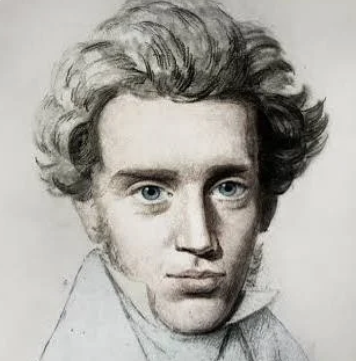
That a woman is presented as a teacher, as a prototype of piety, cannot amaze anyone who knows that piety or godliness is fundamentally womanliness. ... from a woman you learn concern for the one thing needful, from Mary, sister of Lazarus, who sat silent at Christ's feet with her heart's choice: the one thing needful.
7 months 2 days ago
Temperament refers to the mode of reaction and is constitutional and not changeable; character is essentially formed by a person's experiences, especially of those in early life, and changeable, to some extent, by insights and new kinds of experiences. If a person has a choleric temperament, for instance, his mode of reaction is "quick and strong." But what he is quick or strong about depends on his kind of relatedness, his character. If he is a productive, just, loving person he will react quickly and strongly when he loves, when he is enraged by injustice, and when he is impressed by a new idea. If he is a destructive or sadistic character, he will be quick and strong in his destructiveness or in his cruelty. The confusion between temperament and character has had serious consequences for ethical theory. Preferences with regard to differences in temperament are mere matters of subjective taste. But differences in character are ethically of the most fundamental importance.
▼
Source
source
Ch. 3
7 months 1 week ago
There is nothing impossible in the existence of the supernatural: its existence seems to me decidedly probable.
▼
Source
source
The Genteel Tradition at Bay

8 months 2 weeks ago
Properly understood, then, the desire to act justly derives in part from the desire to express most fully what we are or can be, namely free and equal rational beings with the liberty to choose.
▼
Source
source
Chapter IV, Section 40, p. 256
7 months 6 days ago
In the general tendency toward specialization, philosophy too has established itself as a specialized discipline, one purified of all specific content. In so doing, philosophy has denied its own constitutive concept: the intellectual freedom that does not obey the dictates of specialized knowledge.
▼
Source
source
p. 6

8 months 2 weeks ago
Our psychological experiences are all equally facts. There is nothing to choose between them. No psychological experience is "truer," so far as we are concerned, than any other. For even if one should correspond more closely to things in themselves as perceived by some hypothetical non-human being, it would be impossible for us to discover which it was. Science is no "truer" than common sense, or lunacy, or art, or religion. It permits us to organize our experience profitably; but tells us nothing about the real nature of the world to which our experiences are supposed to refer. From the internal reality, by which I mean the totality of psychological experiences, it actually separates us. Art, for example, deals with many more aspects of this internal reality than does science, which confines itself deliberately and by convention to the study of one very limited class of experiences - the experiences of sense.
▼
Source
source
"One and Many," p. 5-6

7 months 2 weeks ago
Morality knows nothing of geographical boundaries, or distinctions of race.
▼
Source
source
Pt. IV, Ch. 30 : General Considerations
7 months 1 week ago
Yet lackest thou one thing: sell all that thou hast, and distribute unto the poor, and thou shalt have treasure in heaven: and come, follow me.
▼
Source
source
18:22 (KJV)
5 months 2 weeks ago
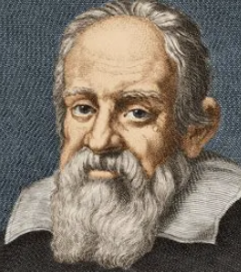
I have been in my bed for five weeks, oppressed with weakness and other infirmities from which my age, seventy four years, permits me not to hope release.
▼
Source
source
Compiled primarily from his correspondence and that of his eldest daughter, Sister Maria Celeste (1870) by Mary Allan-Olney, p. 278
7 months 1 week ago
Everyone who has left houses or brothers or sisters or father or mother or children or fields for my sake will receive a hundred times as much and will inherit eternal life.
▼
Source
source
19:29
8 months 2 weeks ago
Need-love cries to God from our poverty; Gift-love longs to serve, or even to suffer for, God; Appreciative love says: "We give thanks to thee for thy great glory." Need-love says of a woman "I cannot live without her"; Gift-love longs to give her happiness, comfort, protection - if possible, wealth; Appreciative love gazes and holds its breath and is silent, rejoices that such a wonder should exist even if not for him, will not be wholly dejected by losing her, would rather have it so than never to have seen her at all.
8 months 2 weeks ago
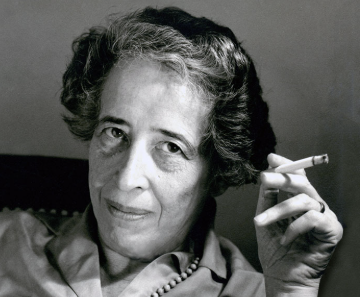
Kant stated that he had "found it necessary to deny knowledge to make room for faith," but all he had "denied" was knowledge of things that are unknowable, and he had not made room for faith but for thought.
▼
Source
source
p. 63
8 months 3 weeks ago
The husband who decides to surprise his wife is often very much surprised himself.
▼
Source
source
La Femme Qui a Raison, Act 1, scene 2, 1759
8 months 2 days ago
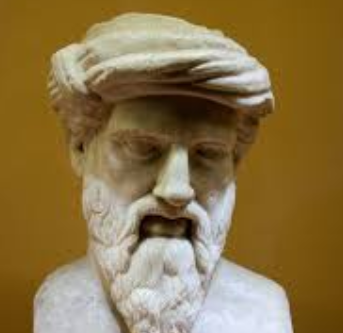
It is requisite to defend those who are unjustly accused of having acted injuriously, but to praise those who excel in a certain good.
▼
Source
source
Pythagorean Ethical Sentences From Stobæus

5 months 1 week ago
What the Universities have mainly done-what I have found the University did for me, was that it taught me to read in various languages and various sciences, so that I could go into the books that treated of these things, and try anything I wanted to make myself master of gradually, as I found it suit me. Whatever you may think of all that, the clearest and most imperative duty lies on every one of you to be assiduous in your reading; and learn to be good readers, which is, perhaps, a more difficult thing than you imagine. Learn to be discriminative in your reading-to read all kinds of things that you have an interest in, and that you find to be really fit for what you are engaged in.
5 months 1 week ago
Mahomet can work no miracles; he often answers impatiently: I can work no miracles. I? "I am a Public Preacher;" appointed to preach this doctrine to all creatures. Yet the world, as we can see, had really from of old been all one great miracle to him. Look over the world, says he; is it not wonderful, the work of Allah; wholly "a sign to you," if your eyes were open!

4 months 2 weeks ago
There is no man so fortunate that there shall not be by him when he is dying some who are pleased with what is going to happen. Suppose that he was a good and a wise man, will there not be at least some one to say to himself, Let us at last breathe freely, being relieved from this schoolmaster? It is true that he was harsh to none of us, but I perceive that he tacitly condemns us.-This is what is said of a good man. But in our own case how many other things are there for which there are many who wish to get rid of us.
▼
Source
source
X, 36

8 months 2 weeks ago
We all remember how many religious wars were fought for a religion of love and gentleness; how many bodies were burned alive with the genuinely kind intention of saving souls from the eternal fire of hell. Only if we give up our authoritarian attitude in the realm of opinion, only if we establish the attitude of give and take, of readiness to learn from other people, can we hope to control acts of violence inspired by piety and duty.

8 months 4 weeks ago
As all those have shown who have discussed civil institutions, and as every history is full of examples, it is necessary to whoever arranges to found a Republic and establish laws in it, to presuppose that all men are bad and that they will use their malignity of mind every time they have the opportunity; and if such malignity is hidden for a time, it proceeds from the unknown reason that would not be known because the experience of the contrary had not been seen, but time, which is said to be the father of every truth, will cause it to be discovered.
▼
Source
source
Book 1, Ch. 3

5 months 3 weeks ago
The irony of scientific progress is that in solving human problems it creates problems that are not humanly soluble. Science has given humans a kind of power over the natural world achieved by no other animal. It has not given humans the ability to remodel the planet according to their wishes. The Earth is not a clock that can be wound up and stopped at will. A living system, the planet will surely rebalance itself. It will do so, however, without any regard for humans.
▼
Source
source
Sweet Morality (p. 212)
8 months 2 weeks ago
They [Christians] believe that the living, dynamic activity of love has been going on in God forever and has created everything else. And that, by the way, is perhaps the most important difference between Christianity and all other religions: that in Christianity God is not an impersonal thing nor a static thing-not even just one person-but a dynamic pulsating activity, a life, a kind of drama, almost, if you will not think me irreverent, a kind of dance ... (The) pattern of this three-personal life is ... the great fountain of energy and beauty spurting up at the very center of reality.
▼
Source
source
Book IV, Chapter 4, "Good Infection"
9 months 2 weeks ago
At my age one's got to be sincere. Lying's too much effort.
6 months 3 weeks ago
Idolatry is a more dangerous crime because it is apt by the authority of Kings & under very specious pretenses to insinuate it self into mankind. Kings being apt to enjoyn the honour of their dead ancestors: & it seeming very plausible to honour the souls of Heroes & Saints & to believe that they can heare us & help us & are mediators between God & man & reside & act principally in the temples & statues dedicated to their honour & memory? And yet this being against the principal part of religion is in scripture condemned & detested above all other crimes. The sin consists first in omitting the service of the true God.
▼
Source
source
Of Idolatry
CivilSimian.com created by AxiomaticPanic, CivilSimian, Kalokagathia