

3 months 2 weeks ago
Life is that which can hold a purpose for three thousand years and never yield. The individual fails, but life succeeds. The individual is foolish, but life holds in its blood and seed the wisdom of generations. The individual dies, but life, tireless and undiscourageble, goes on, wondering, longing, planning, trying, mounting, longing.
▼
Source
source
Ch. 5 : On Death

5 months 3 weeks ago
To be or not to be...Neither one nor the other.
6 months 2 days ago
Shakespeare's fault is not the greatest into which a poet may fall. It merely indicates a deficiency of taste.
5 months 5 days ago
The real significance of the Russell paradox, from the standpoint of the modal-logic picture, is this: it shows that no concrete structure can be a standard model for the naive conception of the totality of all sets; for any concrete structure has a possible extension that contains more 'sets'. (If we identify sets with the points that represent them in the various possible concrete structures, we might say: it is not possible for all possible sets to exist in any one world!) Yet set theory does not become impossible. Rather, set theory becomes the study of what must hold in, e.g. any standard model for Zermelo set theory.
▼
Source
source
Mathematics without foundations
7 months 1 day ago
The love of God consists in an ardent desire to procure the general welfare, and reason teaches me that there is nothing which contributes more to the general welfare of mankind than the perfection of reason.
▼
Source
source
Closing sentence of the Preface to the general science (1677) (in P. Wiener (ed.), Leibniz Selections, Macmilland Press Ltd, 1951).

6 months 4 weeks ago
A physicist looks for causes; that does not necessarily imply that there are causes everywhere. A man may look for gold without assuming that there is gold everywhere; if he finds gold, well and good, if he doesn't he's had bad luck. The same is true when the physicists look for causes.
▼
Source
source
BBC Radio Debate on the Existence of God, Russell vs. Copleston, 1948

5 months 1 week ago
Rationalism is an adventure in the clarification of thought.
▼
Source
source
Pt. I, ch. 1, sec. 3.
7 months 2 weeks ago
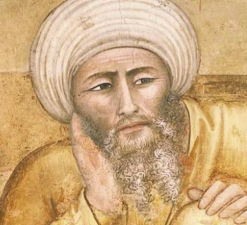
This is one of the most intricate problems of religion. For if you look into the traditional arguments (Hadith) about this problem you will find them contradictory; such also being the case with arguments of reason. The contradiction in the arguments of the first kind is found in the Qur'an and the Hadith.

6 months 2 days ago
The greatness of America lies not in being more enlightened than any other nation, but rather in her ability to repair her faults.
▼
Source
source
Chapter XIII.
6 months 4 weeks ago
"I don't want to! Why should I?" "Because more people will be happier if you do than if you don't." "So what? I don't care about other people." "You should." "But why?" "Because more people will be happier if you do than if you don't."
▼
Source
source
Dialogue between Russell and his daughter Katharine, as quoted in My Father - Bertrand Russell, 1975
7 months 5 days ago
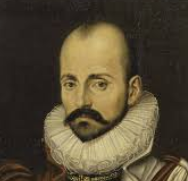
Death, they say, acquits us of all obligations.
▼
Source
source
Book I, Ch. 7

5 months 2 weeks ago
Yes perhaps, as the Sage says, "nothing worthy of proving can be proven, nor yet disproven"; but can we restrain that instinct which urges man to wish to know, and above all to wish to know the things which conduce to life, to eternal life? Eternal life, not eternal knowledge as the Alexandrian gnostic said. For living is one thing and knowing is another; and... perhaps there is an opposition between the two that we may say that everything vital is anti-rational, not merely irrational, and that everything rational is anti-vital. And this is the basis of the tragic sense of life.


5 months 1 week ago
The soul was not made to dwell in a thing; and when forced to it, there is no part of that soul but suffers violence.
▼
Source
source
in The Simone Weil Reader, p. 155
6 months 4 weeks ago
Belief in God and a future life makes it possible to go through life with less of stoic courage than is needed by skeptics. A great many young people lose faith in these dogmas at an age at which despair is easy, and thus have to face a much more intense unhappiness than that which falls to the lot of those who have never had a religious upbringing. Christianity offers reasons for not fearing death or the universe, and in so doing it fails to teach adequately the virtue of courage. The craving for religious faith being largely an outcome of fear, the advocates of faith tend to think that certain kinds of fear are not to be deprecated. In this, to my mind, they are gravely mistaken. To allow oneself to entertain pleasant beliefs as a means of avoiding fear is not to live in the best way. In so far as religion makes its appeal to fear, it is lowering to human dignity.
▼
Source
source
p. 107
5 months 2 weeks ago
To believe in God is to yearn for His existence and, furthermore, it is to act as if He did exist.
6 months 2 weeks ago
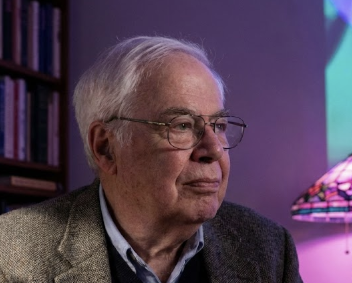
Contemporary intellectuals have given up the Enlightenment assumption that religion, myth, and tradition can be opposed to something ahistorical, something common to all human beings qua human.

4 months 3 weeks ago
To the blind all things are sudden.
▼
Source
source
(p. 41)
5 months 2 weeks ago
Naturalism is a word of many meetings in philosophy as well as in art. like most isms - classicism and romanticism, idealism and realism in art - it's has become an emotional term, a war cry of partisans.
▼
Source
source
p. 157
6 months 2 weeks ago
Rest gives relish to labour.
▼
Source
source
Of the Training of Children, 9 (Tr. Babbitt)
4 months 2 weeks ago
The first effect of modernism was to make high culture difficult: to surround beauty with a wall of erudition.
▼
Source
source
Avant-garde and Kitsch (p. 85)

6 months 4 weeks ago
The aggregate capital appears as the capital stock of all individual capitalists combined. This joint stock company has in common with many other stock companies that everyone knows what he puts in, but not what he will get out of it.
▼
Source
source
Vol. II, Ch. XX, p. 437.
3 months 3 weeks ago
Art enlarges experience by admitting us to the inner life of others.
▼
Source
source
Ch. IV: "The Golden Rule and After", p. 110.

6 months 3 weeks ago
Ignore death up to the last moment; then, when it can't be ignored any longer, have yourself squirted full of morphia and shuffle off in a coma. Thoroughly sensible, humane and scientific, eh?
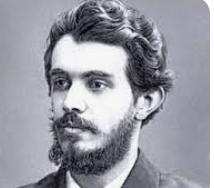
5 months 1 week ago
Objectification is above all exteriorization, the alienation of spirit from itself.
▼
Source
source
p. 63
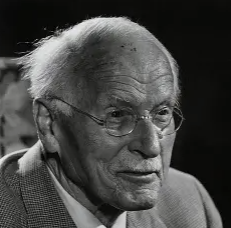
5 months 3 weeks ago
The conscious mind allows itself to be trained like a parrot, but the unconscious does not - which is why St. Augustine thanked God for not making him responsible for his dreams.
▼
Source
source
par. 51 p.46
3 months 1 week ago
The tiger that assails me is in the right, and I who strike him down am also in the right. I defend against him not my right, but myself.
▼
Source
source
S. Byington, trans. (1913), p. 191
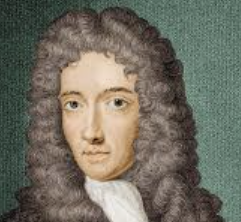
2 months 3 weeks ago
It is somewhat strange to me, that neither the Spagyrists themselves, nor yet their Adversaries, should have taken notice that Chymists have rather supposed than evinced, that the Analysis of bodies by fire, or even that at least some Analysis is the onely instrument of investigating what Ingredients mixt bodies are made up of, since in divers cases That may be discovered by Composition as well as by Resolution; as it may appear, that Vitriol consists of metalline parts (whether Martial, or Venereal, or both) associated by Coagulation with acid ones, one may, I say, discover this as well by making true Vitriol with Spirit (improperly called Oil) of Sulphur, or that of Salt, as by distilling or Resolving Vitriol by the fire.
5 months 2 weeks ago
I hope, reader, that some time while our tragedy is still playing, in some interval between acts, we shall meet again. And we shall recognize one another. And forgive me if I have troubled you more than was needful and inevitable, more than I intended to do when I took up my pen proposing to distract you from your distractions. And may God deny you peace, but give you glory!

6 months 2 weeks ago
The enmity of one's kindred is far more bitter than the enmity of strangers.
6 months 4 weeks ago
The supreme maxim in scientific philosophising is this: wherever possible, logical constructions are to be substituted for inferred entities.
▼
Source
source
Quoted in Hawes The Logic of Contemporary English Realism (1923), p. 110

5 months 2 weeks ago
Master, we saw one casting out devils in thy name; and we forbad him, because he followeth not with us. And Jesus said unto him, Forbid him not: for he that is not against us is for us.
▼
Source
source
Luke 9:49-50 (KJV)

5 months 1 week ago
A young delicate tree, that is being clipped and cut by the gardener in order to give it an artificial form, will never reach the majestic height and the beauty as when allowed to grow in nature and freedom.

6 months 3 weeks ago
How you produce volume after volume the way you do is more than I can conceive. ...But you haven't to forge every sentence in the teeth of irreducible and stubborn facts as I do. It is like walking through the densest brush wood.
▼
Source
source
Letter to Henry James (ca. 1890) as quoted by Robert D. Richardson, William James: In the Maelstrom of American Modernism (2007) p. 297.
3 months 1 week ago
Credit expansion can bring about a temporary boom. But such a fictitious prosperity must end in a general depression of trade, a slump.

4 months 3 weeks ago
The wheel may be one of those cases where the engineering solution can be seen in plain view, yet be unattainable in evolution because it lies on the other side of a deep valley, cutting unbridgeably across the massif of Mount Improbable.
▼
Source
source
Dawkins, Richard (24 November 1996). "Why don't animals have wheels?". The Sunday Times. Retrieved on 29 October 2008.

6 months 3 weeks ago
I am no longer sure of anything. If I satiate my desires, I sin but I deliver myself from them; if I refuse to satisfy them, they infect the whole soul.
▼
Source
source
Act 10, sc. 2
5 months 1 week ago
When I made my theoretical model, I could not have guessed that people would try to realise it with Molotov cocktails.
▼
Source
source
As quoted in The Dialectical Imagination : A History of the Frankfurt School and the Institute of Social Research (1973) by M Jay, p. 279.
6 months 2 days ago
The philosopher has never killed any priests, whereas the priest has killed a great many philosophers.

6 months 4 weeks ago
A poem is one undivided unimpeded expression fallen ripe into literature, and it is undividedly and unimpededly received by those for whom it was matured.

5 months 4 weeks ago
Manners are of more importance than laws. The law can touch us here and there, now and then. Manners are what vex or soothe, corrupt or purify, exalt or debase, barbarize or refine us, by a constant, steady, uniform, insensible operation like that of the air we breathe in.
▼
Source
source
No. 1, p. 172 in The Works of the Right Honourable Edmund Burke: A New Edition, v. VIII. London: F. C. and J. Rivington, 1815
6 months 4 weeks ago
The first remark we have to make, and which - though already presented more than once - cannot be too often repeated when the occasion seems to call for it, - is that what we call principle, aim, destiny, or the nature and idea of Spirit, is something merely general and abstract. Principle - Plan of Existence - Law - is a hidden, undeveloped essence, which as such - however true in itself - is not completely real.
6 months 1 week ago
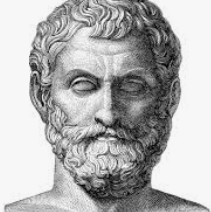
The most difficult thing in life is to know yourself.
▼
Source
source
Know thyself. As quoted in Diogenes Laërtius, The Lives and Opinions of Eminent Philosophers, I, 40 Variant
5 months 2 weeks ago
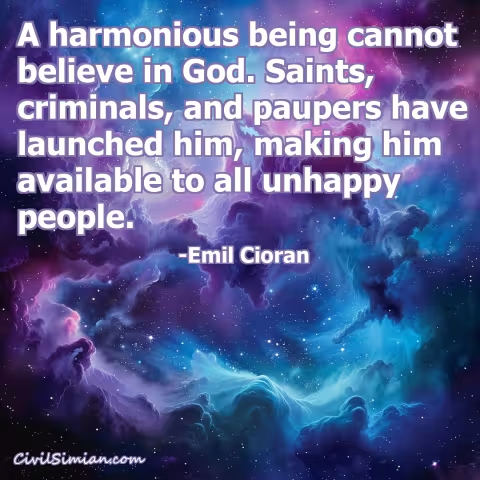
Love is a contradiction if there is no God.

5 months 1 week ago
Pettiness separates; breadth unites. Let us be broad and big. Let us not overlook vital things because of the bulk of trifles confronting us. A true conception of the relation of the sexes will not admit of conqueror and conquered; it knows of but one great thing: to give of one's self boundlessly, in order to find one's self richer, deeper, better. That alone can fill the emptiness, and transform the tragedy of woman's emancipation into joy, limitless joy.
7 months 3 weeks ago
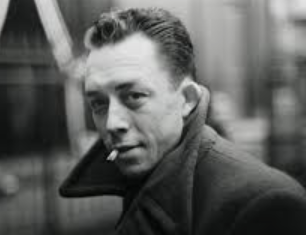
Capital punishment is the most premeditated of murders, to which no criminal's deed, however calculated, can be compared. For there to be an equivalency, the death penalty would have to punish a criminal who had warned his victim of the date on which he would inflict a horrible death on him and who, from that moment onward, had confined him at his mercy for months. Such a monster is not to be encountered in private life.
CivilSimian.com created by AxiomaticPanic, CivilSimian, Kalokagathia