Universal fairness competes in the same lateral space as particularized ideology, but, it is the case that all ideology is bound by it if it is to remain civilized and not founded in a Hobbesian state of war.


We have, indeed, in the part taken by many scientific men in this controversy of "Law versus Miracle," a good illustration of the tenacious vitality of superstitions. Ask one of our leading geologists or physiologists whether he believes in the Mosaic account of the creation, and he will take the question as next to an insult. Either he rejects the narrative entirely, or understands it in some vague non-natural sense. ...Whence ...this notion of "special creations"...Why, after rejecting all the rest of the story, he should strenuously defend this last remnant of it, as though he had received it on valid authority, he would be puzzled to say.

It costs a beautiful person no exertion to paint her image on our eyes; yet how splendid is that benefit! It costs no more for a wise soul to convey his quality to other men.

The Outsider's case against society is very clear. All men and women have these dangerous, unnamable impulses, yet they keep up a pretense, to themselves, to others; their respectability, their philosophy, their religion, are all attempts to gloss over, to make civilized and rational something that is savage, unorganized, irrational. He is an Outsider because he stands for truth.

A beautiful face is a silent commendation.
Macaulay is like a book in breeches...He has occasional flashes of silence, that make his conversation perfectly delightful.

At the speed of light there is no sequence; everything happens at the same instant.
To master this instrument the religious thinker must make a preliminary study of logic, just as the lawyer must study legal reasoning. This is no more heretical in the one case than in the other. And logic must be learned from the ancient masters, regardless of the fact that they were not Muslims.

Vice itself lost half its evil by losing all its grossness.
He who establishes his argument by noise and command shows that his reason is weak.

In order to correctly define art, it is necessary, first of all, to cease to consider it as a means to pleasure and consider it as one of the conditions of human life. ...Reflecting on it in this way, we cannot fail to observe that art is one of the means of affective communication between people.
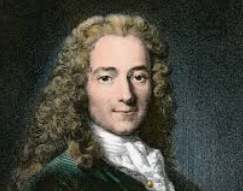
It is forbidden to kill; therefore all murderers are punished unless they kill in large numbers and to the sound of trumpets.

But Eudoxus the Cnidian, who was somewhat junior to Leon, and the companion of Plato, first of all rendered the multitude of those theorems which are called universals more abundant; and to three proportions added three others; and things relative to a section, which received their commencement from Plato, he diffused into a richer multitude, employing also resolutions in the prosecution of these.
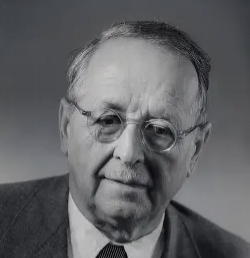
We now come to a decisive step of mathematical abstraction: we forget about what the symbols stand for... [The mathematician] need not be idle; there are many operations which he may carry out with these symbols, without ever having to look at the things they stand for.

It is important to understand what I mean by semiosis. All dynamic action, or action of brute force, physical or psychical, either takes place between two subjects, - whether they react equally upon each other, or one is agent and the other patient, entirely or partially, - or at any rate is a resultant of such actions between pairs. But by "semiosis" I mean, on the contrary, an action, or influence, which is, or involves, a cooperation of three subjects, such as a sign, its object, and its interpretant, this tri-relative influence not being in any way resolvable into actions between pairs.
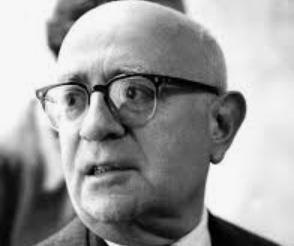
If one is to take Lulu's twelve-tone chord as the integral totality of complementary harmony, then Berg's allegorical genius proves itself within a historical perspective which makes the brain reel: just as Lulu in the world of total illusion longs for nothing but her murderer and finally finds him in that sound, so does all harmony of unrequited happiness long for its fatal chord as the cipher of fulfillment - twelve-tone music is not to be separated from dissonance. Fatal: because all dynamics come to a standstill within it without finding release. The law of complementary harmony already implies the end of the musical experience of time, as this was heralded in the dissociation of time according to Expressionistic extremes.
What if he has borrowed the matter and spoiled the form, as it oft falls out?

I don't think that there are any sinister persons deliberately trying to rob people of their freedom but I do think, first of all, that there are a number of impersonal forces which are pushing in the direction of less and less freedom. And I also thing there are a number of technological devices which anybody who wishes to use, can use, to accelerate this process of going away from freedom, of imposing control.

What we may be witnessing is not just the end of the Cold War, or the passing of a particular period of post-war history, but the end of history as such ... That is, the end point of mankind's ideological evolution and the universalization of Western liberal democracy as the final form of human government.

Creation is in fact a fault, man's famous sin thereby appearing as a minor version of a much graver one. What are we guilty of, except of having followed, more or less slavishly, the Creator's example? Easy to recognize in ourselves the fatality which was His: not for nothing have we issued from the hands of a wicked and woebegone god, a god accursed.

Under no pretext should arms and ammunition be surrendered; any attempt to disarm the workers must be frustrated, by force if necessary.
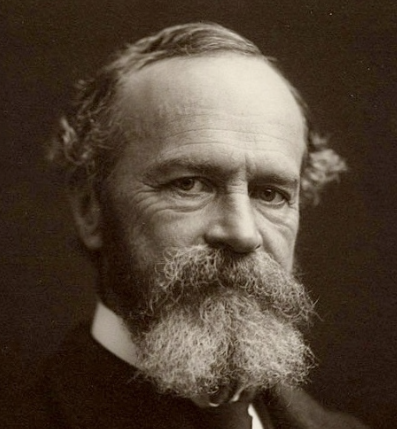
Tell him to live by yes and no - yes to everything good, no to everything bad.

What is love's perfection? To love our enemies, and to love them to the end that they may be our brothers.
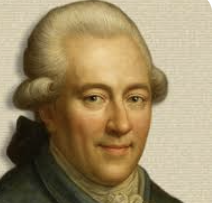
There are people who possess not so much genius as a certain talent for perceiving the desires of the century, or even of the decade, before it has done so itself.
But what is liberty without wisdom, and without virtue? It is the greatest of all possible evils; for it is folly, vice, and madness, without tuition or restraint.
In tetrad form, the artefact is seen to be not netural or passive, but an active logos or utterance of the human mind or body that transforms the user and his ground.
I'm afraid of losing my obscurity. Genuineness only thrives in the dark. Like celery.

I do not believe that I am now dreaming, but I cannot prove that I am not. I am, however, quite certain that I am having certain experiences, whether they be those of a dream or those of waking life.
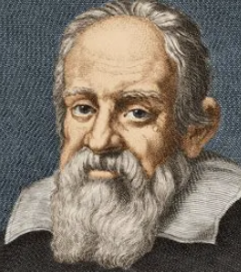
See now the power of truth; the same experiment which at first glance seemed to show one thing, when more carefully examined, assures us of the contrary.
He had no failings which were not owing to a noble cause; to an ardent, generous, perhaps an immoderate passion for fame; a passion which is the instinct of all great souls.
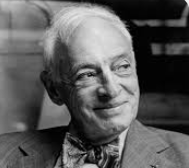
All human accomplishment has the same origin, identically. Imagination is a force of nature. Is this not enough to make a person full of ecstasy? Imagination, imagination, imagination. It converts to actual. It sustains, it alters, it redeems!
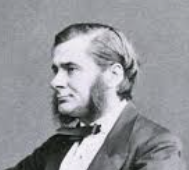
Not far from the invention of fire... we must rank the invention of doubt.

Kindly remember that he whom you call your slave sprang from the same stock, is smiled upon by the same skies, and on equal terms with yourself breathes, lives and dies. It is just as possible for you to see in him a free-born man as for him to see in you a slave.
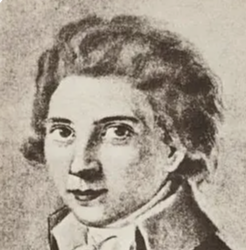
Poetry can be criticized only through poetry. A critique which itself is not a work of art, either in content as representation of the necessary impression in the process of creation, or through its beautiful form and in its liberal tone in the spirit of the old Roman satire, has no right of citizenship in the realm of art.
Nowadays three witty turns of phrase and a lie make a writer.
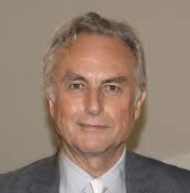
To explain the origin of the DNA/protein machine by invoking a supernatural Designer is to explain precisely nothing, for it leaves unexplained the origin of the Designer.
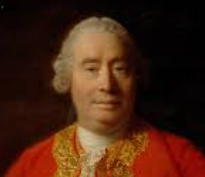
The sentiments of men often differ with regard to beauty and deformity of all kinds, even while their general discourse is the same ... In all matters of opinion and science, the case is opposite: The difference among men is there oftener found to lie in generals than in particulars; and to be less in reality than in appearance.
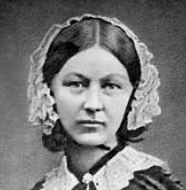
A girl, if she has any pride, is so ashamed of having anything she wishes to say out of the hearing of her own family, she thinks it must be something so very wrong, that it is ten to one, if she have the opportunity of saying it, that she will not. And yet she is spending her life, perhaps, in dreaming of accidental means of unrestrained communion.
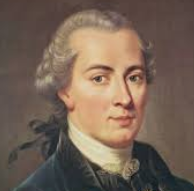
The third of this kind of principles is : matter neither originates nor perishes; all the changes in the world concern form only ; a postulate which on the recommendation of common sense has spread through all philosophical schools, not because it is to be taken as having been found so, or as having been demonstrated by arguments a priori, but because if we were to admit that matter itself is fleeting and transitory, nothing at all that is stable and lasting would be left any longer to serve for the explication of phenomena according to universal and perpetual laws, and hence nothing at all would be left for the exercise of the intellect.
One might think that it must be quite clear to people not deprived of reason, that violence breeds violence; that the only means of deliverance from violence lies in not taking part in it. This method, one would think, is quite obvious. It is evident that a great majority of men can be enslaved by a small minority only if the enslaved themselves take part in their own enslavement. If people are enslaved, it is only because they either fight violence with violence or participate in violence for their own personal profit. Those who neither struggle against violence nor take part in it can no more be enslaved than water can be cut. They can be robbed, prevented from moving about, wounded or killed, but they cannot be enslaved: that is, made to act against their own reasonable will.
The world is full of conflicts; and, overshadowing all minor conflicts, the titanic struggle between Communism and anti-Communism. Almost everybody who is politically conscious has strong feelings about one or more of these issues; but we want you, if you can, to set aside such feelings and consider yourselves only as members of a biological species which has had a remarkable history, and whose disappearance none of us can desire. We shall try to say no single word which should appeal to one group rather than to another. All, equally, are in peril, and, if the peril is understood, there is hope that they may collectively avert it.
The loss which is unknown is no loss at all.
And at once I saw with great clarity that human beings possess two bodies. One is the physical body, the other -- just as real, just as self-contained -- is the emotional body. Like the physical body, the emotional body reaches a certain level of growth, and then stops. But it stops rather sooner than the physical body. So most of us possess the emotional body of a retarded adolescent.
Apart from logical cogency, there is to me something a little odd about the ethical valuations of those who think that an omnipotent, omniscient, and benevolent Deity, after preparing the ground by many millions of years of lifeless nebulae, would consider Himself adequately rewarded by the final emergence of Hitler and Stalin and the H-bomb.

It's not about telling people how to be, outside of supporting ideals that teach us what to avoid.
CivilSimian.com created by AxiomaticPanic, CivilSimian, Kalokagathia