


3 months 6 days ago
The progress of human knowledge depends on maintaining that touch of scepticism even about the most "unquestionable" truths. A century ago, Darwin's theory of evolution by natural selection was regarded as scientifically unshakeable; today, most biologists have their reservations about it. Fifty years ago, Freud's sexual theory of neurosis was accepted by most psychiatrists; today, it is widely recognized that his methods were highly questionable. At the turn of this century, a scientist who questioned Newton's theory of gravity would have been regarded as insane; twenty years later, it had been supplanted by Einstein's theory, although, significantly, few people actually understood it. It seems perfectly conceivable that our descendants of the twenty-second century will wonder how any of us could have been stupid enough to have been taken in by Darwin, Freud or Einstein.
▼
Source
source
p. 4

4 months 3 weeks ago
That Man is the product of causes that had no prevision of the end they were achieving; that his origin, his growth, his hopes and fears, his loves and his beliefs, are but the outcome of accidental collocations of atoms; that no fire, no heroism, no intensity of thought and feeling, can preserve individual life beyond the grave; that all the labors of the ages, all the devotion, all the inspiration, all the noonday brightness of human genius, are destined to extinction in the vast death of the solar system, and that the whole temple of Man's achievement must inevitably be buried beneath the debris of a universe in ruins - all these things, if not quite beyond dispute, are yet so nearly certain that no philosophy which rejects them can hope to stand. Only within the scaffolding of these truths, only on the firm foundation of unyielding despair, can the soul's habitation henceforth be safely built.

3 weeks 2 days ago
I have stated that the constitutions of our several States vary more or less in some particulars. But there are certain principles in which all agree, and which all cherish as vitally essential to the protection of the life, liberty, property, and safety of the citizen:

5 months 3 weeks ago
Never let your sense of morals prevent you from doing what is right.
4 months 3 weeks ago
The goal to be reached is the mind's insight into what knowing is. Impatience asks for the impossible, wants to reach the goal without the means of getting there. The length of the journey has to be borne with, for every moment is necessary, ... because by nothing less could that all-pervading mind ever manage to become conscious of what itself is - for that reason, the individual mind, in the nature of the case, cannot expect by less toil to grasp what its own substance contains.
▼
Source
source
Preface (J. B. Baillie translation), § 29
2 months 2 weeks ago
Everybody knows there is no fineness or accuracy of suppression; if you hold down one thing, you hold down the adjoining.
▼
Source
source
Ch. 1

4 months 5 days ago
Dispose thy Soul to all good and necessary things!

5 months 2 weeks ago
There is not love of life without despair about life.

3 months 2 weeks ago
Man starts over again everyday, in spite of all he knows, against all he knows.

4 months 3 weeks ago
Clever tyrants are never punished.
▼
Source
source
Mérope, act V, scene V, 1743



2 months 3 weeks ago
A man can live and be healthy without killing animals for food; therefore, if he eats meat, he participates in taking animal life merely for the sake of his appetite. And to act so is immoral.
▼
Source
source
Writings on Civil Disobedience and Nonviolence

4 months 3 weeks ago
Only that position can impart dignity in which we do not appear as servile tools but rather create independently within our circle.
▼
Source
source
Writings of the Young Marx on Philosophy and Society, L. Easton, trans. (1967), p. 38
3 months 2 days ago
If we want a theory explaining how people play billiards, we do not want a theory of perfect billiard balls; we want a theory of what heuristics a human billiard player uses in order to plan and make a (often not quite accurate) shot. These heuristics and actions do not involve solving the differential equations of the billiard board; they involve rules of thumb and it is these practice guides to action we are trying to discover in order to explain the behavior.
▼
Source
source
An Empirically Based Microeconomics (1997), p. 173

4 months 2 weeks ago
It is said that "being" is the most universal and the emptiest concept. As such it resists every attempt at definition. Nor does this most universal and thus indefinable concept need any definition. Everybody uses it constantly and also already understands what is meant by it.
▼
Source
source
Introduction: The Exposition of the Question of the Meaning of Being (Stambaugh translation)

3 months 3 weeks ago
Writers, especially when they act in a body and with one direction, have great influence on the public mind.

3 months 4 weeks ago
They all attributed the peaceful dominion of religion in their country mainly to the separation of church and state. I do not hesitate to affirm that during my stay in America I did not meet a single individual, of the clergy or the laity, who was not of the same opinion on this point.
▼
Source
source
Chapter XVII.
3 months 2 weeks ago
The revolution in scientific ideas just mentioned is primarily logical. It is due to recognition that the very method of physical science, with its primary standard units of mass, space, and time, is concerned with measurements of relations of change, not with individuals as such.
3 months 2 weeks ago
When we cannot obtain a thing, we comfort ourselves with the reassuring thought that it is not worth nearly as much as we believed.
▼
Source
source
L. Coser, trans. (1973), p. 73
3 months 6 days ago
The problem is that sex is the most dangerous way of trying to achieve personal growth, because the life force has mixed it so liberally with a string sense of "magic", which, in the attempt at possession turns out to be an illusion. The attempt to possess a woman through an act of sex is as frustrating as trying to possess the scent of a rose by cooking and eating it.
▼
Source
source
p. 250
4 months 3 weeks ago
It is the privilege of true genius, and certainly of the genius that opens a new road, to make without punishment great mistakes.
▼
Source
source
"Siècle de Louis XIV," ch. 32 (1751), qtd. in Arthur Schopenhauer, "The World as Will and Representation," Criticism of the Kantian philosophy, 1818
4 months 1 week ago
Mind is infinite and self-ruled, and is mixed with nothing, but is alone itself by itself.
▼
Source
source
Frag. B 12, quoted in John Burnet's Early Greek Philosophy, (1920), Chapter 6.
4 months 3 weeks ago
Science may set limits to knowledge, but should not set limits to imagination.

4 months 2 weeks ago
No differeance without alterity, no alterity without singularity, no singularity without here-now.
▼
Source
source
Injunctions of Marx, p,31

5 months 3 weeks ago
Irony is a qualification of subjectivity.
1 month 3 days ago
In the realm of physics it is perhaps only the theory of relativity which has made it quite clear that the two essences, space and time, entering into our intuition, have no place in the world constructed by mathematical physics. Colours are thus "really" not even æther-vibrations, but merely a series of values of mathematical functions in which occur four independent parameters corresponding to the three dimensions of space, and the one of time.
▼
Source
source
Introduction
1 month 1 week ago
India was the motherland of our race, and Sanskrit the mother of Europe's languages: she was the mother of our philosophy; mother, through the Arabs, of much of our mathematics; mother, through the Buddha, of the ideals embodied in Christianity; mother, through the village community, of self-government and democracy. Mother India is in many ways the mother of us all.
3 months 6 days ago
When I'm bored, my sense of values goes to sleep. But it's not dead, only asleep. A crisis can wake it up and make the world seem infinitely important and interesting. But what I need to learn is the trick of shaking them awake myself . . . And incidentally, another name for the sense of values is intelligence. A stupid person is a person whose values are narrow.
▼
Source
source
p. 57
3 months 1 day ago
What I am saying, then, is that elements of what we call "language" or "mind" penetrate so deeply into what we call "reality" that the very project of representing ourselves as being "mappers" of something "language-independent" is fatally compromised from the very start. Like Relativism, but in a different way, Realism is an impossible attempt to view the world from Nowhere. In this situation it is a temptation to say, "So we make the world," or "our language makes up the world," or "our culture makes up the world"; but this is just another form of the same mistake. If we succumb, once again we view the world-the only world we know-as a product. One kind of philosopher views it as a product from a raw material: Unconceptualized Reality. The other views it as a creation ex nihilo. But the world isn't a product. It's just the world.
▼
Source
source
"Realism with a Human Face"

5 months 1 day ago
I would advise no one to send his child where the Holy Scriptures are not supreme. Every institution that does not unceasingly pursue the study of God's word becomes corrupt. Because of this we can see what kind of people they become in the universities and what they are like now. Nobody is to blame for this except the pope, the bishops, and the prelates, who are all charged with training young people. The universities only ought to turn out men who are experts in the Holy Scriptures, men who can become bishops and priests, and stand in the front line against heretics, the devil, and all the world. But where do you find that? I greatly fear that the universities, unless they teach the Holy Scriptures diligently and impress them on the young students, are wide gates to hell.
▼
Source
source
To the Christian Nobility of the German States (1520), translated by Charles M. Jacobs, reported in rev. James Atkinson, The Christian in Society, I (Luther's Works, ed. James Atkinson, vol. 44), p. 207

3 months 1 week ago
There is no tyranny in the world more hateful than that of ideas. Ideas bring ideophobia, and the consequence is that people begin to persecute their neighbors in the name of ideas. I loathe and detest all labels, and the only label that I could now tolerate would be that of ideoclast or idea breaker.
▼
Source
source
Recalled by Walter Starkie from a conversation he had with Unamuno, as related in the Epilogue of Unamuno.

5 months 1 week ago
The journey of a thousand miles begins with a single step.
3 months 3 weeks ago
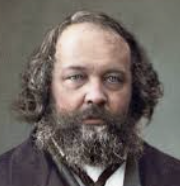
The people should never be deceived, under any pretext or for any purpose. It would not only be criminal but detrimental to the revolutionary cause, for deception of any kind, by its very nature, is shortsighted, petty, narrow, always sewn with rotten threads, so that it inevitably tears and is exposed.
▼
Source
source
"Appendix A"

5 months 3 weeks ago
Because of the way that myth takes it for granted that miracles are always happening, the waking life of a mythically inspired people the ancient Greeks, for instance more closely resembles a dream than it does the waking world of a scientifically disenchanted thinker.
4 months 3 weeks ago
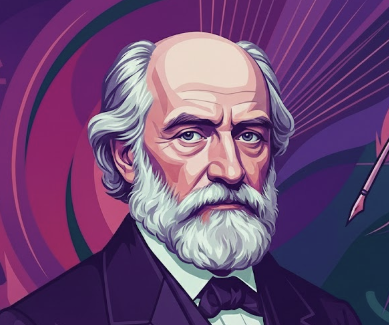
As the biggest library if it is in disorder is not as useful as a small but well-arranged one, so you may accumulate a vast amount of knowledge but it will be of far less value to you than a much smaller amount if you have not thought it over for yourself; because only through ordering what you know by comparing every truth with every other truth can you take complete possession of your knowledge and get it into your power. You can think about only what you know, so you ought to learn something; on the other hand, you can know only what you have thought about.
▼
Source
source
Vol. 2, Ch. 22, § 257 "On Thinking for Yourself" as translated in Essays and Aphorisms(1970) as translated by R. J. Hollingdale


3 months 3 weeks ago
The present state of France was ten times worse than a tyranny. The new constitution was said to be an experiment but the assertion was not true. It had already been tried, and had been found to be only productive of evils. They would go on from tyranny to tyranny, from oppression to oppression, till at last the whole system would terminate in the destruction of that miserable and deluded people... He sincerely hoped that no member of that House would ever barter the constitution of this country, the eternal jewel of their souls, for a wild and visionary system, which could only lead to confusion and disorder.
▼
Source
source
Speech in the House of Commons (6 May 1791), quoted in The Parliamentary History of England, From the Earliest Period to the Year 1803, Vol. XXIX (1817), column 397
3 months 4 weeks ago
In the United States, except for slaves, servants and the destitute fed by townships, everyone has the vote and this is an indirect contributor to law-making. Anyone wishing to attack the law is thus reduced to adopting one of two obvious courses: they must either change the nation's opinion or trample its wishes under foot.
▼
Source
source
Chapter XIV.

4 months 3 weeks ago
Whatever games are played with us, we must play no games with ourselves, but deal in our privacy with the last honesty and truth.
▼
Source
source
Illusions

3 months 2 weeks ago
Nobody really thinks who does not abstract from that which is given, who does not relate the facts to the factors which have made them, who does not - in his mind - undo the facts. Abstractness is the very life of thought, the token of its authenticity.
▼
Source
source
p. 134
1 month 2 weeks ago
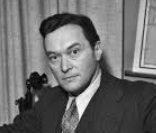
Looking back we can see how indirectly we know the environment in which nevertheless we live. We can see that the news of it comes to us now fast, now slowly; but that whatever we believe to be a true picture, we treat as if it were the environment itself.
▼
Source
source
Ch. I: "The World Outside and the Pictures in Our Heads", p. 4
4 months 2 weeks ago
Those in the crossing must in the end know what is mistaken by all urging for intelligibility: that every thinking of being, all philosophy, can never be confirmed by "facts," ie, by beings. Making itself intelligible is suicide for philosophy. Those who idolize "facts" never notice that their idols only shine in a borrowed light. They are also meant not to notice this; for thereupon they would have to be at a loss and therefore useless. But idolizers and idols are used wherever gods are in flight and so announce their nearness.
▼
Source
source
Contributions to Philosophy (From Enowning) [Beitrage Zur Philosophie (Vom Ereignis)], notes of 1936-1938, as translated by Parvis Emad and Kenneth Maly
3 months 5 days ago
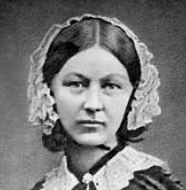
I agree as to the doubtful value of competitive examination. The qualities which you really want, viz., self-control, self-reliance, habits of accurate thought, integrity and what you generally call trustworthiness, are not decided by competitive examination, which test little else than the memory.
▼
Source
source
Letter to Lord Stanley (May 17, 1857), published in Florence Nightingale on Wars and the War Office: Collected Works of Florence Nightingale. Vol. 15 (2011), edited by Lynn McDonald, p. 265.
4 months 3 weeks ago
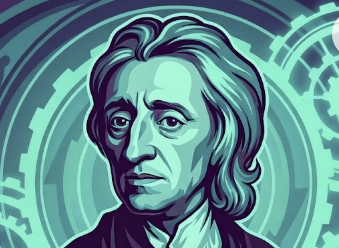
Freedom of Men under Government is, to have a standing Rule to live by, common to every one of that Society, and made by the Legislative Power erected in it; a Liberty to follow my own Will in all things, where the Rule prescribes not; and not to be subject to the inconstant, uncertain, unknown, Arbitrary Will of another Man: as Freedom of Nature is, to be under no other restraint but the Law of Nature.
▼
Source
source
Second Treatise of Civil Government, Ch. IV, sec. 21
1 month 2 weeks ago
There is no idea so obscure that someone could not come to regard it as self-evident.
▼
Source
source
Chapter Seven, Pragmatism and Positivism, p. 156
3 months 1 day ago
Many modern philosophers claim that probability is relation between an hypothesis and the evidence for it.
▼
Source
source
Chapter 4, Evidence, p. 31.
CivilSimian.com created by AxiomaticPanic, CivilSimian, Kalokagathia