But, this is not mutually exclusive. For instance, I focus on universality because if people can't understand justice, they'll never be fair and good to each other. If they're not fair and good, they're rapacious and opportunistic.



If man in the state of nature be so free, as has been said; if he be absolute lord of his own person and possessions, equal to the greatest, and subject to no body, why will he part with his freedom, this empire, and subject himself to the dominion and control of any other power?

Liberalism... has a left of center meaning in the United States. It has a slightly right of center meaning in much of continental Europe.

Genius, in truth, means little more than the faculty of perceiving in an unhabitual way.

The Outsider's miseries are the prophet's teething pains. He retreats into his room, like a spider in a dark corner; he lives alone, wishes to avoid people.
The slaves of developed industrial civilization are sublimated slaves.

To believe in a God means to understand the question about the meaning of life. To believe in a God means to see that the facts of the world are not the end of the matter. To believe in God means to see that life has a meaning.

The stock market was created by the telegraph and the telephone, and its panics are engineered by carefully orchestrated stories in the press.

Good bye, proud world! I'm going home; Thou art not my friend; I am not thine.
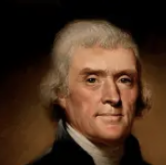
One of our fan-coloring biographers, who paints small men as very great, inquired of me lately with real affection too, whether he might consider as authentic, the change of my religion much spoken of in some circles. Now this supposed that they knew what had been my religion before, taking for it the word of their priests, whom I certainly never made the confidants of my creed. My answer was "say nothing of my religion. It is known to my God and myself alone. Its evidence before the world is to be sought in my life; if that has been honest and dutiful to society, the religion which has regulated it cannot be a bad one."

I hate tyranny, at least I think I do; but I hate it most of all where most are concerned in it. The tyranny of a multitude is a multiplied tyranny. If, as society is constituted in these large countries of France and England, full of unequal property, I must make my choice (which God avert!) between the despotism of a single person, or of the many, my election is made. As much injustice and tyranny has been practised in a few months by a French democracy, as in all the arbitrary monarchies in Europe in the forty years of my observation.

What then is time? If no one asks me, I know what it is. If I wish to explain it to him who asks, I do not know.

All who say the same things do not possess them in the same manner; and hence the incomparable author of the Art of Conversation pauses with so much care to make it understood that we must not judge of the capacity of a man by the excellence of a happy remark that we heard him make. ...let us penetrate, says he, the mind from which it proceeds... it will oftenest be seen that he will be made to disavow it on the spot, and will be drawn very far from this better thought in which he does not believe, to plunge himself into another, quite base and ridiculous.
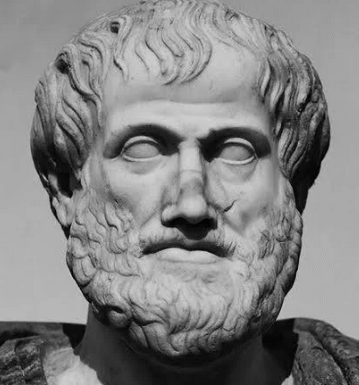
Tolerance and apathy are the last virtues of a dying society.
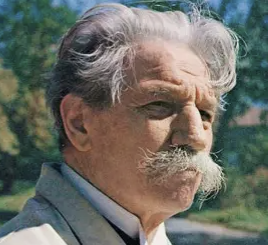
Altogether, Jesus never behaves like a man wandering in a system of delusions. He reacts in absolutely normal fashion to what is said to Him, and to the events that concern Him. He is never out of touch with reality.
When memory begins to decay, proper names are what go first ...[C]ommon qualities and names have contracted an infinitely greater number of associations ...than the names of most of the persons ...Their memory is better organized. ...'Organization' means numerous associations; and the more numerous the associations, the greater the number of paths of recall. For the same reason... words... which form the grammatical framework of all our speech, are the very last to decay.
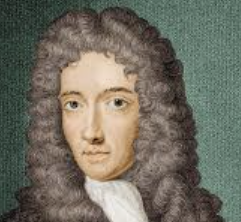
But though much may be said to Excuse the Chymists when they write Darkly, and Ænigmatically, about the Preparation of their Elixir, and Some few other grand Arcana, the divulging of which they may upon Grounds Plausible enough esteem unfit; yet when they pretend to teach the General Principles of Natural Philosophers, this Equivocall Way of Writing is not to be endur'd. For in such Speculative Enquiries, where the naked Knowledge of the Truth is the thing Principally aim'd at, what does he teach me worth thanks that does not, if he can, make his Notion intelligible to me, but by Mystical Termes, and Ambiguous Phrases darkens what he should clear up; and makes me add the Trouble of guessing at the sence of what he Equivocally expresses, to that of examining the Truth of what he seems to deliver.

From the fundamental nature of the Philistine, it follows that, in regard to others, as he has no intellectual but only physical needs, he will seek those who are capable of satisfying the latter not the former. And so of all the demands he makes of others the very smallest will be that of any outstanding intellectual abilities. On the contrary, when he comes across these they will excite his antipathy and even hatred. For here he has a hateful feeling of inferiority and also a dull secret envy which he most carefully attempts to conceal even from himself; but in this way it grows sometimes into a feeling of secret rage and rancour. Therefore it will never occur to him to assess his own esteem and respect in accordance with such qualities, but they will remain exclusively reserved for rank and wealth, power and influence, as being in his eyes the only real advantages to excel in which is also his desire.
Deep in the man sits fast his fate To mould his fortunes, mean or great.
They are ill discoverers that think there is no land, when they can see nothing but sea.
The hot radio medium used in cool or nonliterate cultures has a violent effect, quite unlike its effect, say in England or America, where radio is felt as entertainment.
There is no formula for generating the authentic warmth of love. It cannot be copied. You cannot talk yourself into it or rouse it by straining at the emotions or by dedicating yourself solemnly to the service of mankind. Everyone has love, but it can only come out when he is convinced of the impossibility and the frustration of trying to love himself. This conviction will not come through condemnations, through hating oneself, through calling self love bad names in the universe. It comes only in the awareness that one has no self to love.
A good means to discovery is to take away certain parts of a system to find out how the rest behaves.
Nations are barbarian in their infancy but not savage. The barbarian is a proportional mean between the savage and the citizen. He already possesses no end of knowledge: he has habitations, some agriculture, domestic animals, laws, a cult, regular tribunals; he lacks only the sciences.
All, too, will bear in mind this sacred principle, that though the will of the majority is in all cases to prevail, that will to be rightful must be reasonable; that the minority possess their equal rights, which equal law must protect, and to violate would be oppression. Let us, then, fellow-citizens, unite with one heart and one mind. Let us restore to social intercourse that harmony and affection without which liberty and even life itself are but dreary things.
As for the life of money-making, it is one of constraint, and wealth is manifestly not the good of which we are in search, for it is only useful as a means to something else, and for this reason there is less to be said for it than for the ends mentioned before, which are, at any rate, desired for their own sakes.
No differeance without alterity, no alterity without singularity, no singularity without here-now.
Yet it must be acknowledged that there is a fundamental difference between the sexual impulse in men and women. Her need is for a lover, a protector, a father for her children. His desire is for mastery, conquest, to be allowed to use her body for his own satisfaction. He feels like a bee, burying itself in a flower, apparently doing nothing for the flower but taking its sweetness. If he loves her, then his desire is mixed with a kind of pity.

The whole life of the upper classes is a constant inconsistency. The more delicate a man's conscience is, the more painful this contradiction is to him.

A spectre is haunting Europe; the spectre of Communism.
The question will be asked and ought to be looked at, what is to be the resource if loans cannot be obtained? There is but one, "Carthago delenda est." Bank paper must be suppressed, and the circulating medium must be restored to the nation to whom it belongs. It is the only fund on which they can rely for loans; it is the only resource which can never fail them, and it is an abundant one for every necessary purpose. Treasury bills, bottomed on taxes, bearing or not bearing interest, as may be found necessary, thrown into circulation will take the place of so much gold and silver, which last, when crowded, will find an efflux into other countries, and thus keep the quantum of medium at its salutary level. Let banks continue if they please, but let them discount for cash alone or for treasury notes.

Look within. Within is the fountain of the good, and it will ever bubble up, if thou wilt ever dig.
Not only does reality resist those who still criticize it, but it also abandons those who defend it. Maybe it is a way for reality to get its revenge from those who claim to believe in it for the sole purpose of eventually transforming it: sending back its supporters to their own desires.
What is the first business of one who practices philosophy? To get rid of self-conceit. For it is impossible for anyone to begin to learn that which he thinks he already knows.
The aim of protection, in short, is to prevent the bringing into a country of things in themselves useful and valuable, in order to compel the making of such things. But what all mankind in the individual affairs of every-day life, regard as to be desired is not the making of things, but the possession of things.
In which the technical apparatus of production and distribution (with an increasing sector of automation) functions, not as the sum-total of mere instruments which can be isolated from their social and political effects, but rather as a system which determines a priori the product of the apparatus as well as the operations of servicing and extending it. In this society, the productive apparatus tends to become totalitarian to the extent to which it determines not only the socially needed occupations, skills, and attitudes, but also individual needs and aspirations. It thus obliterates the Opposition between the private and public existence, between individual and social needs.
Logos is powerless without the force of eros.

"The bitterest sorrow that man can know is to aspire to do much and to achieve nothing"... so Herodotus relates that a Persian said to a Theban at a banquet (book ix., chap. xvi.). And it is true. With knowledge and desire we can embrace everything , or almost everything; with the will nothing, or almost nothing. And contemplation is not happiness - no! not if this contemplation implies impotence. And out of this collision between our knowledge and our power pity arises.
We must needs believe with faith, whatever counsels reason may give us, that in the depths of our own bodies, in animals, in plants, in rocks, in everything that lives, in all the Universe, there is a spirit that strives to know itself, to acquire consciousness of itself, to be itself - for to be oneself is to know oneself - to be pure spirit; and since it can only achieve this by means of the body, by means of matter, it creates and makes use of matter at the same time that it remains a prisoner of it.

There is no reason whatever to assume that woman, in her climb to emancipation, has been, or will be, helped by the ballot.
We believe it to be a rule without an exception, that the violence of a revolution corresponds to the degree of misgovemment which has produced that revolution.

If those who lead you say, 'See, the Kingdom is in the sky,' then the birds of the sky will precede you. If they say to you, 'It is in the sea,' then the fish will precede you. Rather, the Kingdom is inside of you, and it is outside of you. When you come to know yourselves, then you will become known, and you will realize that it is you who are the sons of the living Father. But if you will not know yourselves, you dwell in poverty and it is you who are that poverty. (3) And when he was demanded of the Pharisees, when the kingdom of God should come, he answered them and said, The kingdom of God cometh not with observation: Neither shall they say, Lo here! or, lo there! for, behold, the kingdom of God is within you.
God cries to my heart: "Save me!" God cries to men, to animals, to plants, to matter: "Save me!" Listen to your heart and follow him. Shatter your body and awake: We are all one. Love man because you are he. Love animals and plants because you were they, and now they follow you like faithful co-workers and slaves. Love your body; only with it may you fight on this earth and turn matter into spirit. Love matter. God clings to it tooth and nail, and fights. Fight with him. Die every day. Be born every day. Deny everything you have every day. The superior virtue is not to be free but to fight for freedom. Do not condescend to ask: "Shall we conquer? Shall we be conquered?" Fight on!
All things as subsist from nature appear to contain in themselves a principle of motion and permanency; some according to place, others according to increase and diminuation; and others according to change in quality.

One would have to be as unenlightened as an angel or an idiot to imagine that the human escapade could turn out well.
Religion is the vision of something which stands beyond, behind and within the passing flux of immediate things; something which is real, and yet waiting to be realized; something which is a remote possibility, and yet the greatest of present facts; something that gives meaning to all that passes, and yet eludes apprehension; something whose possession is the final good, and yet is beyond all reach; something which is the ultimate ideal, and the hopeless quest.

There are some simple maxims which I think might be commanded to writers of expository prose. First: never use a long word if a short word will do. Second: if you want to make a statement with a great many qualifications, put some of the qualifications in separate sentences. Third: do not let the beginning of your sentence lead the reader to an expectation which is contradicted by the end.
CivilSimian.com created by AxiomaticPanic, CivilSimian, Kalokagathia