

5 months 3 weeks ago
When Christianity came into the world the task was simply to proclaim Christianity. The same is the case wherever Christianity is introduced into a country the religion of which is not Christianity.
5 months 1 day ago
Why may not a goose say thus: "All the parts of the universe I have an interest in: the earth serves me to walk upon, the sun to light me; the stars have their influence upon me; I have such an advantage by the winds and such by the waters; there is nothing that yon heavenly roof looks upon so favourably as me. I am the darling of Nature! Is it not man that keeps and serves me?"
▼
Source
source
Book II, Ch. 12. Apology for Raimond Sebond


5 months 1 week ago
The journey of a thousand miles begins with a single step.

3 months 1 week ago
I feel that I have within me a medieval soul, and I believe that the soul of my country is medieval, that it has perforce passed through the Renaissance, the Reformation, and the Revolution - learning from them, yes, but without allowing them to touch the soul, preserving the spiritual inheritance which has come down from what are called the Dark Ages. And Quixotism is simply the most desperate phase of the struggle between the Middle Ages and the Renaissance, which was the offering of the Middle Ages.
3 months 2 weeks ago
The animating purpose of James was, on the other hand, primarily moral and artistic. It is expressed in his phrase, "block universe," employed as a term of adverse criticism. Mechanism and idealism were abhorrent to him because they both hold to a closed universe in which there is no room for novelty and adventure. Both sacrifice individuality and all the values, moral and aesthetic, which hang upon individuality; for according to absolute idealism, as to mechanistic materialism, the individual is simply a part determined by the whole of which he is a part. Only a philosophy of pluralism, of genuine indetermination, and of change which is real and intrinsic gives significance to individuality. It alone justifies struggle in creative activity and gives opportunity for the emergence of the genuinely new.

3 months 2 weeks ago
I get along quite well with someone only when he is at his lowest point and has neither the desire nor the strength to restore his habitual illusions.

2 months 3 weeks ago
All our problems are caused by forgetting what lives within us, and we sell our souls for the "bowl of stew" of bodily satisfactions.
▼
Source
source
p. 17
3 months 3 weeks ago
He who has thought most deeply loves what is most alive.

4 months 3 weeks ago
God offers to every mind its choice between truth and repose.
▼
Source
source
Intellect

1 month 2 weeks ago
Neoconservatives believed that history can be pushed along with the right application of power and will. Leninism was a tragedy in its Bolshevik version, and it has returned as farce when practiced by the United States. Neoconservatism, as both a political symbol and a body of thought, has evolved into something I can no longer support. ..."War" is the wrong metaphor for the broader struggle, since wars are fought at full intensity and have clear beginnings and endings. Meeting the jihadist challenge is more of a "long, twilight struggle" whose core is not a military campaign but a political contest for the hearts and minds of ordinary Muslims around the world.
▼
Source
source
From the essay "After Neoconservatism" in the New York Times Magazine
4 months 3 weeks ago
A difference which makes no difference is no difference at all.
▼
Source
source
As quoted in William James: The Essential Writings (1971), edited by Bruce W. Wilshire, p. xiii

4 months 5 days ago
Hope is the only good that is common to all men; those who have nothing else possess hope still.
▼
Source
source
A Dictionary of Thoughts (1908) by Tryon Edwards, p. 234
1 month 1 week ago
We know nothing of tomorrow; our business is to be good and happy today.
▼
Source
source
Vol. I, ch. 12, p. 472

4 months 3 weeks ago
When profit diminishes, merchants are very apt to complain that trade decays; though the diminution of profit is the natural effect of its prosperity, or of a greater stock being employed in it than before.
▼
Source
source
Chapter IX
4 months 3 weeks ago
There can be no difference anywhere that doesn't make a difference elsewhere - no difference in abstract truth that doesn't express itself in a difference in concrete fact and in conduct consequent upon that fact, imposed on somebody, somehow, somewhere and somewhen.
▼
Source
source
Lecture II, What Pragmatism Means
1 month 4 days ago
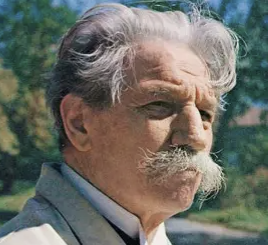
We cannot abdicate our conscience to an organization, nor to a government. 'Am I my brother's keeper?' Most certainly I am! I cannot escape my responsibility by saying the State will do all that is necessary. It is a tragedy that nowadays so many think and feel otherwise.
▼
Source
source
p. 309


4 months 3 weeks ago
Private property has made us so stupid and one-sided that an object is only ours when we have it - when it exists for us as capital, or when it is directly possessed, eaten, drunk, worn, inhabited, etc., - in short, when it is used by us. Although private property itself again conceives all these direct realizations of possession as means of life, and the life which they serve as means is the life of private property - labour and conversion into capital. In place of all these physical and mental senses there has therefore come the sheer estrangement of all these senses - the sense of having. The human being had to be reduced to this absolute poverty in order that he might yield his inner wealth to the outer world.
▼
Source
source
p. 87, The Marx-Engels Reader

4 months 1 week ago
There are two sides to every question.
▼
Source
source
As quoted in Lives of Eminent Philosophers, by Diogenes Laërtius, Book IX, Sec. 51
4 months 1 week ago
When Darius offered him ten thousand talents, and to divide Asia equally with him, "I would accept it," said Parmenio, "were I Alexander." "And so truly would I," said Alexander, "if I were Parmenio." But he answered Darius that the earth could not bear two suns, nor Asia two kings.
▼
Source
source
42 Alexander
3 months 2 weeks ago
Once man loses his faculty of indifference he becomes a potential murderer; once he transforms his idea into a god the consequences are incalculable. We kill only in the name of a god or of his counterfeits: the excesses provoked by the goddess Reason, by the concept of nation, class, or race are akin to those of the Inquisition or of the Reformation.

4 months 5 days ago
If there be light, then there is darkness; if cold, heat; if height, depth; if solid, fluid; if hard, soft; if rough, smooth; if calm, tempest; if prosperity, adversity; if life, death.
▼
Source
source
As quoted in Bibliotheca Sacra and Theological Review by ? Vol. IV, No. 8 (1847) by Dallas Theological Seminary, p. 107

2 months 3 weeks ago
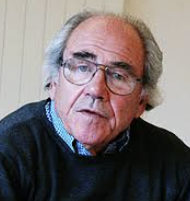
The discourse of truth is quite simply impossible. It eludes itself. Everything eludes itself, everything scoffs at its own truth, seduction renders everything elusive. The fury to unveil the truth, to get at the naked truth, the one which haunts all discourses of interpretation, the obscene rage to uncover the secret, is proportionate to the impossibility of ever achieving this. ...But this rage, this fury, only bears witness to the eternity of seduction and to the impossibility of mastering it.
▼
Source
source
(p. 73)


3 weeks 2 days ago
Above all things, lose no occasion of exercising your dispositions to be grateful, to be generous, to be charitable, to be humane, to be true, just, firm, orderly, courageous, &c. Consider every act of this kind, as an exercise which will strengthen your moral faculties and increase your worth.

5 months 3 weeks ago
We are, all of us, growing volcanoes that approach the hour of their eruption; but how near or distant that is, nobody knows not even God.
3 months 1 week ago
My purpose here is to denounce an idea which seems to be dangerous and false. ... Revolutionary trade unionists and orthodox communists are at one in considering everything that is purely theoretical as bourgeois. ... The culture of a socialist society would be a synthesis of theory and practice; but to synthesize is not the same as to confuse together; it is only contraries that can be synthesized. ... Marx's principal glory is to have rescued the study of societies not only from Utopianism but also and at the same time from empiricism. ... Humanity cannot progress by importing into theoretical study the processes of blind routine and haphazard experiment by which production has so long been dominated. ... The true relation between theory and application only appears when theoretical research has been purged of all empiricism.
▼
Source
source
"The teaching of mathematics," p. 71-72

4 months 3 weeks ago
Facts do not cease to exist because they are ignored.
▼
Source
source
"Note on Dogma"
4 months 3 weeks ago
I wanted pure love: foolishness; to love one another is to hate a common enemy: I will thus espouse your hatred. I wanted Good: nonsense; on this earth and in these times, Good and Bad are inseparable: I accept to be evil in order to become good.
▼
Source
source
Act 11, sc. 2
1 week 6 days ago
There are certain occupations, even in modern society, which entail living in isolation and do not require great physical or intellectual effort. Such occupations as the service of lighthouses and lightships come to mind. Would it not be possible to place young people who wish to think about scientific problems, especially of a mathematical or philosophical nature, in such occupations? Very few young people with such ambitions have, even during the most productive period of their lives, the opportunity to devote themselves undisturbed for any length of time to problems of a scientific nature.

3 months 3 weeks ago
A fool with a heart and no sense is just as unhappy as a fool with sense and no heart.
▼
Source
source
Part 1, Chapter 7
5 months 3 weeks ago
There are ages in which the rational man and the intuitive man stand side by side, the one in fear of intuition, the other with scorn for abstraction. The latter is just as irrational as the former is inartistic. They both desire to rule over life: the former, by knowing how to meet his principle needs by means of foresight, prudence, and regularity; the latter, by disregarding these needs and, as an "overjoyed hero," counting as real only that life which has been disguised as illusion and beauty.
2 months 2 days ago
Philosophy is said to have taken the 'linguistic turn' in this century. One hundred years ago, a philosopher would think in terms of mind, spirit, experience, consciousness; now the by-word is language.
▼
Source
source
Chapter 2, Metaphysics and Metaphor, p. 26

5 months 2 days ago
I am a lover of liberty. I will not and I cannot serve a party.
▼
Source
source
Spongia adversus aspergines Hutteni (1523), § 176, As quoted in Desiderius Erasmus of Rotterdam (1900) by Ephraim Emerton, p. 377
1 month 2 weeks ago
The limits of this strategy were evident as the century drew to a close.
▼
Source
source
The Marxist left had to confront the fact that actual Communist societies in the Soviet Union and China had turned into grotesque and oppressive dictatorships. p. 112
4 months 3 weeks ago
Every crusader is apt to go mad. He is haunted by the wickedness which he attributes to his enemies; it becomes in some sort a part of him.
▼
Source
source
Aldous Huxley, The Devils of Loudon Chatto & Windus, London, (1951), ch. 9, p. 274
3 months 2 weeks ago
The student of mathematics often finds it hard to throw off the uncomfortable feeling that his science, in the person of his pencil, surpasses him in intelligence,-an impression which the great Euler confessed he often could not get rid of. This feeling finds a sort of justification when we reflect that the majority of the ideas we deal with were conceived by others, often centuries ago. In a great measure it is really the intelligence of other people that confronts us in science.
▼
Source
source
Mach, Ernst. p. 196: Mathematics seems possessed of intelligence
4 months 3 weeks ago
We may suppose that everyone has in himself the whole form of a moral conception.
▼
Source
source
Chapter I, Section 9, pg. 50
2 months 2 weeks ago
My friends, I tell you that hitherto you have been prevented from even knowing what happiness really is, solely in consequence of the errors - gross errors - that have been combined with the fundamental notions of every religion that has hitherto been taught to men. And, in consequence, they have made man the most inconsistent, and the most miserable being in existence. By the errors of these systems he has been made a weak, imbecile animal; a furious bigot and fanatic or a miserable hypocrite; and should these qualities be carried, not only into the projected villages, but into Paradise itself, a Paradise would no longer be found!
▼
Source
source
Statement (21 August 1817), as quoted by Jim Herrick, in "Bradlaugh and Secularism: 'The Province of the Real'"
4 months 1 week ago
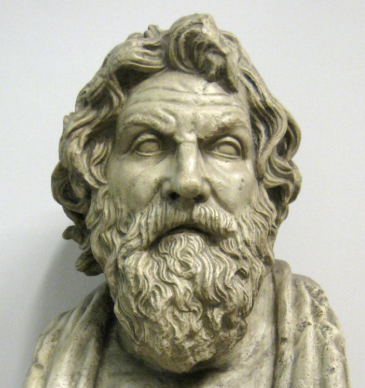
Antisthenes ... was asked on one occasion what learning was the most necessary, and he replied, "To unlearn one's bad habits."
▼
Source
source
§ 4
3 months 2 weeks ago
Basically-I speak of life as it is and not of abstract philosophical constructs-life is only bearable because one does not go to the end; doing something is only possible when one has particular illusions and that holds also for friendships, for everything.


3 months 6 days ago
(Gardner) writes about various kinds of cranks with the conscious superiority of the scientist, and in most cases one can share his sense of the victory of reason. But after half a dozen chapters this non-stop superiority begins to irritate; you begin to wonder about the standards that make him so certain he is always right. He asserts that the scientist, unlike the crank, does his best to remain open-minded. So how can he be so sure that no sane person has ever seen a flying saucer, or used a dowsing rod to locate water? And that all the people he disagrees with are unbalanced fanatics? A colleague of the positivist philosopher A. J. Ayer once remarked wryly "I wish I was as certain of anything as he seems to be about everything." Martin Gardner produces the same feeling.
▼
Source
source
pp. 2-3

3 months 6 days ago
Some will ask, what about weak natures, must they not be protected? Yes, but to be able to do that, it will be necessary to realize that education of children is not synonymous with herdlike drilling and training. If education should really mean anything at all, it must insist upon the free growth and development of the innate forces and tendencies of the child. In this way alone can we hope for the free individual and eventually also for a free community, which shall make interference and coercion of human growth impossible.

1 month 2 weeks ago
The task of a theory of class is to identify the existing conditions for potential collective struggle and express them as a political proposition.
▼
Source
source
104
CivilSimian.com created by AxiomaticPanic, CivilSimian, Kalokagathia