


8 months 3 weeks ago
Singing is of a lover.
▼
Source
source
Variant translation: To sing is characteristic of the lover. 336

9 months 1 week ago
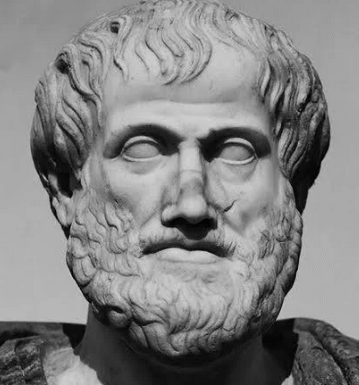
Just as it sometimes happens that deformed offspring are produced by deformed parents, and sometimes not, so the offspring produced by a female are sometimes female, sometimes not, but male, because the female is as it were a deformed male.

4 months 1 week ago
Ask the questions that have no answers. Invest in the millenium.
▼
Source
source
Manifesto: The Mad Farmer Liberation Front in Farming: A Hand Book


8 months 2 weeks ago
If a woman becomes weary and at last dead from bearing, that matters not; let her only die from bearing, she is there to do it.
▼
Source
source
Sermon Von dem ehelichen Stande (1519), p. 41 - as quoted in The Ethic of Freethought: A Selection of Essays and Lectures (1888) by Karl Pearson
9 months 5 days ago
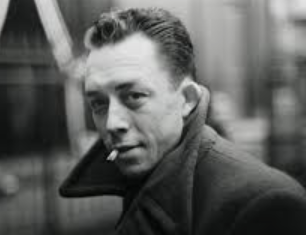
We get into the habit of living before acquiring the habit of thinking.
8 months 1 week ago
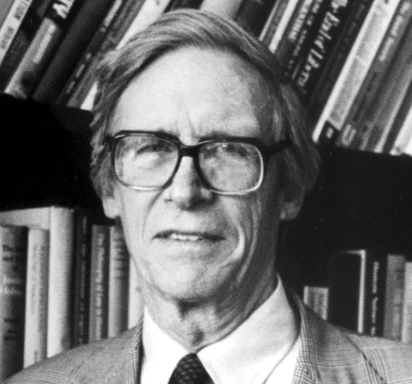
We may suppose that everyone has in himself the whole form of a moral conception.
▼
Source
source
Chapter I, Section 9, pg. 50
8 months 2 weeks ago
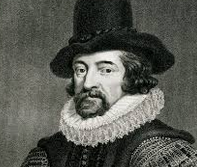
I bequeath my soul to God (...). My body to be buried obscurely. For my name and memory, I leave it to men's charitable speeches, and to foreign nations, and the next age.
▼
Source
source
His Will, 1626

8 months 1 week ago
All this is merely saying that he, in a degree once common, but now very unusual, threw his feelings into his opinions; which truly it is difficult to understand how any one who possesses much of both, can fail to do. None but those who do not care about opinions, will confound it with intolerance. Those, who having opinions which they hold to be immensely important, and their contraries to be prodigiously hurtful, have any deep regard for the general good, will necessarily dislike, as a class and in the abstract, those who think wrong what they think right, and right what they think wrong: though they need not therefore be, nor was my father, insensible to good qualities in an opponent, nor governed in their estimation of individuals by one general presumption, instead of by the whole of their character.
▼
Source
source
(pp. 50-51)
4 months 6 days ago
How can the Universe tell its own story save by making use of human speech; how convey its meanings to finite minds save by employing a thinker to declare them? So long as the story remains unspoken, unwritten, can we say it exists at all? Does not the significance of things become a story by the very process which ends in the movement of an intelligently guided pen over a sheet of paper, in the reading of printed types, in the utterance of recognised vocables; and until this process has been accomplished is not the "meaning" a mere promise or unrealized potency? Can we learn the history of the world, and of human life, otherwise than by reading, or hearing it spoken? How, then, can we receive it without the intermediation of a writer, a speaker?

8 months 1 week ago
Freedom is what you do with what's been done to you.
7 months 1 week ago
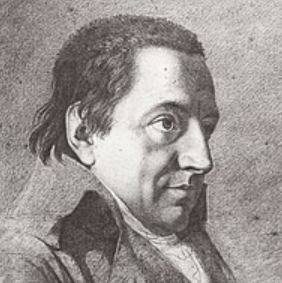
The voice in my soul in which I will have faith, and for the sake of which I have faith in all else, does not merely command me generally to act, but in every particular situation it declares what I shall do and what leave undone; it accompanies me through every event of my life, and it is impossible for me to contend against it. To listen to it and obey it honestly and impartially, without fear or equivocation, is the business of my existence. My life is no longer an empty I play without truth or significance. It is appointed that what I conscience ordains me shall be done, and for this purpose am I here. I have understanding to know, and power to execute it. By conscience alone comes truth and reality into my representations.
▼
Source
source
Jane Sinnett, trans 1846 p. 77
6 months 3 weeks ago
Rituals are symbolic acts. They represent, and pass on, the values and orders on which a community is based. They bring forth a community without communication; today, however, communication without community prevails.

4 months 6 days ago
Reason can make little headway on its own and struggles to be heard; often it has to be - so to speak - armed by the fearsome epigram. French wit pricks like a needle, so that the thread goes through the hole.
▼
Source
source
Sixth Dialogue, p. 160

8 months 1 week ago
For there's no rood has not a star above it; The cordial quality of pear or plum Ascends as gladly in a single tree, As in broad orchards resonant with bees; And every atom poises for itself, And for the whole.
▼
Source
source
Musketaquid, st. 5
8 months 4 weeks ago
No matter how busy you may think you are, you must find time for reading, or surrender yourself to self-chosen ignorance.

4 months 3 weeks ago
Whatever can happen at any time can happen today.

7 months 1 day ago
Master, we saw one casting out devils in thy name; and we forbad him, because he followeth not with us. And Jesus said unto him, Forbid him not: for he that is not against us is for us.
▼
Source
source
Luke 9:49-50 (KJV)

8 months 1 week ago
You could send your soul after the good you had expected, instead of turning it to the good you had got. You could refuse the real good; you could make the real fruit taste insipid by thinking of the other.
7 months 4 days ago
It is a universal revolution and will, accordingly, have a universal range.
8 months 2 weeks ago
We are much beholden to Machiavel and others, that write what men do, and not what they ought to do.
▼
Source
source
Book II, xxi, 9
7 months ago
Art is not the possession of the few who are recognized writers, painters, musicians; it is the authentic expression of any and all individuality. Those who have the gift of creative expression in unusually large measure disclose the meaning of the individuality of others to those others. In participating in the work of art, they become artists in their activity. They learn to know and honor individuality in whatever form it appears. The fountains of creative activity are discovered and released. The free individuality which is the source of art is also the final source of creative development in time.
8 months 2 weeks ago
Cosmus, Duke of Florence, was wont to say of perfidious friends, that "We read that we ought to forgive our enemies; but we do not read that we ought to forgive our friends."
▼
Source
source
No. 206
6 months 2 weeks ago
A book is a mirror: if an ape looks into it an apostle is hardly likely to look out. We have no words for speaking of wisdom to the stupid. He who understands the wise is wise already.
▼
Source
source
E 49

6 months 3 weeks ago
The pathos of it all is that the America which is to be protected by a huge military force is not the America of the people, but that of the privileged class; the class which robs and exploits the masses, and controls their lives from the cradle to the grave. No less pathetic is it that so few people realize that preparedness never leads to peace, but that it is indeed the road to universal slaughter.
7 months 1 week ago
I veil my face before thee, and lay my finger on my lips. What thou art in thyself, or how thou appearest to thyself, I can never know. After living through a thousand lives, I shall comprehend Thee as little as I do now in this mansion of clay. What I can comprehend, becomes finite by my mere comprehension, and this can never, by perpetual ascent, be transformed into the infinite, for it does not differ from it in degree merely, but in kind. By that ascent we may find a greater and greater man, but never a God, who is capable of no measurement.
▼
Source
source
Jane Sinnett, trans 1846 p.115

8 months 1 week ago
The force of the word World, as commonly used, of itself falls in with us. For no one will attribute accidents to the World as parts, but as determinations, states; hence the so-called world of the ego, unrestrained by the single substance and its accidents, is not very appositely called a World, unless, perhaps, an imaginary one.

8 months 1 week ago
In a social order dominated by capitalist production even the non-capitalist producer is gripped by capitalist conceptions.
▼
Source
source
Vol. III, Ch. I, Cost Price and Profit, p. 39.

7 months 5 days ago
If I were asked to summarize as briefly as possible my vision of things, to reduce it to its most succinct expression, I should replace words with an exclamation point, a definitive !
4 months 3 weeks ago
It is always right that a man should be able to render a reason for the faith that is within him.
▼
Source
source
Vol. I, ch. 3, p. 91

8 months 4 days ago
What has to be accepted, the given, is - so one could say - forms of life.
▼
Source
source
Pt II, p. 226 of the 1968 English edition
4 months 3 weeks ago
This spirit thrusts itself forward, confident of commendation and esteem. It is superior to all, monarch of all it surveys; hence it should be subservient to nothing, finding no task too heavy, and nothing strong enough to weigh down the shoulders of a man.
8 months 1 week ago
The superfluous, a very necessary thing.
▼
Source
source
Variant translation: The superfluous is very necessary, Le Mondain, 1736
6 months 3 weeks ago
In conclusion, I wish to say that my attitude to the whole tragic question is not dictated by my Jewish antecedents. It is motivated by my abhorrence of injustice, and man's inhumanity to man. It is because of this that I have fought all my life for anarchism which alone will do away with the horrors of the capitalist régime and place all races and peoples, including the Jews, on a free and equal basis. Until then I consider it highly inconsistent for socialists and anarchists to discriminate in any shape or form against the Jews.

1 year 2 weeks ago
We cannot stand by while the social contract is broken by those who chose conflict over equality. Those that want equal treatment for themselves have to treat others equally. They cannot lead with exclusion, then turn around and demand equal treatment. It is a double standard. If they are going to exclude first, then justice demands that we, the group that stands with universality, follow our duty to react and exclude those that exclude.
6 months 1 week ago
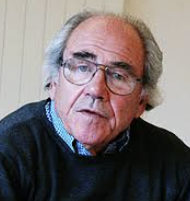
The very ideology of "cultural production" is antithetical to all culture, as is that of visibility and of the polyvalent space: culture is a site of the secret, of seduction, of initiation, of a restrained and highly ritualized symbolic exchange.
▼
Source
source
"The Beaubourg Effect," p. 64

4 months 1 week ago
There is not a sprig of grass that shoots uninteresting to me.
▼
Source
source
Thomas Jefferson Letter (23 Dec 1790) to Martha Jefferson Randolph. Collected in B.L. Rayner (ed.), Sketches of the Life, Writings, and Opinions of Thomas Jefferson (1832), 192.
6 months 2 days ago
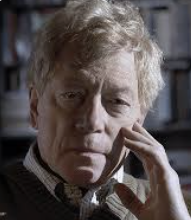
Of course, there are those - Sandel, Walzer and Dworkin, for example - who propose "communitarian" ways of thinking, as a further move in the direction which a sophisticated liberalism requires. But none of them is prepared to accept the real price of community: which is sanctity, intolerance, exclusion, and a sense that life's meaning depends upon obedience, and also on vigilance against the enemy.
▼
Source
source
'In Defence of the Nation', The Philosopher on Dover Beach (1990), p. 310

6 months 6 days ago
When technology extends one of our senses, a new translation of culture occurs as swiftly as the new technology is interiorized.
▼
Source
source
(p. 47)
7 months 4 weeks ago
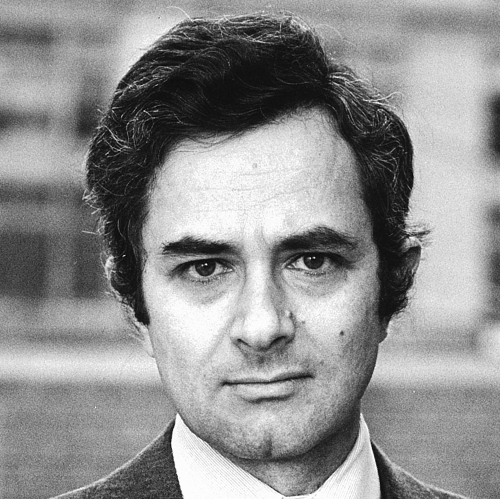
The idealist tradition, including contemporary phenomenology, has of course admitted subjective points of view as basic and has gone to the opposite length of denying an irreducible objective reality. ... I find the idealist solution unacceptable ...: objective reality cannot be analyzed or shut out of existence any more than subjective reality can. Even if not everything is something from no point of view, some things are.The deep source of both idealism and its objectifying opposite is the same: a conviction that a single world cannot contain both irreducible points of view and irreducible objective reality - that one of them must be what there really is and the other somehow reducible or dependent on it. This is a very powerful idea. To deny it is in a sense to deny that there is a single world.
▼
Source
source
"Subjective and Objective" (1979), p. 212.

4 months 5 days ago
To change your mind and to follow him who sets you right is to be nonetheless the free agent that you were before. Remember that to change thy opinion and to follow him who corrects thy error is as consistent with freedom as it is to persist in thy error.
▼
Source
source
(Long translation) VIII, 16
8 months 1 week ago
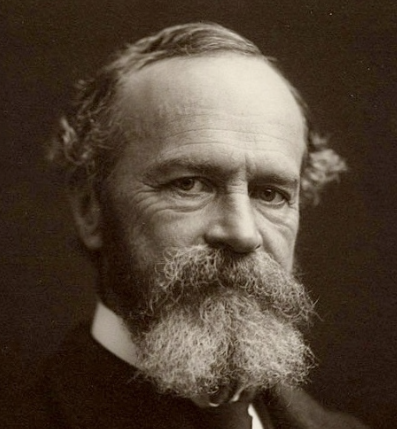
Is dogmatic or scholastic theology less doubted in point of fact for claiming, as it does, to be in point of right undoubtable? And if not, what command over truth would this kind of theology really lose if, instead of absolute certainty, she only claimed reasonable probability for her conclusions? If we claim only reasonable probability, it will be as much as men who love the truth can ever at any given moment hope to have within their grasp. Pretty surely it will be more than we could have had, if we were unconscious of our liability to err.
▼
Source
source
Lectures XIV and XV, "The Value of Saintliness"
8 months 1 week ago
I need Christ, not something that resembles Him.

8 months 1 week ago
And because it may be too great a temptation to human frailty, apt to grasp at power, for the same persons, who have the power of making laws, to have also in their hands the power to execute them, whereby they may exempt themselves from obedience to the laws they make, and suit the law, both in its making, and execution, to their own private advantage...
▼
Source
source
Second Treatise of Civil Government, Ch. XII, sec. 143
6 months 3 weeks ago
A further turn is to be found in some "unmasking" accounts of natural science, which aim to show that its pretensions to deliver the truth are unfounded, because of social forces that control its activities. Unlike the case of history, these do not use truths of the same kind; they do not apply science to the criticism of science. They apply the social sciences, and typically depend on the remarkable assumption that the sociology of knowledge is in a better position to deliver truth about science than science is to deliver truth about the world.
▼
Source
source
p. 2

CivilSimian.com created by AxiomaticPanic, CivilSimian, Kalokagathia