


4 months 3 weeks ago
Rational and kindly behavior tends to produce good results and these results remain good even when the behavior which produced them was itself produced by a pill.
▼
Source
source
"Brave New World Revisited" (1956), in Moksha: Writings on Psychedelics and the Visionary Experience (1977), p. 99
5 months 3 weeks ago
It is of this sort of divine service I used the expression that, in comparison with the Christianity of the New Testament, it is playing Christianity. The expression is essentially true and characterizes the thing perfectly. For what does it mean to play, when one reflects how the word must be understood in this connection? It means to imitate, to counterfeit, a danger when there is no danger, and to do it in such a way that the more art is applied to it, the more delusive the pretense is that the danger is present.
2 weeks 5 days ago
War is divine in itself, since it is a law of the world. War is divine through its consequences of a supernatural nature which are as much general as particular, consequences little known because little studied, but which are nevertheless incontestable. War is divine in the mysterious glory that surrounds it and in the no less inexplicable attraction that draws us to it. War is divine by the manner in which it breaks out.
▼
Source
source
Seventh Dialogue, p. 218
5 months 1 week ago
There is no body but eats and drinks. But they are few who can distinguish flavors.
3 weeks ago
There are, in the Palætiological Sciences, two antagonist doctrines: 'Catastrophes' and 'Uniformity'. The doctrine of a 'uniform course of nature' is tenable only when we extend the notion of uniformity so far that it shall include catastrophes.
4 months 1 week ago
It is now generally accepted that the roots of our ethics lie in patterns of behavior that evolved among our pre-human ancestors, the social mammals and that we retain within our biological nature elements of these evolved responses. We have learned considerably more about these responses, and we are beginning to to understand how they interact with our capacity to reason.
▼
Source
source
Preface To The 2011 edition, p. xi
2 weeks 4 days ago
Freedom only for the supporters of the government, only for the members of one party - however numerous they may be - is no freedom at all. Freedom is always and exclusively freedom for the one who thinks differently. Not because of any fanatical concept of "justice" but because all that is instructive, wholesome and purifying in political freedom depends on this essential characteristic, and its effectiveness vanishes when "freedom" becomes a special privilege.
▼
Source
source
Chapter Six, "The Problem of Dictatorship"
2 months 3 weeks ago
It occurred to him that what had appeared perfectly impossible before, namely that he had not spent his life as he should have done, might after all be true. It occurred to him that his scarcely perceptible attempts to struggle against what was considered good by the most highly placed people, those scarcely noticeable impulses which he had immediately suppressed, might have been the real thing, and all the rest false. And his professional duties and the whole arrangement of his life and of his family, and all his social and official interests, might all have been false. He tried to defend all those things to himself and suddenly felt the weakness of what he was defending.
▼
Source
source
Ch. XI

4 months 3 weeks ago
There is no method of reasoning more common, and yet none more blameable, than in philosophical debates to endeavour to refute any hypothesis by a pretext of its dangerous consequences to religion and morality. When any opinion leads us into absurdities, 'tis certainly false; but 'tis not certain an opinion is false, because 'tis of dangerous consequence.
▼
Source
source
Part 3, Section 2

5 months 2 weeks ago
I joke sometimes to the effect that when I approach a part of a book where I must explain something I don't understand, I just type faster and faster and faster. Then, when I get to the part I don't understand, sheer inertia pushes me through. That's not literally true, of course, but there's something to it psychologically.
3 months 2 weeks ago
I did not hate the author of my misfortunes - truth and justice acquit me of that; I rather pitied the hard destiny to which he seemed condemned. But I thought with unspeakable loathing of those errors, in consequence of which every man is fated to be, more or less, the tyrant or the slave. I was astonished at the folly of my species, that they did not rise up as one man, and shake off chains so ignominious, and misery so insupportable. So far as related to myself, I resolved - and this resolution has never been entirety forgotten by me - to hold myself disengaged from this odious scene, and never fill the part either of the oppressor or the sufferer.
3 months 3 weeks ago
To say that man is a compound of strength and weakness, light and darkness, smallness and greatness, is not to indict him, it is to define him.
▼
Source
source
As quoted in The Anchor Book of French Quotations with English Translations (1963) by Norbert Gutermam

5 months 2 weeks ago
Ironic philosophies produce passionate works. Any thought that abandons unity glorifies diversity! And diversity is the home of art. The only thought to liberate the mind is that which leaves it alone, certain of its limits and of its impending end. No doctrine tempts it. It awaits the ripening of the work and of life.

1 month 2 days ago
We must not always attach too much importance to violent attacks on the bourgeoisie; they may be motivated by the desire to reform and to perfect capitalism.
▼
Source
source
p. 125
3 months 3 weeks ago
The arbitrary rule of a just and enlightened prince is always bad. His virtues are the most dangerous and the surest form of seduction: they lull a people imperceptibly into the habit of loving, respecting, and serving his successor, whoever that successor may be, no matter how wicked or stupid.
▼
Source
source
Refutation of Helvétius

3 months 2 weeks ago
I pride myself on my capacity to perceive the transitory character of everything. An odd gift which has spoiled all my joys; better: all my sensations.

3 months 3 weeks ago
In cities men cannot be prevented from concerting together, and from awakening a mutual excitement which prompts sudden and passionate resolutions. Cities may be looked upon as large assemblies, of which all the inhabitants are members; their populace exercises a prodigious influence upon the magistrates, and frequently executes its own wishes without their intervention. Variant translation: In towns it is impossible to prevent men from assembling, getting excited together and forming sudden passionate resolves. Towns are like great meeting houses with all the inhabitants as members. In them the people wield immense influence over their magistrates and often carry their desires into execution without intermediaries.
▼
Source
source
Chapter XVII.
3 months 2 weeks ago
When we have no further desire to show ourselves, we take refuge in music, the Providence of the abulic.

4 months 2 weeks ago
When I am furious about something, I sometimes beat the ground or a tree with my walking stick. But I certainly do not believe that the ground is to blame or that my beating can help anything... And all rites are of this kind.
▼
Source
source
Ch. 7 : Remarks on Frazer's Golden Bough, p. 131
1 month 1 week ago
The sense of mercy is found in all men; the sense of shame is found in all men; the sense of respect is found in all men; the sense of right and wrong is found in all men.
▼
Source
source
6A:6
1 week 5 days ago
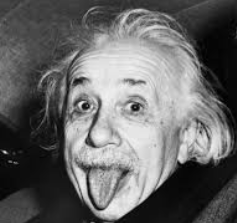
I do not believe in a God who maliciously or arbitrarily interferes in the personal affairs of mankind. My religion consists of a humble admiration for the vast power which manifests itself in that small part of the universe which our poor, weak minds can grasp!

2 months 2 weeks ago
Faced with information overload, we have no alternative but pattern-recognition.
▼
Source
source
(p. 132)
4 months 3 weeks ago
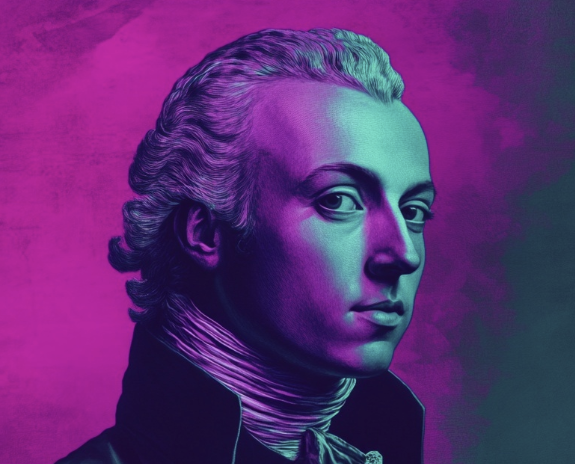
The means employed by Nature to bring about the development of all the capacities of men is their antagonism in society, so far as this is, in the end, the cause of a lawful order among men.
▼
Source
source
Fourth Thesis

5 months 3 weeks ago
Knowledge more than a Means. Also without this passion I refer to the passion for knowledge, science would be furthered: science has hitherto increased and grown up without it. The good faith in science, the prejudice in its favour, by which States are at present dominated (it was even the Church formerly), rests fundamentally on the fact that the absolute inclination and impulse has so rarely revealed itself in it, and that science is regarded not as a passion, but as a condition and an "ethos." Indeed, amour-plaisir of knowledge (curiosity) often enough suffices, amour-vanity suffices, and habituation to it, with the afterthought of obtaining honour and bread; it even suffices for many that they do not know what to do with a surplus of leisure, except to continue reading, collecting, arranging, observing and narrating; their "scientific impulse" is their ennui.

1 month 1 week ago
The manner of men's Hero-worship, verily it is the innermost fact of their existence, and determines all the rest,-at public hustings, in private drawing-rooms, in church, in market, and wherever else. Have true reverence, and what indeed is inseparable therefrom, reverence the right man, all is well; have sham-reverence, and what also follows, greet with it the wrong man, then all is ill, and there is nothing.
3 weeks ago
As to the species of exercise, I advise the gun. While this gives a moderate exercise to the body, it gives boldness, enterprise, and independence to the mind. Games played with the ball, and others of that nature, are too violent for the body, and stamp no character on the mind. Let your gun therefore be the constant companion of your walks. Never think of taking a book with you.

4 months 3 weeks ago
The finest manners in the world are awkwardness and fatuity, when contrasted with a finer intelligence.
▼
Source
source
p. 493
2 months 2 weeks ago
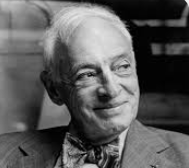
As a scholar [Allan Bloom] intends to enlighten us, and as a writer he has learned from Aristophanes and other models that enlightenment should also be enjoyable. To me, this is not the book of a professor, but that of a thinker who is willing to take the risks more frequently taken by writers. It is risky in a book of ideas to speak in one's own voice, but it reminds us that the sources of the truest truths are inevitably profoundly personal. ... Academics, even those describing themselves as existentialists, very seldom offer themselves publicly and frankly as individuals, as persons.
▼
Source
source
p. 12
3 months 2 weeks ago
Fashion is something barbarous, for it produces innovation without reason and imitation without benefit.
▼
Source
source
Ch. VII
5 months 3 weeks ago
Plato... introduces two infinities, because both in increase and diminution there appears to be transcendency, and a progression to infinity. Though... he did not use them: for neither is there infinity in numbers by diminution or division; since unity is a minimum: nor by increase; for he extends number as far as to the decad.
3 months 5 days ago
It is not honourable to attack an enemy without putting yourself at risk.

4 months 3 weeks ago
Reason is a harmonising, controlling force rather than a creative one.
▼
Source
source
Ch. 1: Mysticism and Logic

4 months 3 weeks ago
For what avail the plough or sail, Or land or life, if freedom fail?
▼
Source
source
Boston
3 months 2 weeks ago
The more you are a victim of contradictory impulses, the less you know which to yield to. To lack character - precisely that and nothing more.
4 months 2 weeks ago
But more correctly: The fact that I use the word "hand" and all the other words in my sentence without a second thought, indeed that I should stand before the abyss if I wanted so much as to try doubting their meanings - shows that absence of doubt belongs to the essence of the language-game, that the question "How do I know..." drags out the language-game, or else does away with it.
5 months 2 weeks ago
Outside of that single fatality of death, everything, joy or happiness, is liberty.
1 month 2 weeks ago
I have never met a man so ignorant that I could not learn something from him.
▼
Source
source
As quoted in The Story of Civilization : The Age of Reason Begins, 1558-1648 (1935) by Will Durant, p. 605

4 months 2 weeks ago
We are born helpless. As soon as we are fully conscious we discover loneliness. We need others physically, emotionally, intellectually; we need them if we are to know anything, even ourselves. Introduction
3 months 1 week ago
The rise of new science in the seventeenth century laid hold upon general culture in the next century. The enlightenment... testified to the widespread belief that at last light had dawned, that dissipation of ignorance, superstition, and bigotry was at hand, and the triumph of reason was assured -- for reason was counterpart in man of the laws of nature which science was disclosing. The reign of law in the natural world was to be followed by the reign of law in human affairs.
3 months 5 days ago
Full of gods means full of meaning, full of narration. The world becomes readable, like a picture.
4 months 1 week ago
It is a royal privilege to do good and be ill spoken of.
▼
Source
source
§ 3; quoted also by Marcus Aurelius, vii. 36
3 months 3 days ago
Chronic boredom - compensated or uncompensated - constitutes one of the major psychopathological phenomena in contemporary technotronic society, although it is only recently that it has found some recognition.
▼
Source
source
p. 273
3 weeks ago
If a nation expects to be ignorant and free, in a state of civilization, it expects what never was and never will be. The functionaries of every government have propensities to command at will the liberty and property of their constituents. There is no safe deposit for these but with the people themselves; nor can they be safe with them without information. Where the press is free, and every man able to read, all is safe.
▼
Source
source
Letter to Colonel Charles Yancey (6 January 1816) ME 14:384
1 month 2 days ago
Zen does not confuse spirituality with thinking about God while one is peeling potatoes. Zen spirituality is just to peel the potatoes. Paraphrase of original text which reads "It does not confuse spirituality with thinking about God while one is peeling potatoes. Zen spirituality is just to peel the potatoes.
▼
Source
source
The Way of Zen, Pt. 2, Ch. 2

3 months 3 weeks ago
All men that are ruined, are ruined on the side of their natural propensities.
▼
Source
source
No. 1, volume v, p. 286
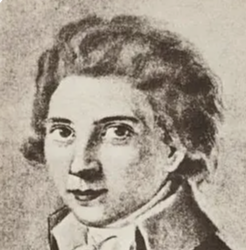
3 months 3 weeks ago
Expect nothing more from philosophy than a voice, language and grammar of the instinct for Godliness that lies at its origin, and, essentially, is philosophy itself.
▼
Source
source
"On Philosophy: To Dorothea," in Theory as Practice (1997), p. 421
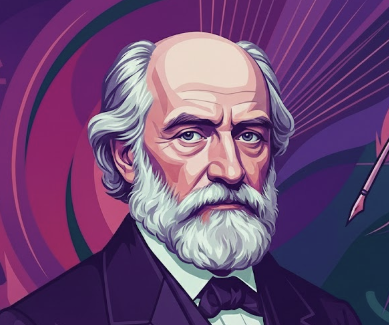
4 months 3 weeks ago
A man of intellect is like an artist who gives a concert without any help from anyone else, playing on a single instrument - a piano, say, which is a little orchestra in itself. Such a man is a little world in himself; and the effect produced by various instruments together, he produces single-handed, in the unity of his own consciousness. Like the piano, he has no place in a symphony; he is a soloist and performs by himself - in solitude, it may be; or if in the company with other instruments, only as principal; or for setting the tone, as in singing.
3 weeks ago
I had always hoped that the younger generation receiving their early impressions after the flame of liberty had been kindled in every breast, & had become as it were the vital spirit of every American, that the generous temperament of youth, analogous to the motion of their blood, and above the suggestions of avarice, would have sympathized with oppression wherever found, and proved their love of liberty beyond their own share of it.
3 months 3 days ago
I believe that the man choosing progress can find a new unity through the full development of all his human forces, which are produced in three orientations. These can be presented separately or together: biophilia, love for humanity and nature, and independence and freedom.
CivilSimian.com created by AxiomaticPanic, CivilSimian, Kalokagathia