


3 months 2 weeks ago
We have not made the Revolution, the Revolution has made us.
▼
Source
source
Act II.

4 months 3 weeks ago
The mass of men lead lives of quiet desperation. What is called resignation is confirmed desperation.
▼
Source
source
p. 10

5 months 1 week ago
It is quite clear to you that all the people see that lower kinds of creation could have been made in a different way from that in which they really are, and as they see this lower degree in many things they think that they must have been made by chance.
2 weeks 6 days ago
We have no reason to fear lest a habit of conscientious inquiry should paralyse the actions of our daily life. But because it is not enough to say, "It is wrong to believe on unworthy evidence," without saying also what evidence is worthy, we shall now go on to inquire under what circumstances it is lawful to believe on the testimony of others; and then, further, we shall inquire more generally when and why we may believe that which goes beyond our own experience, or even beyond the experience of mankind.

1 month 1 week ago
Were we required to characterise this age of ours by any single epithet, we should be tempted to call it, not an Heroical, Devotional, Philosophical, or Moral Age, but, above all others, the Mechanical Age. It is the Age of Machinery, in every outward and inward sense of that word; the age which, with its whole undivided might, forwards, teaches and practises the great art of adapting means to ends. Nothing is now done directly, or by hand; all is by rule and calculated contrivance. For the simplest operation, some helps and accompaniments, some cunning abbreviating process is in readiness. Our old modes of exertion are all discredited, and thrown aside. On every hand, the living artisan is driven from his workshop, to make room for a speedier, inanimate one. The shuttle drops from the fingers of the weaver, and falls into iron fingers that ply it faster.

4 months 1 week ago
You can tell the man who rings true from the man who rings false, not by his deeds alone, but also by his desires.

4 months 3 weeks ago
I am very fond of truth, but not at all of martyrdom.
▼
Source
source
Letter to Jean le Rond d'Alembert, 8 February 1776

4 months 4 weeks ago
Every rich man is avaricious, in my opinion.
▼
Source
source
Ch. 14

3 months 3 days ago
The eros-driven soul produces beautiful things, and, above all, beautiful actions, which have a universal value.
4 months 1 week ago
Once a word has been allowed to escape, it cannot be recalled.
▼
Source
source
Book I, epistle xviii, line 71

4 months 3 weeks ago
The proposal of any new law or regulation of commerce which comes from this order, ought always to be listened to with great precaution, and ought never to be adopted till after having been long and carefully examined, not only with the most scrupulous, but with the most suspicious attention. It comes from an order of men, whose interest is never exactly the same with that of the public, who have generally an interest to deceive and even to oppress the public, and who accordingly have, upon many occasions, both deceived and oppressed it.
▼
Source
source
Chapter XI, Part III, Conclusion of the Chapter, p. 292.

2 months 2 weeks ago
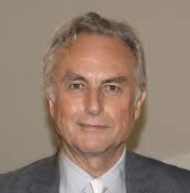
Just because science so far has failed to explain something, such as consciousness, to say it follows that the facile, pathetic explanations which religion has produced somehow by default must win the argument is really quite ridiculous.
▼
Source
source
Steve Paulson, "The flying spaghetti monster" Salon.com

2 months 3 weeks ago
Yet sometimes vegetables and animals are, by certain epithets or circumstances, extended to other significations; as a Tree, when called the tree of life or of knowledge; and a Beast, when called the old serpent, or worshiped. When a Beast or Man is put for a kingdom, his parts and qualities are put for the analogous parts and qualities of the kingdom; as the head of a Beast, for the great men who precede and govern; the tail for the inferior people, who follow and are governed; the heads, if more than one, for the number of capital parts, or dynasties, or dominions in the kingdom, whether collateral or successive, with respect to the civil government; the horns on any head, for the number of kingdoms in that head, with respect to military power...
▼
Source
source
Vol. I, Ch. 2: Of the Prophetic Language

2 weeks 6 days ago
We are firmly convinced, and we act on that conviction, that with nations, as with individuals, our interests, soundly calculated, will ever be found inseparable from our moral duties; and history bears witness to the fact that a just nation is taken on its word, when recourse is had to armaments and wars to bridle others.

4 months 3 weeks ago
Every thing in the world is purchased by labour.
▼
Source
source
Part II, Essay 1: Of Commerce
3 months 2 weeks ago
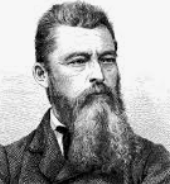
Speculative philosophy as the realisation of God is the positing of God, and at the same time his cancellation or negation; theism and at the same time atheism: for God - in the sense of theology - is God only as long as he is taken to be a being distinguished from and independent of the being of man as well as of nature. The theism that as the positing of God is simultaneously his negation or, conversely, as the negation of God equally his affirmation, is pantheism. Theological theism - that is, theism properly speaking - is nothing other than imaginary pantheism which itself is nothing other than real and true theism.
▼
Source
source
Part I, Section 14
1 month 1 week ago
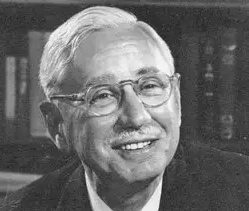
To all Christian governments Christianity was not a rule of means but a means of rule; Christ was for the people, Machiavelli was preferred by the kings. The state in some measure had civilized man, but who would civilize the state?
▼
Source
source
Chapter 6, p. 229
1 month 1 day ago
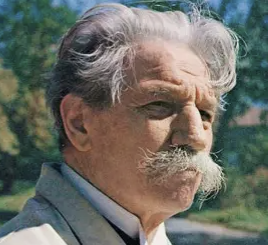
Never for a moment do we lay aside our mistrust of the ideals established by society, and of the convictions which are kept by it in circulation. We always know that society is full of folly and will deceive us in the matter of humanity. ... humanity meaning consideration for the existence and the happiness of individual human beings.
▼
Source
source
Chapter 26

2 weeks 3 days ago
Does the light of a lamp shine and keep its glow until its fuel is spent? Why shouldn't your truth, justice, and self-control shine until you are extinguished?
▼
Source
source
XII. 15:294
1 month 4 weeks ago
What I would like to show is that there is a vital dimension of their writing, which I call performative reflexivity, which if ignored or misunderstood will impede an adequate response to it.
▼
Source
source
Chapter 8, Performative Reflexivity, p. 134
4 months 2 weeks ago
If we compare the third-person attitude of someone who simply says how things stand (this is the attitude of the scientist, for example) with the performative attitude of someone who tries to understand what is said to him (this is the attitude of the interpreter, for example), the implications ... become clear. ... First, interpreters relinquish superiority that observers have by virtue of their privileged position, in that they themselves are drawn, at least potentially, into negotiations about the meaning and validity of utterances. By taking part in communicative action, they accept in principle the same status as those whose utterances they are trying to understand. ... It is impossible to decide a priori who is to learn from whom.
▼
Source
source
p. 26

4 months 2 weeks ago
What can you ever really know of other people's souls - of their temptations, their opportunities, their struggles? One soul in the whole creation you do know: and it is the only one whose fate is placed in your hands. If there is a God, you are, in a sense, alone with Him. You cannot put Him off with speculations about your next door neighbours or memories of what you have read in books.
▼
Source
source
Book IV, Chapter 10, "Nice People or New Men"

3 months 3 days ago
The free expression of the hopes and aspirations of a people is the greatest and only safety in a sane society.

5 months 3 weeks ago
Thoughts in a poem. The poet presents his thoughts festively, on the carriage of rhythm: usually because they could not walk.
2 months 3 weeks ago
To every action there is always opposed an equal reaction; or, the mutual actions of two bodies upon each other are always equal, and directed to contrary parts.
▼
Source
source
Laws of Motion, III

2 months 2 weeks ago
The TV generation is postliterate and retribalized. It seeks by violence to scrub the old private image and to merge in a new tribal identity, like any corporate executive.
▼
Source
source
(p. 201)
4 months 4 weeks ago
Writing does not cause misery. It is born of misery.
1 month 4 weeks ago
It's easy to support the status quo if one is not another of its victims.
▼
Source
source
Reply to Meet the people who want to turn predators into herbivores, TreeHugger, 4 Dec. 2015
3 months 6 days ago
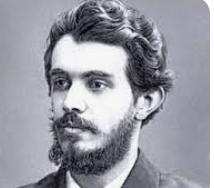
It is difficult to fit the work of Nikolai Berdyaev into any neat category. The label that was used most frequently to characterize him was that of an "existential Christian philosopher" but ... his voice is equally relevant to psychology and psychoanalysis and it also constitutes a uniquely original commentary on the very nature of the person in our postmodern world especially in relation to spirituality.
▼
Source
source
Renos K. Papadopoulos, in C.G. Jung and Nikolai Berdyaev: Individuation and the Person (2011) by Georg Nicolaus, Foreword, p. xiii

2 months 2 weeks ago
The global village is a place of very arduous interfaces and very abrasive situations.


2 months 3 weeks ago
We often attribute "understanding" and other cognitive predicates by metaphor and analogy to cars, adding machines, and other artifacts, but nothing is proved by such attributions.

3 months 1 week ago
Not without reason did he who had the right to do so speak of the foolishness of the cross. Foolishness, without a doubt, foolishness. And the American humorist, Oliver Wendell Holmes, was not altogether wide of the mark in making one of the characters in his ingenious conversations say that he thought better of those who were confined in a lunatic asylum on account of religious mania than of those who, while professing the same religious principles, kept their wits and appeared to enjoy life very well outside the asylums. But those who are at large, are they not really, thanks to God, mad too? Are there not mild madnesses, which not only permit us to mix with our neighbors without danger to society, but which rather enable us to do so, for by means of them we are able to attribute a meaning and finality to life and society?

5 months 3 weeks ago
Irony limits, finitizes, and circumscribes and thereby yields truth, actuality, content; it disciplines and punishes and thereby yields balance and consistency.

4 months 3 weeks ago
Nor is it the irrationality of the form which is taken as characteristic. On the contrary, one overlooks the irrational.
▼
Source
source
Vol. II, Ch. I, p. 30.
2 weeks 3 days ago
In contemplating thyself never include the vessel which surrounds thee, and these instruments which are attached about it. For they are like an ax, differing only in this, that they grow to the body. For indeed there is no more use in these parts without the cause which moves and checks them than in the weaver's shuttle, and the writer's pen, and the driver's whip.
▼
Source
source
X, 38

3 months 3 weeks ago
...a monarchy is a thing perfectly susceptible of reform; perfectly susceptible of a balance of power; and that, when reformed and balanced, for a great country, it is the best of all governments. The example of our country might have led France, as it has led him, to perceive that monarchy is not only reconcilable to liberty, but that it may be rendered a great and stable security to its perpetual enjoyment.
▼
Source
source
p. 400

4 months 2 weeks ago
Don't get involved in partial problems, but always take flight to where there is a free view over the whole single great problem.
3 weeks ago
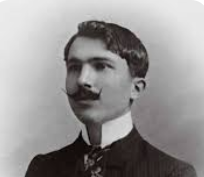
Profound and incommensurable is the worth of this flowing world: God clings to it and ascends, God feeds upon it and increases.


4 months 4 weeks ago
Is Christ only to be adored? Or is the holy Mother of God rather not to be honoured? This is the woman who crushed the Serpent's head. Hear us. For your Son denies you nothing.
▼
Source
source
Weimar edition of Martin Luther's Works, English translation edited by J. Pelikan [Concordia: St. Louis], Vol. 51, 128-129
4 months 2 weeks ago
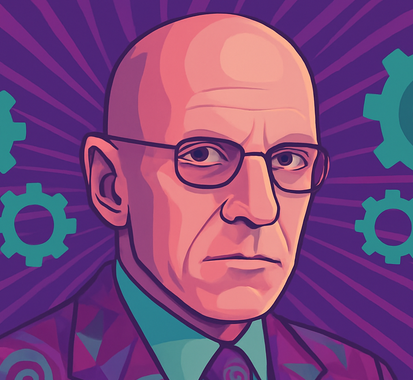
In the Greek conception of parrhesia... truth-having is guaranteed by the possession of... moral qualities... required... to know... and... convey such truth...
4 months 1 week ago
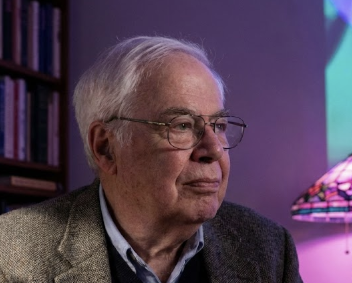
When the individual finds in her conscience beliefs that are relevant to public policy but incapable of the defense on the basis of beliefs common to her fellow citizens, she must sacrifice her conscience on the altar of public expediency.

3 months 2 weeks ago
So it is that after each night, facing a new day, the impossible necessity of dealing with it fills us with dread; exiled in light as if the world had just started, inventing the sun, we flee from tears-just one of which would be enough to wash us out of time.
4 months 2 weeks ago
"Ah, Psyche," I said, "have I made you so little happy as that?"
▼
Source
source
Orual
3 months 6 days ago
Logic chases truth up the tree of grammar.
▼
Source
source
Philosophy of Logic
CivilSimian.com created by AxiomaticPanic, CivilSimian, Kalokagathia