


2 weeks 4 days ago
It is not fit that I should give myself pain, for I have never intentionally given pain even to another.
▼
Source
source
VIII, 42
3 months 2 weeks ago
Modern man may assert that he can dispense with them, and he may bolster his opinion by insisting that there is no scientific evidence of their truth. But since we are dealing with invisible and unknowable things (for God is beyond human understanding, and there is no mean of proving immortality), why should we bother with evidence?
▼
Source
source
p. 75-76

4 months 3 weeks ago
Every book is a quotation; and every house is a quotation out of all forests and mines and stone-quarries; and every man is a quotation from all his ancestors.
▼
Source
source
Quotation and Originality

3 months 3 weeks ago
It looks to me to be narrow and pedantic to apply the ordinary ideas of criminal justice to this great public contest. I do not know the method of drawing up an indictment against a whole people.
3 months 2 weeks ago
No doubt the spirit or energy of the world is what is acting in us, as the sea is what rises in every little wave; but it passes through us, and cry out as we may, it will move on. Our privilege is to have perceived it as it moves.
▼
Source
source
p. 199

4 months 4 weeks ago
Is Christ only to be adored? Or is the holy Mother of God rather not to be honoured? This is the woman who crushed the Serpent's head. Hear us. For your Son denies you nothing.
▼
Source
source
Weimar edition of Martin Luther's Works, English translation edited by J. Pelikan [Concordia: St. Louis], Vol. 51, 128-129

4 months 2 weeks ago
Be quiet! Anyone can spit in my face, and call me a criminal and a prostitute. But no one has the right to judge my remorse.
▼
Source
source
Act 1

4 months 3 days ago
Water is the first principle of everything.
▼
Source
source
As quoted in Aristotle, Metaphysics, 983b
2 weeks 4 days ago
So remember this principle when something threatens to cause you pain: the thing itself was no misfortune at all; to endure it and prevail is great good fortune.
▼
Source
source
IV, 49a

3 months 2 weeks ago
The only profound thinkers are the ones who do not suffer from a sense of the ridiculous.

4 months 3 weeks ago
He that thinks diversion may not lie in hard and painful labour, forgets the early rising, hard riding, heat, cold and hunger of huntsmen, which is yet known to be the constant recreation of men of the greatest condition.
▼
Source
source
Sec. 206

4 months 2 weeks ago
In the darkest region of the political field the condemned man represents the symmetrical, inverted figure of the king.
3 months 6 days ago
Without doubt, if we are to go back to that ultimate, integral experience, unwarped by the sophistications of theory, that experience whose elucidation is the final aim of philosophy, the flux of things is one ultimate generalization around which we must weave our philosophical system.
▼
Source
source
Pt. II, ch. 10, sec. 1.

2 months ago
Much more seriously, in those traditional eco-systems that we chose to retain, millions of non-human animals will continue periodically to starve, die horribly of thirst and disease, or even get eaten alive. This is commonly viewed as "natural" and hence basically OK. It would indeed be comforting to think that in some sense this ongoing animal holocaust doesn't matter too much. We often find it convenient to act as though the capacity to suffer were somehow inseparably bound up with linguistic ability or ratiocinative prowess. Yet there is absolutely no evidence that this is the case, and a great deal that it isn't.
▼
Source
source
1.9 The Taste of Depravity
1 month ago
My faith in human dignity consists in the belief that man is the greatest scamp on earth. Human dignity must be associated with the idea of a scamp and not with that of an obedient, disciplined and regimented soldier.
▼
Source
source
Ch. I : The Awakening, p. 12
2 months 3 weeks ago
Science fiction is like other writing. It is just novels and short stories with machines.

4 months 2 weeks ago
It is often asserted that discussion is only possible between people who have a common language and accept common basic assumptions. I think that this is a mistake. All that is needed is a readiness to learn from one's partner in the discussion, which includes a genuine wish to understand what he intends to say. If this readiness is there, the discussion will be the more fruitful the more the partner's backgrounds differ.
▼
Source
source
p. 352

2 months 3 weeks ago
He did not, and could not, understand the meaning of words apart from their context. Every word and action of his was the manifestation of an activity unknown to him, which was his life.
▼
Source
source
About Platon Karataev in Bk. XII, ch. 13
2 weeks 4 days ago
Look to the essence of a thing, whether it be a point of doctrine, of practice, or of interpretation.
▼
Source
source
VIII, 22
4 months 3 weeks ago
There is no virtue they should be excited to, nor fault they should be kept from, which I do not think they may be convinced of; but it must be by such reasons as their age and understandings are capable of, and those propos'd always in very few and plain words.
▼
Source
source
Sec. 81
3 months 2 weeks ago
Anyone can escape into sleep, we are all geniuses when we dream, the butcher's the poet's equal there.

3 months 4 days ago
Like Fichte, Brentano had one simple and powerful insight. He declared: there is a basic difference between a mental and physical act. if I slip on the snow and fall flat on my back, that is an unintentional physical act. But there is no such thing as an unintentional mental act. When I think, I have to think about something; I have to focus my mind on it. You could compare all mental acts (thinking, willing, loving, trying to remember something) to a searchlight beam stabbing into the darkness. There is an element of will, of 'intentionality,' in all mental activity. So it is quite inaccurate to compare mental activity to chemistry, or to a kind of drifting, like leaves on a stream. It flows purposefully or not at all.
▼
Source
source
p. 35

2 months 2 weeks ago
World War I a railway war of centralization and encirclement. World War II a radio war of decentralization concluded by the Bomb. World War III a TV guerrilla war with no divisions between civil and military fronts.
▼
Source
source
(p. 152)

5 months 3 weeks ago
He who humbleth himself wants to be exalted.

4 months 3 weeks ago
The importation of gold and silver is not the principal, much less the sole benefit which a nation derives from its foreign trade.
▼
Source
source
Chapter I, p. 479.

4 months 3 weeks ago
Love is a severe critic. Hate can pardon more than love.
▼
Source
source
Pearls of Thought (1881) p. 159

5 months 3 weeks ago
Therefore only an utterly senseless person can fail to know that our characters are the result of our conduct.
2 months 3 weeks ago
In the upper, rich, more educated classes of European society doubt arose as to the truth of that understanding of life which was expressed by Church Christianity. When, after the Crusades and the maximum development of papal power and its abuses, people of the rich classes became acquainted with the wisdom of the classics and saw, on the one hand, the reasonable lucidity of the teachings of the ancient sages, and on the other hand, the incompatibility of the Church doctrine with the teaching of Christ, they found it impossible to continue to believe the Church teaching.
4 months 4 weeks ago
One must never forget to look at the aim of a matter.
▼
Source
source
Act III, scene xi
3 months 3 weeks ago
...what I look to with seriousness is the Phalanx of Party which exists in the body of the dissenters, who are, at the very least, nine tenths of them entirely devoted, some with greater some with less zeal, to the principles of the French Revolution.
▼
Source
source
Letter to the Home Secretary, Henry Dundas (30 September 1791), quoted in Alfred Cobban and Robert A. Smith (eds.), The Correspondence of Edmund Burke, Volume VI: July 1789-December 1791 (1967), p. 419

3 months 1 week ago
The Ottoman Empire whose sick body was not supported by a mild and regular diet, but by a powerful treatment, which continually exhausted it.
▼
Source
source
No. 19. (Usbek writing to Rustan)
3 months 2 weeks ago
If the individual were no longer compelled to prove himself on the market, as a free economic subject, the disappearance of this kind of freedom would be one of the greatest achievements of civilization. The technological processes of mechanization and standardization might release individual energy into a yet uncharted realm of freedom beyond necessity. The very structure of human existence would be altered; the individual would be liberated from the work world's imposing upon him alien needs and alien possibilities. The individual would be free to exert autonomy over a life that would be his own.
▼
Source
source
p. 2

5 months ago
Let great authors have their due, as time, which is the author of authors, be not deprived of his due, which is, further and further to discover truth.
▼
Source
source
Book I, iv, 10
2 months 2 weeks ago
One touch of nature makes the whole world tin.

5 months 1 week ago
Even then [at the time of Peter's speech in Acts 2] it was the last days; how much more so now, when there must still be as much time till the end of the world as has passed since the ascension of the Lord! We do not know the end of the world, because it is not for us to know the times or the seasons that the Father has set in his power; but we know that, like the apostles, we live in the last times, in the last days, in the last hour. Those who lived after the apostles and before us were more in what we call the last times, and we ourselves are in them even more than they; those who will come after us will be so much more, till one gets to those who will be, if one may say so, the last of the last, and finally till that day, the very last, of which the Lord means to speak when he said, "And I will raise him up on the last day". How far are we from that day? That is an impenetrable secret.
2 months ago
After Hegel, philosophy confronts the possibility of its own death, and in some sense has to do so if it is to remain the most fundamental kind of thinking.
▼
Source
source
Chapter 4, Philosophy As Writing: The Case Of Hegel, p. 88
2 weeks 4 days ago
The mechanical mind has a passion for control - of everything except itself. Beyond the control it has won over the forces of nature it would now win control over the forces of society of stating the problem and producing the solution, with social machinery to correspond.
▼
Source
source
Revolt Against Mechanism (1933).
4 months 3 weeks ago
...this our world, which is so real, with all its suns and milky ways is-nothing.
2 months 3 weeks ago
There is no practice of nonviolence that does not negotiate fundamental ethical and political ambiguities, which means that "nonviolence" is not an absolute principle, but the name of an ongoing struggle.
▼
Source
source
p. 23
2 weeks 6 days ago
Now to get back to our given Church: it lives almost entirely for modesty and moneyed piety. It zealously inveighs against the harm done to Joseph and the sheep, but it has made its arrangements with the upper classes and serves as their spiritual defender. It bristles at see-through blouses, but not at slums in which half-naked children starve, and not, above all, at the conditions that keep three quarters of mankind in misery. It condemns desperate girls who abort a foetus, but it consecrates war, which aborts millions. It has nationalized its God, nationalized him into ecclesiastic organization, and has inherited the Roman empire under the mask of the Crucified. It preserves misery and injustice, having first tolerated and then approved the class power that causes them; it prevents any seriousness about deliverance by postponing it to St. Never-Ever's Day or shifting it to the beyond.
▼
Source
source
p. 144

3 weeks ago
The system of banking we have both equally and ever reprobated. I contemplate it as a blot left in all our constitutions, which, if not covered, will end in their destruction, which is already hit by the gamblers in corruption, and is sweeping away in its progress the fortunes and morals of our citizens.
2 months 3 weeks ago
The oppression of a majority by a minority, and the demoralization inevitably resulting from it, is a phenomenon that has always occupied me and has done so most particularly of late.
▼
Source
source
I
4 months 2 weeks ago
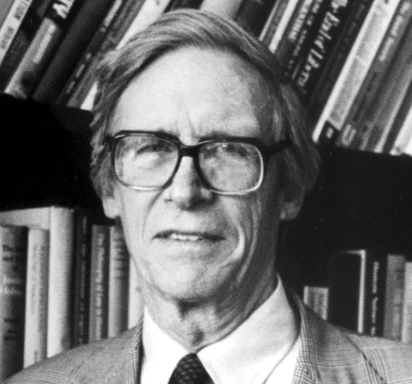
When the basic structure of society is publicly known to satisfy its principles for an extended period of time, those subject to these arrangements tend to develop a desire to act in accordance with these principles and to do their part in institutions which exemplify them.
▼
Source
source
Chapter III, Section 29, pg.177
2 months 3 weeks ago
Nonviolence does not necessarily emerge from a pacific or calm part of the soul. Very often it is an expression of rage, indignation, and aggression.
▼
Source
source
p. 21
3 months 2 weeks ago
I think of so many people who are no more, and I pity them. Yet they are not so much to be pitied, for they have solved every problem, beginning with the problem of death.

4 months 1 week ago
As for me, when you want a good laugh, you will find me in fine state... fat and sleek, a true hog of Epicurus' herd.
▼
Source
source
Book I, epistle iv, lines 15-16


3 months 2 weeks ago
For two thousand years, Jesus has revenged himself on us for not having died on a sofa.
2 months 2 weeks ago
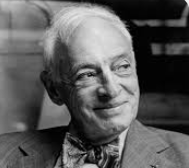
In the greatest confusion there is still an open channel to the soul. It may be difficult to find because by midlife it is overgrown, and some of the wildest thickets that surround it grow out of what we describe as our education. But the channel is always there, and it is our business to keep it open, to have access to the deepest part of ourselves.
▼
Source
source
Foreword to The Closing of the American Mind by Allan Bloom
3 months 2 weeks ago
Impossible to spend sleepless nights and accomplish anything: if, in my youth, my parents had not financed my insomnias, I should surely have killed myself.
CivilSimian.com created by AxiomaticPanic, CivilSimian, Kalokagathia