


9 months 3 days ago
There is more of good nature than of good sense at the bottom of most marriages.
▼
Source
source
Pearls of Thought (1881) p. 170

9 months 4 days ago
Every parting gives a foretaste of death; every coming together again a foretaste of the resurrection.
▼
Source
source
"Psychological Observations"

9 months 2 weeks ago
The world is divided into men who have wit and no religion and men who have religion and no wit.
9 months 3 days ago
A gun gives you the body, not the bird.
▼
Source
source
Quoted by Ralph Waldo Emerson, in C. J. Woodbury (ed.) Talks with Ralph Waldo Emerson, 1890

6 months 2 weeks ago
In a well worn metaphor, a parallel is drawn between the life of man and the metamorphosis of the caterpillar into the butterfly; but the comparison may be more just as well as more novel, if for its former term we take the mental progress of the race. History shows that the human mind, fed by constant accessions of knowledge, periodically grows too large for its theoretical coverings, and bursts them asunder to appear in new habiliments, as the feeding and growing grub, at intervals, casts its too narrow skin and assumes another, itself but temporary. Truly the imago state of Man seems to be terribly distant, but every moult is a step gained, and of such there have been many.
▼
Source
source
Ch.2, p. 72
10 months 3 days ago
If God stops a man on the road, and calls him with a revelation and sends him armed with divine authority among men, they say to him; from whom dost thou come? He answers: from God. But now God cannot help his messenger physically like a king, who gives him soldiers or policemen, or his ring or his signature, which is known to all; in short, God cannot help men by providing them with physical certainty that an Apostle is an Apostle-which would, moreover, be nonsense. Even miracles, if the Apostle has that gift, give no physical certainty; for the miracle is the object of faith.

8 months 3 days ago
It was not only that I could not become spiteful, I did not know how to become anything; neither spiteful nor kind, neither a rascal nor an honest man, neither a hero nor an insect. Now, I am living out my life in my corner, taunting myself with the spiteful and useless consolation that an intelligent man cannot become anything seriously, and it is only the fool who becomes anything.
▼
Source
source
Part 1, Chapter 1
7 months 4 weeks ago
The ego involved in responsibility is me and no one else, me with whom one whould have liked to pair up a sister soul, from whom one would have substitution and sacrifice.
▼
Source
source
The Levinas reader by Levinas, Emmanuel p. 116
9 months 5 days ago
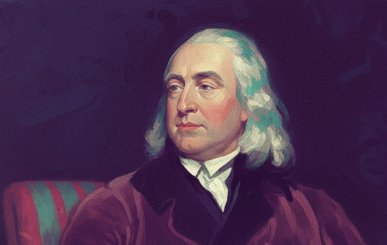
The community is a fictitious body, composed of the individual persons who are considered as constituting as it were its members. The interest of the community then is what? The sum of the interests of the several members who compose it.
▼
Source
source
Ch. 1: Of the Principle of Utility
10 months 3 days ago
In an age as agitated as ours, it no longer suffices just to be advertised in the newspaper. To be advertised in this way is the same thing as being consigned to oblivion. If one is to be noticed, once must as least appear on the first page under a hand that points to and, as it were, announces or advertises the advertisement.

4 months 4 weeks ago
That which makes the man no worse than he was makes his life no worse: it has no power to harm, without or within.
▼
Source
source
IV, 8

8 months 3 days ago
It is easy to see that this problem can be solved neither in theoretical nor in practical philosophy, but only in a higher discipline, which is the link that combines them, and neither theoretical nor practical, but both at once.

8 months 3 days ago
I assert, that the ancient Whigs held doctrines, totally different from those I have last mentioned. I assert, that the foundations laid down by the Commons, on the trial of Doctor Sacheverel, for justifying the revolution of 1688, are the very same laid down in Mr. Burke's Reflections; that is to say,-a breach of the original contract, implied and expressed in the constitution of this country, as a scheme of government fundamentally and inviolably fixed in King, Lords, and Commons.-That the fundamental subversion of this antient constitution, by one of its parts, having been attempted, and in effect accomplished, justified the Revolution. That it was justified only upon the necessity of the case; as the only means left for the recovery of that antient constitution, formed by the original contract of the British state; as well as for the future preservation of the same government. These are, the points to be proved.
▼
Source
source
p. 411

9 months 2 weeks ago
The highest perfection of human life consists in the mind of man being detached from care, for the sake of God.
▼
Source
source
III, 130, 3

7 months 4 days ago
You learn about life by the accidents you have, over and over again, and your father is always in your head when that stuff happens. Writing, most of the time, for most people, is an accident and your father is there for that, too. You know, I taught writing for a while and whenever somebody would tell me they were going to write about their dad, I would tell them they might as well go write about killing puppies because neither story was going to work. It just doesn't work. Your father won't let it happen.
▼
Source
source
Interviewed by J. Rentilly, "The Best Jokes Are Dangerous", McSweeny's
10 months ago
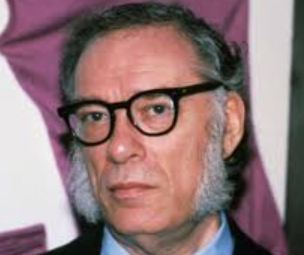
A robot must protect its own existence as long as such protection does not conflict with the First or Second Laws.
9 months 3 days ago
Do not hire a man who does your work for money, but him who does it for love of it.
▼
Source
source
p. 486
9 months 2 weeks ago
For creation is not a change, but that dependence of the created existence on the principle from which it is instituted, and thus is of the genus of relation; whence nothing prohibits it being in the created as in the subject. Creation is thus said to be a kind of change, according to the way of understanding, insofar as our intellect accepts one and the same thing as not existing before and afterwards existing.
▼
Source
source
II, 18, 2 (see also Summa Theologica I, q. 45, art. 3 ad 2)

8 months 3 weeks ago
Truly to escape Hegel involves an exact appreciation of the price we have to pay to detach ourselves from him. It assumes that we are aware of the extent to which Hegel, insidiously perhaps, is close to us; it implies a knowledge, in that which permits us to think against Hegel, of that which remains Hegelian. We have to determine the extent to which our anti-Hegelianism is possibly one of his tricks directed against us, at the end of which he stands, motionless, waiting for us.
▼
Source
source
Discourse on Language, Inaugural Lecture at the Collège de France, 1970-1971. tr. A. M. Sheridan Smith

8 months 1 week ago
I pray you, magnificent Sir, do not trouble yourself to return to us, but await our coming to you.
▼
Source
source
Third Dialogue

7 months 3 weeks ago
Are ye also yet without understanding? Do not ye yet understand, that whatsoever entereth in at the mouth goeth into the belly, and is cast out into the draught? But those things which proceed out of the mouth come forth from the heart; and they defile the man. For out of the heart proceed evil thoughts, murders, adulteries, fornications, thefts, false witness, blasphemies: These are the things which defile a man: but to eat with unwashen hands defileth not a man.
▼
Source
source
15:16-20 (KJV)
9 months 3 weeks ago
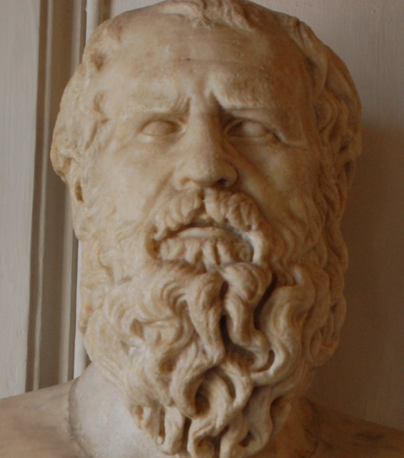
Much learning does not teach understanding.

5 months 3 weeks ago
Ever since prehistoric antiquity one field of study after another has crossed the divide between what the historian might call its prehistory as a science and its history proper. These transitions to maturity have seldom been so sudden or so unequivocal as my necessarily schematic discussion may have implied. But neither have they been historically gradual, coextensive, that is to say, with the entire development of the fields within which they occurred.
▼
Source
source
p. 22
9 months 6 days ago
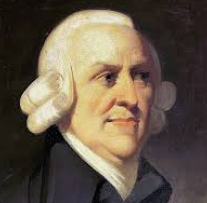
China has been long one of the richest, that is, one of the most fertile, best cultivated, most industrious, and most populous countries in the world. It seems, however, to have been long stationary. Marco Polo, who visited it more than five hundred years ago, describes its cultivation, industry, and populousness, almost in the same terms in which they are described by travellers in the present times.
▼
Source
source
Chapter VIII, p. 86.

5 months 2 days ago
The good old Dominion, the blessed mother of us all.
▼
Source
source
"Thoughts on Lotteries", 1826

7 months 4 weeks ago
"What's wrong - what's the matter with you?" Nothing, nothing's the matter, I've merely taken a leap outside my fate, and now I don't know where to turn, what to run for...


9 months 2 weeks ago
Christ's whole body groans in pain. Until the end of the world, when pain will pass away, this man groans and cries to God. And each one of us has part in the cry of that whole body. Thou didst cry out in thy day, and thy days have passed away; another took thy place and cried out in his day. Thou here, he there, and another there. The body of Christ ceases not to cry out all the day, one member replacing the other whose voice is hushed. Thus there is but one man who reaches unto the end of time, and those that cry are always His members.
▼
Source
source
p.423

9 months 2 weeks ago
Love hath so long possessed me for his ownAnd made his lordship so familiar.
▼
Source
source
Chapter XXIV
7 months 4 weeks ago
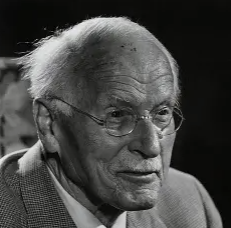
Primitive superstition lies just below the surface of even the most tough-minded individuals, and it is precisely those who most fight against it who are the first to succumb to its suggestive effects.
▼
Source
source
p. 25
9 months 3 days ago
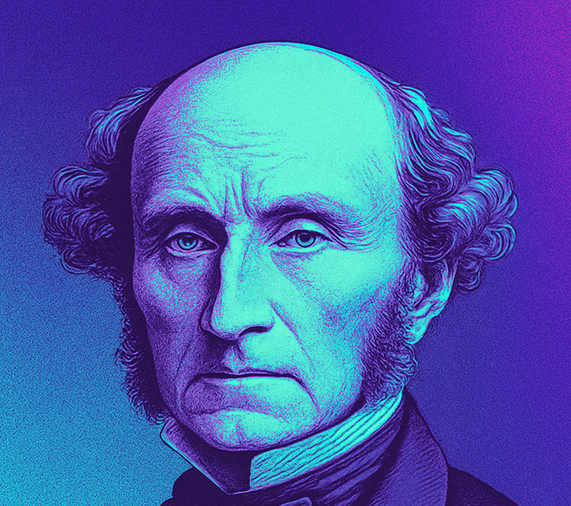
Compared with the greatest poets, he may be said to be the poet of unpoetical natures, possessed of quiet and contemplative tastes. But unpoetical natures are precisely those which require poetic cultivation. This cultivation Wordsworth is much more fitted to give, than poets who are intrinsically far more poets than he.
▼
Source
source
(p. 149)

7 months 2 days ago
We are not ostriches, and cannot believe that if we refuse to look at what we do not wish to see, it will not exist. This is especially the case when what we do not wish to see is what we wish to eat. If it were really indispensable, or, if not indispensable, at least in some way useful! But it is quite unnecessary ... And this is continually being confirmed by the fact that young, kind, undepraved people - especially women and girls - without knowing how it logically follows, feel that virtue is incompatible with beefsteaks, and, as soon as they wish to be good, give up eating flesh.
▼
Source
source
Ch. X

5 months 3 weeks ago
One of the problems... both on the left and the right is that the... individual autonomy protected by liberalism tends to take more and more extreme versions... and... becomes self-undermining.
▼
Source
source
13:24

7 months 2 weeks ago
Full of gods means full of meaning, full of narration. The world becomes readable, like a picture.

7 months 2 weeks ago
During the last quarter of a century all the authority associated with the function of spiritual guidance ... has seeped down into the lowest publications. ... Between a poem by Valéry and an advertisement for a beauty cream promising a rich marriage to anyone who used it there was at no point a breach of continuity. So as a result of literature's spiritual usurpation a beauty cream advertisement possessed, in the eyes of little village girls, the authority that was formerly attached to the words of priests.
▼
Source
source
"Morality and literature," p. 164

9 months 4 weeks ago
Even before the bomb, one did not breathe too easily in this tortured world. Now we are given a new source of anguish; it has all the promise of being our greatest anguish ever. There can be no doubt that humanity is being offered its last chance. Perhaps this is an occasion for the newspapers to print a special edition. More likely, it should be cause for a certain amount of reflection and a great deal of silence.

8 months 1 week ago
If there ever are great revolutions there, they will be caused by the presence of the blacks upon American soil. That is to say, it will not be the equality of social conditions but rather their inequality which may give rise thereto.
▼
Source
source
Book Three, Chapter XXI.

8 months 3 days ago
A widow, the mother of a family, and from her heart she produces chords to which my whole being responds.
▼
Source
source
Part 1, Chapter 12
10 months ago
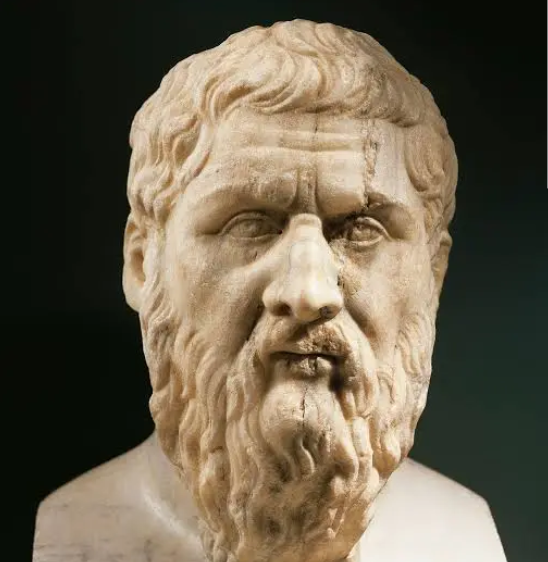
For once touched by love, everyone becomes a poet.

8 months 1 week ago
Only a very bad theologian would confuse the certainty that follows revelation with the truths that are revealed. They are entirely different things.
▼
Source
source
Apology for the Abbé de Prades

9 months 2 days ago
The survival of democracy depends on the ability of large numbers of people to make realistic choices in the light of adequate information.
▼
Source
source
Chapter 6 (p. 47)

9 months 1 week ago
How many worthy men have we seen survive their own reputation!
▼
Source
source
Book II, Ch. 16. Of Glory
9 months 3 days ago
It is not enough to be industrious; so are the ants. What are you industrious about?
▼
Source
source
Letter to Harrison Blake, November 16, 1857
9 months 4 weeks ago
There is not love of life without despair about life.

5 months 2 days ago
Reductionism (ultimately, the empirical explanability of everything and a cornerstone of science), has uses that are appropriate, and it also can be used inappropriately. It is appropriately used as a way (one way) of understanding what is empirically known or empirically knowable. When it becomes merely an intellectual "position" confronting what is not empirically known or knowable, then it becomes very quickly absurd, and also grossly desensitizing and false.
8 months 3 weeks ago
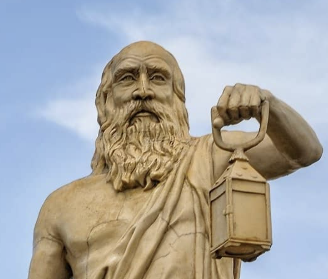
He lit a lamp in broad daylight and said, as he went about, "I am looking for a human."
▼
Source
source
Diogenes Laërtius, vi. 41. This line is frequently translated as "I am looking for an honest man."
CivilSimian.com created by AxiomaticPanic, CivilSimian, Kalokagathia