The original hustle culture bro....


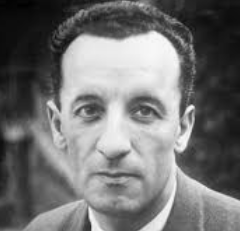
Machiavelli is the complete contrary of a machiavellian, since he describes the tricks of power and "gives the whole show away." The seducer and the politician, who live in the dialectic and have a feeling and instinct for it, try their best to keep it hidden.
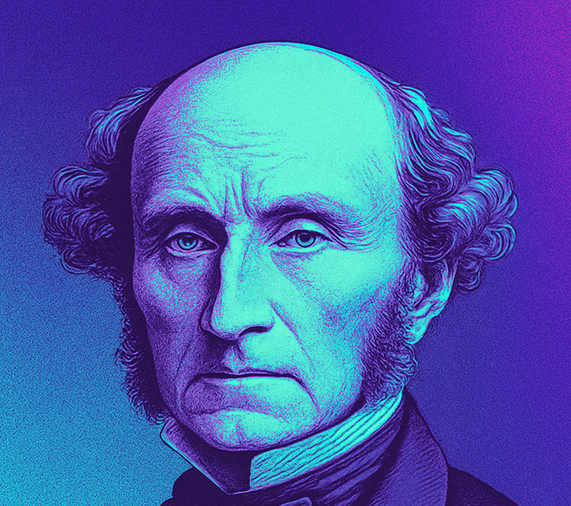
The writers by whom, more than by any others, a new mode of political thinking was brought home to me, were those of the St. Simonian school in France. In 1829 and 1830 I became acquainted with some of their writings. They were then only in the earlier stages of their speculations. They had not yet dressed out their philosophy as a religion, nor had they organized their scheme of Socialism. They were just beginning to question the principle of hereditary property. I was by no means prepared to go with them even this length; but I was greatly struck with the connected view which they for the first time presented to me, of the natural order of human progress; and especially with their division of all history into organic periods and critical periods.
Till women are more rationally educated, the progress in human virtue and improvement in knowledge must receive continual checks.

The difficulty in philosophy is to say no more than we know.
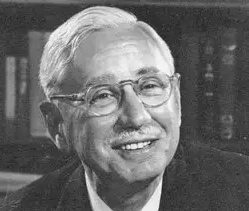
All the problems that disturb us today-the cutting down of forests and the erosion of the soil; the emancipation of woman and the limitation of the family; the conservatism of the established, and the experimentalism of the unplaced, in morals, music, and government; the corruptions of politics and the perversions of conduct; the conflict of religion and science, and the weakening of the supernatural supports of morality; the war of the classes, the nations, and the continents; the revolutions of the poor against the economically powerful rich, and of the rich against the politically powerful poor; the struggle between democracy and dictatorship, between individualism and communism, between the East and the West-all these agitated, as if for our instruction, the brilliant and turbulent life of ancient Hellas. There is nothing in Greek civilization that does not illuminate our own.

You can never do a kindness too soon, for you never know how soon it will be too late.

Lay hold of today's task, and you will not need to depend so much upon tomorrow's. While we are postponing, life speeds by.

History teaches us that war is not inevitable. Once again, it is for us to choose whether we use war or some other method of settling the ordinary and unavoidable conflicts between groups of men.
It is impossible for any man, when the most favourable circumstances concur, to acquire sufficient knowledge and strength of mind to discharge the duties of a king, entrusted with uncontrolled power; how then must they be violated when his very elevation is an insuperable bar to the attainment of either wisdom or virtue; when all the feelings of a man are stifled by flattery, and reflection shut out by pleasure! Surely it is madness to make the fate of thousands depend on the caprice of a weak fellow creature, whose very station sinks him NECESSARILY below the meanest of his subjects! But one power should not be thrown down to exalt another--for all power intoxicates weak man; and its abuse proves, that the more equality there is established among men, the more virtue and happiness will reign in society.
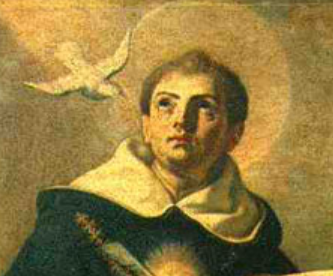
I am not my soul.

The mask, like the side-show freak, is mainly participatory rather than pictorial in its sensory appeal.
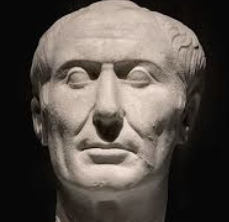
Money alone sets all the world in motion.

There is in fact a manly and legitimate passion for equality that spurs all men to wish to be strong and esteemed. This passion tends to elevate the lesser to the rank of the greater. But one also finds in the human heart a depraved taste for equality, which impels the weak to want to bring the strong down to their level, and which reduces men to preferring equality in servitude to inequality in freedom.

If there is a kind of "proof" of the sincerity of the parrhesiastes, it is his courage... Saying something dangerous-different from what the majority believes-is a strong indication that he is a parrhesiastes.
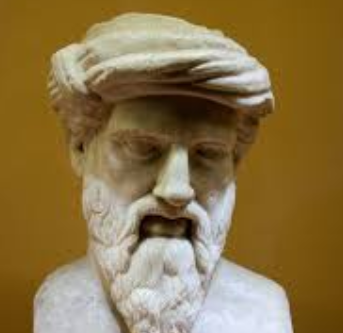
Declining from the public ways, walk in unfrequented paths.

Let me give two cautions. 1) The one is, that you keep them to the practice of what you would have grow into a habit with them, by kind words, and gentle admonitions, rather as minding them of what they forget, than by harsh rebukes and chiding, as if they were wilfully guilty. 2) Another thing you are to take care of, is, not to endeavour to settle too many habits at once, lest by variety you confound them, and so perfect none. When constant custom has made any one thing easy and natural to 'em, and they practice it without reflection, you may then go on to another.
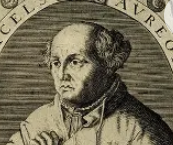
He who conquers his enemy with meekness, wins fame.
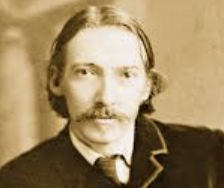
In many ways an artistic nature unfits a man for practical existence.
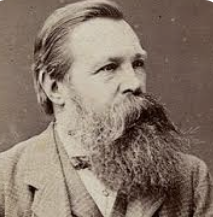
The bourgeoisie has gained a monopoly of all means of existence in the broadest sense of the word. What the proletarian needs, he can obtain only from this bourgeoisie, which is protected in its monopoly by the power of the state. The proletarian is, therefore, in law and in fact, the slave of the bourgeoisie, which can decree his life or death.

Animals no doubt have different interests from humans, and may experience different pleasures and pains, but the principle of equal consideration for similar interests still holds, and pleasures and pains of similar intensity and duration should be given equal weight, whether they are experienced by humans or by animals.

Be not as one that hath ten thousand years to live; death is nigh at hand: while thou livest, while thou hast time, be good.

Every good thing is gentle and consistent, progressing in good order and not going beyond what is right.
I had better never see a book than to be warped by its attraction clean out of my own orbit, and made a satellite instead of a system. The one thing in the world, of value, is the active soul.
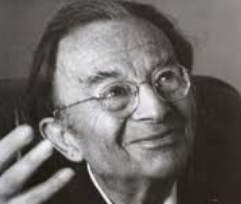
If a person loves only one other person and is indifferent to all others, his love is not love but a symbiotic attachment, or an enlarged egotism.

What is new in our time is the increased power of the authorities to enforce their prejudices.

Culture is an instrument wielded by professors to manufacture professors, who, when their turn comes, will manufacture professors.
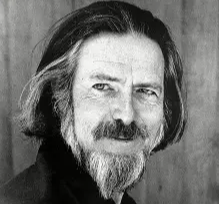
Living, loving, being natural or sincere-all these are spontaneous forms of behavior: they happen "of themselves" like digesting food or growing hair. As soon as they are forced they acquire that unnatural, contrived, and phony atmosphere which everyone deplores-weak and scentless like forced flowers and tasteless like forced fruit. Life and love generate effort, but effort will not generate them. Faith-in life, in other people, and in oneself-is the attitude of allowing the spontaneous to be spontaneous, in its own way and in its own time.
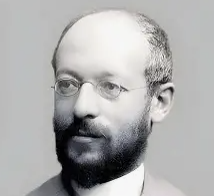
All relationships of people to each other rest, as a matter of course, upon the precondition that they know something about each other. The merchant knows that his correspondent wants to buy at the lowest price and to sell at the highest price. The teacher knows that he may credit to the pupil a certain quality and quantity of information. Within each social stratum the individual knows approximately what measure of culture he has to presuppose in each other individual.
A serious and good philosophical work could be written consisting entirely of jokes.
It is the mark of a good action that it appears inevitable in the retrospect. We should have been cut-throats to do otherwise. And there's an end. We ought to know distinctly that we are damned for what we do wrong; but when we have done right, we have only been gentlemen, after all. There is nothing to make a work about.

No man lives without jostling and being jostled; in all ways he has to elbow himself through the world, giving and receiving offense.
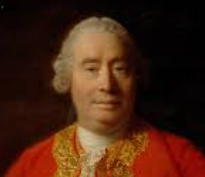
Love in animals, has not for its only object animals of the same species, but extends itself farther, and comprehends almost every sensible and thinking being. A dog naturally loves a man above his own species, and very commonly meets with a return of affection.
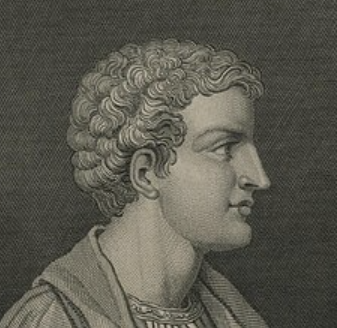
Struggling to be brief I become obscure.
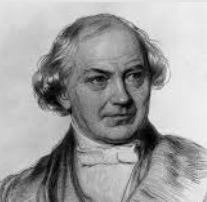
An 'Artificial System' is one in which the 'smaller' groups (the Genera) are 'natural'; and in which the 'wider' divisions (Classes, Orders) are constructed by the 'peremptory' application of selected Characters
T is one and the same Nature that rolls on her course, and whoever has sufficiently considered the present state of things might certainly conclude as to both the future and the past.

The history of mankind could... be described as a history of outbreaks of fashionable philosophical and religious maladies. These... have... one serious function... evoking criticism.

Jesus said to His disciples, "Compare me to someone and tell Me whom I am like." Simon Peter said to Him, "You are like a righteous angel." Matthew said to Him, "You are like a wise philosopher." Thomas said to Him, "Master, my mouth is wholly incapable of saying whom You are like." Jesus said, "I am not your master. Because you have drunk, you have become intoxicated by the bubbling spring which I have measured out." And He took him and withdrew and told him three things. When Thomas returned to his companions, they asked him, "What did Jesus say to you?" Thomas said to them, "If I tell you one of the things which he told me, you will pick up stones and throw them at me; a fire will come out of the stones and burn you up."
Remember that it is not he who gives abuse or blows who affronts, but the view we take of these things as insulting. When, therefore, any one provokes you, be assured that it is your own opinion which provokes you.
I can prove now, for instance, that two human hands exist. How? By holding up my two hands, and saying, as I make a certain gesture with the right hand, "Here is one hand," and adding, as I make a certain gesture with the left, "and here is another." And if, by doing this, I have proved ipso facto the existence of external things, you will all see that I can also do it now in numbers of other ways: there is no need to multiply examples.
The habit of the religious way of thinking has biased our mind so grievously that we are - terrified at ourselves in our nakedness and naturalness; it has degraded us so that we deem ourselves depraved by nature, born devils.

We have convictions only if we have studied nothing thoroughly.
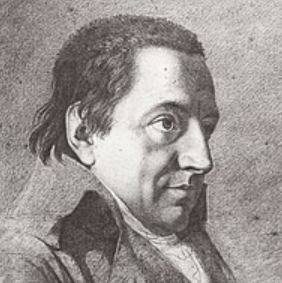
Education to true religion is the final task of the new education.
CivilSimian.com created by AxiomaticPanic, CivilSimian, Kalokagathia