


3 months 1 week ago
Do not be afraid. I am the First and the Last, and the living one, and I became dead, but look! I am living forever and ever, and I have the keys of death and of the Grave.
▼
Source
source
Revelation 1:17-18, NWT

2 months 2 weeks ago
Some teachers of mankind - as Plato... the first Christians, the orthodox Muslims, and the Buddhists - have gone so far as to repudiate art. ...[They consider it] so highly dangerous in its power to infect people against their wills, that mankind will lose far less by banishing all art than by tolerating each and every art. ...such people were wrong in repudiating all art, for they denied that which cannot be denied - one of the indispensable means of communication, without which mankind could not exist. ...Now there is only fear, lest we should be deprived of any pleasures art can afford, so any type of art is patronized. And I think the last error is much grosser than the first and that its consequences are far more harmful.


3 months 2 weeks ago
It has been a long time since philosophers have read men's souls. It is not their task, we are told. Perhaps. But we must not be surprised if they no longer matter much to us.

3 months 2 weeks ago
It is only natural that I should constantly have revolved in my mind the question of the relationship of the symbolism of the unconscious to Christianity as well as to other religions. Not only do I leave the door open for the Christian message, but I consider it of central importance for Western man. It needs, however, to be seen in a new light, in accordance with the changes wrought by the contemporary spirit.

4 months 3 weeks ago
People are often reproached because their desires are directed mainly to money and they are fonder of it than of anything else. Yet it is natural and even inevitable for them to love that which, as an untiring Proteus, is ready at any moment to convert itself into the particular object of our fickle desires and manifold needs. Thus every other blessing can satisfy only one desire and one need; for instance, food is good only to the hungry, wine only for the healthy, medicine for the sick, a fur coat for winter, women for youth, and so on. Consequently, all these are only ... relatively good. Money alone is the absolutely good thing because it meets not merely one need in concreto, but needs generally in abstracto.
▼
Source
source
E. Payne, trans. (1974) Vol. 1, p. 347
3 months 2 weeks ago
We do not rush toward death, we flee the catastrophe of birth, survivors struggling to forget it. Fear of death is merely the projection into the future of a fear which dates back to our first moment of life. We are reluctant, of course, to treat birth as a scourge: has it not been inculcated as the sovereign good - have we not been told that the worst came at the end, not at the outset of our lives? Yet evil, the real evil, is behind, not ahead of us. What escaped Jesus did not escape Buddha: "If three things did not exist in the world, O disciples, the Perfect One would not appear in the world. ..." And ahead of old age and death he places the fact of birth, source of every infirmity, every disaster.
3 months 2 weeks ago
How is it possible that the poorer classes can remain healthy and have a reasonable expectation of life under such conditions? What can one expect but that they should suffer from continual outbreaks of epidemics and an excessively low expectation of life? The physical condition of the workers shows a progressive deterioration.

1 month 6 days ago
But no wall can be erected against Fortune which she cannot take by storm; let us strengthen our inner defences. If the inner part be safe, man can be attacked, but never captured.

4 months 2 weeks ago
Uttering a word is like striking a note on the keyboard of the imagination.
▼
Source
source
§ 6

4 months 3 weeks ago
The best life is the one in which the creative impulses play the largest part and the possessive impulses the smallest.
2 weeks 4 days ago
What are we, weak and blind human beings! And what is that flickering light we call Reason? When we have calculated all the probabilities, questioned history, satisfied every doubt and special interest, we may still embrace only a deceptive shadow rather than the truth. What decree has He pronounced on the king, on his dynasty, on his family, on France, and on Europe? Where and when will the troubles end, and by how many misfortunes must we purchase our tranquillity? Is it to build that He has overthrown, or are our hardships to last forever? Alas! A dark cloud hides the future and no eye can penetrate its shadows.
▼
Source
source
Chapter VIII, p. 76

4 months 3 weeks ago
Gentlemen, there is a sublime and friendly Destiny by which the human race is guided, - the race never dying, the individual never spared, - to results affecting masses and ages. Men are narrow and selfish, but the Genius or Destiny is not narrow, but beneficent. It is not discovered in their calculated and voluntary activity, but in what befalls, with or without their design. Only what is inevitable interests us, and it turns out that love and good are inevitable, and in the course of things. That Genius has infused itself into nature. It indicates itself by a small excess of good, a small balance in brute facts always favorable to the side of reason.

4 months 4 weeks ago
There is little less trouble in governing a private family than a whole kingdom.
▼
Source
source
Book I, Ch. 39
3 months 1 week ago
The characteristic activity of science is not construction, but induction. The more often something has occurred in the past, the more certain that it will in all the future. Knowledge relates solely to what is and to its recurrence. New forms of being, especially those arising from the historical activity of man, lie beyond empiricist theory. Thoughts which are not simply carried over from the prevailing pattern of consciousness, but arise from the aims and resolves of the individual, in short, all historical tendencies that reach beyond what is present and recurrent, do not belong to the domain of science.
▼
Source
source
p. 144.

4 months 2 weeks ago
The For-itself, in fact, is nothing but the pure nihilation of the In-itself; it is like a hole of being at the heart of Being.
4 months 2 weeks ago
It is not how things are in the world that is mystical, but that it exists.
▼
Source
source
(6.44) Variant translation: The mystical is not how the world is, but that it is. Original German: Nicht wie die Welt ist, ist das Mystische, sondern dass sie ist.
3 months 3 weeks ago
It is easy to see that this problem can be solved neither in theoretical nor in practical philosophy, but only in a higher discipline, which is the link that combines them, and neither theoretical nor practical, but both at once.

4 months 3 weeks ago
Act as if what you do makes a difference. It does.
▼
Source
source
Correspondence with Helen Keller, 1908, in The Correspondence of William James: April 1908-August 1910, Vol. 12

4 months 2 weeks ago
Scientists try to eliminate their false theories, they try to let them die in their stead. The believer-whether animal or man-perishes with his false beliefs.
▼
Source
source
Epistemology Without A Knowing Subject

1 month 2 weeks ago
The idea of universal human dignity ultimately comes out of Christianity... the view that all human beings are equal in the sight of God because they have the capacity for moral choice. As Western thought developed in the 17th-18th centuries, this took on a secular form under thinkers like Jean-Jacques Rousseau or Immanuel Kant or Georg Hegel, who argued that human equality is... based on human autonomy.
▼
Source
source
11:12

1 month 1 week ago
All greatness is unconscious, or it is little and naught.
2 weeks 3 days ago
The intelligence of the universe is social.
▼
Source
source
V, 30

5 months 2 weeks ago
When you write a short story ... you had better know the ending first. The end of a story is only the end to the reader. To the writer, it's the beginning. If you don't know exactly where you're going every minute you're writing, you'll never get there or anywhere.

2 months 3 weeks ago
There are two kinds of people, killers, and everybody else.

4 months 3 weeks ago
It is a bad thing to perform menial duties even for the sake of freedom; to fight with pinpricks, instead of with clubs. I have become tired of hypocrisy, stupidity, gross arbitrariness, and of our bowing and scraping, dodging, and hair-splitting over words. Consequently, the government has given me back my freedom.
▼
Source
source
Letter from Marx to Arnold Ruge (25 January 1843)

2 months 2 weeks ago
Speech structures the abyss of mental and acoustic space...it is a cosmic, invisible architecture of the human dark.
▼
Source
source
(p. 13)
4 months 3 weeks ago
To save the world requires faith and courage: faith in reason, and courage to proclaim what reason shows to be true.

5 months 1 week ago
A young man should serve his parents at home and be respectful to elders outside his home. He should be earnest and truthful, loving all, but become intimate with humaneness. After doing this, if he has energy to spare, he can study literature and the arts.
2 weeks 6 days ago
Whether we and our politicians know it or not, Nature is party to all our deals and decisions, and she has more votes, a longer memory, and a sterner sense of justice than we do.
▼
Source
source
Part of an endorsement statement for The Dying of the Trees (1997) by Charles E. Little

3 months 3 weeks ago
When we speak of the commerce with our [American] colonies, fiction lags after truth, invention is unfruitful, and imagination cold and barren.

3 months 2 weeks ago
Who am I? Subject and object in one - contemplating and contemplated, thinking and thought of. As both must I have become what I am.
▼
Source
source
Jane Sinnett, trans 1846 p. 71
4 months 2 days ago
The most difficult thing in life is to know yourself.
▼
Source
source
Know thyself. As quoted in Diogenes Laërtius, The Lives and Opinions of Eminent Philosophers, I, 40 Variant
1 week 4 days ago
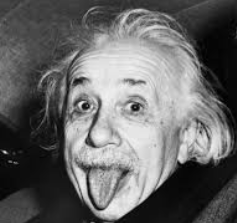
What the inventive genius of mankind has bestowed upon us in the last hundred years could have made human life care free and happy if the development of the organizing power of man had been able to keep step with his technical advances. As it is, the hardly bought achievements of the machine age in the hands of our generation are as dangerous as a razor in the hands of a three-year-old child. The possession of wonderful means of production has not brought freedom-only care and hunger.
▼
Source
source
writing for the 1932 Disarmament Conference, included in The Nation 1865-1990: Selections From the Independent Magazine of Politics and Culture (1990)

4 months 3 weeks ago
Thus there is nothing waste, nothing dead in the universe; no chaos, no confusions, save in appearence. We might compare this to the appearence of a pond in the distance, where we can see the confused movement and swarming of the fish, without distinguishing the fish themselves.Thus we are that each living body has a dominante entelechy, which in case of an animal is the soul, but the members of this living body are full of other living things, plants and animals, of which each has in turn ita dominant entelechy or soul.
▼
Source
source
Monadology (69-70).
4 months 4 weeks ago
In true education, anything that comes to our hand is as good as a book: the prank of a page-boy, the blunder of a servant, a bit of table talk- they are all part of the curriculum.
▼
Source
source
The Autobiography of Michel de Montaigne, Chapter III, pg. 24 (Translated by Marvin Lowenthal
2 weeks 2 days ago
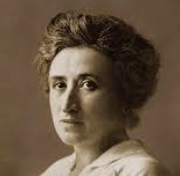
Lenin's thesis is that the party Central Committee should have the privilege of naming all the local committees of the party. It should have the right to appoint the effective organs of all local bodies from Geneva to Liege, from Tomsk to Irkutsk. It should also have the right to impose on all of them its own ready-made rules of party conduct. It should have the right to rule without appeal on such questions as the dissolution and reconstitution of local organizations. This way, the Central Committee could determine, to suit itself, the composition of the highest party organs. The Central Committee would be the only thinking element in the party. All other groupings would be its executive limbs.

2 months 3 weeks ago
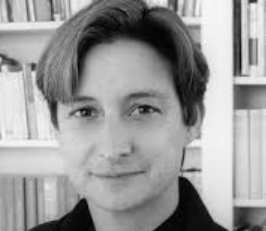
There is no gender identity behind the expressions of gender; that identity is performatively constituted by the very "expressions" that are said to be its results.
▼
Source
source
Gender Trouble: Feminism and the Subversion of Identity
2 months 2 weeks ago
The good is the everlasting, the pinnacle of our life. ... life is striving towards the good, toward God. The good is the most basic idea ... an idea not definable by reason ... yet is the postulate from which all else follows. But the beautiful ... is just that which is pleasing. The idea of beauty is not an alignment to the good, but is its opposite, because for most part, the good aids in our victory over our predilections, while beauty is the motive of our predilections. The more we succumb to beauty, the further we are displaced from the good. ...the usual response is that there exists a moral and spiritual beauty ... we mean simply the good. Spiritual beauty or the good, generally not only does not coincide with the typical meaning of beauty, it is its opposite.
1 month 2 weeks ago
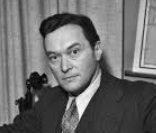
News and truth are not the same thing and must be clearly distinguished. The function of news is to signalize an event, the function of truth is to bring to light the hidden facts, to set them into relation with each other, and make a picture of reality on which men can act. Only at those points, where social conditions take recognizable and measurable shape, do the body of truth and the body of news coincide.
▼
Source
source
Ch. XXIV: "News, Truth, and a Conclusion", p. 358 The clause in bold is sometimes quoted on its own in the form, "The news and the truth are not the same thing."
1 month 1 week ago
Nothing that was worthy in the past departs; no truth or goodness realized by man ever dies, or can die.
3 months 1 week ago
The concept of guilt is found most powerfully developed even in the most primitive communal forms which we know: ... the man is guilty who violates one of the original laws which dominate the society and which are mostly derived from a divine founder; the boy who is accepted into the tribal community and learns its laws, which bind him thenceforth, learns to promise; this promise is often given under the sign of death, which is symbolically carried out on the boy, with a symbolical rebirth.
▼
Source
source
p. 178

4 months 3 weeks ago
And why should man, added he, pretend to an exemption from the lot of all other animals? The whole earth, believe me, PHILO, is cursed and polluted. A perpetual war is kindled amongst all living creatures. Necessity, hunger, want, stimulate the strong and courageous: Fear, anxiety, terror, agitate the weak and infirm. The first entrance into life gives anguish to the new-born infant and to its wretched parent: Weakness, impotence, distress, attend each stage of that life: and it is at last finished in agony and horror.
▼
Source
source
Demea to Philo, Part X

5 months 3 weeks ago
The person who is going to preach ought to live in the Christian thoughts and ideas: they ought to be his daily life. If so, this is the view of Christianity, then you, too, will have eloquence enough and precisely that which is needed when you speak extemporaneously without specific preparation. However, it is fallacious eloquence if someone, without otherwise occupying himself with, without living in these thoughts, once in a while sits down and laboriously collects such thoughts, perhaps in the field of literature, and then works them into a well-composed discourse, which is then committed to memory and delivered superbly, with respect both to voice and diction and gestures.

4 months 2 weeks ago
The First [Friend] is the alter ego, the man who first reveals to you that you are not alone in the world by turning out (beyond hope) to share all your most secret delights. There is nothing to be overcome in making him your friend; he and you join like raindrops on a window. But the Second Friend is the man who disagrees with you about everything... Of course he shares your interests; otherwise he would not become your friend at all. But he has approached them all at a different angle. he has read all the right books but has got the wrong thing out of every one... How can he be so nearly right, and yet, invariably, just not right? He is as fascinating (and infuriating) as a woman.

3 months 4 days ago
The unbeliever walks for a quadrillion miles, yet one moments of reality makes up for it.
▼
Source
source
Chapter Seven, The Great Synthesis…
CivilSimian.com created by AxiomaticPanic, CivilSimian, Kalokagathia