

1 month 4 weeks ago
As the neurobiological basis of feeling and emotion is unravelled, and the human genome decoded and rewritten, it will become purely an issue of post-human decision whether negative modes of consciousness are generated in any form or texture whatsoever. "The Hedonistic Imperative: Heaven on Earth", BLTC Research

2 weeks 1 day ago
Granting, as Lenin wants, such absolute powers of a negative character to the top organ of the party, we strengthen, to a dangerous extent, the conservatism inherent in such an organ.



3 months 6 days ago
And above all, we must feel and act as if an endless continuation of our earthly life awaited us after death; and if it be that nothingness is the fate that awaits us we must not, in the words of Obermann, so act that it shall be a just fate.

4 months 2 weeks ago
Existentialism is nothing else but an attempt to draw the full conclusions from a consistently atheistic position. Its intention is not in the least that of plunging men into despair. And if by despair one means as the Christians do - any attitude of unbelief, the despair of the existentialists is something different. Existentialism is not atheist in the sense that it would exhaust itself in demonstrations of the non-existence of God. It declares, rather, that even if God existed that would make no difference from its point of view. Not that we believe God does exist, but we think that the real problem is not that of His existence; what man needs is to find himself again and to understand that nothing can save him from himself, not even a valid proof of the existence of God. In this sense existentialism is optimistic. It is a doctrine of action, and it is only by self-deception, by confining their own despair with ours that Christians can describe us as without hope.
▼
Source
source
p. 56
3 months 2 weeks ago
The mind understands something only insofar as it absorbs it like a seed into itself, nurtures it, and lets it grow into blossom and fruit. Therefore scatter holy seeds into the soil of the spirit.
▼
Source
source
"Ideas," Lucinde and the Fragments, P. Firchow, trans. (1991), § 5
2 weeks 4 days ago
Now to get back to our given Church: it lives almost entirely for modesty and moneyed piety. It zealously inveighs against the harm done to Joseph and the sheep, but it has made its arrangements with the upper classes and serves as their spiritual defender. It bristles at see-through blouses, but not at slums in which half-naked children starve, and not, above all, at the conditions that keep three quarters of mankind in misery. It condemns desperate girls who abort a foetus, but it consecrates war, which aborts millions. It has nationalized its God, nationalized him into ecclesiastic organization, and has inherited the Roman empire under the mask of the Crucified. It preserves misery and injustice, having first tolerated and then approved the class power that causes them; it prevents any seriousness about deliverance by postponing it to St. Never-Ever's Day or shifting it to the beyond.
▼
Source
source
p. 144

3 months 1 week ago
Be ye therefore ready also: for the Son of man cometh at an hour when ye think not.
▼
Source
source
12:40
4 months 3 weeks ago
As the analysis of a substantial composite terminates only in a part which is not a whole, that is, in a simple part, so synthesis terminates only in a whole which is not a part, that is, the world.

2 months 2 weeks ago
Does the interiorization of media such as letters alter the ratio among our senses and change mental processes?
▼
Source
source
(p. 28)

4 months 2 weeks ago
Have no mean hours, but be grateful for every hour, and accept what it brings. The reality will make any sincere record respectable. No day will have been wholly misspent, if one sincere, thoughtful page has been written. Let the daily tide leave some deposit on these pages, as it leaves sand and shells on the shore. So much increase of terra firma. this may be a calendar of the ebbs and flows of the soul; and on these sheets as a beach, the waves may cast up pearls and seaweed.
▼
Source
source
July 6, 1840

4 months 3 weeks ago
All men would then be necessarily equal, if they were without needs. It is the poverty connected with our species which subordinates one man to another. It is not inequality which is the real misfortune, it is dependence.
▼
Source
source
"Equality", 1764
2 weeks 2 days ago
Men exist for the sake of one another. Teach them then or bear with them.
▼
Source
source
(Long translation) All men are made one for another: either then teach them better, or bear with them. (trans. Meric Casaubon). VIII, 59
2 months 3 weeks ago
The sense in which an automatic door "understands instructions" from its photoelectric cell is not at all the sense in which I understand English.

4 months 2 weeks ago
Although I consider our political world to be the best of which we have any historical knowledge, we should beware of attributing this fact to democracy or to freedom. Freedom is not a supplier who delivers goods to our door. Democracy does not ensure that anything is accomplished - certainly not an economic miracle. It is wrong and dangerous to extol freedom by telling people that they will certainly be all right once they are free. How someone fares in life is largely a matter of luck or grace, and to a comparatively small degree perhaps also of competence, diligence, and other virtues. The most we can say of democracy or freedom is that they give our personal abilities a little more influence on our well-being.
2 weeks 2 days ago
As for others whose lives are not so ordered, he reminds himself constantly of the characters they exhibit daily and nightly at home and abroad, and of the sort of society they frequent; and the approval of such men, who do not even stand well in their own eyes has no value for him.
▼
Source
source
III. 4, trans. Maxwell Staniforth

3 months 2 weeks ago
Someday the old shack we call the world will fall apart. How, we don't know, and we don't really care either. Since nothing has real substance, and life is a twirl in the void, its beginning and its end are meaningless.

4 months 2 weeks ago
Thus mathematics may be defined as the subject in which we never know what we are talking about, nor whether what we are saying is true.
▼
Source
source
Ch. 5: Mathematics and the Metaphysicians
2 months 2 weeks ago
The future masters of technology will have to be lighthearted and intelligent. The machine easily masters the grim and the dumb.
▼
Source
source
(p. 55)
1 month 2 weeks ago
Ours is a problem in which deception has become organized and strong; where truth is poisoned at its source; one in which the skill of the shrewdest brains is devoted to misleading a bewildered people.
▼
Source
source
Ch. IV: "The Golden Rule and After", p. 105.
2 months 5 days ago
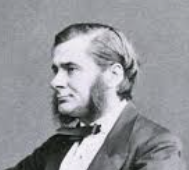
If a well were sunk at our feet in the midst of the city of Norwich, the diggers would very soon find themselves at work in that white substance almost too soft to be called rock, with which we are all familiar as "chalk".
3 months 2 weeks ago
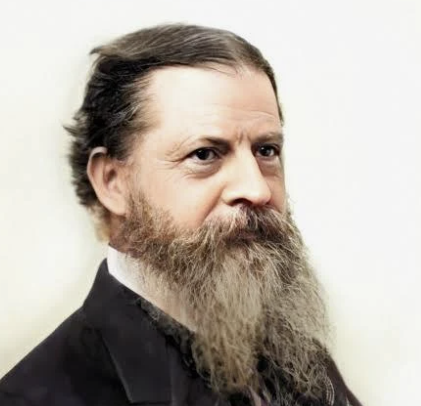
Some words shall herein be capitalised when used, not as vernacular, but as terms defined. Thus an "idea" is the substance of an actual unitary thought or fancy; but "Idea," nearer Plato's idea of ἰδέα, denotes anything whose Being consists in its mere capacity for getting fully represented, regardless of any person's faculty or impotence to represent it.
▼
Source
source
I
4 months 3 weeks ago
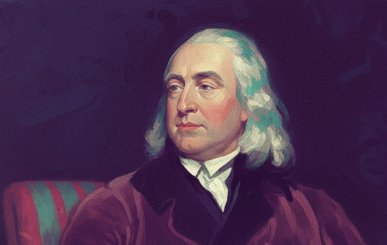
Liberty therefore not being more fit than other words in some of the instances in which it has been used, and not so fit in others, the less the use that is made of it the better. I would no more use the word liberty in my conversation when I could get another that would answer the purpose, than I would brandy in my diet, if my physician did not order me: both cloud the understanding and inflame the passions.
▼
Source
source
Jeremy Bentham, quoted in P. J. Kelly, Utilitarianism and Distributive Justice: Jeremy Bentham and the Civil Law, Oxford, 1990, p. 96
4 months 2 weeks ago
To be aware of limitations is already to be beyond them.
▼
Source
source
As quoted in Inwardness and Existence (1989) by Walter A. Davis, p. 18

4 months 2 weeks ago
The film concludes with ... the most nauseatingly luscious, the most penetratingly vulgar mammy song that it has ever been my lot to hear. My flesh crept as the loud speaker poured out those sodden words, the greasy, sagging melody. I felt ashamed of myself for listening to such things, for even being a member of the species to which such things are addressed.
▼
Source
source
"Silence is Golden," p. 62
2 months 3 weeks ago
To sum up: we have seen that of the three notions of 'partial interpretation' discussed, each is either unsuitable for Carnap's purposes (starting with observation terms), or incompatible with a rather minimal scientific realism; and, in addition, the second notion depends upon gross and misleading changes in our use of language. Thus in none of these senses is 'a partially interpreted calculus in which only the observation terms are directly interpreted' an acceptable model for a scientific theory.
▼
Source
source
"What theories are not"

1 month 2 weeks ago
All wars today tend to be netwars.
▼
Source
source
55
1 month 2 weeks ago
An empire derives no advantage from the caresses of two turtledoves who spend a year cooing to each other in public meetings.
▼
Source
source
Charles Fourier: The Visionary and His World, J. Beecher (1986), p. 315

1 month 1 week ago
If we read History with any degree of thoughtfulness, we shall find that checks and balances of Profit and Loss have never been the grand agents with men, that they have never been roused into deep, thorough, all-pervading efforts by any computable prospect of Profit and Loss, for any visible, finite object; but always for some invisible and infinite one.
2 months 5 days ago
The life, the fortune, and the happiness of every one of us, and, more or less, of those who are connected with us, do depend upon our knowing something of the rules of a game infinitely more difficult and complicated than chess. It is a game which has been played for untold ages, every man and woman of us being one of the two players in a game of his or her own. The chessboard is the world, the pieces are the phenomena of the universe, the rules of the game are what we call the laws of Nature. The player on the other side is hidden from us. We know that his play is always fair, just, and patient. But also we know, to our cost, that he never overlooks a mistake, or makes the smallest allowance for ignorance. To the man who plays well, the highest stakes are paid, with that sort of overflowing generosity with which the strong shows delight in strength. And one who plays ill is checkmated - without haste, but without remorse.
3 months 2 weeks ago
Who Rebels? Who rises in arms? Rarely the slave, but almost always the oppressor turned slave.

4 months 2 weeks ago
If anything is certain, it is that I myself am not a Marxist
▼
Source
source
Marx quoted and translated by Engels (in an 1882 letter to Eduard Bernstein) about the peculiar Marxism which arose in France 1882.
3 months 1 week ago
You have heard that it was said, "Eye for eye, and tooth for tooth." But I tell you, do not resist an evil person. If someone strikes you on the right cheek, turn to him the other also. And if someone wants to sue you and take your tunic, let him have your cloak as well. If someone forces you to go one mile, go with him two miles.
▼
Source
source
5:38-41 (NIV)

3 months 3 weeks ago
Since therefore, as well those degrees of heat that are not painful, as those that are, can exist in a thinking substance; may we not conclude that external bodies are absolutely incapable of any degree of heat whatsoever?
▼
Source
source
Philonous to Hylas. Hylas replies with, "So it seems".
2 months 5 days ago
The students of physical science are not unfrequently told that their pursuits unfit them for the estimation of moral probability. And it may be so, for I am afraid that to those who are accustomed to severe reasoning, either in the province of Science or in that of Law, reasoning from 'moral probability' is apt to be regarded as a process of accumulating inconclusive arguments, in the hope that a great heap of them may, at least, look as firm as one good demonstration.
▼
Source
source
The Evidence of the Miracle of the Resurrection
4 months 2 weeks ago
Defined in psychological terms, a fanatic is a man who consciously over-compensates a secret doubt.
▼
Source
source
"The Substitutes for Religion, The Religion of Sex"
2 weeks 2 days ago
I do what is mine to do; the rest doesn't disturb me.
▼
Source
source
(Hays translation) VI, 22
4 months 3 weeks ago
I have received, sir, your new book against the human species, and I thank you for it. You will please people by your manner of telling them the truth about themselves, but you will not alter them. The horrors of that human society-from which in our feebleness and ignorance we expect so many consolations-have never been painted in more striking colours: no one has ever been so witty as you are in trying to turn us into brutes: to read your book makes one long to go on all fours. Since, however, it is now some sixty years since I gave up the practice, I feel that it is unfortunately impossible for me to resume it: I leave this natural habit to those more fit for it than are you and I.
▼
Source
source
Letter to Jean-Jacques Rousseau, August 30, 1755 referring to Rousseau's Discourse on Inequality.
4 months 4 weeks ago
What then remains but that we still should cry Not to be born, or, being born, to die?

4 months 2 weeks ago
Life seems to me essentially passion, conflict, rage... It is only intellect that keeps me sane; perhaps this makes me overvalue intellect against feeling.
▼
Source
source
Letter to Lady Ottoline Morrell in 1912, as quoted in Clark The life of Bertrand Russell (1976), p. 174

2 months 2 weeks ago
We are not ostriches, and cannot believe that if we refuse to look at what we do not wish to see, it will not exist. This is especially the case when what we do not wish to see is what we wish to eat. If it were really indispensable, or, if not indispensable, at least in some way useful! But it is quite unnecessary ... And this is continually being confirmed by the fact that young, kind, undepraved people - especially women and girls - without knowing how it logically follows, feel that virtue is incompatible with beefsteaks, and, as soon as they wish to be good, give up eating flesh.
▼
Source
source
Ch. X
4 months 2 weeks ago
The French bourgeois doesn't dislike shit, provided it is served up to him at the right time.
▼
Source
source
Book 2, "To Succeed in Being All, Strive to be Nothing in Anything"
1 month 2 weeks ago
Material production - the production, for example, or cars, televisions, clothing, and food - creates the means of social life. ... Immaterial production, by contrast, including the production of ideas, knowledges, communication, cooperation, and affective relations, tends to create not the means of social life but social life itself. (146)
▼
Source
source
146
3 months 1 week ago
Go thy way; and as thou hast believed, so be it done unto thee.
▼
Source
source
8:13 (KJV) Said to the officer.
4 months 2 weeks ago
Subjects who reciprocally recognize each other as such, must consider each other as identical, insofar as they both take up the position of subject; they must at all times subsume themselves and the other under the same category. At the same time, the relation of reciprocity of recognition demands the non-identity of one and the other, both must also maintain their absolute difference, for to be a subject implies the claim of individuation.
▼
Source
source
Habermas (1972) "Sprachspiel, intention und Bedeutung. Zu Motiven bei Sellars und Wittgenstein". In R.W. Wiggerhaus (Ed.) Sprachanalyse and Soziologie. Frankfurt: Suhrkamp). p. 334 This is called the paradoxical achievement of intersubjectivity

3 months 2 days ago
What is generally regarded as success - acquisition of wealth, the capture of power or social prestige - I consider the most dismal failures. I hold when it is said of a man that he has arrived, it means that he is finished - his development has stopped at that point. I have always striven to remain in a state of flux and continued growth, and not to petrify in a niche of self-satisfaction. If I had my life to live over again, like anyone else, I should wish to alter minor details. But in any of my more important actions and attitudes I would repeat my life as I have lived it. Certainly I should work for Anarchism with the same devotion and confidence in its ultimate triumph.

4 months 4 weeks ago
Wherever you encounter truth, look upon it as Christianity.
▼
Source
source
As quoted in Erasmus of Rotterdam (1934) by Stefan Zweig, Eden Paul, and Cedar Paul, p. 91; reprinted in Erasmus - The Right to Heresy (2008) by Stefan Zweig, p. 62

2 weeks 5 days ago
The earth belongs to the living, not to the dead.
▼
Source
source
24 June 1813
CivilSimian.com created by AxiomaticPanic, CivilSimian, Kalokagathia