

2 months 2 weeks ago
To be overwise is to ossify; and the scruple-monger ends by standing stockstill.
▼
Source
source
314

4 months 2 weeks ago
Your questions refer to words; so I have to talk about words. You say: The point isn't the word, but its meaning, and you think of the meaning as a thing of the same kind as the word, though also different from the word. Here the word, there the meaning.
▼
Source
source
§ 120
1 month ago
Every relationship between two individuals or two groups will be characterized by the ratio of secrecy that is involved in it. Even when one of the parties does not notice the secret factor, yet the attitude of the concealer, and consequently the whole relationship, will be modified by it.
▼
Source
source
p. 462

3 months ago
It is certainly not a matter of indifference whether I learn something without effort or finally arrive at it myself through my system of thought. In the latter case everything has roots, in the former it is merely superficial.
▼
Source
source
F154
2 weeks 6 days ago
I have often thought that nothing would do more extensive good at small expense than the establishment of a small circulating library in every county, to consist of a few well-chosen books, to be lent to the people of the country under regulations as would secure their safe return in due time.
▼
Source
source
Letter to John Wyche

4 months 3 weeks ago
The question here is not, "How conscience ought to be guided? For Conscience is its own General and Leader; it is therefore enough that each man have one. What we want to know is, how conscience can be her own Ariadne, and disentangle herself from the mazes even of the most raveled and complicated casuistical theology. Here is an ethical proposition that stands in need of no proof: No Action May At Any Time Be Hazarded On The Uncertainty That Perchance It May Not Be Wrong (Quod dubitas, ne feceris! Pliny - which you doubt, then neither do) Hence the Consciousness, that Any Action I am about to perform is Right, is in itself a most immediate and imperative duty. What actions are right, - what wrong - is a matter for the understanding, not for conscience.
▼
Source
source
p. 251 Book IV, Part 2, Section 4

2 months 2 weeks ago
Never say, and never take seriously anyone who says, "I cannot believe that so-and-so could have evolved by gradual selection". I have dubbed this kind of fallacy "the Argument from Personal Incredulity". Time and again, it has proven the prelude to an intellectual banana-skin experience.

3 months 5 days ago
A philosopher of imposing stature doesn't think in a vacuum. Even his most abstract ideas are, to some extent, conditioned by what is or is not known in the time when he lives.
▼
Source
source
Ch. 29, June 10, 1943.

4 months 2 weeks ago
To plead the organic causation of a religious state of mind, then, in refutation of its claim to possess superior spiritual value, is quite illogical and arbitrary, unless one have already worked out in advance some psycho-physical theory connecting spiritual values in general with determinate sorts of physiological change. Otherwise none of our thoughts and feelings, not even our scientific doctrines, not even our dis-beliefs, could retain any value as revelations of the truth, for every one of them without exception flows from the state of their possessor's body at the time.
▼
Source
source
Lecture I, "Religion and Neurology"

3 months 1 week ago
He that dippeth his hand with me in the dish, the same shall betray me. The Son of man goeth as it is written of him: but woe unto that man by whom the Son of man is betrayed! it had been good for that man if he had not been born.
▼
Source
source
26:23-24 (KJV)

4 months 3 weeks ago
Next to enjoying ourselves, the next greatest pleasure consists in preventing others from enjoying themselves, or, more generally, in the acquisition of power.
▼
Source
source
Ch. 10: Recrudescence of Puritanism
4 months 2 weeks ago
Is dogmatic or scholastic theology less doubted in point of fact for claiming, as it does, to be in point of right undoubtable? And if not, what command over truth would this kind of theology really lose if, instead of absolute certainty, she only claimed reasonable probability for her conclusions? If we claim only reasonable probability, it will be as much as men who love the truth can ever at any given moment hope to have within their grasp. Pretty surely it will be more than we could have had, if we were unconscious of our liability to err.
▼
Source
source
Lectures XIV and XV, "The Value of Saintliness"
1 month 1 week ago
There is no idea so obscure that someone could not come to regard it as self-evident.
▼
Source
source
Chapter Seven, Pragmatism and Positivism, p. 156
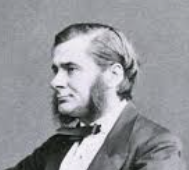
2 months 6 days ago
Is Man so different from any of these Apes that he must form an order by himself? Or does he differ less from them than they differ from one another, and hence must take his place in the same order with them?
▼
Source
source
Ch.2, p. 86
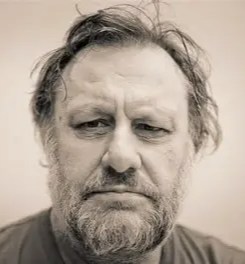
8 months 3 weeks ago
Ideology is not a dreamlike illusion that we build to escape insupportable; in its basic dimension, it is a fantasy-construction which serves as a support for our reality itself; an illusion which structures our effective, real social relations and thereby masks some insupportable, real, impossible kernel.

4 months 3 weeks ago
The love of God consists in an ardent desire to procure the general welfare, and reason teaches me that there is nothing which contributes more to the general welfare of mankind than the perfection of reason.
▼
Source
source
Closing sentence of the Preface to the general science (1677) (in P. Wiener (ed.), Leibniz Selections, Macmilland Press Ltd, 1951).
4 months 2 weeks ago
Philosophy is like trying to open a safe with a combination lock: each little adjustment of the dials seems to achieve nothing, only when everything is in place does the door open.
▼
Source
source
Philosophical Occasions 1912-1951 (1993) edited by James Carl Klagge and Alfred Nordmann
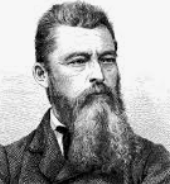
3 months 2 weeks ago
Feuerbach is saying: No, wait a minute - if you are going to be allowed to go on living as you are living, then you also have to admit that you are not Christians. Feuerbach has understood the requirements but cannot force himself to submit to them - ergo, he prefers to renounce being a Christian. And now, no matter how great a responsibility he must bear, he takes a position that is not unsound, that is, it is wrong of established Christendom to say that Feuerbach is attacking Christianity; it is not true, he is attacking the Christians by demonstrating that their lives do not correspond to the teachings of Christianity.
▼
Source
source
Soren Kierkegaard, Journals X2A 163
2 months 2 weeks ago
Mankind was never so happily inspired as when it made a cathedral.
▼
Source
source
An Inland Voyage (1878).
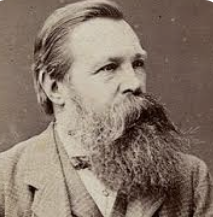
3 months 2 weeks ago
It is no longer a question anywhere of inventing interconnections from out of our brains, but of discovering them in the facts.
▼
Source
source
Ludwig Feuerbach and the End of Classical German Philosophy

4 months 3 weeks ago
The teaching of my philosophy... that our whole existence is something which had better not have been, and that to disown and disclaim it is the highest wisdom.
▼
Source
source
Ch 1
3 months 6 days ago
In the products of the culture industry human beings get into trouble only so that they can be rescued unharmed, usually by representatives of a benevolent collective; and then, in illusory harmony, they are reconciled with the general interest whose demands they had initially experienced as irreconcilable with their own.
▼
Source
source
Section 14
4 months 1 week ago
We assume that our own advances in objectivity are steps along a path that extends beyond them and beyond all our capacities. But even allowing unlimited time, or an unlimited number of generations, to take as many successive steps as we like, the process can never be completed. ... What is wanted is some way of making the most objective standpoint the basis of action.
▼
Source
source
pp. 128-129.
1 month 1 week ago
There is no witness so dreadful, no accuser so terrible as the conscience that dwells in the heart of every man.
▼
Source
source
Histories, XVIII, 43 (Bartlett's Familiar Quotations)

1 month 1 week ago
Such parliamentary bagpipes I myself have heard play tunes, much to the satisfaction of the people.

3 months 6 days ago
Capitalism has brought about the emancipation of collective humanity with respect to nature. But this collective humanity has itself taken on with respect to the individual the oppressive function formerly exercised by nature.
▼
Source
source
p. 140

4 months 3 weeks ago
Indeed, history is nothing more than a tableau of crimes and misfortunes.
▼
Source
source
L'Ingénu, ch.10 (1767) Quoted in The End, part 13 of A Series of Unfortunate Events

4 months 1 week ago
Of all things the worst to teach the young is dalliance, for it is this that is the parent of those pleasures from which wickedness springs.


4 months 4 weeks ago
For what is life but a play in which everyone acts a part until the curtain comes down?

5 months 1 week ago
Truth is the ultimate end of the whole universe.
▼
Source
source
I, 1, 2

2 months 4 days ago
The business of grabbing and money-making, through a violent extractive economy that the 1% have built, is burdening the earth and humanity with unbearable and non-sustainable costs, and has brought us to the brink of extinction. We do not have to escape from the earth; we have to escape from the illusions that enslave our minds and make extinction look inevitable.

4 months 3 weeks ago
The remedies for all our diseases will be discovered long after we are dead; and the world will be made a fit place to live in, after the death of most of those by whose exertions it will have been made so. It is to be hoped that those who live in those days will look back with sympathy to their known and unknown benefactors.
▼
Source
source
Diary, April 15, 1854, in The Collected Works of John Stuart Mill, Toronto, 1988, vol. 27, p. 668
2 weeks 6 days ago
There are extraordinary situations which require extraordinary interposition. An exasperated people, who feel that they possess power, are not easily restrained within limits strictly regular.
3 weeks ago
The entire Earth, with her trees and her waters, with her animals, with her men and her gods, calls from within your breast. Earth rises up in your brains and sees her entire body for the first time.

3 months 3 weeks ago
People talk sometimes of bestial cruelty, but that's a great injustice and insult to the beasts; a beast can never be so cruel as a man, so artistically cruel.
2 months 4 weeks ago
The criterion of efficiency dictates that choice of alternatives which produces the largest result for the given application of resources.
▼
Source
source
Simon (1945, p. 179); As cited in: Harry M. Johnson (1966) Sociology: A Systematic Introduction. p. 287.
4 months 4 days ago
Soul, indeed, is a certain medium between an impartible essence, and an essence which is divisible about bodies. But intellect is an impartible essence alone. And qualities and material forms are divisible about bodies. Not everything which acts on another, effects that which it does effect by approximation and contact; but those natures which effect any thing by approximation and contact, use approximation accidentally.

4 months 3 weeks ago
A circuit performed by a capital and meant to be a periodical process, not an individual act, is called its turnover. The duration of this turnover is determined by the sum of its time of production and its time of circulation.
▼
Source
source
Volume II, Ch. VII, p. 158.
1 month 1 day ago
The great fault of all ethics hitherto has been that they believed themselves to have to deal only with the relations of man to man. In reality, however, the question is what is his attitude to the world and all life that comes within his reach. A man is ethical only when life, as such, is sacred to him, and that of plants and animals as that of his fellow men, and when he devotes himself helpfully to all life that is in need of help. Only the universal ethic of the feeling of responsibility in an ever-widening sphere for all that lives - only that ethic can be founded in thought. ... The ethic of Reverence for Life, therefore, comprehends within itself everything that can be described as love, devotion, and sympathy whether in suffering, joy, or effort.
▼
Source
source
Ch. 13, p. 188

3 months 1 week ago
"God does not think, He creates; He does not exist, He is eternal," wrote Kierkegaard (Afslutende uvidenskabelige Efterskrift); but perhaps it is more exact to say with Mazzini, the mystic of the Italian city, that "God is great because his thought is action" (Ai giovani d'Italila), because with Him to think is to create, and He gives existence to that which exists in His thought by the mere fact of thinking it, and the impossible is unthinkable by God. It is not written in the Scriptures that God creates with His word - that is to say, with His thought - and that by this, by His Word, He made everything that exists? And what God has once made does He ever forget? May it not be that all the thoughts that have ever passed through the Supreme Consciousness still subsist therein? In Him, who is eternal, is not all existence eternalized?
8 months 3 weeks ago
Precisely as an enigma, the symptom, so to speak, announces its dissolution through interpretation: the aim of psychoanalysis is to re-establish the broken network of communication by allowing the patient to verbalize the meaning of his symptom: through this verbalization the symptom is automatically dissolved. This, then is the basic point: in its very construction, the symptom implies the field of the big Other as consistent, complete, because its very function is an appeal to the Other which contains its meaning.

3 months 1 week ago
Society ... can afford to grant more than before because its interests have become the innermost drives of its citizens.
▼
Source
source
p. 72

4 months 2 weeks ago
The days .... come and go like muffled and veiled figures, sent from a distant friendly party; but they say nothing, and if we do not use the gifts they bring, they carry them as silently away.
▼
Source
source
Works and Days
2 weeks 4 days ago
Men gather the clouds, and then they complain of the tempests that follow.
▼
Source
source
Chapter III, p. 30
2 weeks 3 days ago
We want philosophers, among other reasons, because the world is full of false philosophy. The way of experience is beset on every hand by a multitude of verbal judgments, of empty phrases, of word-copies, which pass themselves off as the real thing, which pretend to do duty for concrete fact and, by force of their number and importunity, capture our attention and cause the true originals to be overlooked. If it is true that philosophy must perforce fight its battles with words, is it not equally true that words are the weapons against which it must everywhere contend? The philosopher bent on the enlargement of experience perceives at once that his work cannot be done, cannot even be commenced, until he has cleared away the heaps of verbal detritus under which the bedrocks of experience lie buried.

5 months 2 weeks ago
There is a cult of ignorance in the United States, and there always has been. The strain of anti-intellectualism has been a constant thread winding its way through our political and cultural life, nurtured by the false notion that democracy means that "my ignorance is just as good as your knowledge."
1 week 3 days ago
How can it be that mathematics, being, after all, a product of human thought which is independent of experience, is so admirably appropriate to the objects of reality? Is human reason, then, without experience, merely by taking thought, able to fathom the properties of real things?

3 months 3 weeks ago
The infant runs toward it with its eyes closed, the adult is stationary, the old man approaches it with his back turned.
▼
Source
source
"Death"
CivilSimian.com created by AxiomaticPanic, CivilSimian, Kalokagathia