

3 months 1 week ago
For the Lawes of Nature (as Justice, Equity, Modesty, Mercy, and (in summe)doing to others, as wee would be done to,) of themselves, without the terrour of some Power, to cause them to be observed, are contrary to our naturall Passions, that carry us to Partiality, Pride, Revenge, and the like. And Covenants, without the Sword, are but Words, and of no strength to secure a man at all.
▼
Source
source
The Second Part, Chapter 17, p. 85


3 months 1 week ago
Go and shew John again those things which ye do hear and see: The blind receive their sight, and the lame walk, the lepers are cleansed, and the deaf hear, the dead are raised up, and the poor have the gospel preached to them. And blessed is he, whosoever shall not be offended in me.
▼
Source
source
11:4-6 (KJV)
4 months 1 week ago
The investigation of the meaning of words is the beginning of education.
▼
Source
source
Arrian, Discourses of Epictetus, i. 17


4 months 3 weeks ago
There must be a seed of every good thing in the character of men, otherwise no one can bring it out. Lacking that, analogous motives, honor, etc., are substituted. Parents are in the habit of looking out for the inclinations, for the talents and dexterity, perhaps for the disposition of their children, and not at all for their heart or character.
▼
Source
source
Part III : Selection on Education from Kant's other Writings, Ch. I Pedagogical Fragments, # 13
1 month 1 week ago
It would be silly, of course, to be either 'for' or 'against' modernity tout court, not only because it is pointless to try to stop the development of technology, science, and economic rationality, but because both modernity and antimodernity may be expressed in barbarous and antihuman terms.
▼
Source
source
"Modernity on Endless Trial"

4 months 4 weeks ago
Virtue refuses facility for her companion ... the easy, gentle, and sloping path that guides the footsteps of a good natural disposition is not the path of true virtue. It demands a rough and thorny road.
▼
Source
source
Ch. 11. Of Cruelty (tr. Donald M. Frame)
1 month 1 day ago
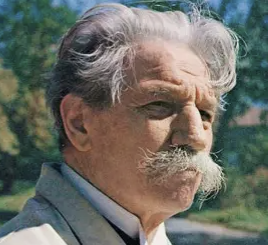
Only at quite rare moments have I felt really glad to be alive. I could not but feel with a sympathy full of regret all the pain that I saw around me, not only that of men but that of the whole creation. From this community of suffering I have never tried to withdraw myself. It seemed to me a matter of course that we should all take our share of the burden of pain which lies upon the world.

2 weeks 6 days ago
We confide in our strength, without boasting of it; we respect that of others, without fearing it.
▼
Source
source
Letter to William Carmichael and William Short
2 weeks 6 days ago
A free people claim their rights, as derived from the laws of nature, and not as the gift of their chief magistrate.

3 months 2 weeks ago
They ask you for facts, proofs, works, and all you can show them are transformed tears.

4 months 3 weeks ago
We should be considerate to the living; to the dead we owe only the truth.
▼
Source
source
Letter to M. de Grenonville, 1719
2 months 3 weeks ago
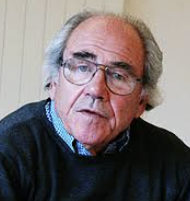
Watergate was thus nothing but a lure held out by the system to catch its adversaries-a simulation of scandal for regenerative ends.
▼
Source
source
"The Precession of Simulacra," p. 16
3 months 2 weeks ago
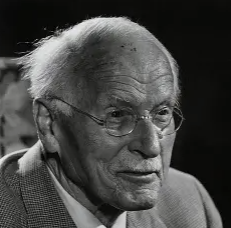
As far as we can discern, the sole purpose of human existence is to kindle a light in the darkness of mere being.
▼
Source
source
p. 326

5 months 2 weeks ago
Absolute freedom mocks at justice. Absolute justice denies freedom. To be fruitful, the two ideas must find their limits in each other.
▼
Source
source
"Historical Murder", as translated by Anthony Bower

4 months 2 weeks ago
For Genet, reflective states of mind are the rule. And although they are of an unstable nature in everyone, in him...reflection is always contrary to the reflected feeling.
▼
Source
source
p. 278
3 weeks ago
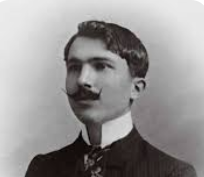
Your first duty, in completing your service to your race, is to feel within you all your ancestors. Your second duty is to throw light on their onrush and to continue their work. Your third duty is to pass on to your son the great mandate to surpass you.

1 month 1 week ago
And yet I will venture to believe that in no time, since the beginnings of Society, was the lot of those same dumb millions of toilers so entirely unbearable as it is even in the days now passing over us. It is not to die, or even to die of hunger, that makes a man wretched; many men have died; all men must die,-the last exit of us all is in a Fire-Chariot of Pain. But it is to live miserable we know not why; to work sore and yet gain nothing; to be heart-worn, weary, yet isolated, unrelated, girt in with a cold universal Laissez-faire: it is to die slowly all our life long, imprisoned in a deaf, dead, Infinite Injustice, as in the accursed iron belly of a Phalaris' Bull! This is and remains forever intolerable to all men whom God has made. Do we wonder at French Revolutions, Chartisms, Revolts of Three Days? The times, if we will consider them, are really unexampled.

4 months 2 weeks ago
Friendship arises out of mere companionship when two or more of the companions discover that they have in common some insight or interest or even taste which the others do not share and which, till that moment, each believed to be his own unique treasure (or burden). The typical expression of opening Friendship would be something like, "What? You too? I thought I was the only one."

3 months 3 weeks ago
Strange incongruities must ever perplex those, who confound the unhappiness of civil dissensions with the crime of treason.
4 months 2 weeks ago
Friendship, I have said, is born at the moment when one man says to another "What! You too? I thought that no one but myself..."
3 months 2 weeks ago
We have convictions only if we have studied nothing thoroughly.
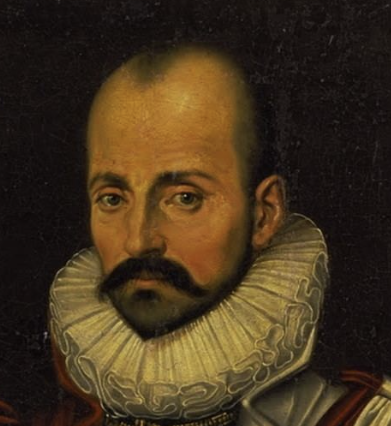
1 month 2 weeks ago
Tyrants would distribute largess, a bushel of wheat, a gallon of wine, and a sesterce: and then everybody would shamelessly cry, "Long live the King!" The fools did not realize that they were merely recovering a portion of their own property, and that their ruler could not have given them what they were receiving without having first taken it from them.
▼
Source
source
Part 2
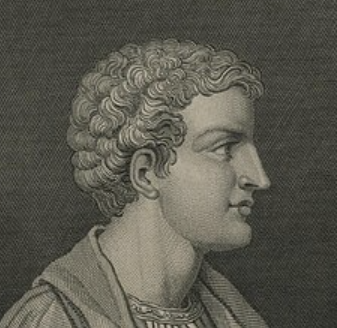
4 months 1 week ago
In peace, as a wise man, he should make suitable preparation for war.
▼
Source
source
Book II, satire ii, line 111

4 months 3 weeks ago
A physicist looks for causes; that does not necessarily imply that there are causes everywhere. A man may look for gold without assuming that there is gold everywhere; if he finds gold, well and good, if he doesn't he's had bad luck. The same is true when the physicists look for causes.
▼
Source
source
BBC Radio Debate on the Existence of God, Russell vs. Copleston, 1948

4 months 3 weeks ago
But capitalist production begets,with the inexorability of a law of Nature,its own negation. It is the negation of negation.
▼
Source
source
Vol. I, Ch. 32, p. 837.
4 months 2 weeks ago
If He who in Himself can lack nothing chooses to need us, it is because we need to be needed.
2 months 4 weeks ago
In sum, a theory is only accepted if the theory has substantial, non-ad hoc, explanatory successes. This is in accordance with Popper; unfortunately, it is in even better accordance with the 'inductivist' accounts that Popper rejects, since these stress support rather than falsification.
▼
Source
source
The 'corroboration' of theories
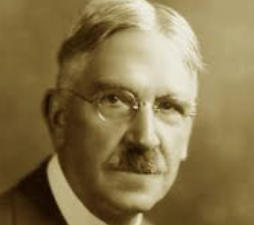
3 months 1 week ago
The animating purpose of James was, on the other hand, primarily moral and artistic. It is expressed in his phrase, "block universe," employed as a term of adverse criticism. Mechanism and idealism were abhorrent to him because they both hold to a closed universe in which there is no room for novelty and adventure. Both sacrifice individuality and all the values, moral and aesthetic, which hang upon individuality; for according to absolute idealism, as to mechanistic materialism, the individual is simply a part determined by the whole of which he is a part. Only a philosophy of pluralism, of genuine indetermination, and of change which is real and intrinsic gives significance to individuality. It alone justifies struggle in creative activity and gives opportunity for the emergence of the genuinely new.
5 months 5 days ago
If what the philosophers say be true,—that all men's actions proceed from one source; that as they assent from a persuasion that a thing is so, and dissent from a persuasion that it is not, and suspend their judgment from a persuasion that it is uncertain, so likewise they seek a thing from a persuasion that it is for their advantage.
▼
Source
source
Book I, ch. 18, 1.
2 weeks 2 days ago
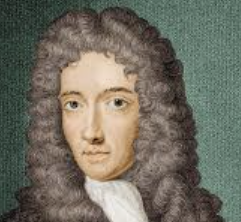
As for the Mystical Writers scrupling to Communicate their Knowledge, they might less to their own Disparagement, and to the trouble of their Readers, have conceal'd it by writing no Books, then by Writing bad ones. If Themistius were here, he would not stick to say that Chymists write thus darkly, not because they think their Notions too precious to be explain'd, but because they fear that if they were explain'd, men would discern, that they are farr from being precious.
3 months 2 weeks ago
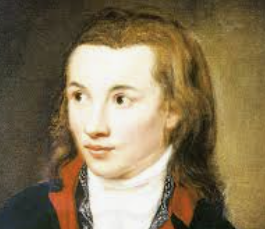
Tools arm the man. One can well say that man is capable of bringing forth a world; he lacks only the necessary apparatus, the corresponding armature of his sensory tools. The beginning is there. Thus the principle of a warship lies in the idea of the shipbuilder, who is able to incorporate this thought by making himself into a gigantic machine, as it were, through a mass of men and appropriate tools and materials. Thus the idea of a moment often required monstrous organs, monstrous masses of materials, and man is therefore a potential, if not an actual creator.
▼
Source
source
Fragment No. 88

4 months 2 days ago
Those alone are dear to Divinity who are hostile to injustice.
▼
Source
source
Pythagorean Ethical Sentences From Stobæus
2 months 3 weeks ago
It is the real, and not the map, whose vestiges persist here and there in the deserts that are no longer those of the Empire, but ours: The desert of the real itself.
▼
Source
source
"The Precession of Simulacra," p. 1

2 weeks 3 days ago
Whatever happens to you has been waiting to happen since the beginning of time. The twining strands of fate wove both of them together: your own existence and the things that happen to you.
▼
Source
source
V. 8, trans. Gregory Hays
4 months 2 weeks ago
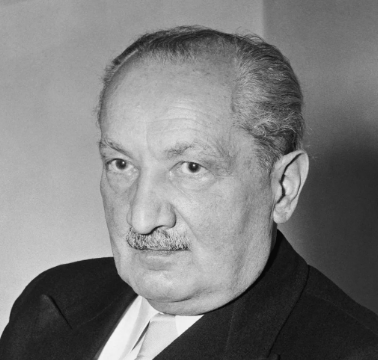
Kant's philosophy shifts for the first time the whole of modern thought and being (Desein) into the clarity and transparency of the foundation (Begrundung). This determines every attitude toward knowledge since then, as well as the bounds (Abgrenzungen) and appraisals of the sciences in the nineteenth century up to the present time. Therein Kant towers so far above all who precede and follow that even those who reject him or go beyond him still remain entirely dependent upon him.
▼
Source
source
p. 55-56
3 months 3 weeks ago
These principles it is necessary strictly to attend to, because they will serve much to explain the whole course both of government and real property, wherever the German nations obtained a settlement; the whole of their government depending for the most part upon two principles in our nature,-ambition, that makes one man desirous, at any hazard or expense, of taking the lead amongst others; and admiration, which makes others equally desirous of following him from the mere pleasure of admiration, and a sort of secondary ambition, one of the most universal passions among men. These two principles, strong both of them in our nature, create a voluntary inequality and dependence.
▼
Source
source
An Essay towards an Abridgment of English History (1757-c. 1763), quoted in The Works of the Right Honourable Edmund Burke, Vol. VI (1856), p. 282
4 months 2 days ago
If thy fellows hurt thee in small things, suffer it! and be as bold with them!
3 months 2 weeks ago
In all probability, the proletarian revolution will transform existing society gradually and will be able to abolish private property only when the means of production are available in sufficient quantity. What will be the course of this revolution? Above all, it will establish a democratic constitution, and through this, the direct or indirect dominance of the proletariat.
1 month 2 weeks ago
Looking back we can see how indirectly we know the environment in which nevertheless we live. We can see that the news of it comes to us now fast, now slowly; but that whatever we believe to be a true picture, we treat as if it were the environment itself.
▼
Source
source
Ch. I: "The World Outside and the Pictures in Our Heads", p. 4

2 months 2 weeks ago
The precise reason why abstinence from animal food will be the first act ... of a moral life is admirably explained in the book, The Ethics of Diet [by Howard Williams]; and not by one man only, but by all mankind in the persons of its best representatives during all the conscious life of humanity. ... the moral progress of humanity - which is the foundation of every other kind of progress - is always slow; but ... the sign of true, not casual, progress is its uninterruptedness and its continual acceleration. And the progress of vegetarianism is of this kind. That progress, is expressed both in the words of the writers cited in the above-mentioned book and in the actual life of mankind, which from many causes is involuntarily passing metre and more from carnivorous habits to vegetable food, and is also deliberately following the same path in a movement which shows evident strength, and which is growing larger and larger - viz., vegetarianism.
▼
Source
source
Ch. X

3 months 5 days ago
Heaven knows what seeming nonsense may not to-morrow be demonstrated truth.
▼
Source
source
Ch. 7: "Relativity", p. 161
4 months 3 weeks ago
The essence of the Liberal outlook lies not in what opinions are held, but in how they are held: instead of being held dogmatically, they are held tentatively, and with a consciousness that new evidence may at any moment lead to their abandonment.
3 months 1 week ago
The capabilities (intellectual and material) of contemporary society are immeasurably greater than ever before-which means that the scope of society's domination over the individual is immeasurably greater than ever before. Our society distinguishes itself by conquering the centrifugal social forces with Technology rather than Terror, on the dual basis of an overwhelming efficiency and an increasing standard of living.
▼
Source
source
p. xliii

5 months 3 weeks ago
Death cannot explain itself. The earnestness consists precisely in this, that the observer must explain it to himself.
5 months 2 weeks ago
Life continues, and some mornings, weary of the noise, discouraged by the prospect of the interminable work to keep after, sickened also by the madness of the world that leaps at you from the newspaper, finally convinced that I will not be equal to it and that I will disappoint everyone, all I want to do is sit down and wait for evening. This is what I feel like, and sometimes I yield to it.
3 months 2 weeks ago
To win the guilty kiss of a saint, I'd welcome the plague as a blessing

4 months 2 weeks ago
All things living are in search of a better world.
▼
Source
source
Preface
CivilSimian.com created by AxiomaticPanic, CivilSimian, Kalokagathia