

3 months 1 week ago
Being good is just a matter of temperament in the end.
▼
Source
source
The Nice and the Good (1968), ch. 14, p. 127. Murdoch attributed this opinion to her character Kate Gray. It was not her own.
5 months 5 days ago
If a person gave your body to any stranger he met on his way, you would certainly be angry. And do you feel no shame in handing over your own mind to be confused and mystified by anyone who happens to verbally attack you?
▼
Source
source
(28) [tr. Elizabeth Carter]
1 month 2 weeks ago
One need only open the eyes to see that the conquests of industry which have enriched so many practical men would never have seen the light, if these practical men alone had existed and if they had not been preceded by unselfish devotees who died poor, who never thought of utility, and yet had a guide far other than caprice.As Mach says, these devotees have spared their successors the trouble of thinking.
▼
Source
source
Author's Essay Prefatory to the Translation: "The Choice of Facts," p.4
4 months 4 weeks ago
Knowledge, that tendeth but to satisfaction, is but as a courtesan, which is for pleasure, and not for fruit or generation.
▼
Source
source
Valerius Terminus: Of the Interpretation of Nature (ca. 1603), in Works, Vol. 1, p. 83; The Works of Francis Bacon (1819), Vol. 2, p. 133

4 months 2 weeks ago
Facts are ventriloquists' dummies. Sitting on a wise man's knee they may be made to utter words of wisdom; elsewhere, they say nothing, or talk nonsense, or indulge in sheer diabolism.
▼
Source
source
"Bruno Rontini"

3 months 3 days ago
The real importance of Swedenborg lies in the doctrines he taught, which are the reverse of the gloom and hell-fire of other breakaway sects. He rejects the notion that Jesus died on the cross to atone for the sin of Adam, declaring that God is neither vindictive nor petty-minded, and that since he is God, he doesn't need atonement. It is remarkable that this common-sense view had never struck earlier theologians. God is Divine Goodness, and Jesus is Divine Wisdom, and Goodness has to be approached through Wisdom. Whatever one thinks about the extraordinary claims of its founder, it must be acknowledged that there is something very beautiful and healthy about the Swedenborgian religion. Its founder may have not been a great occultist, but he was a great man.
▼
Source
source
p. 280

5 months 6 days ago
For it still seemed to me that it is not we who sin, but some other nature sinned in us. And it gratified my pride to be beyond blame, and when I did anything wrong not to have to confess that I had done wrong. I loved to excuse my soul and to accuse something else inside me (I knew not what) but which was not I. But, assuredly, it was I, and it was my impiety that had divided me against myself. That sin then was all the more incurable because I did not deem myself a sinner.
▼
Source
source
A. Outler, trans. (Dover: 2002), Book 5, Chapter 10, p. 77

3 months 2 weeks ago
Fortunate those who, born before science, were privileged to die of their first disease!
3 months 6 days ago
Tactically, conceptualism is no doubt the strongest position of the three; for the tired nominalist can lapse into conceptualism and still allay his puritanic conscience with the reflection that he has not quite taken to eating lotus with the Platonists.
▼
Source
source
"Logic and the Reification of Universals"

4 months 3 weeks ago
The cheapest sort of pride is national pride; for if a man is proud of his own nation, it argues that he has no qualities of his own of which he can be proud; otherwise he would not have recourse to those which he shares with so many millions of his fellowmen. The man who is endowed with important personal qualities will be only too ready to see clearly in what respects his own nation falls short, since their failings will be constantly before his eyes. But every miserable fool who has nothing at all of which he can be proud adopts, as a last resource, pride in the nation to which he belongs; he is ready and glad to defend all its faults and follies tooth and nail, thus reimbursing himself for his own inferiority.
▼
Source
source
Vol. 1, Ch. 3, Section 2: Pride
3 months 2 weeks ago
Wherever big industries displaced manufacture, the bourgeoisie developed in wealth and power to the utmost and made itself the first class of the country. The result was that wherever this happened, the bourgeoisie took political power into its own hands and displaced the hitherto ruling classes, the aristocracy, the guildmasters, and their representative, the absolute monarchy. The bourgeoisie annihilated the power of the aristocracy, the nobility, by abolishing the entailment of estates - in other words, by making landed property subject to purchase and sale, and by doing away with the special privileges of the nobility. It destroyed the power of the guildmasters by abolishing guilds and handicraft privileges. In their place, it put competition - that is, a state of society in which everyone has the right to enter into any branch of industry, the only obstacle being a lack of the necessary capital.

5 months 3 weeks ago
Once in his early youth a man allowed himself to be so far carried away in an overwrought irresponsible state as to visit a prostitute. It is all forgotten. Now he wants to get married. Then anxiety stirs. He is tortured day and night with the thought that he might possibly be a father, that somewhere in the world there could be a created being who owed his life to him. He cannot share his secret with anyone; he does not even have any reliable knowledge of the fact. –For this reason the incident must have involved a prostitute and taken place in the wantonness of youth; had it been a little infatuated or an actual seduction, it would be hard to imagine that he could know nothing about it, but now this this very ignorance is the basis of his agitated torment. On the other hand, precisely because of the rashness of the whole affair, his misgivings do not really start until he actually falls in love.
1 week 3 days ago
I refuse to make money out of my science. My laurel is not for sale like so many bales of cotton.

3 months 3 days ago
The God idea is growing more impersonal and nebulous in proportion as the human mind is learning to understand natural phenomena and in the degree that science progressively correlates human and social events.

3 months 3 weeks ago
In any country where talent and virtue produce no advancement, money will be the national god. Its inhabitants will either have to possess money or make others believe that they do. Wealth will be the highest virtue, poverty the greatest vice. Those who have money will display it in every imaginable way. If their ostentation does not exceed their fortune, all will be well. But if their ostentation does exceed their fortune they will ruin themselves. In such a country, the greatest fortunes will vanish in the twinkling of an eye. Those who don't have money will ruin themselves with vain efforts to conceal their poverty. That is one kind of affluence: the outward sign of wealth for a small number, the mask of poverty for the majority, and a source of corruption for all.

3 months 1 week ago
The sun will be darkened, and the moon will not give its light; the stars will fall from the sky, and the heavenly bodies will be shaken. They will see the Son of Man coming on the clouds of the sky, with power and great glory... I tell you the truth, this generation will certainly not pass away until all these things have happened.
▼
Source
source
24:29-34 (NIV)
4 months 1 week ago
Almost as soon as I began to study philosophy, I was impressed by the way in which philosophical problems appeared, disappeared, or changed shape, as a result of new assumptions or vocabularies.
▼
Source
source
Preface

3 months 3 weeks ago
You have theories enough concerning the Rights of Men. It may not be amiss to add a small degree of attention to their Nature and disposition.
▼
Source
source
Letter to Charles-Jean-François Depont (November 1789), quoted in Alfred Cobban and Robert A. Smith (eds.), The Correspondence of Edmund Burke, Volume VI: July 1789-December 1791 (1967), p. 46

2 weeks 6 days ago
Knowing that religion does not furnish grosser bigots than law, I expect little from old judges.
▼
Source
source
Letter to Thomas Cooper
1 month 1 week ago
Ever since prehistoric antiquity one field of study after another has crossed the divide between what the historian might call its prehistory as a science and its history proper. These transitions to maturity have seldom been so sudden or so unequivocal as my necessarily schematic discussion may have implied. But neither have they been historically gradual, coextensive, that is to say, with the entire development of the fields within which they occurred.
▼
Source
source
p. 22

4 months 3 weeks ago
Though the principles of the banking trade may appear somewhat abstruse, the practice is capable of being reduced to strict rules. To depart upon any occasion from these rules, in consequence of some flattering speculation of extraordinary gain, is almost always extremely dangerous, and frequently fatal to the banking company which attempts it.
▼
Source
source
Chapter I, Part III, p. 820.
2 weeks 6 days ago
Necessity, as well as patriotism and confidence, will make us all eager to receive treasury notes, if founded on specific taxes. Congress may borrow of the public, and without interest, all the money they may want, to the amount of a competent circulation, by merely issuing their own promissory notes, of proper denominations for the larger purposes of circulation, but not for the small. Leave that door open for the entrance of metallic money.
▼
Source
source
Letter to Thomas Cooper, 1814. ME 14:189

5 months 3 weeks ago
So far no one had had enough courage and intelligence to reveal me to my dear Germans. My problems are new, my psychological horizon frighteningly comprehensive, my language bold and clear; there may well be no books written in German which are richer in ideas and more independent than mine.
5 months 6 days ago
We make a ladder of our vices, if we trample those same vices underfoot.
▼
Source
source
3

4 months 1 week ago
Be cheerful while you are alive.
▼
Source
source
Maxim no. 34.

3 months 3 weeks ago
There is hardly a pioneer's hut which does not contain a few odd volumes of Shakespeare. I remember reading the feudal drama of Henry V for the first time in a log cabin.
▼
Source
source
Book One, Chapter XIII.
3 months 1 week ago
Works of art express space as opportunity for movement and action.
▼
Source
source
p. 217
1 month 3 weeks ago
It is because human needs are contradictory that no human life can be perfect. That does not mean that human life is imperfect. It means that the idea of perfection has no meaning.
▼
Source
source
'Modus Vivendi' (p.29)
4 months 2 weeks ago
A conception of justice cannot be deduced from self evident premises or conditions on principles; instead, its justification is a matter of the mutual support of many considerations, of everything fitted together into one coherent view.
▼
Source
source
Chapter I, Section 4, p. 21
3 months 1 week ago
But if one Subject giveth Counsell to another, to do anything contrary to the Lawes, whether that Counsell proceed from evil intention, or from ignorance onely, it is punishable by the Common-wealth; because ignorance of the Law, is no good excuse, where every man is bound to take notice of the Lawes to which he is subject.
▼
Source
source
The Second Part, Chapter 25, p. 132
3 months 3 days ago
The point I wish to make is that I became aware that we discipline our minds to see only certain aspects of the world; life is complicated, and we need all our wits about us to deal with its complexities. There would be no great point in having second sight or thaumaturgic powers for most of us. But it is worth observing that they can generally be developed where needed.
▼
Source
source
p. 240

4 months 2 weeks ago
The humans live in time but our Enemy (God) destines them for eternity.
▼
Source
source
Letter XV

4 months 2 weeks ago
There are men who astonish and delight, men who instruct and guide. Some men's words I remember so well that I must often use them to express my thought. Yes, because I perceive that we have heard the same truth, but they have heard it better.
▼
Source
source
Character
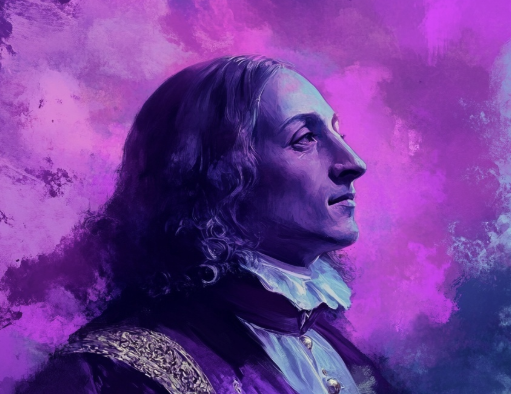
5 months 3 days ago
If the public thought elevates you above the generality of men, let the other humble you, and hold you in a perfect equality with all mankind, for this is your natural condition.
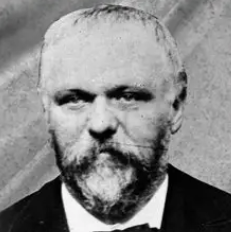
1 month ago
In ignoring the important fundamental contribution of the followers of Marx, and by insisting exclusively on the phenomenon of superficial adaptation and variation, Sorel passed in silence over all that was healthy, live and fruitful in the Marxist doctrine.
▼
Source
source
Lucien Laurat, Marxism and Democracy, 1940, published by the Left Book Club, Victor Gollancz Ltd, London; translated by Edward Fitzgerald. Text online at the Marxists Internet Archive.

1 month 5 days ago
Whoever complains about the death of anyone, is complaining that he was a man. Everyone is bound by the same terms: he who is privileged to be born, is destined to die.
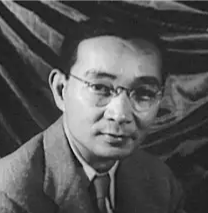
4 weeks ago
A mellow understanding of life and of human nature is, and always has been, the Chinese ideal of character, and from that understanding other qualities are derived, such as pacifism, contentment, calm and strength of endurance which distinguish the Chinese character.
▼
Source
source
p. 43
4 months 3 weeks ago
We do not, however, reckon that trade disadvantageous which consists in the exchange of the hard-ware of England for the wines of France;and yet hard-ware is a very durable commodity, and were it not for this continual exportation, might too be accumulated for ages together, to the incredible augmentation of the pots and pans of the country. But it readily occurs that the number of such utensils is in every country necessarily limited by the use which there is for them;that it would be absurd to have more pots and pans than were necessary for cooking the victuals usually consumed there;and that if the quantity of victuals were to increase, the number of pots and pans would readily increase along with it, apart of the increased quantity of victuals being employed in purchasing them, or in maintaining an additional number of workman whose business it was to make them.
▼
Source
source
Chapter I, p. 471.
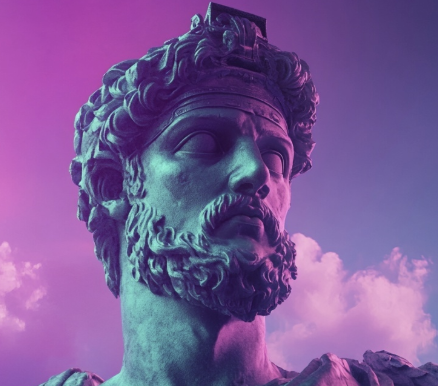
2 weeks 3 days ago
Of my grandfather Verus I have learned to be gentle and meek, and to refrain from all anger and passion... I have learned both shamefastness and manlike behaviour. Of my mother I have learned to be religious, and bountiful; and to forbear, not only to do, but to intend any evil; to content myself with a spare diet, and to fly all such excess as is incidental to great wealth.
▼
Source
source
I, 1
3 months 2 weeks ago
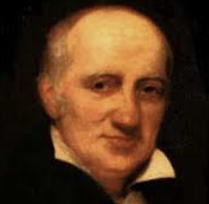
Privilege is a regulation rendering a few men, and those only, by the accident of their birth, eligible to certain situations. It kills all liberal ambition in the rest of mankind, by opposing to it an apparently insurmountable bar. It diminishes it in the favored class itself, by showing them the principal qualification as indefeasibly theirs. Privilege entitles a favored few to engross to themselves gratifications which the system of the universe left at large to all her sons; it puts into the hands of those few the means of oppression against the rest of their species; it fill them witth vain-glory, and affords them every incitement to insolence and a lofty disregard to the feeling and interests of others.
▼
Source
source
Book V, Chapter 11, "Moral Effects of Aristocracy"
3 months 2 weeks ago
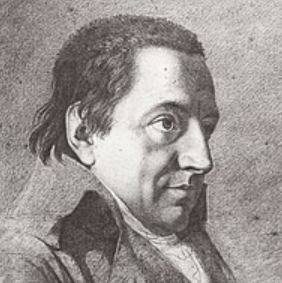
The nature of the Absolute State consists herein, -that all individual powers be directed towards the Life of the Race,-in place of which Race, the State puts the aggregate of its own Citizens. It therefore becomes necessary, first, that all Individuals, without exception, should be taken into equal consideration by the State; and second, that every Individual, with all his individual powers, without exception or reserve, should be taken into equal consideration. In a State so constituted, where all, as Individuals, are dedicated to the Race, it follows at the same time, that all without exception, with all the Rights which belong to them as component parts of the Race, are dedicated to all the other individual members of the State.
▼
Source
source
p. 150-151
2 weeks 2 days ago
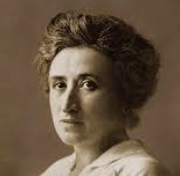
Without the collapse of capitalism the expropriation of the capitalist class is impossible.
▼
Source
source
Ch. 9
3 months 1 week ago
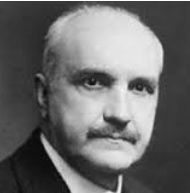
Culture is on the horns of this dilemma: if profound and noble, it must remain rare, if common, it must become mean.
▼
Source
source
Ch. IV: The Aristocratic Ideal
5 months 1 week ago
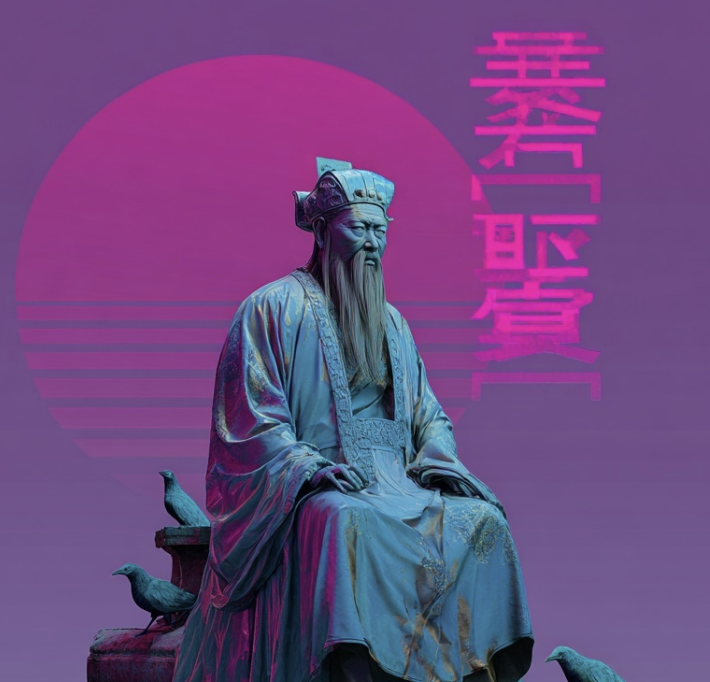
It is soft, smooth and shining like intelligence. Its edges seem sharp but do not cut like justice. It hangs down to the ground like humility. When struck, it gives a clear, ringing sound like music. The strains in it are not hidden and add to its beauty like truthfulness.' What imagination! Confucius extolled Jade's virtues this way.

4 months 1 week ago
A righteous government is of all the most to be wished for,Bearing of blessing and good fortune in the highest.Guided by the law of Truth, supported by dedication and zeal,It blossoms into the Best of Order, a Kingdom of Heaven!To effect this I shall work now and ever more.
▼
Source
source
Vohu-Khshathra Gatha; Yasna 51, 1.

4 months 3 weeks ago
You need only look around you, replied PHILO, to satisfy yourself with regard to this question. A tree bestows order and organisation on that tree which springs from it, without knowing the order; an animal in the same manner on its offspring; a bird on its nest; and instances of this kind are even more frequent in the world than those of order, which arise from reason and contrivance. To say, that all this order in animals and vegetables proceeds ultimately from design, is begging the question; nor can that great point be ascertained otherwise than by proving, a priori, both that order is, from its nature, inseparably attached to thought; and that it can never of itself, or from original unknown principles, belong to matter.
▼
Source
source
Philo to Demea, Part VII
2 months ago
The serpent, the king, the tiger, the stinging wasp, the small child, the dog owned by other people, and the fool: these seven ought not to be awakened from sleep.
CivilSimian.com created by AxiomaticPanic, CivilSimian, Kalokagathia