


3 months 2 weeks ago
Objection to scientific knowledge: this world doesn't deserve to be known.
2 weeks 5 days ago
Our lives are guided by that general conception of the course of things which has been created by society for social purposes. Our words, our phrases, our forms and processes and modes of thought, are common property, fashioned and perfected from age to age; an heirloom which every succeeding generation inherits as a precious deposit and a sacred trust to be handled on to the next one, not unchanged but enlarged and purified, with some clear marks of its proper handiwork. Into this, for good or ill, is woven every belief of every man who has speech of his fellows. An awful privilege, and an awful responsibility, that we should help to create the world in which posterity will live.

4 months 3 weeks ago
The christian religion is a parody on the worship of the Sun, in which they put a man whom they call Christ, in the place of the Sun, and pay him the same adoration which was originally paid to the Sun.
▼
Source
source
An Essay on the Origin of Free-Masonry (1803-1805); found in manuscript form after Paine's death and thought to have been written for an intended part III of The Age of Reason. It was partially published in 1810 and published in its entirety in 1818.


4 months 2 weeks ago
Man Thinking must not be subdued by his instruments.
▼
Source
source
par. 20

4 months 3 weeks ago
Thee might observe incidentally that if the state paid for child-bearing it might and ought to require a medical certificate that the parents were such as to give a reasonable result of a healthy child - this would afford a very good inducement to some sort of care for the race, and gradually as public opinion became educated by the law, it might react on the law and make that more stringent, until one got to some state of things in which there would be a little genuine care for the race, instead of the present haphazard higgledy-piggledy ways.
▼
Source
source
Letter to Alys Pearsall Smith (1894); published in The Selected Letters of Bertrand Russell, Volume 1: The Private Years (1884-1914)
4 months 3 weeks ago
Opinion is like a pendulum and obeys the same law. If it goes past the centre of gravity on one side, it must go a like distance on the other; and it is only after a certain time that it finds the true point at which it can remain at rest.
▼
Source
source
Vol. 2 "Further Psychological Observations" as translated in Essays and Aphorisms (1970), as translated by R. J. Hollingdale
4 months 3 weeks ago
I think people who are unhappy are always proud of being so, and therefore do not like to be told that there is nothing grand about their unhappiness. A man who is melancholy because lack of exercise has upset his liver always believes that it is the loss of God, or the menace of Bolshevism, or some such dignified cause that makes him sad. When you tell people that happiness is a simple matter, they get annoyed with you.
▼
Source
source
Letter to W. W. Norton, 17 February, 1931

3 months 3 days ago
Time begins to emit a scent when it gains duration; when it is given a narrative or deep tension; when it gains depth and breadth, even space.
5 months 1 week ago
The world is divided into men who have wit and no religion and men who have religion and no wit.
4 months 2 weeks ago
The charming landscape which I saw this morning, is indubitably made up of some twenty or thirty farms. Miller owns this field, Locke that, and Manning the woodland beyond. But none of them owns the landscape. There is a property in the horizon which no man has but he whose eye can integrate all the parts, that is, the poet. This is the best part of these men's farms, yet to this their warranty-deeds give no title. To speak truly, few adult persons can see nature. Most persons do not see the sun. At least they have a very superficial seeing. The sun illuminates only the eye of the man, but shines into the eye and the heart of the child. The lover of nature is he whose inward and outward senses are still truly adjusted to each other; who has retained the spirit of infancy even into the era of manhood. His intercourse with heaven and earth, becomes part of his daily food.
▼
Source
source
Nature
3 months 2 weeks ago
To suppose universal laws of nature capable of being apprehended by the mind and yet having no reason for their special forms, but standing inexplicable and irrational, is hardly a justifiable position. Uniformities are precisely the sort of facts that need to be accounted for. That a pitched coin should sometimes turn up heads and sometimes tails calls for no particular explanation; but if it shows heads every time, we wish to know how this result has been brought about. Law is par excellence the thing that wants a reason.
3 months 2 weeks ago
Even more than in a poem, it is the aphorism that the word is god.
3 months 2 weeks ago
Erect I make a resolution; prone I revoke it.

4 months 3 weeks ago
We never have a full demonstration, although there is always an underlying reason for the truth, even if it is only perfectly understood by God, who alone penetrated the infinite series in one stroke of the mind.
▼
Source
source
The Shorter Leibniz Texts (2006) edited by Lloyd H. Strickland, p. 111

3 months 2 weeks ago
The Africans had that claim on our humanity which could not be resisted, whatever might have been advanced by an hon. gentleman in defence of the property of the planters.
▼
Source
source
Speech in the House of Commons (12 May 1789), quoted in The Parliamentary History of England, From the Earliest Period to the Year 1803, Vol. XXVIII (1816), column 98

4 months 1 day ago
Many words befall men, mean and noble alike; do not be astonished by them, nor allow yourself to be constrained. If a lie is told, bear with it gently. But whatever I tell you, let it be done completely. Let no one persuade you by word or deed to do or say whatever is not best for you.
▼
Source
source
As quoted in Divine Harmony: The Life and Teachings of Pythagoras by John Strohmeier and Peter Westbrook.
2 weeks 3 days ago
As surgeons keep their instruments and knives always at hand for cases requiring immediate treatment, so shouldst thou have thy thoughts ready to understand things divine and human, remembering in thy every act, even the smallest, how close is the bond that unites the two.
▼
Source
source
III, 13

4 months 3 weeks ago
When national debts have once been accumulated to a certain degree, there is scarce, I believe, a single instance of their having been fairly and completely paid. The liberation of the public revenue, if it has ever been brought about at all, has always been brought about by bankruptcy; sometimes by an avowed one, but always by a real one, though frequently by a pretend payment.
▼
Source
source
Chapter III, Part V, p. 1012.
3 months 2 weeks ago
In a word, we reject all legislation, all authority, and all privileged, licensed, official, and legal influence, even though arising from universal suffrage, convinced that it can turn only to the advantage of a dominant minority of exploiters against the interest of the immense majority in subjection to them. This is the sense in which we are really Anarchists.
2 weeks 5 days ago
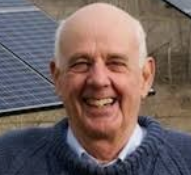
The standard that I always come back to is the health of the world, which is the same as our own personal health. We can't distinguish our health from the health of everything else. And we know enough from the ecologists now to know that health is a very complex and un-understandable complexity of relationships that makes the world whole.

4 months 3 days ago
If two right lines cut one another, they will form the angles at the vertex equal. ...This... is what the present theorem evinces, that when two right lines mutually cut each other, the vertical angles are equal. And it was first invented according to Eudemus by Thales...
▼
Source
source
Proposition XV. Thereom VIII.

4 months 3 weeks ago
Let us cultivate our garden.
3 months 2 weeks ago
One grasps incomparably more things in boredom than by labor, effort being the mortal enemy of meditation.
4 months 3 weeks ago
The love of God consists in an ardent desire to procure the general welfare, and reason teaches me that there is nothing which contributes more to the general welfare of mankind than the perfection of reason.
▼
Source
source
Closing sentence of the Preface to the general science (1677) (in P. Wiener (ed.), Leibniz Selections, Macmilland Press Ltd, 1951).

4 months 2 weeks ago
Logic takes care of itself; all we have to do is to look and see how it does it.
▼
Source
source
Journal entry (13 October 1914), also in Tractatus Logico-Philosophicus (§ 5.47)

5 months 5 days ago
In order to understand the Scriptures, it is absolutely necessary to know the whole, complete Christ, that is, Head and members. For sometimes Christ speaks in the name of the Head alone, sometimes in the name of His body, which is the holy Church spread over the entire earth. And we are in His body, and we hear ourselves speaking in it, for the Apostle tells us: We are members of His body (Eph. 5:30). In many places does the Apostle tell us this.
▼
Source
source
p. 419

4 months 2 weeks ago
The necessity of faith as an ingredient in our mental attitude is strongly insisted on by the scientific philosophers of the present day; but by a singularly arbitrary caprice they say that it is only legitimate when used in the interests of one particular proposition, - the proposition, namely, that the course of nature is uniform. That nature will follow to-morrow the same laws that she follows to-day is, they all admit, a truth which no man can know; but in the interests of cognition as well as of action we must postulate or assume it.
9 months 2 weeks ago
No subgroup, race, nationalism, religious group, gender based groups or other identity essence based groups will ever be more important than, and should never ethically take precedence over the existence based universal group, the human group. Universal identity takes precedence over subgroup identity, and when we are forced to subgroup in reaction to injustice, that is the only ethical subgroup.

5 months 2 weeks ago
If Nietzsche and Hegel serve as alibis to the masters of Dachau and Karaganda, that does not condemn their entire philosophy. But it does lead to the suspicion that one aspect of their thought, or of their logic, can lead to these appalling conclusions.
3 months 2 weeks ago
The mind that puts everything in question, reaches, after a thousand interrogations, an almost total inertia, a situation which the inert, in fact, knows from the start, by instinct. For what is inertia but a congenital perplexity?

4 months 2 weeks ago
There are, besides, eternal truths, such as Freedom, Justice, etc., that are common to all states of society. But Communism abolishes eternal truths, it abolishes all religion, and all morality, instead of constituting them on a new basis; it therefore acts in contradiction to all past historical experience.
▼
Source
source
Section 2, paragraph 63
2 weeks 3 days ago
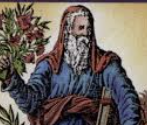
This also is a beautiful circumstance, that they referred every thing to Pythagoras, and called it by his name, and that they did not ascribe to themselves the glory of their own inventions, except very rarely.
4 months 2 weeks ago
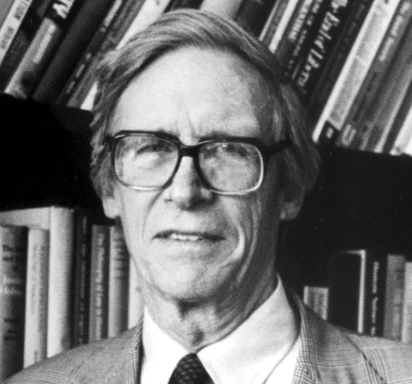
When the basic structure of society is publicly known to satisfy its principles for an extended period of time, those subject to these arrangements tend to develop a desire to act in accordance with these principles and to do their part in institutions which exemplify them.
▼
Source
source
Chapter III, Section 29, pg.177

1 month 1 week ago
The stupendous Fourth Estate, whose wide world-embracing influences what eye can take in?
3 months 1 week ago
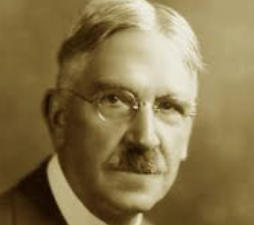
There are in our minds in solution a vast number of emotional attitudes, feelings ready to be re-excited when the proper stimulus arrives, and more than anything else it is these forms, this residue of experience, which, fuller and richer than in the mind if the ordinary man, constitute the artist's capital. What is called the magic of the artist resides in his ability to transfer these values from one field of experience to another, to attach them to objects of our common life, and by his imaginative insight make these objects poignant and momentous. Not colors, not sense qualities as such, are either matter or form, but these qualities as thoroughly imbued, impregnated, with transferred value. And then they are either matter or form according to the direction of our interest.
▼
Source
source
p. 123
4 months 2 weeks ago
Persecution of powerless or power-losing groups may not be a very pleasant spectacle, but it does not spring from human meanness alone. What makes men obey or tolerate real power and, on the other hand, hate people who have wealth without power, is the rational instinct that power has a certain function and is of some general use. Even exploitation and oppression still make society work and establish some kind of order. Only wealth without power or aloofness without a policy are felt to be parasitical, useless, revolting, because such conditions cut all the threads which tie men together. Wealth which does not exploit lacks even the relationship which exists between exploiter and exploited; aloofness without policy does not imply even the minimum concern of the oppressor for the oppressed.
▼
Source
source
Part 1, Ch. 1, § 1

1 month 1 week ago
Those who try to include all life when trying to determine justice: Should a man be executed for killing a fly? No? The fly has a short life span? The fly is small? All these rationalizations can be applied to you, by a creature that lives longer, is bigger, etc. #philosophy

5 months 2 weeks ago
Since those who rule in the city do so because they own a lot, I suppose they're unwilling to enact laws to prevent young people who've had no discipline from spending and wasting their wealth, so that by making loans to them, secured by the young people's property, and then calling those loans in, they themselves become even richer and more honored.

3 months 2 days ago
It is the private dominion over things that condemns millions of people to be mere nonentities, living corpses without originality or power of initiative, human machines of flesh and blood, who pile up mountains of wealth for others and pay for it with a gray, dull and wretched existence for themselves. I believe that there can be no real wealth, social wealth, so long as it rests on human lives - young lives, old lives and lives in the making.
4 weeks ago
The three great American vices seem to be efficiency, punctuality, and the desire for achievement and success. They are the things that make the Americans so unhappy and so nervous.
▼
Source
source
p. 162

5 months 2 weeks ago
Modesty is an unnatural attitude, and one which is only with difficulty taught to children.
4 months 3 weeks ago
The third of this kind of principles is : matter neither originates nor perishes; all the changes in the world concern form only ; a postulate which on the recommendation of common sense has spread through all philosophical schools, not because it is to be taken as having been found so, or as having been demonstrated by arguments a priori, but because if we were to admit that matter itself is fleeting and transitory, nothing at all that is stable and lasting would be left any longer to serve for the explication of phenomena according to universal and perpetual laws, and hence nothing at all would be left for the exercise of the intellect.
2 weeks 3 days ago
..If you are troubled by external circumstances, it is not the circumstances that trouble you, but your own perception of them - and they are in your power to change at any time.

3 months 1 week ago
Moses because of the hardness of your hearts suffered you to put away your wives: but from the beginning it was not so. And I say unto you, Whosoever shall put away his wife, except it be for fornication, and shall marry another, committeth adultery: and whoso marrieth her which is put away doth commit adultery.
▼
Source
source
19:8-9 (KJV)
4 months 1 week ago
A soldier told Pelopidas, "We are fallen among the enemies." Said he, "How are we fallen among them more than they among us?"
▼
Source
source
63 Pelopidas

4 months 2 weeks ago
The vessel, though her masts be firm, beneath her copper bears a worm.
▼
Source
source
"Though All the Fates Should Prove Unkind", st. 2
4 months 3 weeks ago
It is very important to note that some 2,500 years ago at the least Pythagoras went from Samos to the Ganges to learn geometry...But he would certainly not have undertaken such a strange journey had the reputation of the Brahmins' science not been long established in Europe...
▼
Source
source
Voltaire, Fragments historiques sur l'Inde. Quoted in Gewali, Salil (2013). Great Minds on India. New Delhi: Penguin Random House.
CivilSimian.com created by AxiomaticPanic, CivilSimian, Kalokagathia