


8 months 1 week ago
Sphere Music - Some sounds seem to reverberate along the plain, and then settle to earth again like dust; such are Noise, Discord, Jargon. But such only as spring heavenward, and I may catch from steeples and hilltops in their upward course, which are the more refined parts of the former, are the true sphere music - pure, unmixed music - in which no wail mingles.
▼
Source
source
August 5, 1838
9 months 6 days ago
I accept nothing on authority. A hypothesis must be backed by reason, or else it is worthless.

8 months 2 weeks ago
Wars begin when you will, but they do not end when you please.
▼
Source
source
Book III, Chapter 7.
8 months 4 weeks ago
At fifteen my heart was set on learning; at thirty I stood firm; at forty I had no more doubts; at fifty I knew the will of heaven; at sixty my ear was obedient; at seventy I could follow my heart's desire without overstepping the boundaries of what was right.


5 months 3 days ago
Do not imagine that there is any bird more easily caught by decoy, nor any fish sooner fixed on the hook by wormy bait, than are all these poor fools neatly tricked into servitude by the slightest feather passed, so to speak, before their mouths. Truly it is a marvelous thing that they let themselves be caught so quickly at the slightest tickling of their fancy. Plays, farces, spectacles, gladiators, strange beasts, medals, pictures, and other such opiates, these were for ancient peoples the bait toward slavery, the price of their liberty, the instruments of tyranny. By these practices and enticements the ancient dictators so successfully lulled their subjects under the yoke, that the stupefied peoples, fascinated by the pastimes and vain pleasures flashed before their eyes, learned subservience as naïvely, but not so creditably, as little children learn to read by looking at bright picture books.
▼
Source
source
Part 2

4 months 4 weeks ago
The battling Reformer too is, from time to time, a needful and inevitable phenomenon. Obstructions are never wanting: the very things that were once indispensable furtherances become obstructions; and need to be shaken off, and left behind us,-a business often of enormous difficulty.

4 months 6 days ago
Providence has given the French nation precisely two instruments, two arms, so to speak, with which it stirs up the world - the French language and the spirit of proselytism that forms the essence of the nation's character.
▼
Source
source
Chapter II, p. 20
6 months 1 week ago
Such would be the successive phases of the image:it is the reflection of a profound reality;it masks and denatures a profound reality;it masks the absence of a profound reality;it has no relation to any reality whatsoever: it is its own pure simulacrum.In the first case, the image is a good appearance-representation is of the sacramental order. In the second, it is an evil appearance-it is of the order of maleficence. In the third, it plays at being an appearance-it is of the order of sorcery. In the fourth, it is no longer of the order of appearances, but of simulation.

8 months 3 weeks ago
If thou shouldst say, 'It is enough, I have reached perfection,' all is lost. For it is the function of perfection to make one know one's imperfection.
▼
Source
source
Quoted by Aldous Huxley, in The Perennial Philosophy (1945)
8 months 1 week ago
Any fool can make a ruleAnd every fool will mind it.
▼
Source
source
February 3, 1860
6 months 6 days ago
Anyone can hold the helm when the sea is calm.
▼
Source
source
Maxim 358

8 months 1 week ago
He wanted to assume his entire condition, to carry the world on his shoulders and to become, in defiance of all, what all have made of him.
▼
Source
source
p. 384

7 months 1 week ago
There is no sin, and there can be no sin on all the earth, which the Lord will not forgive to the truly repentant! Man cannot commit a sin so great as to exhaust the infinite love of God. Can there be a sin which could exceed the love of God?
▼
Source
source
Book II, ch. 3 (trans. Constance Garnett) The Elder Zossima, speaking to a devout widow afraid of death

6 months 3 weeks ago
Emptiness is not a denial of the proper but an affirmation of it.

7 months 1 week ago
After having thus successively taken each member of the community in its powerful grasp and fashioned him at will, the government then extends its arm over the whole community. It covers the surface of society with a network of small, complicated rules, minute and uniform, through which the most original minds and the most energetic characters cannot penetrate, to rise above the crowd. The will of man is not shattered, but softened, bent, and guided; men are seldom forced by it to act, but they are constantly restrained from acting. Such a power does not destroy, but it prevents existence: it does not tyrannize, but it compresses, enervates, extinguishes, and stupefies a people, till each nation is reduced to nothing better than a flock of timid and industrious animals, of which the government is the shepherd.
▼
Source
source
Book Four, Chapter VI.

4 months 1 week ago
Our country is now taking so steady a course as to show by what road it will pass to destruction, to wit: by consolidation of power first, and then corruption, its necessary consequence. The engine of consolidation will be the Federal judiciary; the two other branches the corrupting and corrupted instruments.
▼
Source
source
Letter, Thomas Jefferson to Nathaniel Macon, 1821: ME 15-341

7 months 1 day ago
The Son of man shall be betrayed into the hands of men: And they shall kill him, and the third day he shall be raised again.
▼
Source
source
17:22-23 (KJV)

8 months 2 weeks ago
And I must speak plainly. If I were a judge, I would have such a poisonous, syphilitic whore tortured by being broken on the wheel and having her veins lacerated, for it is not to be denied what damage such a filthy whore does to young blood, so that it is unspeakably damaged before it is even fully grown and destroyed in the blood.
▼
Source
source
pp. 552-554 (1566); cited in Susan C. Karant-Nunn & Merry E. Wiesner-Hanks [editors and translators], Luther on Women: a Sourcebook, Cambridge University Press, 2003, pp. 157-158)
4 months 2 weeks ago
In the realm of physics it is perhaps only the theory of relativity which has made it quite clear that the two essences, space and time, entering into our intuition, have no place in the world constructed by mathematical physics. Colours are thus "really" not even æther-vibrations, but merely a series of values of mathematical functions in which occur four independent parameters corresponding to the three dimensions of space, and the one of time.
▼
Source
source
Introduction

4 months 3 weeks ago
Armies have endured all manner of want, have lived on roots, and have resisted hunger by means of food too revolting to mention. All this they have suffered to gain a kingdom, and-what is more marvellous-to gain a kingdom that will be another's. Will any man hesitate to endure poverty, in order that he may free his mind from madness?
5 months ago
We can get some idea of a whole from a part, but never knowledge or exact opinion. Special histories therefore contribute very little to the knowledge of the whole and conviction of its truth. It is only indeed by study of the interconnexion of all the particulars, their resemblances and differences, that we are enabled at least to make a general survey, and thus derive both benefit and pleasure from history.

8 months 1 week ago
By quarrelling amongst themselves, instead of confederating, Germans and Scandinavians, both of them belonging to the same great race, only prepare the way for their hereditary enemy, the Slav.
▼
Source
source
The Eastern Question: A Reprint of Letters written 1853 -1856 dealing with the events of the Crimean War, edit., Eleanor Marx Aveling, London, Swan Sonnenschein & Co. (1897) p. 90

8 months 1 week ago
Friendship, I have said, is born at the moment when one man says to another "What! You too? I thought that no one but myself..."

8 months 1 week ago
Our conviction that the world is meaningless is due in part to the fact (discussed in a later paragraph) that the philosophy of meaningless lends itself very effectively to furthering the ends of political and erotic passion; in part to a genuine intellectual error - the error of identifying the world of science, a world from which all meaning has deliberately been excluded, with ultimate reality.
▼
Source
source
Ch. 14, p. 309 [2012 reprint]
6 months 4 weeks ago
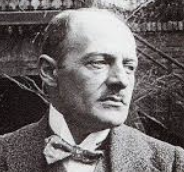
It is precisely the essential feature of egoism that it does not apprehend the full value of the isolated self. The egoist sees himself only with regard to the others, as a member of society who wishes to possess and acquire more than the others. Self-directedness or other-directedness have no essential bearing on the specific quality of love or hatred. These acts are different in themselves, quite independently of their direction.
▼
Source
source
L. Coser, trans. (1961), p. 96

4 months 5 days ago
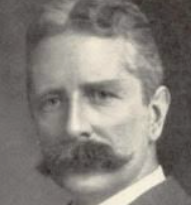
Are there not many Arts which, though speechless, express their meanings with perfect adequacy, with satisfaction to the recipient, and serve at the same time as a medium of communication between soul and soul?
4 months 2 weeks ago
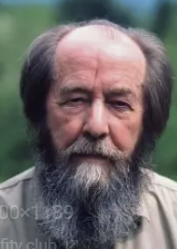
And the simple step of a simple courageous man is not to partake in falsehood, not to support false actions! Let THAT enter the world, let it even reign in the world - but not with my help. But writers and artists can achieve more: they can CONQUER FALSEHOOD! In the struggle with falsehood art always did win and it always does win! Openly, irrefutably for everyone! Falsehood can hold out against much in this world, but not against art. And no sooner will falsehood be dispersed than the nakedness of violence will be revealed in all its ugliness - and violence, decrepit, will fall.

7 months 4 days ago
How many disappointments are conducive to bitterness? One or a thousand, depending on the subject.
8 months 1 week ago
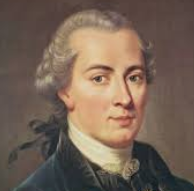
The sensuous may be exceedingly distinct, while intellectual concepts are extremely confused. The former we observe in the prototype of sensuous knowledge geometry; the latter, in the organon of all intellectual concepts, metaphysics. It is evident how much toil the latter is expending to dispel the fogs of confusion darkening the common intellect, though not always with the happy success of the former science.

8 months 2 weeks ago
For a man to love again where he is loved, it is the charity of publicans contracted by mutual profit and good offices; but to love a man's enemies is one of the cunningest points of the law of Christ, and an imitation of the divine nature.
▼
Source
source
Of The Exaltation of Charity
6 months 4 days ago
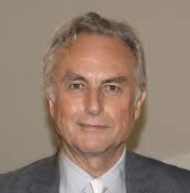
It is fashionable to wax apocalyptic about the threat to humanity posed by the AIDS virus, "mad cow" disease, and many others, but I think a case can be made that faith is one of the world's great evils, comparable to the smallpox virus but harder to eradicate.
▼
Source
source
Is Science a Religion?, The Humanist
6 months 1 week ago
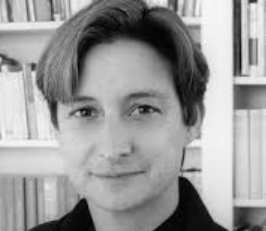
Nonviolence is not an absolute principle, but an open-ended struggle with violence and its countervailing forces.
▼
Source
source
p. 56
4 months 2 weeks ago
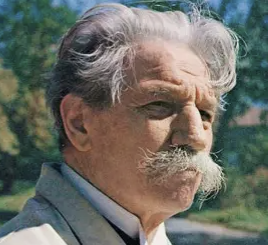
Don't let your hearts grow numb. Stay alert. It is your soul which matters.
4 months 4 weeks ago
They have their belief, these poor Thibet people, that Providence sends down always an Incarnation of Himself into every generation. At bottom some belief in a kind of Pope! At bottom still better, belief that there is a Greatest Man; that he is discoverable; that, once discovered, we ought to treat him with an obedience which knows no bounds! This is the truth of Grand Lamaism; the "discoverability" is the only error here.

4 months 2 weeks ago
Suppose we try to locate the cause of disorder, we shall find it lies in the want of mutual love.
▼
Source
source
Book 4; Universal Love I


8 months 4 days ago
Knowledge is in the end based on acknowledgement.
6 months 1 day ago
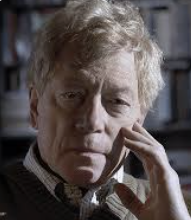
Hayek's theory of evolutionary rationality shows how traditions and customs (those surrounding sexual relations, for example) might be reasonable solutions to complex social problems, even when, and especially when, no clear rational grounds can be provided to the individual for obeying them. These customs have been selected by the ''invisible hand'' of social reproduction, and societies that reject them will soon enter the condition of ''maladaptation,'' which is the normal prelude to extinction.
▼
Source
source
Hayek and conservatism, in Edward Feser (ed.), The Cambridge Companion to Hayek
8 months 1 week ago
Religion should be .... successively freed from all statutes based on history, and one purely moral religion rule over all, in order that God might be all in all. The veil must fall. The leading-string of sacred tradition with all its appendices becomes by degrees useless, and at last a fetter ... The humiliating difference between laymen and clergymen must disappear, and equality spring from true liberty. All this, however, must not be expected from an exterior revolution, which acts violently, and depends upon fortune In the principle of pure moral religion, which is a sort of divine revelation constantly taking place in the soul of man, must be sought the ground for a passage to the new order of things, which will be accomplished by slow and successive reforms.
▼
Source
source
As quoted in German Thought, From The Seven Years' War To Goethe's Death : Six Lectures (1880) by Karl Hillebrand, p. 208

4 months 5 days ago
No state sorrier than that of the man who keeps up a continual round, and pries into "the secrets of the nether world," as saith the poet, and is curious in conjecture of what is in his neighbour's heart.
▼
Source
source
II, 13
5 months 4 days ago
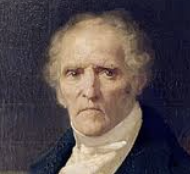
There is a class of writers who are ever boasting of the progress of civilization and of the human mind in modern times. If we were to credit their pretensions, we should be led to believe that the science of society had reached its highest degree of perfection, because old metaphysical and economic theories have been somewhat refined upon.In answer to their boasts of social progress, it is not sufficient to refer to the deeply-rooted social evils which exist, and which prey upon our boasted civilized social order. We will mention but a single one, the frightful increase of national debts and of taxation.
▼
Source
source
The Theory of Social Organization. Harmonian Man: Selected Writings of Charles Fourier
7 months 4 days ago
Why don't I commit suicide? Because I am as sick of death as I am of life.
5 months ago
It is a course which perhaps would not have been necessary had it been possible to form a state composed of wise men, but as every multitude is fickle, full of lawless desires, unreasoned passion, and violent anger, the multitude must be held in by invisible terrors and suchlike pageantry. For this reason I think, not that the ancients acted rashly and at haphazard in introducing among the people notions concerning the gods and beliefs in the terrors of hell, but that the moderns are most rash and foolish in banishing such beliefs.
6 months 1 week ago
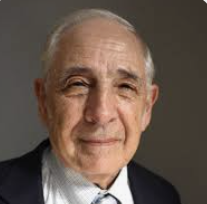
The ascription of an unconscious intentional phenomenon to a system implies that the phenomenon is in principle accessible to consciousness. A statement of the author's "connection principle."
▼
Source
source
"Consciousness, Explanatory Inversion, and Cognitive Science," The Behavioral and Brain Sciences 13, 4 (December 1990): 585-696.
8 months 2 weeks ago
The believing man hath the Holy Ghost; and where the Holy Ghost dwelleth, He will not suffer a man to be idle, butstirreth him up to all exercises of piety and godliness, and of true religion, to the love of God, to the patient suffering of afflictions, to prayer, to thanksgiving, and the exercise of charity towards all men.
▼
Source
source
p. 320
6 months 1 week ago
One may dream of a culture where everyone bursts into laughter when someone says: this is true, this is real.
7 months 3 weeks ago
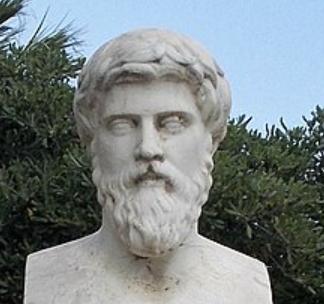
When Demaratus was asked whether he held his tongue because he was a fool or for want of words, he replied, "A fool cannot hold his tongue."
▼
Source
source
Of Demaratus
CivilSimian.com created by AxiomaticPanic, CivilSimian, Kalokagathia