


3 months 3 weeks ago
Man exists for his own sake and not to add a laborer to the state.
▼
Source
source
November 15, 1839
3 months 4 weeks ago
I doubt not but one great reason why many children abandon themselves wholly to silly sports, and trifle away all their time insipidly, is, because they have found their curiosity baulk'd, and their inquiries neglected. But had they been treated with more kindness and respect, and their questions answered, as they should, to their satisfaction; I doubt not but that they would have taken more pleasure in learning, and improving their knowledge, wherein there would still be newness and variety, which is what they are delighted with, than in returning over and over to the same play and play-things.
▼
Source
source
Sec. 118

3 months 3 weeks ago
Those only are happy (I thought) who have their minds fixed on some object other than their own happiness; on the happiness of others, on the improvement of mankind, even on some art or pursuit, followed not as a means, but as itself an ideal end. Aiming thus at something else, they find happiness by the way.
▼
Source
source
(p. 142)

3 months 4 weeks ago
All of the other people have committed crimes, the Jews are the only ones who have boasted about committing them. They are, all of them, born with raging fanaticism in their hearts, just as the Bretons and the Germans are born with blond hair. I would not be in the least bit surprised if these people would not some day become deadly to the human race.
▼
Source
source
Lettres de Memmius a Cicéron, 1771

3 months 3 weeks ago
There are two types of poor people, those who are poor together and those who are poor alone. The first are the true poor, the others are rich people out of luck.
▼
Source
source
Act 4, sc. 5
3 months 1 day ago
There are three principal means of acquiring knowledge available to us: observation of nature, reflection, and experimentation. Observation collects facts; reflection combines them; experimentation verifies the result of that combination. Our observation of nature must be diligent, our reflection profound, and our experiments exact. We rarely see these three means combined; and for this reason, creative geniuses are not common.
▼
Source
source
No. 15

2 weeks 3 days ago
The pious soul,-which, if you reflect, will mean the ingenuous and ingenious, the gifted, intelligent and nobly-aspiring soul,-such a soul, in whatever rank of life it were born, had one path inviting it; a generous career, whereon, by human worth and valor, all earthly heights and Heaven itself were attainable. In the lowest stratum of social thraldom, nowhere was the noble soul doomed quite to choke, and die ignobly.
3 months 3 weeks ago
All that is solid melts into air, all that is holy is profaned, and man is at last compelled to face with sober senses, his real conditions of life, and his relations with his kind.
▼
Source
source
Section 1, paragraph 18, lines 12-14.

3 months 1 week ago
Reason not with him, that will deny the principal truths!
3 months 4 weeks ago
All religions promise a reward for excellences of the will or heart, but none for excellences of the head or understanding.
▼
Source
source
E. Payne, trans., vol. 2, p. 230

2 months 3 weeks ago
Lucidity is not necessarily compatible with life, actually not at all.

2 months 3 weeks ago
The body of all true religion consists, to be sure, in obedience to the will of the Sovereign of the world, in a confidence in His declarations, and in imitation of His perfections.
2 months 3 weeks ago
Speculative philosophy as the realisation of God is the positing of God, and at the same time his cancellation or negation; theism and at the same time atheism: for God - in the sense of theology - is God only as long as he is taken to be a being distinguished from and independent of the being of man as well as of nature. The theism that as the positing of God is simultaneously his negation or, conversely, as the negation of God equally his affirmation, is pantheism. Theological theism - that is, theism properly speaking - is nothing other than imaginary pantheism which itself is nothing other than real and true theism.
▼
Source
source
Part I, Section 14

3 months 3 weeks ago
Resting on your laurels is as dangerous as resting when you are walking in the snow. You doze off and die in your sleep.
▼
Source
source
p. 35e
3 months 3 weeks ago
In fact, it is as difficult to appropriate the thoughts of others as it is to invent.
▼
Source
source
Quotation and Originality
1 month 4 weeks ago
Nonviolence is perhaps best described as a practice of resistance that becomes possible, if not mandatory, precisely at the moment when doing violence seems most justified and obvious. In this way, it can be understood as a practice that not only stops a violent act, or a violent process, but requires a form of sustained action, sometimes aggressively pursued. So, one suggestion I will make is that we can think of nonviolence not simply as the absence of violence, or as the act of refraining from committing violence, but as a sustained commitment, even a way of rerouting aggression for the purposes of affirming ideals of equality and freedom.
▼
Source
source
p. 27

3 months 3 weeks ago
There is object proof that homosexuality is more interesting than heterosexuality. It's that one knows a considerable number of heterosexuals who would wish to become homosexuals, whereas one knows very few homosexuals who would really like to become heterosexuals.
▼
Source
source
As quoted in Who's Who in Contemporary Gay & Lesbian History: From World War II to the Present Day (2001) by Robert Aldrich and Gary Wotherspoon ISBN 041522974X

4 months 4 days ago
Don't discuss yourself, for you are bound to lose; if you belittle yourself, you are believed; if you praise yourself, you are disbelieved.
▼
Source
source
Book III, Ch. 8
3 months 3 weeks ago
But since he has decided to have the impossibility of living, every misfortune is an opportunity which lays this importance of living before his eyes and obliges him to decide, once again, to die.
▼
Source
source
p. 158
2 months 2 weeks ago
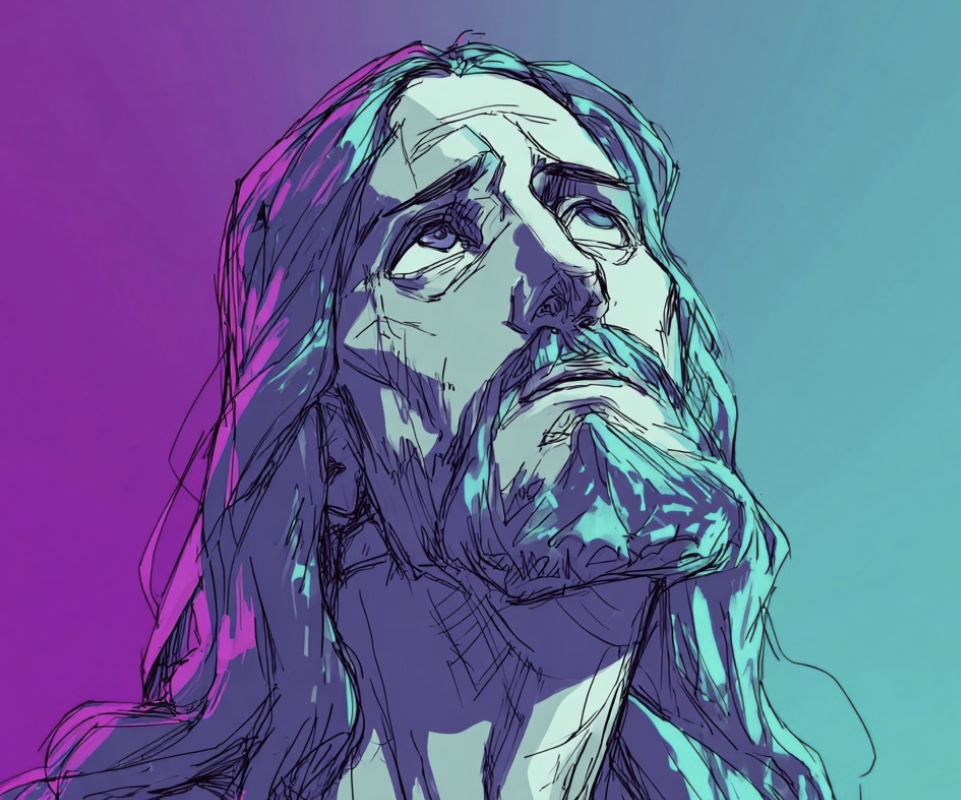
Blessed are the poor in spirit, for theirs is the kingdom of heaven. Blessed are those who mourn, for they will be comforted. Blessed are the meek, for they will inherit the earth. Blessed are those who hunger and thirst for righteousness, for they will be filled. Blessed are the merciful, for they will be shown mercy. Blessed are the pure in heart, for they will see God. Blessed are the peacemakers, for they will be called sons of God. Blessed are those who are persecuted because of righteousness, for theirs is the kingdom of heaven. Blessed are you when people insult you, persecute you and falsely say all kinds of evil against you because of me. Rejoice and be glad, because great is your reward in heaven, for in the same way they persecuted the prophets who were before you.
▼
Source
source
5:1 12 (NIV) Often referred to as "The Beatitudes" this is the start of "The Sermon on the Mount".

2 months 2 weeks ago
The guiding question of Marx's analysis was, How does capitalist society supply its members with the necessary use-values? And the answer disclosed a process of blind necessity, chance, anarchy and frustration. The introduction of the category of use-value was the introduction of a forgotten factor, forgotten, that is, by the classical political economy which was occupied only with the phenomenon of exchange value. In the Marxian theory, this factor becomes an instrument that cuts through the mystifying reification of the commodity world.
▼
Source
source
P. 304
2 months 3 weeks ago
A very great part of the mischiefs that vex the world arises from words.
▼
Source
source
Letter to Richard Burke post 19 February 1792 (1792), in R. B. McDowell and William B. Todd (eds), The Writings and Speeches of Edmund Burke, Vol. 9: I: The Revolutionary War, 1794-1797; II: Ireland. p. 647

4 months 3 weeks ago
It was the addition of status that brought the little things: a more comfortable seat here, a better cut of meat there, a shorter wait in line at the other place. To the philosophical mind, these items might seem scarcely worth any great trouble to acquire.Yet no one, however philosophical, could give up those privileges, once acquired, without a pang. That was the point.

1 month 3 days ago
With other beliefs crumbling, many seek to return to what they piously describe as "Enlightenment values". But these values were not as unambiguously benign as is nowadays commonly supposed.
▼
Source
source
2015

1 month 4 weeks ago
I'm prepared to teach acceptance of religion, but, religion has to agree to the social contract. If we have to do it church by church, I'm ready.
2 months 1 week ago
A girl, if she has any pride, is so ashamed of having anything she wishes to say out of the hearing of her own family, she thinks it must be something so very wrong, that it is ten to one, if she have the opportunity of saying it, that she will not. And yet she is spending her life, perhaps, in dreaming of accidental means of unrestrained communion.

3 months 3 weeks ago
I strongly suspect that most of the great knowers of Suchness paid very little attention to art.... (To a person whose transfigured and transfiguring mind can see the All in every this, the first-rateness or tenth-rateness of even a religious painting will be a matter of the most sovereign indifference.) Art, I suppose, is only for beginners, or else for those resolute dead-enders, who have made up their minds to be content with the ersatz of Suchness, with symbols rather than with what they signify, with the elegantly composed recipe in lieu of actual dinner.

4 months 3 weeks ago
If the very essence of knowledge changes, at the moment of the change to another essence of knowledge there would be no knowledge, and if it is always changing, there will always be no knowledge, and by this reasoning there will be neither anyone to know nor anything to be known. But if there is always that which knows and that which is known if the beautiful, the good, and all the other verities exist I do not see how there is any likeness between these conditions of which I am now speaking and flux or motion.

3 months 3 weeks ago
Every man would like to be God, if it were possible; some few find it difficult to admit the impossibility.
▼
Source
source
Ch. 1: The Impulse to Power
3 months 3 weeks ago
The opinions that are held with passion are always those for which no good ground exists; indeed the passion is the measure of the holder's lack of rational conviction.
▼
Source
source
Opinions in politics and religion are almost always held passionately. Introduction to 1961 edition of Sceptical Essays, 1961

3 months 1 day ago
What chiefly diverts the men of democracies from lofty ambition is not the scantiness of their fortunes, but the vehemence of the exertions they daily make to improve them.
▼
Source
source
Book Three, Chapter XIX.
3 months 3 weeks ago
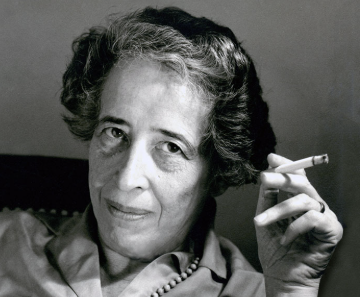
If a given science accidentally reached its goal, this would by no means stop the workers in the field, who would be driven past their goal by the sheer momentum of the illusion of unlimited progress.
▼
Source
source
p. 55
4 months 1 week ago
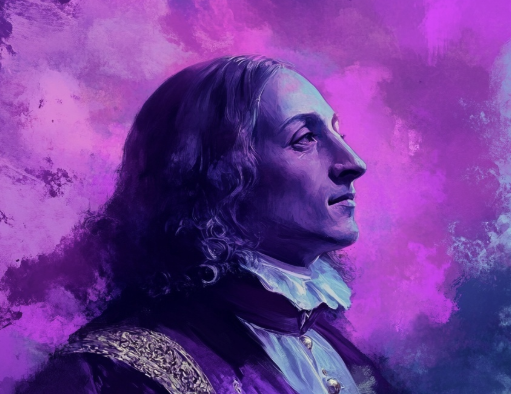
Thus he had a double thought: the one by which he acted as king, the other by which he recognized his true state, and that it was accident alone that had placed him in his present condition.

1 month 3 weeks ago
Some teachers of mankind - as Plato... the first Christians, the orthodox Muslims, and the Buddhists - have gone so far as to repudiate art. ...[They consider it] so highly dangerous in its power to infect people against their wills, that mankind will lose far less by banishing all art than by tolerating each and every art. ...such people were wrong in repudiating all art, for they denied that which cannot be denied - one of the indispensable means of communication, without which mankind could not exist. ...Now there is only fear, lest we should be deprived of any pleasures art can afford, so any type of art is patronized. And I think the last error is much grosser than the first and that its consequences are far more harmful.
2 months 1 week ago
Why have women passion, intellect, moral activity - these three - and a place in society where no one of the three can be exercised? Men say that God punishes for complaining. No, but men are angry with misery. They are irritated with women for not being happy. They take it as a personal offence. To God alone may women complain without insulting Him!

3 weeks 1 day ago
Disobedience to authority is one of the most natural and healthy acts.
▼
Source
source
210
2 months ago
It is indeed a matter of great difficulty to discover, and effectually to distinguish, the true motions of particular bodies from the apparent; because the parts of that immovable space, in which those motions are performed, do by no means come under the observation of our senses. Yet the thing is not altogether desperate; for we have some arguments to guide us, partly from the apparent motions, which are the differences of the true motions; partly from the forces, which are the causes and effects of the true motions.
▼
Source
source
Definitions - Scholium
4 months 1 week ago
All the excesses, all the violence, and all the vanity of great men, come from the fact that they know not what they are: it being difficult for those who regard themselves at heart as equal with all men... For this it is necessary for one to forget himself, and to believe that he has some real excellence above them, in which consists this illusion that I am endeavoring to discover to you.
1 month ago
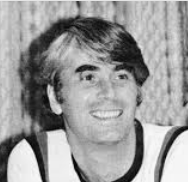
Some anarchists have claimed not merely that we would be better off without a state, but that any state necessarily violates people's moral rights and hence is intrinsically immoral. Our starting point then, though nonpolitical, is by intention far from nonmoral. Moral philosophy sets the background for, and boundaries of, political philosophy. What persons may and may not do to one another limits what they may do through the apparatus of a state, or do to establish such an apparatus.
▼
Source
source
Ch. 1 : Why State of Nature Theory?; Political Philosophy, p. 6
1 month 3 weeks ago
The inherent contradiction of human life has now reached an extreme degree of tension: on the one side there is the consciousness of the beneficence of the law of love, and on the other the existing order of life which has for centuries occasioned an empty, anxious, restless, and troubled mode of life, conflicting as it does with the law of love and built on the use of violence. This contradiction must be faced, and the solution will evidently not be favourable to the outlived law of violence, but to the truth which has dwelt in the hearts of men from remote antiquity: the truth that the law of love is in accord with the nature of man. But men can only recognize this truth to its full extent when they have completely freed themselves from all religious and scientific superstitions and from all the consequent misrepresentations and sophistical distortions by which its recognition has been hindered for centuries.
▼
Source
source
VI

4 months ago
With regard to politics and the character of princes and great men, I think I am very moderate. My views of things are more conformable to Whig principles; my representation of persons to Tory prejudices. Nothing can so much prove that men commonly regard more persons than things, as to find that I am commonly numbered among the Tories.
▼
Source
source
E. C. Mossner, Life of David Hume (Clarendon Press, 2001), p. 311.

2 months 3 weeks ago
Limiting the liberty of each by the like liberty of all, excludes a wide range of improper actions, but does not exclude certain other improper ones.
▼
Source
source
Pt. II, Ch. 4 : Derivation of a First Principle, § 4
3 months 4 weeks ago
Life is just a notebook with blank pages. Every time we make a mistake, the pages get stained and living in it becomes impossible.
2 weeks 5 days ago
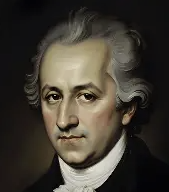
I am more and more convinced that poetry is the universal possession of mankind, revealing itself everywhere and at all times in hundreds and hundreds of men. ... I therefore like to look about me in foreign nations, and advise everyone to do the same. National literature is now a rather unmeaning term; the epoch of world literature is at hand, and everyone must strive to hasten its approach.
▼
Source
source
Conversations with Eckermann
3 months 3 weeks ago
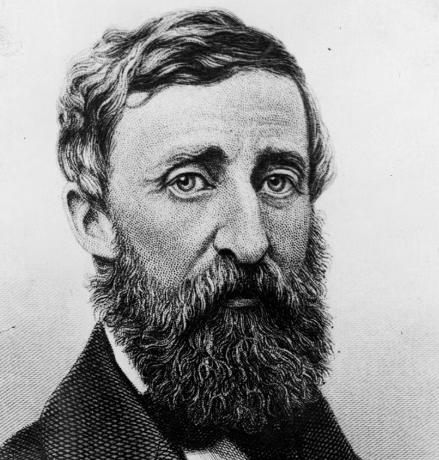
The perception of beauty is a moral test.
▼
Source
source
June 21, 1852
3 months 3 weeks ago
I should like to believe my people's religion, which was just what I could wish, but alas, it is impossible. I have really no religion, for my God, being a spirit shown merely by reason to exist, his properties utterly unknown, is no help to my life. I have not the parson's comfortable doctrine that every good action has its reward, and every sin is forgiven. My whole religion is this: do every duty, and expect no reward for it, either here or hereafter.
▼
Source
source
Greek Exercises (1888), written two days after his sixteenth birthday.

1 month 3 weeks ago
Electricity does not centralize, but decentralizes.
▼
Source
source
(p. 36)

4 months 1 week ago
It is no advantage to be near the light if the eyes are closed.
▼
Source
source
p. 607
2 weeks 3 days ago
A word spoken in season, at the right moment, is the mother of ages.
▼
Source
source
Reported in Josiah Hotchkiss Gilbert, Dictionary of Burning Words of Brilliant Writers (1895), p. 561.
CivilSimian.com created by AxiomaticPanic, CivilSimian, Kalokagathia