


1 month 3 weeks ago
The whole life of the upper classes is a constant inconsistency. The more delicate a man's conscience is, the more painful this contradiction is to him.
▼
Source
source
Chapter V, Contradiction Between our Life and our Christian Conscience

2 months 1 week ago
The "passion for incredulity" can produce as much self-deception as the uncritical will to believe.
▼
Source
source
p. 209

3 months 3 weeks ago
Character is higher than intellect...A great soul will be strong to live, as well as strong to think.
▼
Source
source
par. 27
1 month 1 week ago
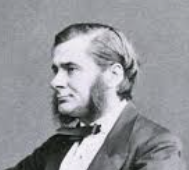
Let us have "sweet girl graduates" by all means. They will be none the less sweet for a little wisdom; and the "golden hair" will not curl less gracefully outside the head by reason of there being brains within.
▼
Source
source
Emancipation - Black and White
2 months 1 week ago
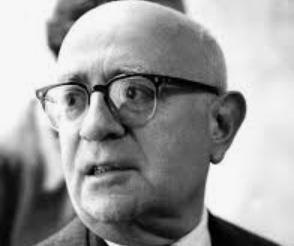
Regressive listeners behave like children. Again and again and with stubborn malice, they demand the one dish they have once been served.
▼
Source
source
p. 290
4 months 3 weeks ago
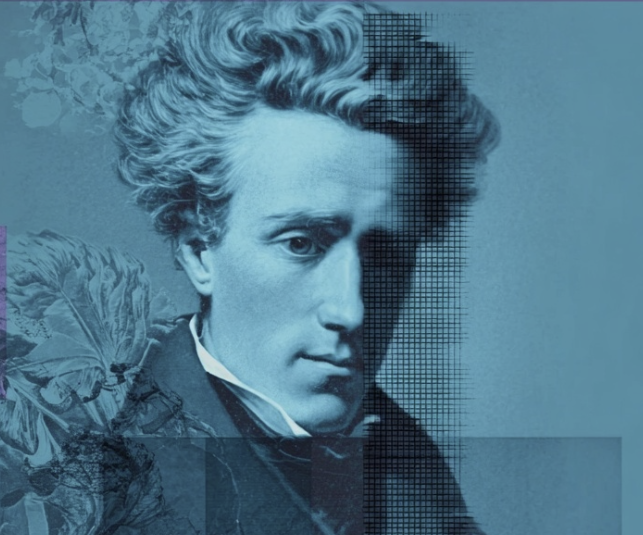
How close men, despite all their knowledge, usually live to madness? What is truth but to live for an idea? When all is said and done, everything is based on a postulate; but not until it no longer stands on the outside, not until one lives in it, does it cease to be a postulate.

4 months 3 weeks ago
The ancients, even though they believed in destiny, believed primarily in nature, in which they participated wholeheartedly. To rebel against nature amounted to rebelling against oneself.
2 months 2 weeks ago
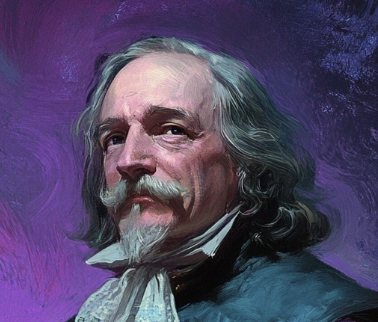
And whereas many men, by accident unevitable, become unable to maintain themselves by their labour; they ought not to be left to the Charity of private persons; but to be provided for, (as far-forth as the necessities of Nature require,) by the Lawes of the Common-wealth. For as it is Unchariablenesse in any man, to neglect the impotent; so it is in the Soveraign of a Common-wealth, to expose them to the hazard of such uncertain Charity.
▼
Source
source
The Second Part, Chapter 30, p. 181

3 months 3 weeks ago
For the moment, the jazz is playing; there is no melody, just notes, a myriad of tiny tremors. The notes know no rest, an inflexible order gives birth to them then destroys them, without ever leaving them the chance to recuperate and exist for themselves.... I would like to hold them back, but I know that, if I succeeded in stopping one, there would only remain in my hand a corrupt and languishing sound. I must accept their death; I must even want that death: I know of few more bitter or intense impressions.

3 months 3 weeks ago
"And yet, it was not, not now, she that really counted. Or if she counted (and, oh, gloriously she did) it was for another's sake. The earth and stars and sun, all that was or will be, existed for his sake. And he was coming. The most dreadful, the most beautiful, the only dread and beauty there is, was coming. The pillars on the far side of the pool flushed with his approach. I cast down my eyes."
▼
Source
source
Orual

4 months 2 days ago
Truly man is a marvellously vain, diverse, and undulating object. It is hard to found any constant and uniform judgement on him.
▼
Source
source
Ch. 1. That Men by various Ways arrive at the same End (tr. Donald M. Frame)Cotton, rev. W. Hazlitt, 1842

3 months 3 weeks ago
Need and struggle are what excite and inspire us; our hour of triumph is what brings the void. Not the Jews of the captivity, but those of the days of Solomon's glory are those from whom the pessimistic utterances in our Bible come.
▼
Source
source
"Is Life Worth Living?"
4 months 2 days ago
I am firmly convinced, therefore, that to set up a republic which is to last a long time, the way to set about it is to constitute it as Sparta and Venice were constituted; to place it in a strong position, and so to fortify it that no one will dream of taking it by a sudden assault; and, on the other hand, not to make it so large as to appear formidable to its neighbors. It should in this way be able to enjoy its form of government for a long time. For war is made on a commonwealth for two reasons: to subjugate it, and for fear of being subjugated by it.
▼
Source
source
Book 1, Ch. 6 (as translated by LJ Walker and B Crick)

1 month 3 weeks ago
Psychic communal integration, made possible at last by the electronic media, could create the universality of consciousness foreseen by Dante when he predicted that men would continue as no more than broken fragments until they were unified into an inclusive consciousness...This is a new interpretation of the mystical body of Christ; and Christ, after all, is the ultimate extension of man.
1 month 3 weeks ago
An agreeable companion on a journey is as good as a carriage.
▼
Source
source
Maxim 143
1 month 3 weeks ago
In spite the mountains of books written about art, no precise definition of art has been constructed. And the reason for this is that the conception of art has been based on the conception of beauty.

3 months 3 weeks ago
Change is one thing, progress is another.
2 days ago
For a long time there have been no true sovereigns, monarchs by divine right capable of wielding sword and scepter, and symbols of a higher human ideal. More than a century ago, Juan Donoso Cortés stated that no kings existed capable of proclaiming themselves as such except "by the will of the nation," adding that, even if any had existed, they would not have been recognized. The few monarchies still surviving are notoriously impotent and empty, while the traditional nobility has lost its essential character as a political class and any existential prestige and rank along with it. Its current representatives may still interest our contemporaries when put on the same plane as film actors and actresses, sport heroes and opera stars, and when through some private, sentimental, or scandalous chance, they serve as fodder for magazine articles.
▼
Source
source
p. 172

3 months 4 weeks ago
A very poor man may be said in some sense to have a demand for a coach and six; he might like to have it; but his demand is not an effectual demand, as the commodity can never be brought to market in order to satisfy it.
▼
Source
source
Chapter VII, p. 67.
3 months 2 weeks ago
Speciesism-the word is not an attractive one, but I can think of no better term-is a prejudice or attitude of bias in favor of the interests of members of one's own species and against those of members of other species.
▼
Source
source
Ch. 1: All Animals Are Equal

3 months 3 weeks ago
I don't think that there are any sinister persons deliberately trying to rob people of their freedom but I do think, first of all, that there are a number of impersonal forces which are pushing in the direction of less and less freedom. And I also thing there are a number of technological devices which anybody who wishes to use, can use, to accelerate this process of going away from freedom, of imposing control.

3 months 3 weeks ago
Our inventions are wont to be pretty toys, which distract our attention from serious things. They are but improved means to an unimproved end, an end which it was already but too easy to arrive at.
▼
Source
source
pp. 60-61
3 months 3 weeks ago
...the reality of society involves the socialization of certain unrealities.
▼
Source
source
p. 455
3 months 3 weeks ago
We may define "faith" as a firm belief in something for which there is no evidence. Where there is evidence, no one speaks of "faith". We do not speak of faith that two and two are four or that the earth is round. We only speak of faith when we wish to substitute emotion for evidence. The substitution of emotion for evidence is apt to lead to strife, since different groups substitute different emotions.
▼
Source
source
p. 215
1 month 2 weeks ago
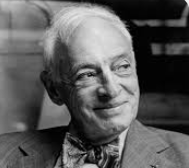
Much of junk culture has a core of crisis - shoot-outs, conflagrations, bodies weltering in blood, naked embracers or rapist-stranglers. The sounds of junk culture are heard over a ground bass of extremism. Our entertainments swarm with specters of world crisis. Nothing moderate can have any claim to our attention.
▼
Source
source
A Second Half Life (1991), p. 326

2 months 3 weeks ago
Religious persecution may shield itself under the guise of a mistaken and over-zealous piety.
▼
Source
source
Speech in opening the impeachment of Warren Hastings (18 February 1788), quoted in The Works of the Right Honourable Edmund Burke, Volume the Tenth (1899), pp. 7-8

2 weeks 1 day ago
In the learned professions as in the unlearned, and in human things throughout, in every place and in every time, the true function of intellect is not that of talking, but of understanding and discerning with a view to performing!
2 weeks 1 day ago
The inventive genius of great England will not forever sit patient with mere wheels and pinions, bobbins, straps and billy-rollers whirring in the head of it. The inventive genius of England is not a Beaver's, or a Spinner's or Spider's genius: it is a Man's genius, I hope, with a God over him!
3 months 4 weeks ago
By nature a philosopher is not in genius and disposition half so different from a street porter, as a mastiff is from a greyhound.
▼
Source
source
Chapter II, p. 17.
4 months 2 days ago
There is a plague on Man, the opinion that he knows something.
3 months 3 weeks ago
Night is falling: at dusk, you must have good eyesight to be able to tell the Good Lord from the Devil.
▼
Source
source
Act 10, sc. 2
4 months 2 days ago
No circumstance is ever so desperate that one cannot nurture some spark of hope.
▼
Source
source
Act I, scene i
4 months 3 weeks ago
Some say that the body is the "tomb" of the soul, their notion being that the soul is buried in the present life; and again, because by its means the soul gives any signs which it gives, it is for this reason also properly called "sign". But I think it most likely that the Orphic poets gave this name, with the idea that the soul is undergoing punishment for something; they think it has the body as an enclosure to keep it safe, like a prison, and this is, as the name itself denotes, the "safe" for the soul, until the penalty is paid, and not even a letter needs to be changed.
1 month 3 weeks ago
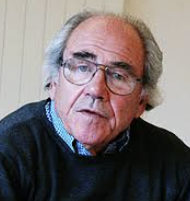
Particularly in the case of all professional of press-images which testify of the real events. In making reality, even the most violent, emerge to the visible, it makes the real substance disappear. It is like the Myth of Eurydice : when Orpheus turns around to look at her, she vanishes and returns to hell. That is why, the more exponential the marketing of images is growing the more fantastically grows the indifference towards the real world. Finally, the real world becomes a useless function, a collection of phantom shapes and ghost events. We are not far from the silhouettes on the walls of the cave of Plato.
3 months 3 weeks ago
We are not that we are, nor do we treat or esteem each other for such, but for that we are capable of being.
▼
Source
source
Pearls of Thought (1881) p. 37
3 months 2 weeks ago
By virtue of its innermost intention, and like all questions about language, structuralism escapes the classical history of ideas which already supposes structuralism's possibility, for the latter naively belongs to the province of language and propounds itself within it.Nevertheless, by virtue of an irreducible region of irreflection and spontaneity within it, by virtue of the essential shadow of the undeclared, the structuralist phenomenon will deserve examination by the historian of ideas. For better or for worse. Everything within this phenomenon that does not in itself transparently belong to the question of the sign will merit this scrutiny; as will everything within it that is methodologically effective, thereby possessing the kind of infallibil-ity now ascribed to sleepwalkers and formerly attributed to instinct, which was said to be as certain as it was blind.
▼
Source
source
Force and Signification
1 month 2 weeks ago
Can we find nothing good to say about TV? Well, yes, it brings scattered solitaries into a sort of communion. TV allows your isolated American to think that he participates in the life of the entire country. It does not actually place him in a community, but his heart is warmed with the suggestion (on the whole false) that there is a community somewhere in the vicinity and that his atomized consciousness will be drawn back toward the whole.
▼
Source
source
The Distracted Public (1990), p. 159
2 months 3 days ago
The true line is not between "hard" natural science and "soft" social sciences, but between precise science limited to highly abstract and simple phenomena in the laboratory and inexact science and technology dealing with complex problems in the real world.
▼
Source
source
p. 302.
4 months 1 week ago
I have read in Plato and Cicero sayings that are very wise and very beautiful; but I never read in either of them, "Come unto me, all ye that labor and are heavy laden."
▼
Source
source
p. 62
4 months 3 weeks ago
Blessed are the hearts that can bend; they shall never be broken.

2 months 1 week ago
...as the great Unitarian preacher Channing pointed out, that in France and Spain there are multitudes who have proceeded from rejecting Popery to absolute atheism, because "the fact is, that false and absurd doctrines, when exposed, have a natural tendency to beget skepticism in those who receive them without reflection. None are so likely to believe too little as those who have begun by believing too much." Here is, indeed, the terrible danger of believing too much. But no! the terrible danger comes from another quarter - from seeking to believe with the reason and not with the life.

3 months 3 weeks ago
"Let us work without reasoning," said Martin; "it is the only way to make life endurable."

3 months 2 weeks ago
A teacher who can show good, or indeed astounding results while he is teaching, is still not on that account a good teacher, for it may be that, while his pupils are under his immediate influence, he raises them to a level which is not natural to them, without developing their own capacities for work at this level, so that they immediately decline again once the teacher leaves the schoolroom.
▼
Source
source
p. 43e

1 month 1 day ago
Throughout the years in which the US was punishing countries that departed from fiscal prudence, it was borrowing on a colossal scale to finance tax cuts and fund its over-stretched military commitments. Now, with federal finances critically dependent on continuing large inflows of foreign capital, it will be the countries that spurned the American model of capitalism that will shape America's economic future.


3 months 3 weeks ago
The product of labour is labour which has been congealed in an object, which has become material: it is the objectification of labour. Labour's realization is its objectification.
▼
Source
source
p. 71, The Marx-Engels Reader
3 months 3 weeks ago
'Our kingdom go' is the necessary and unavoidable corollary of 'Thy kingdom come.' For the more there is of self, the less there is of God.
▼
Source
source
Chapter VI - Mortification, Non-Attachment, Right Livelihood
2 months 2 weeks ago
The tangible source of exploitation disappears behind the façade of objective rationality.
▼
Source
source
p. 32
2 months 4 weeks ago
Patriotism is an ephemeral motive that scarcely ever outlasts the particular threat to society that aroused it.
3 months 3 weeks ago
How shall we define a god? Expressed in psychological terms (which are primary-there is no getting behind them) a god is something that gives us the peculiar kind of feeling which Professor Otto has called "numinous". Numinous feelings are the original god-stuff from which the theory-making mind extracts the individualised gods of the pantheon.
▼
Source
source
"Meditation on the Moon"
CivilSimian.com created by AxiomaticPanic, CivilSimian, Kalokagathia