


2 months 2 days ago
To get up in the morning, wash and then wait for some unforeseen variety of dread or depression. I would give the whole universe and all of Shakespeare for a grain of ataraxy.
1 month 1 week ago
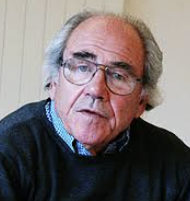
When the real is no longer what it was, nostalgia assumes its full meaning. "The Precession of Simulacra,"
▼
Source
source
p. 6

3 months 6 days ago
The speaker with whom I was most struck, though I dissented from nearly every word he said, was Thirlwall, the historian, since Bishop of St. David's, then a Chancery barrister, unknown except by a high reputation for eloquence acquired at the Cambridge Union before the era of Austin and Macaulay. His speech was in answer to one of mine. Before he had uttered ten sentences, I set him down as the best speaker I had ever heard, and I have never since heard any one whom I placed above him.
▼
Source
source
(p. 125)

3 months 5 days ago
It is not the same thing. You are perhaps not lying, but you are not telling the truth.
▼
Source
source
Act 1
1 month 4 weeks ago
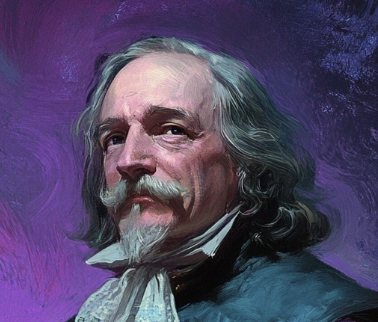
And whereas many men, by accident unevitable, become unable to maintain themselves by their labour; they ought not to be left to the Charity of private persons; but to be provided for, (as far-forth as the necessities of Nature require,) by the Lawes of the Common-wealth. For as it is Unchariablenesse in any man, to neglect the impotent; so it is in the Soveraign of a Common-wealth, to expose them to the hazard of such uncertain Charity.
▼
Source
source
The Second Part, Chapter 30, p. 181

3 months 5 days ago
The humans live in time but our Enemy (God) destines them for eternity.
▼
Source
source
Letter XV

4 months 6 days ago
But it is better to assume principles less in number and finite, as Empedocles makes them to be. All philosophers... make principles to be contraries... (for Parmenides makes principles to be hot and cold, and these he demominates fire and earth) as those who introduce as principles the rare and the dense. But Democritus makes the principles to be the solid and the void; of which the former, he says, has the relation of being, and the latter of non-being. ...it is necessary that principles should be neither produced from each other, nor from other things; and that from these all things should be generated. But these requisites are inherent in the first contraries: for, because they are first, they are not from other things; and because they are contraries, they are not from each other.

1 month 2 weeks ago
It may seem to be a long way from Blake's innocent talk of love and copulation to De Sade's need to inflict pain. And yet both are the outcome of a sexual mysticism that strives to transcend the everyday world. Simone de Beauvoir said penetratingly of De Sade's work that 'he is trying to communicate an experience whose distinguishing characteristic is, nevertheless its will to remain incommunicable'. De Sade's perversion may have sprung from his dislike of his mother or of other women, but its basis is a kind of distorted religious emotion.
▼
Source
source
p. 90
2 months 1 day ago
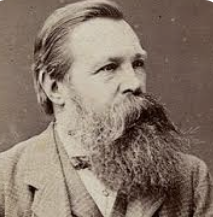
Since the management of industry by individuals necessarily implies private property, and since competition is in reality merely the manner and form in which the control of industry by private property owners expresses itself, it follows that private property cannot be separated from competition and the individual management of industry. Private property must, therefore, be abolished and in its place must come the common utilization of all instruments of production and the distribution of all products according to common agreement - in a word, what is called the communal ownership of goods.
2 months 6 days ago
Religion is usually nothing but a supplement to or even a substitute for education, and nothing is religious in the strict sense which is not a product of freedom.
▼
Source
source
"Selected Aphorisms from the Athenaeum (1798)", Dialogue on Poetry and Literary Aphorisms, Ernst Behler and Roman Struc, trans. (Pennsylvania University Press:1968) #233

2 months 6 days ago
He laid it down as a maxim, that monarchy was the basis of all good government and the nearer to monarchy any government approached, the more perfect it was, and vice versa; and he certainly in his wildest moments, never had so far forgotten the nature of government, as to argue that we ought to wish for a constitution that we could alter at pleasure, and change like a dirty shirt. He was by no means anxious for a monarchy with a dash of republicanism to correct it. But the French constitution was the exact opposite of the English in every thing, and nothing could be so dangerous as to set it up to the view of the English, to mislead and debauch their minds.
▼
Source
source
Speech in the House of Commons (6 May 1791), quoted in The Parliamentary History of England, From the Earliest Period to the Year 1803, Vol. XXIX (1817), column 385
1 month 4 weeks ago
Reverie is not a mind vacuum. It is rather the gift of an hour which knows the plenitude of the soul.
▼
Source
source
Ch. 2, sect. 3

3 months 1 week ago
In a word, human life is more governed by fortune than by reason; is to be regarded more as a dull pastime than as a serious occupation; and is more influenced by particular humour, than by general principles. Shall we engage ourselves in it with passion and anxiety? It is not worthy of so much concern. Shall we be indifferent about what happens? We lose all the pleasure of the game by our phlegm and carelessness. While we are reasoning concerning life, life is gone; and death, though perhaps they receive him differently, yet treats alike the fool and the philosopher.
▼
Source
source
Part I, Essay 18: The Sceptic

1 month 2 weeks ago
Emptiness simply prevents what is individual from insisting on itself.

2 months 1 week ago
All things are artificial, for nature is the Art of God.
▼
Source
source
Section 16

1 month 3 days ago
The new media are not bridges between man and nature: they are nature.
▼
Source
source
(p. 14)

1 month 2 weeks ago
So long as one can use scented candy to abate the foul breath of hypocrisy, Puritanism is triumphant.

3 months 3 weeks ago
Choose to love whomsoever thou wilt: all else will follow. Thou mayest say, "I love only God, God the Father." Wrong! If Thou lovest Him, thou dost not love Him alone; but if thou lovest the Father, thou lovest also the Son. Or thou mayest say, "I love the Father and I love the Son, but these alone; God the Father and God the Son, our Lord Jesus Christ who ascended into heaven and sitteth at the right hand of the Father, the Word by whom all things were made, the Word who was made flesh and dwelt amongst us; only these do I love." Wrong again! If thou lovest the Head, thou lovest also the members; if thou lovest not the members, neither dost thou love the Head.
▼
Source
source
p 438
1 month 2 weeks ago
It is characteristic of theistic "tolerance" that no one really cares what the people believe in, just so they believe or pretend to believe.

3 months 1 week ago
Even from their infancy we frame them to the sports of love: their instruction, behavior, attire, grace, learning and all their words azimuth only at love, respects only affection. Their nurses and their keepers imprint no other thing in them.
4 weeks 1 day ago
You never have to change anything you got up in the middle of the night to write.
▼
Source
source
As quoted in The #1 New York Times Bestseller (1992) by John Bear, p. 93
2 days ago
A free press is not a privilege but an organic necessity in a great society. ...Without criticism and reliable and intelligent reporting, the government cannot govern. For there is no adequate way in which it can keep itself informed about what the people of the country are thinking and doing and wanting.
▼
Source
source
International Press Institute Association, London

3 months 3 weeks ago
The kingdom, its states, and its families, may be perfectly ruled; dignities and emoluments may be declined; naked weapons may be trampled under the feet; but the course of the Mean cannot be attained to.

1 month 4 weeks ago
Do not be afraid. I am the First and the Last, and the living one, and I became dead, but look! I am living forever and ever, and I have the keys of death and of the Grave.
▼
Source
source
Revelation 1:17-18, NWT

1 month 2 weeks ago
Sickness is mankind's greatest defect.
▼
Source
source
F 100
3 months 2 weeks ago
Be bold to look towards God and say, "Use me henceforward for whatever you want; I am of one mind with you; I am yours; I refuse nothing that seems good to you; lead me where you will; wrap me in what clothes you will."
▼
Source
source
Book II, ch. 16, 42

2 months 6 days ago
On its pass through finitude, the being-for-itself of the counter-image expresses itself most potently as ""I-ness", as self-identical individuality. Just as a planet in its orbit no sooner reaches its farthest distance from the center than it returns to its closest proximity, so the point of the farthest distance from God, the I-ness, is also the moment of its return to the Absolute, of the re-absorption into the ideal.
▼
Source
source
P. 30

3 months 5 days ago
The survival of democracy depends on the ability of large numbers of people to make realistic choices in the light of adequate information.
▼
Source
source
Chapter 6 (p. 47)
2 months 5 days ago
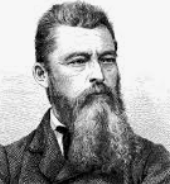
We have busied ourselves and contented ourselves long enough with speaking and writing; now at last we demand that the word become flesh, the spirit matter; we are as sick of political as we are of philosophical idealism; we are determined to become political materialists.
▼
Source
source
Lecture I, Occasion and Context
1 month 2 weeks ago
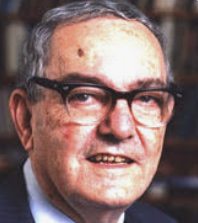
We need to augment and amend the existing body of classical and neoclassical economic theory to achieve a more realistic picture of economic process.
▼
Source
source
Herbert A. Simon (1986) in Preface to: Gilad & Kaish (eds.), Handbook of Behavioral Economics, p. xvi.
2 months 3 weeks ago
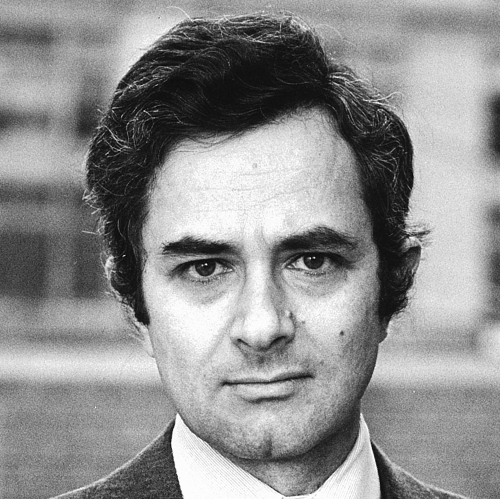
Ethics increases the range of what it is about ourselves that we can will-extending it from our actions to the motives and character traits and dispositions from which they arise. We want to be able to will the sources of our actions down to the very bottom.
▼
Source
source
p. 135.

2 months 2 weeks ago
He is worst of all, that is malicious against his friends.
1 month 3 days ago
TV is not good at covering single events. It needs a ritual, a rhythm, and a pattern...[TV] tends to fosters patterns rather than events.

1 week 6 days ago
The core of the belief in progress is that human values and goals converge in parallel with our increasing knowledge. The twentieth century shows the contrary. Human beings use the power of scientific knowledge to assert and defend the values and goals they already have. New technologies can be used to alleviate suffering and enhance freedom. They can, and will, also be used to wage war and strengthen tyranny. Science made possible the technologies that powered the industrial revolution. In the twentieth century, these technologies were used to implement state terror and genocide on an unprecedented scale. Ethics and politics do not advance in line with the growth of knowledge - not even in the long run.
▼
Source
source
"Joseph Conrad, Our Contemporary," from Heresies: Against Progress and Other Illusions

3 months 1 week ago
Good and strong will. Mechanism must precede science (learning). Also in morals and religion? Too much discipline makes one narrow and kills proficiency. Politeness belongs, not to discipline, but to polish, and thus comes last.
▼
Source
source
Part III : Selection on Education from Kant's other Writings, Ch. I Pedagogical Fragments, # 9
1 month 2 weeks ago
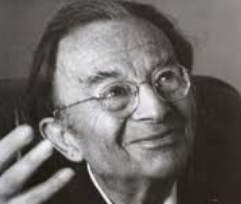
One cannot be deeply responsive to the world without being saddened very often.
▼
Source
source
ABC TV
2 months 6 days ago
There was a time when religion was kept secret from popular belief within the mystery cults like a holy fire, sharing a common sanctuary with philosophy. The legends of antiquity name the earliest philosophers as the originators of these mystery cults, from which the most enlightened among the later philosophers, notably Plato, liked to educe their divine teachings. At that time philosophers still had the courage and the right to discuss the singly great themes, the only ones worthy of philosophizing and rising above common knowledge.
▼
Source
source
P. 7

3 months 1 week ago
Obscenity is whatever happens to shock some elderly and ignorant magistrate.
▼
Source
source
Quoted in Look (New York, 23 February 1954). Cf. Russell (1928), Sceptical Essays
1 month 2 weeks ago
The American who first discovered Columbus made a bad discovery.
▼
Source
source
G 42

3 weeks ago
Mr. Darwin's hypothesis is not, so far as I am aware, inconsistent with any known biological fact; on the contrary, if admitted, the facts of Development, of Comparative Anatomy, of Geographical Distribution, and of Palaeontology, become connected together, and exhibit a meaning such as they never possessed before; and I, for one, am fully convinced that if not precisely true, that hypothesis is as near an approximation to the truth as, for example, the Copernican hypothesis was to the true theory of the planetary motions.
▼
Source
source
Ch.2, p. 127
2 months 2 days ago
The wrinkles of a nation are as visible as those of an individual.

3 months 3 weeks ago
The greatness of the human being consists in this: that it is capable of the universe.
▼
Source
source
q. 1, art. 2, ad 4
1 month 4 weeks ago
Suffer it to be so now: for thus it becometh us to fulfil all righteousness.
▼
Source
source
3:15 (KJV) Said to John the Baptist.

2 months 2 days ago
Even if the whole world were to fall to pieces, the unity of the psyche would never be shattered. And the wider and more numerous the fissures on the surface, the more the unity is strengthened in the depths.
▼
Source
source
Civilization in Transition
2 months 1 day ago
For the first time in the revolutionary movement of 1848, for the first time since 1793, a nation surrounded by superior counter-revolutionary forces dares to counter the cowardly counter-revolutionary fury by revolutionary passion, the terreur blanche by the terreur rouge. For the first time after a long period we meet with a truly revolutionary figure, a man who in the name of his people dares to accept the challenge of a desperate struggle, who for his nation is Danton and Carnot in one person - Lajos Kossuth.
▼
Source
source
The Magyar Struggle in Neue Rheinische Zeitung (13 January 1849).
3 months 5 days ago
To shoot down a European is to kill two birds with one stone, to destroy an oppressor and the man he oppresses at the same time.
▼
Source
source
From the introduction to The Wretched of the Earth by Frantz Fanon.
3 months 1 week ago
If there were in the world today any large number of people who desired their own happiness more than they desired the unhappiness of others, we could have a paradise in a few years.
▼
Source
source
As quoted in Think, Vol. 27 (1961), p. 32



3 months 1 week ago
By Natura naturans we must understand what is in itself and is conceived through itself, or such attributes of substance as express an eternal and infinite essence, that is ... God, insofar as he is considered as a free cause. But by Natura naturata I understand whatever follows from the necessity of God's nature, or from God's attributes, that is, all the modes of God's attributes insofar as they are considered as things which are in God, and can neither be nor be conceived without God.
▼
Source
source
Part I, Prop. XXIX, Scholium, trans: Edwin Curley, London: Penguin, 1996

3 months 1 week ago
In particular, at this point also urge governing authorities and parents to rule well and to send their children to school. Point out how they are obliged to do so and what a damnable sin they commit if they do not, for thereby, as the worst enemies of God and humanity, they overthrow and lay waste both the kingdom of God and the kingdom of the world. Explain very clearly what kind of horrible damage they do when they do not help to train children as pastors, preachers, civil servants, etc., and tell them that God will punish them dreadfully for this. For in our day and age it is necessary to preach about these things. The extent to which parents and governing authorities are now sinning in these matters defies description. The devil, too, intends to do something horrible in all this.
▼
Source
source
Foreword to the small catechismus, as quoted in the Preface, The Book of Concord: The Confessions of the Evangelical Lutheran Church (2000) by Robert Kolb and Timothy J. Wengert, p. 19
CivilSimian.com created by AxiomaticPanic, CivilSimian, Kalokagathia