


2 months 2 weeks ago
The ideal form for a poem, essay, or fiction, is that which the ideal writer would evolve spontaneously. One in whom the powers of expression fully responded to the state of feeling, would unconsciously use that variety in the mode of presenting his thoughts, which Art demands.
▼
Source
source
Pt. II, sec. 4, "The Ideal Writer"
2 months 2 weeks ago
Opinion is ultimately determined by the feelings, and not by the intellect.
▼
Source
source
Pt. IV, Ch. 30 : General Considerations
3 months 2 weeks ago
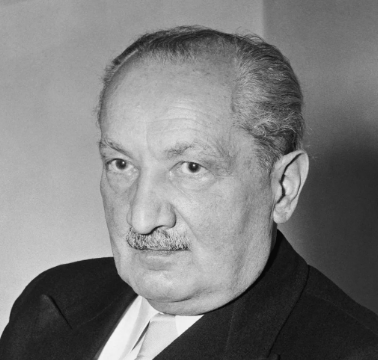
In everything well known something worthy of thought still lurks.
▼
Source
source
p. xxxix

3 months 2 weeks ago
What does not exist must be something, or it would be meaningless to deny its existence; and hence we need the concept of being, as that which belongs even to the non-existent.
▼
Source
source
Principles of Mathematics (1903), p. 450

3 months 2 weeks ago
Everything great glitters, glitter begets ambition, and ambition can easily have caused the inspiration or what we thought to be inspiration. But reason can no longer restrain one who is lured by the fury of ambition. He tumbles where his vehement drive calls him; no longer does he choose his position, but rather chance and luster determine it.

3 months 2 weeks ago
It seems to me that, in every culture, I come across a chapter headed Wisdom. And then I know exactly what is going to follow: Vanity of vanities, all is vanity.
▼
Source
source
Conversation of 1934

2 months 2 weeks ago
What can be said, lacks reality. Only what fails to make its way into words exists and counts.
2 months 2 weeks ago
I was walking late one night along a tree-lined path; a chestnut fell at my feet. The noise it made as it burst, the resonance it provoked in me, and an upheaval out of all proportion to this insignificant event thrust me into miracle, into the rapture of the definitive, as if there were no more questions - only answers. I was drunk on a thousand unexpected discoveries, none of which I could make use of. This is how I nearly reached the Supreme. But instead I went on with my walk.

4 months 2 weeks ago
It is the duty of the human understanding to understand that there are things which it cannot understand, and what those things are. Human understanding has vulgarly occupied itself with nothing but understanding, but if it would only take the trouble to understand itself at the same time it would simply have to posit the paradox.
3 months 2 weeks ago
Philosophy, if it cannot answer so many questions as we could wish, has at least the power of asking questions which increase the interest of the world, and show the strangeness and wonder lying just below the surface even in the commonest things of daily life.
3 months 2 weeks ago
A circuit performed by a capital and meant to be a periodical process, not an individual act, is called its turnover. The duration of this turnover is determined by the sum of its time of production and its time of circulation.
▼
Source
source
Volume II, Ch. VII, p. 158.

3 months 4 weeks ago
A constant element of enjoyment must be mingled with our studies, so that we think of learning as a game rather than a form of drudgery, for no activity can be continued for long if it does not to some extent afford pleasure to the participant.
▼
Source
source
Letter to Christian Northoff (1497), as translated in Collected Works of Erasmus (1974), p. 114

4 months 3 weeks ago
Whereas the man of action binds his life to reason and its concepts so that he will not be swept away and lost, the scientific investigator builds his hut right next to the tower of science so that he will be able to work on it and to find shelter for himself beneath those bulwarks which presently exist. And he requires shelter, for there are frightful powers which continuously break in upon him, powers which oppose scientific "truth" with completely different kinds of "truths" which bear on their shields the most varied sorts of emblems.

3 months 3 weeks ago
Our stubbornness is right, because we want to preserve the liberty which we have in Christ. Only by preserving our liberty shall we be able to retain the truth of the Gospel inviolate.
▼
Source
source
Chapter 2

3 months 2 weeks ago
A man builds a fine house; and now he has a master, and a task for life: he is to furnish, watch, show it, and keep it in repair, the rest of his days.
▼
Source
source
Works and Days
1 week 5 days ago
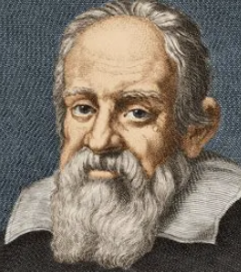
If what we are discussing were a point of law or of the humanities, in which neither true nor false exists, one might trust in subtlety of mind and readiness of tongue and in the greater experience of the writers, and expect him who excelled in those things to make his reasoning most plausible, and one might judge it to be the best. But in the natural sciences, whose conclusions are true and necessary and have nothing to do with human will, one must take care not to place oneself in the defense of error; for here a thousand Demostheneses and a thousand Aristotles would be left in the lurch by every mediocre wit who happened to hit upon the truth for himself. Therefore, Simplicio, give up this idea and this hope of yours that there may be men so much more learned, erudite, and well-read than the rest of us as to be able to make that which is false become true in defiance of nature.
▼
Source
source
Salviati, p. 61
4 months 2 weeks ago
He was extremely important to his contemporaries, who wanted nothing more than to see in him the Expected One; they wanted almost to press it upon him and and to force him into the role - but that he then refuses to be that!
2 months 4 days ago
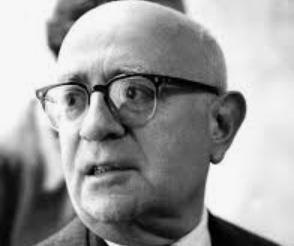
Even the most insensitive hit song enthusiast cannot always escape the feeling that the child with a sweet tooth comes to know in the candy store.
▼
Source
source
p. 290

2 months 3 weeks ago
Shakespeare's fault is not the greatest into which a poet may fall. It merely indicates a deficiency of taste.
4 months 2 weeks ago
Throughout history there have been peasant rebellions which have followed always the same course. Blindly, the peasants sacked and destroyed, and when members of the "upper classes" fell into their hands, they killed ruthlessly and cruelly, for never in their lives had they been taught gentleness and mercy by those now in their power.
3 months 2 weeks ago
My first advice (on how not to grow old) would be to choose you ancestors carefully. Although both my parents died young, I have done well in this respect as regards my other ancestors. My maternal grandfather, it is true, was cut off in the flower of his youth, at the age of sixty-seven, but my other three grandparents all lived to be over eighty. Of remoter ancestors I can only discover one who did not live to a great age, and he died of a disease which is now rare, namely, having his head cut off.
▼
Source
source
p. 50
4 months 1 week ago
It pertains to all men to know themselves and to learn self-control.

3 months 2 weeks ago
Romeo wants Juliet as the filings want the magnet; and if no obstacles intervene he moves towards her by as straight a line as they. But Romeo and Juliet, if a wall be built between them, do not remain idiotically pressing their faces against its opposite sides like the magnet and the filings with the card. Romeo soon finds a circuitous way, by scaling the wall or otherwise, of touching Juliet's lips directly. With the filings the path is fixed; whether it reaches the end depends on accidents. With the lover it is the end which is fixed, the path may be modified indefinitely.
▼
Source
source
Ch. 1 : The Scope of Psychology
2 months 2 weeks ago
Aging people should know that their lives are not mounting and unfolding but that an inexorable inner process forces the contraction of life. For a young person it is almost a sin - and certainly a danger - to be too much occupied with himself; but for the aging person it is a duty and a necessity to give serious attention to himself.
▼
Source
source
p. 125

3 months 2 weeks ago
Being in love is a good thing, but it is not the best thing. There are many things below it, but there are also things above it. You cannot make it the basis of a whole life. It is a noble feeling, but it is still a feeling... Knowledge can last, principles can last, habits can last; but feelings come and go... But, of course, ceasing to be "in love" need not mean ceasing to love. Love in this second sense-love as distinct from "being in love"-is not merely a feeling. It is a deep unity, maintained by the will and deliberately strengthened by habit; reinforced by (in Christian marriages) the grace which both partners ask, and receive, from God... "Being in love" first moved them to promise fidelity: this quieter love enables them to keep the promise. It is on this love that the engine of marriage is run: being in love was the explosion that started it.
▼
Source
source
Book III, Chapter 6, "Christian Marriage"

3 months 3 weeks ago
You're either excluding the right people or including the wrong people.
▼
Source
source
ComfortDragon

2 months 2 weeks ago
The law of habit exhibits a striking contrast to all physical laws in the character of its commands. A physical law is absolute. What it requires is an exact relation. Thus, a physical force introduces into a motion a component motion to be combined with the rest by the parallelogram of forces; but the component motion must actually take place exactly as required by the law of force. On the other hand, no exact conformity is required by the mental law. Nay, exact conformity would be in downright conflict with the law ; since it would instantly crystallise thought and prevent all further formation of habit. The law of mind only makes a given feeling more likely to arise. It thus resembles the "non-conservative" forces of physics, such as viscosity and the like, which are due to statistical uniformities in the chance encounters of trillions of molecules.

3 months 3 weeks ago
Physicians have this advantage: the sun lights their success and the earth covers their failures.
▼
Source
source
Ch. 37
4 months 3 days ago
These reasonings are unconnected: "I am richer than you, therefore I am better"; "I am more eloquent than you, therefore I am better." The connection is rather this: "I am richer than you, therefore my property is greater than yours;" "I am more eloquent than you, therefore my style is better than yours." But you, after all, are neither property nor style.
▼
Source
source
(44).

3 months 2 weeks ago
Money is not required to buy one necessity of the soul.
▼
Source
source
p. 370
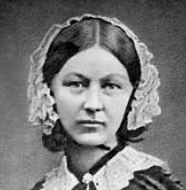
2 months ago
Can the "word" be pinned down to either one period or one church? All churches are, of course, only more or less unsuccessful attempts to represent the unseen to the mind.
▼
Source
source
Letter quoted in Florence Nightingale in Rome : Letters Written by Florence Nightingale in Rome in the Winter of 1847-1848 (1981)
2 months 2 weeks ago
It is sometimes difficult to avoid the impression that there is a sort of foreknowledge of the coming series of events.
▼
Source
source
p. 94
2 months 3 weeks ago
To attempt the destruction of our passions is the height of folly. What a noble aim is that of the zealot who tortures himself like a madman in order to desire nothing, love nothing, feel nothing, and who, if he succeeded, would end up a complete monster!
▼
Source
source
Ch. 5, as quoted in Selected Writings (1966) edited by Lester G. Crocker
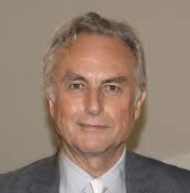
1 month 2 weeks ago
The likelihood is that, in 100,000 years time, we shall either have reverted to wild barbarism, or else civilisation will have advanced beyond all recognition - into colonies in outer space, for instance. In either case, evolutionary extrapolations from present conditions are likely to be highly misleading.
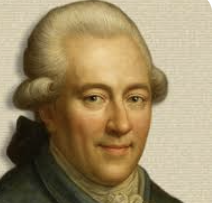
1 month 4 weeks ago
If all else fails, the character of a man can be recognized by nothing so surely as by a jest which he takes badly. K 46 Variant translation: A person reveals his character by nothing so clearly as the joke he resents.
1 month 4 weeks ago
It is a question whether, when we break a murderer on the wheel, we do not fall into the error a child makes when it hits the chair it has bumped into.
▼
Source
source
J 146
2 months 2 weeks ago
The idea does not belong to the soul; it is the soul that belongs to the idea.
▼
Source
source
Vol. I, par. 216

1 week 2 days ago
Behold therefore, this England of the Year 1200 was no chimerical vacuity or dreamland, peopled with mere vaporous Fantasms, Rymer's Foedera, and Doctrines of the Constitution, but a green solid place, that grew corn and several other things. The Sun shone on it; the vicissitude of seasons and human fortunes. Cloth was woven and worn; ditches were dug, furrowfields ploughed, and houses built. Day by day all men and cattle rose to labour, and night by night returned home weary to their several lairs. In wondrous Dualism, then as now, lived nations of breathing men; alternating, in all ways, between Light and Dark; between joy and sorrow, between rest and toil, between hope, hope reaching high as Heaven, and fear deep as very Hell. Not vapour Fantasms, Rymer's Foedera at all!
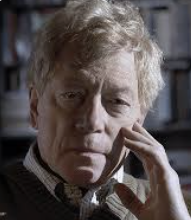
1 month 1 week ago
In discussing tradition, we are not discussing arbitrary rules and conventions. We are discussing answers that have been discovered to enduring questions.
▼
Source
source
(p. 21)
2 months 1 week ago
Man is a substantial emigrant on a pilgrimage of being, and it is accordingly meaningless to set limits to what he is capable of being.
▼
Source
source
"Man has no nature"
4 months 2 weeks ago
Junz found revulsion growing strong within him. A planet full of people meant nothing against the dictates of economic necessity!
4 months 6 days ago
The greatest states have been overthrown by the young and sustained and restored by the old. ... Rashness is the product of the budding-time of youth, prudence of the harvest-time of age.
▼
Source
source
section 20
2 months 2 weeks ago
We Shall Naturally look round in vain the macrophysical world for acausal events, for the simple reason that we cannot imagine events that are connected non-causally and are capable of a non-causal explanation. But that does not mean that such events do not exist... The so-called "scientific view of the world" based on this can hardly be anything more than a psychologically biased partial view which misses out all those by no means unimportant aspects that cannot be grasped statistically.
▼
Source
source
p. 5
3 months 2 weeks ago
A logical theory may be tested by its capacity for dealing with puzzles, and it is a wholesome plan, in thinking about logic, to stock the mind with as many puzzles as possible, since these serve much the same purpose as is served by experiments in physical science.
▼
Source
source
"On Denoting", Mind, Vol. 14, No. 56 (October 1905), pp. 479-493; as reprinted in Logic and Knowledge: Essays, 1901-1950, 1956
2 months 1 week ago
Whoever abhors the name and fancies that he is godless - when he addresses with his whole devoted being the Thou of his life that cannot be restricted by any other, he addresses God.
1 week 2 days ago
By now it may be clear that the position I'm developing is a sort of post-Darwinian Kantianism.
▼
Source
source
p. 104; from "The Road since Structure"
2 months 4 days ago
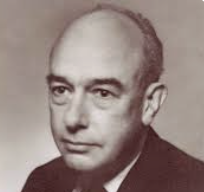
Modern empiricism has been conditioned in large part by two dogmas. One is a belief in some fundamental cleavage between truths which are analytic, or grounded in meanings independently of matters of fact, and truths which are synthetic, or grounded in fact. The other dogma is reductionism: the belief that each meaningful statement is equivalent to some logical construct upon terms which refer to immediate experience. Both dogmas, I shall argue, are ill-founded. One effect of abandoning them is, as we shall see, a blurring of the supposed boundary between speculative metaphysics and natural science. Another effect is a shift toward pragmatism.
▼
Source
source
"Two dogmas of Empiricism"

3 months 2 weeks ago
The Communist Party has one objective: the creation of a socialist economy; and one means: the utilization of the class struggle.
▼
Source
source
Hugo, Act 5, sc. 3
3 months 2 weeks ago
In place of the bourgeois society, with its classes and class antagonisms, shall we have an association, in which the free development of each is the condition for the free development of all.
▼
Source
source
Section 2, paragraph 72 (last paragraph).
CivilSimian.com created by AxiomaticPanic, CivilSimian, Kalokagathia