


3 months 1 week ago
I exist, that is all, and I find it nauseating.
3 months 1 week ago
I, for my part, do not conceive an act as having causes, and I consider myself satisfied when I have found in it not its 'factors' but the general themes which it organizes: for our decisions gather into new syntheses and on new occasions the leitmotif that governs our life
▼
Source
source
p. 461

1 month 1 week ago
Violence, whether spiritual or physical, is a quest for identity and the meaningful.
▼
Source
source
The less identity, the more violence. "Violence in the media." Canadian Forum. Volume 56, 1976, p. 9
2 months 6 days ago
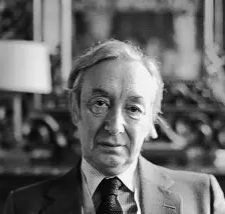
To make our position clearer, we may formulate it in another way. Let us call a proposition which records an actual or possible observation an experiential proposition. Then we may say that it is the mark of a genuine factual proposition, not that it should be equivalent to an experiential proposition, or any finite number of experiential propositions, but simply that some experiential propositions can be deduced from it in conjunction with certain other premises without being deducible from those other premises alone.
▼
Source
source
p. 20.
1 week 6 days ago
Whatever arises from a just situation by just steps is itself just.
▼
Source
source
Ch. 7 : Distributive Justice, Section I, The Entitlement Theory, p. 151

1 month 3 weeks ago
During his lifetime Gurdjieff did not publish any books on the techniques of his teaching, and his pupils were bound to secrecy on the subject. Since his death in Paris in 1949, however, many of his works have been published, and there has been a flood of memoirs by disciples and admirers. Gurdjieff was in almost ever respect the antithesis of Aleister Crowley. Whereas Crowley craved publicity, Gurdjieff shunned it. Crowley was forgotten for two decades after his death; Gurdjieff on the contrary, has become steadily better known, and his influence continues to grow. One of the main reasons for this is that there was so little of the charlatan about him. He is no cult figure with hordes of gullible disciples. What he has to teach makes an appeal to the intelligence, and can be fully understood only by those who are prepared to make a serious effort.

2 months 5 days ago
I thought that the only action a man could perform without shame was to take his life; that he had no right to diminish himself in the succession of days and the inertic of misery. No elect, I kept telling myself, but those who committed suicide.
2 months 5 days ago
No one should forget: Eros alone can fulfill life; knowledge, never. Only Eros makes sense; knowledge is empty infinity; - for thoughts, there is always time; life has its time; there is no thought that comes too late; any desire can become a regret.
4 months 1 week ago
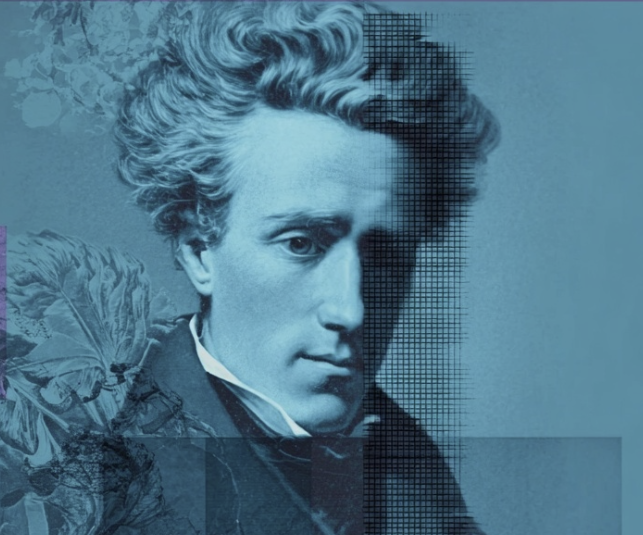
Someone in despair despairs over something. So, for a moment, it seems, but only for a moment. That same instant the true despair shows itself, or despair in its true guise. In despairing over something he was really despairing over himself, and he wants now to be rid of himself.

3 months 1 week ago
To love at all is to be vulnerable. Love anything, and your heart will certainly be wrung and possibly be broken. If you want to make sure of keeping it intact, you must give your heart to no one, not even to an animal. Wrap it carefully round with hobbies and little luxuries; avoid all entanglements; lock it up safe in the casket or coffin of your selfishness. But in that casket - safe, dark, motionless, airless - it will change. It will not be broken; it will become unbreakable, impenetrable, irredeemable. The alternative to tragedy, or at least to the risk of tragedy, is damnation. The only place outside of Heaven where you can be perfectly safe from all the dangers and perturbations of love is Hell.
4 months 1 week ago
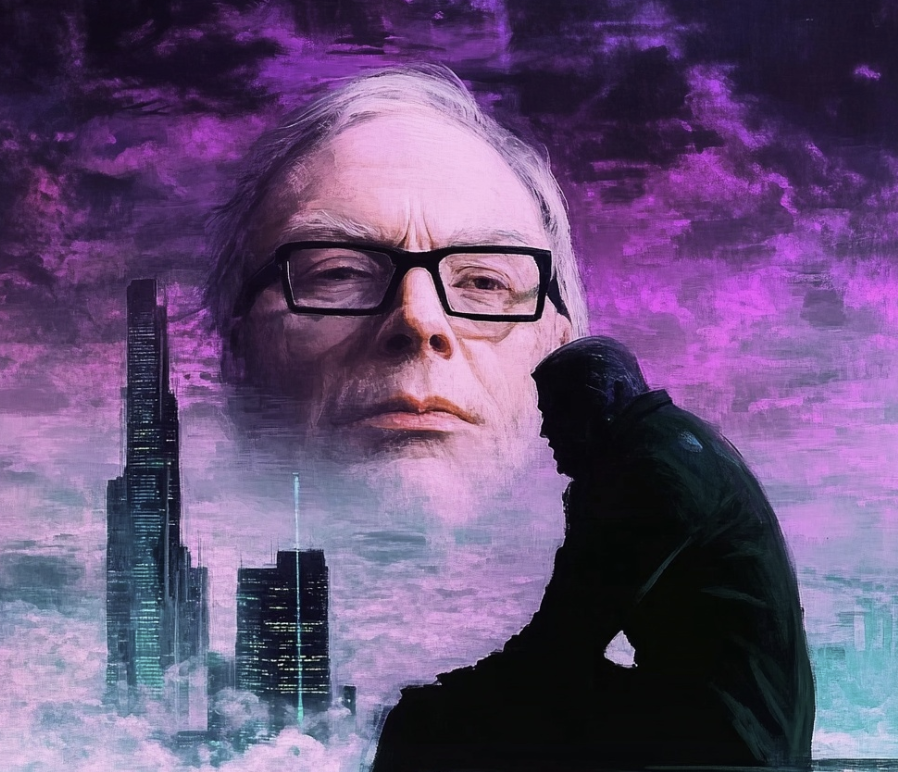
Throughout history there have been peasant rebellions which have followed always the same course. Blindly, the peasants sacked and destroyed, and when members of the "upper classes" fell into their hands, they killed ruthlessly and cruelly, for never in their lives had they been taught gentleness and mercy by those now in their power.
1 month 3 weeks ago
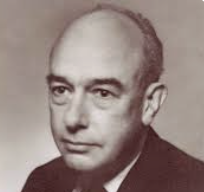
Creatures inveterately wrong in their inductions have a pathetic but praiseworthy tendency to die before reproducing their kind.
▼
Source
source
"Natural Kinds", in Ontological Relativity and Other Essays (1969), p. 126
3 weeks 4 days ago
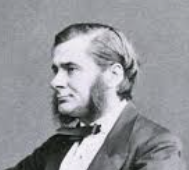
The foundation of morality is to have done, once and for all, with lying; to give up pretending to believe that for which there is no evidence, and repeating unintelligible propositions about things beyond the possibilities of knowledge.
▼
Source
source
Science and Morals

2 months 1 week ago
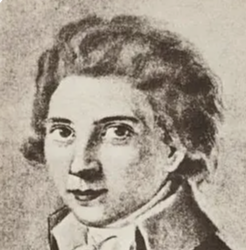
The mind understands something only insofar as it absorbs it like a seed into itself, nurtures it, and lets it grow into blossom and fruit. Therefore scatter holy seeds into the soil of the spirit.
▼
Source
source
"Ideas," Lucinde and the Fragments, P. Firchow, trans. (1991), § 5

3 months 1 week ago
As for 'taking sides' - the choice, it seems to me, is no longer between two users of violence, two systems of dictatorship. Violence and dictatorship cannot produce peace and liberty; they can only produce the results of violence and dictatorship, results with which history has made us only too sickeningly familiar. The choice now is between militarism and pacifism. To me, the necessity of pacifism seems absolutely clear.
▼
Source
source
Authors Take Sides on the Spanish War (1937) edited by Nancy Cunard and published by the Left Review

2 months 2 days ago
Go into the city to such a man, and say unto him, The Master saith, My time is at hand; I will keep the passover at thy house with my disciples.
▼
Source
source
26:18 (KJV)

2 months 2 weeks ago
They call, in fact, for the forfeiture, to a greater or less degree, of human liberty, to the point where, were I to attempt to sum up what socialism is, I would say that it was simply a new system of serfdom.
▼
Source
source
Notes for a Speech on Socialism (1848). http://oll.libertyfund.org/pages/tocqueville-s-critique-of-socialism-1848
2 months 6 days ago
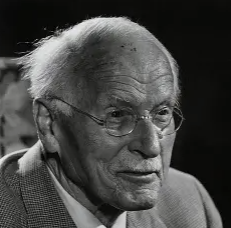
The whole nature of man presupposes woman, both physically and spiritually. His system is tuned into woman from the start, just as it is prepared for a quite definite world where there is water, light, air, salt, carbohydrates etc.
▼
Source
source
"Two Essays in Analytical Psychology" In CW 7: P. 188

3 months 1 week ago
A life without adventure is likely to be unsatisfying, but a life in which adventure is allowed to take whatever form it will is sure to be short.
▼
Source
source
Authority and the Individual, 1949
4 months 1 week ago
For some identify happiness with virtue, some with practical wisdom, others with a kind of philosophic wisdom, others with these, or one of these, accompanied by pleasure or not without pleasure; while others include also external prosperity. Now ... it is not probable that these should be entirely mistaken, but rather that they should be right in at least some one respect or even in most respects.

2 months 1 week ago
It is impossible for any man, when the most favourable circumstances concur, to acquire sufficient knowledge and strength of mind to discharge the duties of a king, entrusted with uncontrolled power; how then must they be violated when his very elevation is an insuperable bar to the attainment of either wisdom or virtue; when all the feelings of a man are stifled by flattery, and reflection shut out by pleasure! Surely it is madness to make the fate of thousands depend on the caprice of a weak fellow creature, whose very station sinks him NECESSARILY below the meanest of his subjects! But one power should not be thrown down to exalt another--for all power intoxicates weak man; and its abuse proves, that the more equality there is established among men, the more virtue and happiness will reign in society.
▼
Source
source
Ch. 1
3 months 1 week ago
The question here is not, "How conscience ought to be guided? For Conscience is its own General and Leader; it is therefore enough that each man have one. What we want to know is, how conscience can be her own Ariadne, and disentangle herself from the mazes even of the most raveled and complicated casuistical theology. Here is an ethical proposition that stands in need of no proof: No Action May At Any Time Be Hazarded On The Uncertainty That Perchance It May Not Be Wrong (Quod dubitas, ne feceris! Pliny - which you doubt, then neither do) Hence the Consciousness, that Any Action I am about to perform is Right, is in itself a most immediate and imperative duty. What actions are right, - what wrong - is a matter for the understanding, not for conscience.
▼
Source
source
p. 251 Book IV, Part 2, Section 4

1 month 3 weeks ago
To know something is to make this something that I know myself; but to avail myself of it, to dominate it, it has to remain distinct from myself.

2 months 4 weeks ago
I would rather discover one cause than gain the kingdom of Persia.
▼
Source
source
Freeman (1948), p. 155
1 month 3 weeks ago
History is full of religious wars; but, we must take care to observe, it was not the multiplicity of religions that produced these wars, it was the intolerating spirit which animated that one which thought she had the power of governing.
▼
Source
source
No. 65. (Usbek writing to his wives)

3 months 1 week ago
To be ignorant of the past is to remain a child.
▼
Source
source
Cicero

2 months 1 week ago
A great revolution is on the point of being accomplished. It is a revolution not in human affairs, but in man himself.
▼
Source
source
p. 2
2 weeks 4 days ago
My own sense of how to behave in a simulation has more traditional roots in the theory of perception. I've long believed that each of us lives in an egocentric simulation of the world run by the mind/brain. Since the zombies of each (waking) simulation have sentient real world counterparts, one should treat them as though they were real. Nonetheless as an angst-ridden teenager, my dawning acceptance of an inferential realist theory of perception made me feel as if I'd been condemned to solitary confinement for life. The sense of loneliness was indescribable. Naïve realism is better for one's mental health.
▼
Source
source
Origins and Theory of the World Transhumanist Association, Institute for Ethics and Emerging Technologies, 26 Dec. 2007

4 months 6 days ago
To two men living the same number of years, the world always provides the same sum of experiences. It is up to us to be conscious of them.

3 months 3 weeks ago
For it still seemed to me that it is not we who sin, but some other nature sinned in us. And it gratified my pride to be beyond blame, and when I did anything wrong not to have to confess that I had done wrong. I loved to excuse my soul and to accuse something else inside me (I knew not what) but which was not I. But, assuredly, it was I, and it was my impiety that had divided me against myself. That sin then was all the more incurable because I did not deem myself a sinner.
▼
Source
source
A. Outler, trans. (Dover: 2002), Book 5, Chapter 10, p. 77

3 months 1 week ago
I say, then, that belief is nothing but a more vivid, lively, forcible, firm, steady conception of an object, than what the imagination alone is ever able to attain.
▼
Source
source
§ 4.9

1 month 3 weeks ago
I believe government, organized authority, or the State is necessary only to maintain or protect property and monopoly. It has proven efficient in that function only. As a promoter of individual liberty, human well-being and social harmony, which alone constitute real order, government stands condemned by all the great men of the world...I believe - indeed, I know - that whatever is fine and beautiful in the human expresses and asserts itself in spite of government, and not because of it.
3 months 1 week ago
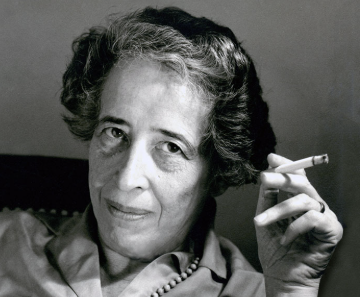
The Nazis were 'convinced that evil-doing in our time has a morbid force of attraction,' Bolshevik assurances inside and outside Russia that they do not recognize ordinary moral standards have become a mainstay of Communist propaganda, and experience has proven time and again that the propaganda value of evil deeds and general contempt for moral standards is independent of mere self-interest, supposedly the most powerful psychological factor in politics.
▼
Source
source
Part 3, Ch. 10
3 months 1 week ago
And why should man, added he, pretend to an exemption from the lot of all other animals? The whole earth, believe me, PHILO, is cursed and polluted. A perpetual war is kindled amongst all living creatures. Necessity, hunger, want, stimulate the strong and courageous: Fear, anxiety, terror, agitate the weak and infirm. The first entrance into life gives anguish to the new-born infant and to its wretched parent: Weakness, impotence, distress, attend each stage of that life: and it is at last finished in agony and horror.
▼
Source
source
Demea to Philo, Part X
2 months 2 weeks ago
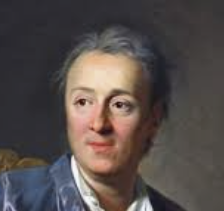
We are constantly railing against the passions; we ascribe to them all of man's afflictions, and we forget that they are also the source of all his pleasures ... But what provokes me is that only their adverse side is considered ... and yet only passions, and great passions, can raise the soul to great things. Without them there is no sublimity, either in morals or in creativity. Art returns to infancy, and virtue becomes small-minded.
▼
Source
source
As translated in Diderot (1977) by Otis Fellows, p. 39
3 months 1 week ago
Ignorance is not a simple lack of knowledge but an active aversion to knowledge, the refusal to know, issuing from cowardice, pride or laziness of mind.
▼
Source
source
Principle attributed to Popper by Ryszard Kapiscinski in New York Times obituary, 1995.
2 months 1 week ago
Boldness formerly was not the character of Atheists as such. ... But of late they are grown active, designing, turbulent, and seditious.
▼
Source
source
"Thoughts on French Affairs" (December 1791), in Three Memorials on French Affairs (1797), p. 53
2 weeks 5 days ago
It is better to live under a tree in a jungle inhabited by tigers and elephants, to maintain oneself in such a place with ripe fruits and spring water, to lie down on grass and to wear the ragged barks of trees than to live amongst one's relations when reduced to poverty.

3 months 1 week ago
What potent blood hath modest May!
▼
Source
source
May-Day

2 months 2 weeks ago
That Vulcan gave arrows unto Apollo and Diana the fourth day after their Nativities, according to Gentile Theology, may pass for no blind apprehension of the Creation of the Sun and Moon, in the work of the fourth day.
▼
Source
source
Opening lines of Ch. 1
1 month 3 weeks ago
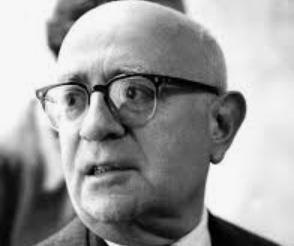
If philosophy is still necessary, it is so only in the way it has been from time immemorial: as critique, as resistance to the expanding heteronomy, even if only as thought's powerless attempt to remain its own master and to convict of untruth, by their own criteria, both a fabricated mythology and a conniving, resigned acquiescence. ... It is incumbent upon philosophy ... to provide a refuge for freedom. Not that there is any hope that it could break the political tendencies that are throttling freedom throughout the world both from within and without and whose violence permeates the very fabric of philosophical argumentation.
▼
Source
source
p. 10

1 month 2 weeks ago
There's no objective morality, but that's not the real point. It's not the point that morality has to somehow be a stone, or something that can be touched.
The options that are available to choose are determined to a point, and this is the objective aspect of morality, ethics, goodness, fairness, justice.
The subjective aspect can still remain subjective, but that doesn't mean goodness is relative.....at all. The measure of a man is a man.
1 month 3 weeks ago
Your own philosophy condemns you and supports us.
▼
Source
source
Salbatore Mitxelena (1958): Unamuno eta Abendats, Baiona: Darracq
3 months 2 weeks ago
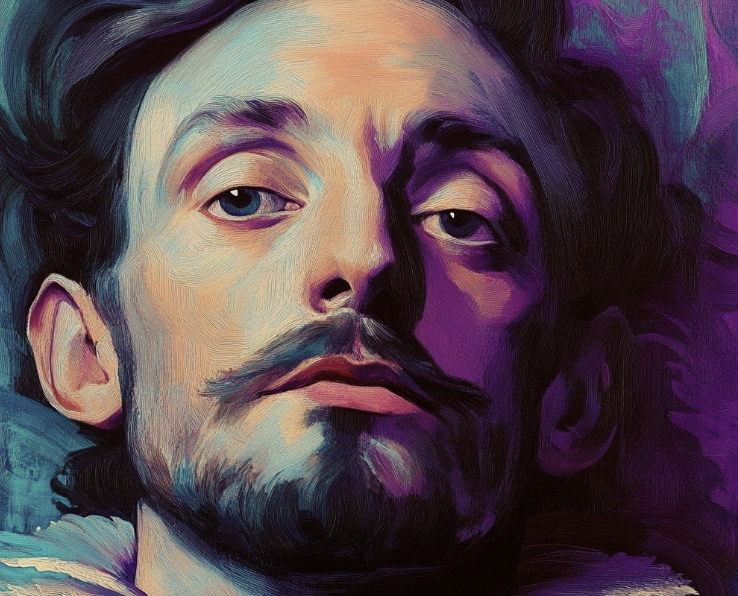
Alonso of Aragon was wont to say in commendation of age, that age appears to be best in four things - old wood best to burn, old wine to drink, old friends to trust, and old authors to read.
▼
Source
source
No. 97
1 month 1 week ago
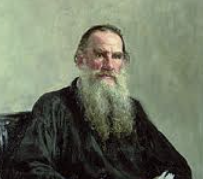
By words one transmits thoughts to another, by means of art, one transmits feelings.
2 months 3 weeks ago
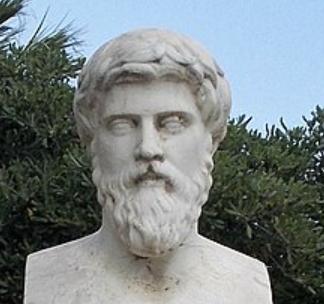
After the battle in Pharsalia, when Pompey was fled, one Nonius said they had seven eagles left still, and advised to try what they would do. "Your advice," said Cicero, "were good if we were to fight jackdaws."
▼
Source
source
Cicero
2 months 2 days ago
Get thee hence, Satan: for it is written, Thou shalt worship the Lord thy God, and him only shalt thou serve.
▼
Source
source
4:10 (KJV) Said to Satan.
3 months 1 week ago
Several actual worlds without one another are not, therefore, impossible by the very concept, as Wolf hastily concluded from the notion of a complex or multiplicity which he deemed sufficient to a whole, as such, but only on condition that there exist but one necessary cause of all things. If several are admitted, several worlds without one another will be possible in the strictest metaphysical sense.
1 month 2 weeks ago
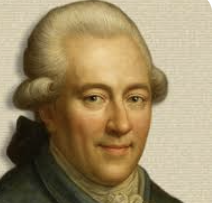
Courage, garrulousness and the mob are on our side. What more do we want?
▼
Source
source
E 32
CivilSimian.com created by AxiomaticPanic, CivilSimian, Kalokagathia