

2 months 6 days ago
The music of the soul is also the music of salesmanship. Exchange value, not truth value counts. On it centers the rationality of the status quo, and all alien rationality is bent to It.
▼
Source
source
p. 57
2 months ago
If I knew of something that could serve my nation but would ruin another, I would not propose it to my prince, for I am first a man and only then a Frenchman, because I am necessarily a man, and only accidentally am I French.
▼
Source
source
I.

3 months 2 weeks ago
Of all evils of war the greatest is the purely spiritual evil: the hatred, the injustice, the repudiation of truth, the artificial conflict.
▼
Source
source
Justice in War-Time (1916), p. 27

3 months 1 week ago
Rhodora! if the sages ask thee why This charm is wasted on the earth and sky, Tell them, dear, that, if eyes were made for seeing, Then beauty is its own excuse for Being.
▼
Source
source
The Rhodora

4 months 1 day ago
The knowledge of anything, since all things have causes, is not acquired or complete unless it is known by its causes. Therefore in medicine we ought to know the causes of sickness and health. And because health and sickness and their causes are sometimes manifest, and sometimes hidden and not to be comprehended except by the study of symptoms, we must also study the symptoms of health and disease. Now it is established in the sciences that no knowledge is acquired save through the study of its causes and beginnings, if it has had causes and beginnings; nor completed except by knowledge of its accidents and accompanying essentials. Of these causes there are four kinds: material, efficient, formal, and final.

3 months 2 weeks ago
This miracle of analysis, this marvel of the world of ideas, an almost amphibian object between Being and Non-being that we call the imaginary number.
▼
Source
source
Quoted in Singularités : individus et relations dans le système de Leibniz (2003) by Christiane Frémont

2 months 1 week ago
We dread the future only when we are not sure we can kill ourselves when we want to.

4 days ago
On the dust of our heroic ancestors we too sit ballot-boxing, saying to one another, It is well, it is well! By inheritance of their noble struggles, we have been permitted to sit slothful so long. By noble toil, not by shallow laughter and vain talk, they made this English Existence from a savage forest into an arable inhabitable field for us; and we, idly dreaming it would grow spontaneous crops forever,-find it now in too questionable a state.
2 months 1 week ago
Every civilized human being, whatever his conscious development, is still an archaic man at the deeper levels of his psyche. Just as the human body connects us with the mammals and displays numerous relics of earlier evolutionary stages going back to even the reptilian age, so the human psyche is likewise a product of evolution which, when followed up to its origins, show countless archaic traits.
▼
Source
source
p. 126
3 months 2 weeks ago
The instinctive foundation of the intellectual life is curiosity, which is found among animals in its elementary forms. Intelligence demands an alert curiosity, but it must be of a certain kind. The sort that leads village neighbours to try to peer through curtains after dark has no very high value. The widespread interest in gossip is inspired, not by a love of knowledge but by malice: no one gossips about other people's secret virtues, but only about their secret vices. Accordingly most gossip is untrue, but care is taken not to verify it. Our neighbour's sins, like the consolations of religion, are so agreeable that we do not stop to scrutinise the evidence closely.
▼
Source
source
On Education, Especially in Early Childhood (1926), Ch. 2: The Aims of Education, p. 50
2 months 6 days ago
As for [...] Of all passions, that which inclineth men least to break the laws is fear.
▼
Source
source
The Second Part, Chapter 27
1 month 2 weeks ago
An utterance can have Intentionality, just as a belief has Intentionality, but whereas the Intentionality of the belief is intrinsic the Intentionality of the utterance is derived.
▼
Source
source
P. 27.

3 months 3 weeks ago
Many have been deceived by outward appearances and have proceeded to write and teach about good works and how they justify without even mentioning faith. ... Wearying themselves with many works, they never come to righteousness.
▼
Source
source
p. 75
3 months 3 weeks ago
I know that a Christian should be humble, but against the Pope I am going to be proud and say to him: "You, Pope, I will not have you for my boss, for I am sure that my doctrine is divine."
▼
Source
source
Chapter 2, Verse 6
3 months 2 weeks ago
Amid the pressure of great events, a general principle gives no help.
3 months 3 days ago
What is to prevent one from telling truth as he laughs, even as teachers sometimes give cookies to children to coax them into learning their A B C?
▼
Source
source
Book I, satire i, line 24 (translation by H. Fairclough)
1 month 1 week ago
Money alone sets all the world in motion.
▼
Source
source
Maxim 656
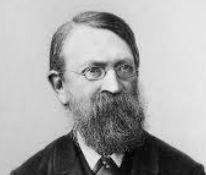
2 months 1 week ago
Personally, people know themselves very poorly.
▼
Source
source
Contributions to the analysis of the sensations (1897), translated by Cora May Williams, published by Open Court Publishing Company, p. 4
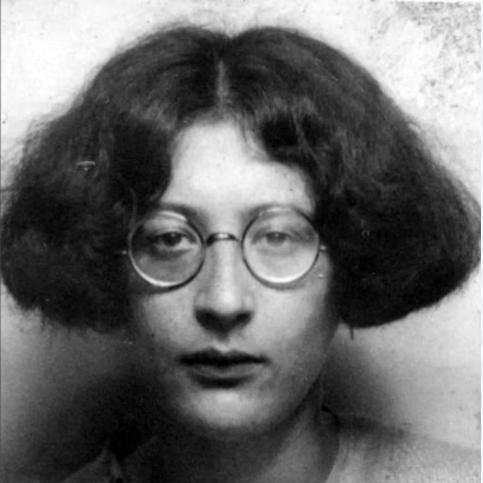
1 month 4 weeks ago
The essential characteristic of the first half of the twentieth century is the growing weakness, and almost the disappearance, of the idea of value.
▼
Source
source
"The responsibility of writers," p. 167
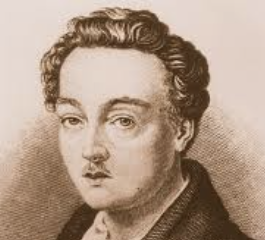
2 months 1 week ago
Freedom and whores are the most cosmopolitan items under the sun. .
▼
Source
source
Act IV
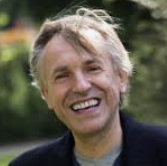
3 weeks 1 day ago
Many city-dwellers have a romanticized conception of the living world. From another perspective, some "conservation biologists" favour e.g. "Pleistocene rewilding". By contrast, I think any truly compassionate person should be horrified at the terrible suffering of Nature "red in tooth and claw". Why not aim for a cruelty-free world instead?
▼
Source
source
"Interview with Pensata Animal", Pensata Animal, 25 Oct. 2009
2 months 1 week ago
Time is heavy sometimes; imagine how heavy eternity must be.


2 months 2 weeks ago
Obstinacy in a bad cause, is but constancy in a good.
▼
Source
source
Section 25

4 months 1 week ago
Autumn is a second Spring when every leaf is a flower.

1 month 4 weeks ago
The notion of rights is linked with the notion of sharing out, of exchange, of measured quantity. It has a commercial flavor, essentially evocative of legal claims and arguments. Rights are always asserted in a tone of contention; and when this tone is adopted, it must rely upon force in the background, or else it will be laughed at.
▼
Source
source
p. 61
3 months 4 weeks ago
Everything has two handles, the one by which it may be carried, the other by which it cannot. If your brother acts unjustly, don't lay hold on the action by the handle of his injustice, for by that it cannot be carried; but by the opposite, that he is your brother, that he was brought up with you; and thus you will lay hold on it, as it is to be carried.
▼
Source
source
(43).

4 months 1 week ago
As you hope to prove your own great value to the state, and having proved it, to attain at once to absolute power, so do I indulge a hope that I shall be the supreme power over you, if I am able to prove my own great value to you. Socrates speaking to Alcibiades
3 months 3 weeks ago
Reason is the greatest enemy that faith has: it never comes to the aid of spiritual things, but--more frequently than not--struggles against the divine Word, treating with contempt all that emanates from God.
▼
Source
source
353
3 months 2 weeks ago
All... good and useful properties of character have a price in exchange for others which have just as much use. Talent has a market price, since the sovereign or estate-owner can use a talented person in all sorts of ways. Temperament has a fancy price,22 since one can converse well with such a person; he is a pleasant companion. But, character has an inner value[,] and it is above all price.
▼
Source
source
Kant, Immanuel (1996), page 203
3 months 1 week ago
We are not necessarily doubting that God will do the best for us; we are wondering how painful the best will turn out to be.
▼
Source
source
Letters of C. S. Lewis (29 April 1959), para. 1, p. 285 - as reported in The Quotable Lewis (1989), p. 469
3 months 3 weeks ago
Lend yourself to others, but give yourself to yourself.
▼
Source
source
Ch. 10. Of Managing the Will
1 month 1 week ago
No longer able to believe in the Church religion, whose falsehood they had detected, and incapable of accepting true Christian teaching, which denounced their whole manner of life, these rich and powerful people, stranded without any religious conception of life, involuntarily returned to that pagan view of things which places life's meaning in personal enjoyment. And then among the upper classes what is called the "Renaissance of science and art" took place, which was really not only a denial of every religion, but also an assertion that religion was unnecessary.
4 months 1 week ago
It would be better for me that multitudes of men should disagree with me rather than that I, being one, should be out of harmony with myself.
5 days ago
In all human affairs, and especially in those that relate to war, ...leave always some room to fortune, and to accidents which cannot be foreseen.
▼
Source
source
The General History, Book II, Ch. 4 (trans. by Hampton)

4 months 1 week ago
Writing is hard work. The fact that I love doing it doesn't make it less hard work. People who love tennis will sweat themselves to exhaustion playing it, and the love of the game doesn't stop the sweating. The casual assumption that writers are unemployed bums because they don't go to the office and don't have a boss is something every writer has to live with. I have never known a writer who hasn't suffered as a result of this, hasn't resented it, and hasn't dreamed of murdering the next person who says "Boy, you've sure got it made. You just sit there and toss off a story or something whenever you feel like it."
3 months 1 week ago
Form displays the relation itself as the state of original comportment toward beings, the festive state in which the being itself in its essence is celebrated and thus for the first time placed in the open.
▼
Source
source
p. 119
3 months 1 week ago
Fine manners need the support of fine manners in others, and this is a gift interred only by the self.
▼
Source
source
Behavior
3 months 1 week ago
It is the same thing: killing, dying, it is the same thing: one is just as alone in each. He is lucky, he will only die once. As for me, for ten days I have been killing him at every minute. Hugo to Jessica, on his plans to kill.
▼
Source
source
Hoederer, Act 5, sc. 2
1 month 3 weeks ago
It has been said of old, all roads lead to Rome. In paraphrased application to the tendencies of our day, it may truly be said that all roads lead to the great social reconstruction. The economic awakening of the workingman, and his realization of the necessity for concerted industrial action; the tendencies of modern education, especially in their application to the free development of the child; the spirit of growing unrest expressed through, and cultivated by, art and literature, all pave the way to the Open Road.
3 months 3 weeks ago
Live as long as you please, you will strike nothing off the time you will have to spend dead.
▼
Source
source
Ch. 20. Of the Force of Imagination
4 months 1 week ago
Everything considered, a determined soul will always manage.
3 months 4 weeks ago
Some things are in our control and others not. Things in our control are opinion, pursuit, desire, aversion, and, in a word, whatever are our own actions. Things not in our control are body, property, reputation, command, and, in one word, whatever are not our own actions.
▼
Source
source
(1).
2 months 1 week ago
The fact that life has no meaning is a reason to live - moreover, the only one.

3 months 1 week ago
One can say that the author is an ideological product, since we represent him as the opposite of his historically real function. (When a historically given function is represented in a figure that inverts it, one has an ideological production.) The author is therefore the ideological figure by which one marks the manner in which we fear the proliferation of meaning.
▼
Source
source
What is an author?
2 months 2 weeks ago
...out of the tomb of the murdered Monarchy in France, has arisen a vast, tremendous, unformed spectre, in a far more terrific guise than any which ever yet have overpowered the imagination and subdued the fortitude of man.
▼
Source
source
p. 7
3 months 1 week ago
To sum up all these steps, each of which is very lengthy and complex, we will have put the game of truth back in the network of constraints and dominations. Truth, I should say rather, the system of truth and falsity, will have revealed the face it turned away from us for so long and which is that of its violence.
▼
Source
source
p. 4
1 month 3 weeks ago
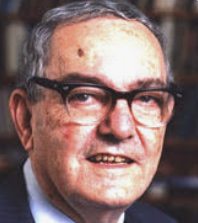
In an information-rich world, the wealth of information means a dearth of something else: a scarcity of whatever it is that information consumes. What information consumes is rather obvious: it consumes the attention of its recipients. Hence a wealth of information creates a poverty of attention and a need to allocate that attention efficiently among the overabundance of information sources that might consume it.
▼
Source
source
Simon, H. A. (1971) "Designing Organizations for an Information-Rich World" in: Martin Greenberger, Computers, Communication, and the Public Interest, Baltimore. MD: The Johns Hopkins Press. pp. 40-41.
CivilSimian.com created by AxiomaticPanic, CivilSimian, Kalokagathia