


3 months 2 weeks ago
For each new class which puts itself in the place of one ruling before it, is compelled, merely in order to carry through its aim, to represent its interests the common interest of all the members of society, that is, sality, and represent them as the only rational, universally valid ones. The class making a revolution appears from the very start, if only because it is opposed to a class, not as a class but as the representative of the whole of society; it appears as the whole mass of society confronting the one ruling class.
▼
Source
source
"Concerning the production of Consciousness"

1 month 3 weeks ago
The pornographic face says nothing. It has no expressivity or mystery.
2 months 4 days ago
In philosophical anthropology, ... where the subject is man in his wholeness, the investigator cannot content himself, as in anthropology as an individual science, with considering man as another part of nature and with ignoring the fact that he, the investigator, is himself a man and experiences this humanity in his inner experience in a way that he simply cannot experience any part of nature.
▼
Source
source
p. 147
4 months 3 days ago
Chi Wan thought thrice, and then acted. When the Master was informed of it, he said, "Twice may do."

3 months 1 week ago
In these downbeat times, we need as much hope and courage as we do vision and analysis; we must accent the best of each other even as we point out the vicious effects of our racial divide and pernicious consequences of our maldistribution of wealth and power. We simply cannot enter the twenty-first century at each other's throats, even as we acknowledge the weighty forces of racism, patriarchy, economic inequality, homophobia, and ecological abuse on our necks. We are at a crucial crossroad in the history of this nation--and we either hang together by combating these forces that divide and degrade us or we hang separately. Do we have the intelligence, humor, imagination, courage, tolerance, love, respect, and will to meet the challenge? Time will tell. None of us alone can save the nation or world. But each of us can make a positive difference if we commit ourselves to do so.
▼
Source
source
(p 109)
3 months 3 weeks ago
Few are the women and maidens who would let themselves think that one could at the same time be joyous and modest. They are all bold and coarse in their speech, in their demeanor wild and lewd. That is now the fashion of being in good cheer. But it is specially evil that the young maiden folk are exceedingly bold of speech and bearing, and curse like troopers, to say nothing of their shameful words and scandalous coarse sayings, which one always hears and learns from another.
3 months 2 weeks ago
Want keeps pace with dignity. Destitute of the lawful means of supporting his rank, his dignity presents a motive for malversation, and his power furnishes the means.
▼
Source
source
The Rationale of Reward, 1811

2 months 1 week ago
The strides of humanity are slow, they can only be counted in centuries.
▼
Source
source
Act II.
3 months 4 days ago
From Richard McKeon and Robert Brumsbaugh I learned to view the history of philosophy as a series, not of alternative solutions to the same problems, but of quite different sets of problems. From Rudolph Carnap and Carl Hempel I learned how pseudo-problems could be revealed as such by restarting them in the formal mode of speech. From Charles Hartshorne and Paul Weiss I learned how they could be so revealed by being translated into Whiteheadian or Hegelian terms.
▼
Source
source
Preface
3 months 3 weeks ago
The human being, corrupted to the root, can neither desire nor perform anything but evil.
▼
Source
source
The Making of Martin Luther, By Richard Rex, p66

3 months 2 weeks ago
Religion may be purified. This great work was begun two hundred years ago: but men can only bear light to come in upon them by degrees.
▼
Source
source
The critical review, or annals of literature, Volume XXVI, by A Society of Gentlemen (1768) p. 450

2 months 2 weeks ago
This reasonable moderator, and equal piece of justice, Death.
▼
Source
source
Section 38
4 months 2 weeks ago
But as more arts were invented, and some were directed to the necessities of life, others to recreation, the inventors of the latter were naturally always regarded as wiser than the inventors of the former, because their branches of knowledge did not aim at utility. ... This is why the mathematical arts were founded in Egypt; for there the priestly caste was allowed to be at leisure.

3 months 1 week ago
The meaning of a question is the method of answering it: then what is the meaning of 'Do two men really mean the same by the word "white"?' Tell me how you are searching, and I will tell you what you are searching for.
▼
Source
source
Philosophical Remarks (1991), Part III (27), pp.66-67

3 months 1 week ago
Good tests kill flawed theories; we remain alive to guess again.
▼
Source
source
As quoted in My Universe : A Transcendent Reality (2011) by Alex Vary, Part II
3 months 1 week ago
The need of reason is not inspired by the quest for truth but by the quest for meaning. And truth and meaning are not the same. The basic fallacy, taking precedence over all specific metaphysical fallacies, is to interpret meaning on the model of truth.
▼
Source
source
p. 15
1 month 4 weeks ago
I have always noticed that deeply and truly religious persons are fond of a joke, and I am suspicious of those who aren't.
▼
Source
source
As quoted in Church and Home, Vol. 1 (1964) by United Methodist Church, and Evangelical United Brethren Church, p. 21.
3 months 3 weeks ago
It is good to rub and polish our brain against that of others.
▼
Source
source
Book I, Ch. 26
3 months 2 weeks ago
Nor is it the irrationality of the form which is taken as characteristic. On the contrary, one overlooks the irrational.
▼
Source
source
Vol. II, Ch. I, p. 30.

2 months 2 weeks ago
All things are in the Universe, and the universe is in all things: we in it, and it in us; in this way everything concurs in a perfect unity.
3 months 1 week ago
No particular results then, so far, but only an attitude of orientation, is what the pragmatic method means. The attitude of looking away from first things, principles, 'categories,' supposed necessities; and of looking towards last things, fruits, consequences, facts.
▼
Source
source
Lecture II, What Pragmatism Means
2 months 2 weeks ago
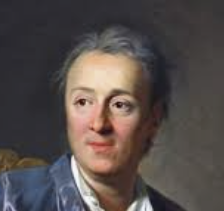
When one compares the talents one has with those of a Leibniz, one is tempted to throw away one's books and go die quietly in the dark of some forgotten corner.
▼
Source
source
Oeuvres complètes, vol. 7, p. 678
2 weeks 6 days ago
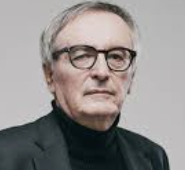
From a Darwinian point of view, human beliefs are adaptations to our part of the world. No doubt much of what we believe must be roughly accurate, or else we would not have survived. But the beliefs we have evolved might latch on to the world only enough to help us stumble our way through it, and then only for the time being. Human belief-systems could be useful illusions, appearing and disappearing as they prove to be more or less advantageous in the random walk of natural selection. Might not evolution be one of these illusions? Scientific naturalism is the theory that human beliefs are evolutionary adaptations whose survival has nothing to do with their truth. But in that case scientific naturalism is self-defeating, since on its own premises scientific theories cannot be known to be true.
▼
Source
source
Cross-correspondences (p. 69)
3 weeks 5 days ago
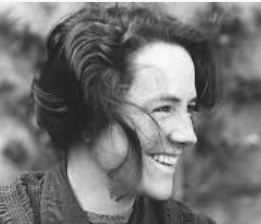
Rollers on the beach, wind in the pines, the slow flapping of herons across sand dunes, drown out the hectic rhythms of city and suburb, time tables and schedules. One falls under their spell, relaxes, stretches out prone. One becomes, in fact, like the element on which one lies, flattened by the sea; bare, open, empty as the beach, erased by today's tides of all yesterday's scribblings.

3 months 2 weeks ago
Either Man will abolish war, or war will abolish Man.
▼
Source
source
Fact and Fiction (1961), Part IV, Ch. 10: "Can War Be Abolished?", p. 276

2 months 1 week ago
One disgust, then another - to the point of losing the use of speech and even of the mind...The greatest exploit of my life is to be still alive.
1 month 4 weeks ago
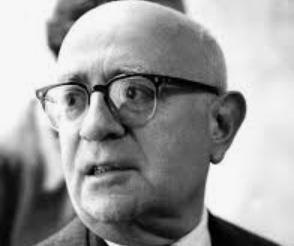
By abstaining from all definite content, whether as formal logic and theory of science or as the legend of Being beyond all beings, philosophy declared its bankruptcy regarding concrete social goals.
▼
Source
source
p. 6
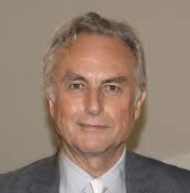
1 month 1 week ago
The popularity of the paranormal, oddly enough, might even be grounds for encouragement. I think that the appetite for mystery, the enthusiasm for that which we do not understand, is healthy and to be fostered. It is the same appetite which drives the best of true science, and it is an appetite which true science is best qualified to satisfy.
▼
Source
source
"Science Delusion and the Appetite for Wonder", John Brockman, Edge.org, December 29, 1996
1 month 4 weeks ago
Sensitiveness without impulse spells decadence, and impulse without sensitiveness spells brutality.
▼
Source
source
Ch. 13: "Requisites for Social Progress", p. 280
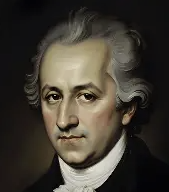
6 days ago
Nothing is great but truth, and the smallest truth is great. The other day I had a thought, which I put like this: Even a harmful truth is useful, for it can be harmful only for the moment and will lead to other truths, which must always become useful, very much so. Conversely, even a useful error is harmful, for it can be useful only for the moment, enticing us into other errors, which become more and more harmful.
▼
Source
source
Letter to Charlotte von Stein (1787) in Goethe's World View: Presented in His Reflections and Maxims (1963), Edited with an Introduction by Frederick Ungar, Translated by Heinz Norden, pp. 72-73, Frederick Ungar Publishing Company, New York.
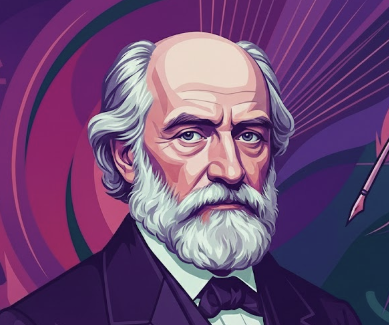
3 months 2 weeks ago
If there is anything in the world that can really be called a man's property, it is surely that which is the result of his mental activity.
▼
Source
source
Unverified attribution noted in Respectfully Quoted: A Dictionary of Quotations (1993), ed. Suzy Platt, Library of Congress, p. 227
3 months 2 weeks ago
Between the Shaman of the Tungus, the European prelate who rules church and state, the Voguls, and the Puritans, on the one hand, and the man who listens to his own command of duty, on the other, the difference is not that the former make themselves slaves, while the latter is free, but that the former have their lord outside themselves, while the latter carries his lord in himself, yet at the same time is his own slave.

3 months 1 week ago
These effects of mescalin are the sort of effects you could expect to follow the administration of a drug having the power to impair the efficiency of the cerebral reducing valve. When the brain runs out of sugar, the undernourished ego grows weak, can't be bothered to undertake the necessary chores, and loses all interest in those spatial and temporal relationships which mean so much to an organism bent on getting on in the world. As Mind at Large seeps past the no longer watertight valve, all kinds of biologically useless things start to happen. ... Other persons discover a world of visionary beauty. To others again is revealed the glory, the infinite value and meaningfulness of naked existence, of the given, unconceptualized event.
▼
Source
source
describing his experiment with mescaline, p. 26
3 months 3 weeks ago
Nature, which alone is good, is wholly familiar and common.

3 months 2 weeks ago
It is not enough to be industrious; so are the ants. What are you industrious about?
▼
Source
source
Letter to Harrison Blake, November 16, 1857

2 months 2 weeks ago
The wise will determine from the gravity of the case; the irritable from sensibility to oppression; the high-minded from disdain and indignation at abusive power in unworthy hands.
1 month 3 weeks ago
Before one blames, one should always find out whether one cannot excuse. To discover little faults has been always the particularity of such brains that are a little or not at all above the average. The superior ones keep quiet or say something against the whole and the great minds transform without blaming.
▼
Source
source
K 39 Variant translation: Before we blame we should first see whether we cannot excuse.
3 months 3 days ago
Ill repute is a good thing and much the same as pain.
▼
Source
source
§ 5
1 month 2 weeks ago
The close-up of a face is as obscene as a sexual organ seen from up close. It is a sexual organ. The promiscuity of the detail, the zoom-in, takes on a sexual value.
▼
Source
source
(p. 43)
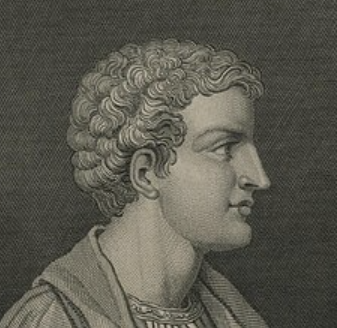
3 months 3 days ago
Death takes the mean man with the proud; The fatal urn has room for all.
▼
Source
source
Book III, ode i, line 14 (trans. John Conington)
1 month 1 week ago
Nature is not cruel, only pitilessly indifferent. This is one of the hardest lessons for humans to learn. We cannot admit that things might be neither good nor evil, neither cruel nor kind, but simply callous - indifferent to all suffering, lacking all purpose.

2 months 2 weeks ago
Égalité is an expression of envy. It means, in the real heart of every Republican, " No one shall be better off than I am;" and while this is preferred to good government, good government is impossible.
▼
Source
source
Conversation with Nassau William Senior, 22 May 1850 Nassau, p. 94

1 month 3 weeks ago
Most men have nothing in their heads but their physical needs; put them on a desert island with nothing to occupy their minds and they would go insane. They lack real motive. The curse of civilization is boredom.
▼
Source
source
Chapter Eight, The Outsider as a Visionary

3 months 1 week ago
The world is sacred because it gives an inkling of a meaning that escapes us.
▼
Source
source
p. 280
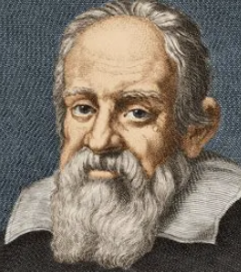
1 week ago
All truths are easy to understand once they are discovered; the point is to discover them.
▼
Source
source
As quoted in Angels in the workplace: stories and inspirations for creating a new world of work (1999) by Melissa Giovagnoli
2 months 1 week ago
The death clock is ticking slowly in our breast, and each drop of blood measures its time, and our life is a lingering fever.
▼
Source
source
Act II.
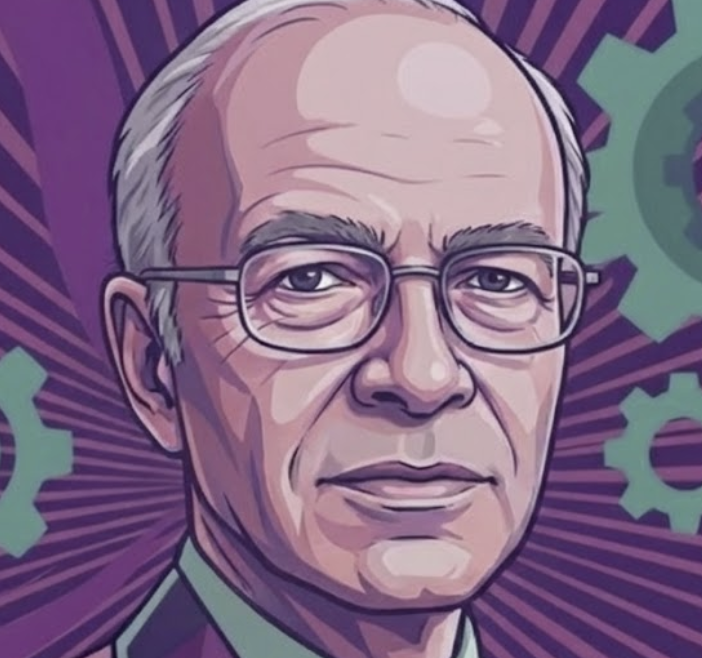
3 months 4 days ago
September 11, 2001, was just another day for most of the world's desperately poor people, so presumably close to 30,000 children under five died from these causes on that day-about ten times the number of victims of the terrorist attacks. The publication of these figures did not lead to an avalanche of money for UNICEF or other aid agencies helping to reduce infant mortality. In the year 2000 Americans made private donations for foreign aid of all kinds totaling about $4 per person in extreme poverty, or roughly $20 per family. New Yorkers who were living in lower Manhattan on September 11, 2001, whether wealthy or not, were able to receive an average of $5,300 per family. The distance between these amounts encapsulates the way in which, for many people, the circle of concern for others stops at the boundaries of their own country-if it extends even that far.
▼
Source
source
Chapter 5: One Community (p. 176)
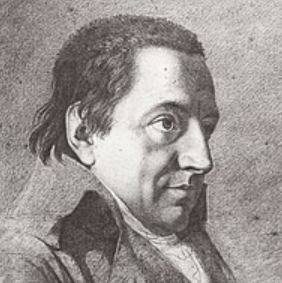
2 months 1 week ago
Blessed be the hour in which I was first led to inquire into my own spiritual nature and destination! All my doubts are removed; I know what I can know, and have no fears for what I cannot know. I am satisfied; perfect clearness and harmony reign in my soul, and a new and more glorious existence begins for me. My entire destiny I cannot comprehend; what I am to become, exceeds my present power of conception. A part, which is concealed from me, is visible to the father of spirits. I know only that it is secure, everlasting and glorious. That part of it which is confided to me I know, for it is the root of all my other knowledge.
▼
Source
source
Jane Sinnett, trans 1846 p.120
3 months 4 weeks ago
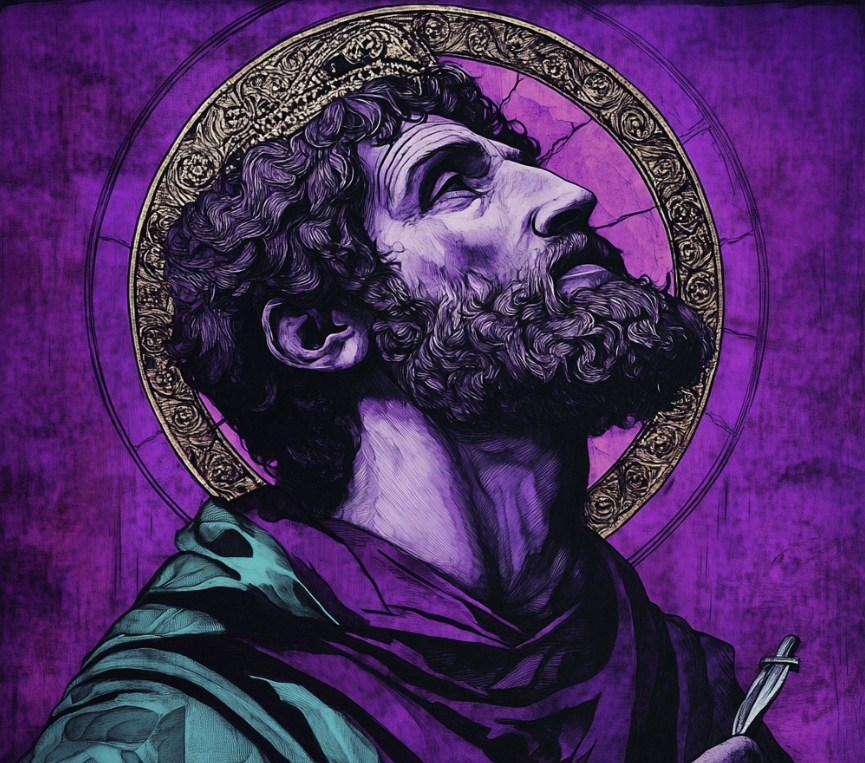
Wonderful is the depth of Thy oracles, whose surface is before us, inviting the little ones; and yet wonderful is the depth, O my God, wonderful is the depth. It is awe to look into it; and awe of honour, and a tremor of love. The enemies thereof I hate vehemently. Oh, if Thou wouldest slay them with Thy two-edged sword, that they be not its enemies! For thus do I love, that they should be slain unto themselves that they may live unto Thee.
▼
Source
source
XII, 14
CivilSimian.com created by AxiomaticPanic, CivilSimian, Kalokagathia