

1 month 1 week ago
The cruelest lies are often told in silence. A man may have sat in a room for hours and not opened his teeth, and yet come out of that room a disloyal friend or a vile calumniator. And how many loves have perished because, from pride, or spite, or diffidence, or that unmanly shame which withholds a man from daring to betray emotion, a lover, at the critical point of the relation, has but hung his head and held his tongue?
▼
Source
source
Truth of Intercourse.

3 months 1 week ago
So long as men worship the Caesars and Napoleons, Caesars and Napoleons will duly rise and make them miserable.
▼
Source
source
Ch. 8, p. 99 [2012 reprint]
3 months 2 weeks ago
Freedom of Men under Government is, to have a standing Rule to live by, common to every one of that Society, and made by the Legislative Power erected in it; a Liberty to follow my own Will in all things, where the Rule prescribes not; and not to be subject to the inconstant, uncertain, unknown, Arbitrary Will of another Man: as Freedom of Nature is, to be under no other restraint but the Law of Nature.
▼
Source
source
Second Treatise of Civil Government, Ch. IV, sec. 21
1 month 3 weeks ago
In the empire of signs, the soul, psychology, is erased. There is no soul to infect the holy seriousness of ritual play.
1 month 6 days ago
An international socialism is the stated ideal of most socialists; an international liberalism is the unstated tendency of the liberal. To neither system is it thinkable that men live, not by universal aspirations but by local attachments; not by a "solidarity" that stretches across the globe from end to end, but by obligations that are understood in terms which separate men from most of their fellows-in terms such as national history, religion, language, and the customs that provide the basis of legitimacy.
▼
Source
source
How to be a Non-Liberal, Anti-Socialist Conservative, Intercollegiate Review: A Journal of Scholarship and Opinion

2 months 2 weeks ago
To be in love is not the same as loving. You can be in love with a woman and still hate her.

2 months 1 week ago
"I am like a broken puppet whose eyes have fallen inside." This remark of a mental patient weighs more heavily than a whole stack of works on introspection.
1 month 1 week ago
Scientific and technological progress themselves are value-neutral. They are just very good at doing what they do. If you want to do selfish, greedy, intolerant and violent things, scientific technology will provide you with by far the most efficient way of doing so. But if you want to do good, to solve the world's problems, to progress in the best value-laden sense, once again, there is no better means to those ends than the scientific way.
1 month 3 weeks ago
To receive applause for works which do not demand all our powers hinders our advance towards a perfecting of our spirit. It usually means that thereafter we stand still.
▼
Source
source
K 42
3 months 2 weeks ago
The first remark we have to make, and which - though already presented more than once - cannot be too often repeated when the occasion seems to call for it, - is that what we call principle, aim, destiny, or the nature and idea of Spirit, is something merely general and abstract. Principle - Plan of Existence - Law - is a hidden, undeveloped essence, which as such - however true in itself - is not completely real.



4 months 1 week ago
There's nothing like deduction. We've determined everything about our problem but the solution.
2 months 6 days ago
Fashion is something barbarous, for it produces innovation without reason and imitation without benefit.
▼
Source
source
Ch. VII

3 months 2 weeks ago
Europeans are awakening more and more to a sense that beasts have rights, in proportion as the strange notion is being gradually overcome and outgrown, that the animal kingdom came into existence solely for the benefit and pleasure of man. This view, with the corollary that non-human living creatures are to be regarded merely as things, is at the root of the rough and altogether reckless treatment of them, which obtains in the West.
▼
Source
source
Part III, Ch. VIII, 7, p. 225

3 months 2 weeks ago
It is clear that thought is not free if the profession of certain opinions makes it impossible to earn a living. It is clear also that thought is not free if all the arguments on one side of a controversy are perpetually presented as attractively as possible, while the arguments on the other side can only be discovered by diligent search.
▼
Source
source
Ch. 12: Free Thought and Official Propaganda, books.google.com, archive.org

3 months 2 weeks ago
The Christian Religion not only was at first attended with miracles, but even at this day cannot be believed by any reasonable person without one. Mere reason is insufficient to convince us of its veracity: and whoever is moved by Faith to assent to it, is conscious of a continued miracle in his own person, which subverts all the principles of his understanding, and gives him a determination to believe what is most contrary to custom and experience.
▼
Source
source
Section 10 : Of Miracles Pt. 2
4 weeks 1 day ago
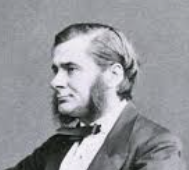
Sound knowledge respecting the habits and mode of life of the man-like Apes has been even more difficult of attainment than correct information regarding their structure.
▼
Source
source
Ch.1, p. 36
1 week 3 days ago
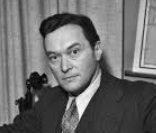
The present crisis of Western democracy is a crisis in journalism.
▼
Source
source
Journalism and the Higher Law, p. 5

3 months 4 days ago
Be cheerful while you are alive.
▼
Source
source
Maxim no. 34.

1 month 1 week ago
A theory of cultural change is impossible without knowledge of the changing sense ratios effected by various externalizations of our senses.
▼
Source
source
(p. 49)

3 months 2 weeks ago
Marriage is encouraged in China, not by the profitableness of children, but by the liberty of destroying them.
▼
Source
source
Chapter VIII, p. 87.

3 months 1 week ago
Scientific theories are distinguished from myths... in being criticizable, and... open to modifications... They can be neither verified nor probabilified.
3 months 2 weeks ago
The reason that I call my doctrine logical atomism is because the atoms that I wish to arrive at as the sort of last residue in analysis are logical atoms and not physical atoms. Some of them will be what I call "particulars" - such things as little patches of color or sounds, momentary things - and some of them will be predicates or relations and so on.
4 months 3 days ago
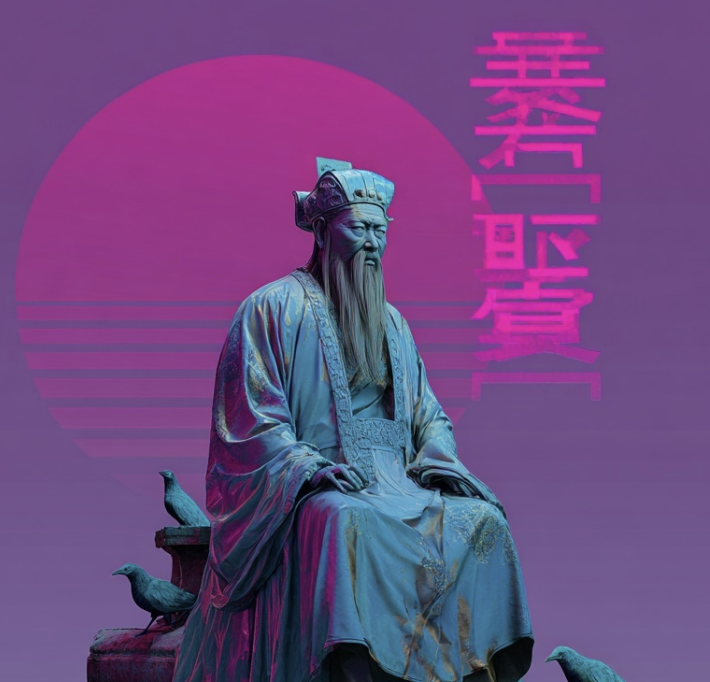
It is only the individual possessed of the most entire sincerity that can exist under Heaven, who can adjust the great invariable relations of mankind, establish the great fundamental virtues of humanity, and know the transforming and nurturing operations of Heaven and Earth; shall this individual have any being or anything beyond himself on which he depends? Call him man in his ideal, how earnest is he! Call him an abyss, how deep is he! Call him Heaven, how vast is he! Who can know him, but he who is indeed quick in apprehension, clear in discernment, of far-reaching intelligence, and all-embracing knowledge, possessing all Heavenly virtue?
2 months 5 days ago
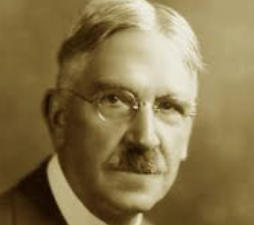
Even the eye that is artificially trained to see color as color, apart from things that colors qualify, cannot shut out the resonances and transfers of value.
▼
Source
source
p. 126
3 months 4 weeks ago
But if we discard this definition of a people, and, assuming another, say that a people is an assemblage of reasonable beings bound together by a common agreement as to the objects of their love, then, in order to discover the character of any people, we have only to observe what they love. Yet whatever it loves, if only it is an assemblage of reasonable beings and not of beasts, and is bound together by an agreement as to the objects of love, it is reasonably called a people; and it will be a superior people in proportion as it is bound together by higher interests, inferior in proportion as it is bound together by lower.
▼
Source
source
XIX, 24

1 month 3 weeks ago
Anarchism is the only philosophy which brings to man the consciousness of himself; which maintains that God, the State, and society are non-existent, that their promises are null and void, since they can be fulfilled only through man's subordination.

3 months 1 week ago
If we are going to be destroyed by an atomic bomb, let that bomb when it comes find us doing sensible and human things - praying, working, teaching, reading, listening to music, bathing the children, playing tennis, chatting to our friends over a pint and a game of darts - not huddled together like frightened sheep and thinking about bombs. They might break our bodies (a microbe can do that) but they need not dominate our minds.
1 month 4 weeks ago
If one is to take Lulu's twelve-tone chord as the integral totality of complementary harmony, then Berg's allegorical genius proves itself within a historical perspective which makes the brain reel: just as Lulu in the world of total illusion longs for nothing but her murderer and finally finds him in that sound, so does all harmony of unrequited happiness long for its fatal chord as the cipher of fulfillment - twelve-tone music is not to be separated from dissonance. Fatal: because all dynamics come to a standstill within it without finding release. The law of complementary harmony already implies the end of the musical experience of time, as this was heralded in the dissociation of time according to Expressionistic extremes.
▼
Source
source
Philosophy of Modern Music (1973) as translated by Anne G. Mitchell and Wesley V. Blomster
2 months 1 week ago
The dream is the small hidden door in the deepest and most intimate sanctum of the soul, which opens to that primeval cosmic night that was soul long before there was conscious ego and will be soul far beyond what a conscious ego could ever reach.
▼
Source
source
The Meaning of Psychology for Modern Man
2 months 1 week ago
We define only out of despair, we must have a formula... to give a facade to the void.
3 months 2 weeks ago
Certainly one may, with as much reason and decency, plead for murder, robbery, lewdness, and barbarity, as for this practice: They are not more contrary to the natural dictates of Conscience, and feelings of Humanity; nay, they are all comprehended in it.
3 weeks 1 day ago
Everyone knows that time is Death, that Death hides in clocks. Imposing another time powered by the Clock of the Imagination, however, can refuse his law. Here, freed of the Grim Reaper's scythe, we learn that pain is knowledge and all knowledge pain.
▼
Source
source
"Death"

4 months 2 weeks ago
In the external, patience is some third element that must be added, and, humanly speaking, it would be better if it were not needed; some days it is needed more, some days less, all according to fortune, whose debtor a person becomes, even though he gained ever so little, because only when he wants to gain patience does he become one's debtor.

3 months 1 week ago
The moment we no longer have a free press, anything can happen. What makes it possible for a totalitarian or any other dictatorship to rule is that people are not informed; how can you have an opinion if you are not informed? If everybody always lies to you, the consequence is not that you believe the lies, but rather that nobody believes anything any longer. This is because lies, by their very nature, have to be changed, and a lying government has constantly to rewrite its own history. On the receiving end you get not only one lie - a lie which you could go on for the rest of your days - but you get a great number of lies, depending on how the political wind blows. And a people that no longer can believe anything cannot make up its mind. It is deprived not only of its capacity to act but also of its capacity to think and to judge. And with such a people you can then do what you please.
▼
Source
source
p. 70

2 months 6 days ago
It is more blessed to give than to receive.
▼
Source
source
Acts 20:35b
6 days ago
When young, one is confident to be able to build palaces for mankind, but when the time comes one has one's hands full just to be able to remove their trash.
▼
Source
source
Letter to Johann Kaspar Lavatar
2 months 2 weeks ago
For no one's authority ought to rank so high as to set a value on his words and terms even though nothing clear and determinate lies behind them.
▼
Source
source
Paragraph 1
3 months 1 week ago
It is, in fact, far easier to act under conditions of tyranny than it is to think.
▼
Source
source
The Human Condition

1 month 4 weeks ago
The number 2 thought of by one man cannot be added to the number 2 thought of by another man so as to make up the number 4.
▼
Source
source
Oppression and Liberty (1958), p. 82
3 months 3 weeks ago
A speech comes alive only if it rises from the heart, not if it floats on the lips.
▼
Source
source
in The Erasmus Reader (1990), p. 130.
3 months 2 weeks ago
Beauty is no quality in things themselves: It exists merely in the mind which contemplates them; and each mind perceives a different beauty. One person may even perceive deformity, where another is sensible of beauty; and every individual ought to acquiesce in his own sentiment, without pretending to regulate those of others.
▼
Source
source
Part I, Essay 23: Of The Standard of Taste
3 months 2 weeks ago
Modern physics... reduces matter to a set of events which proceed outward from a centre. If there is something further in the centre itself, we cannot know about it, and it is irrelevant to physics.
▼
Source
source
An Outline of Philosophy Ch.15 The Nature of our Knowledge of Physics, 1927
3 months 2 weeks ago
The society adopts neither rites nor priesthood, and it will never lose sight of the resolution not to advance any thing as a society inconvenient to any sect or sects, in any time or country, and under any government. It will be seen that it is so much the more easy for the society to keep within this circle, because, that the dogmas of the Theophilanthropists are those upon which all the sects have agreed, that their moral is.that upon which there has never been the least dissent; and that the name they have taken expresses the double end of all the sects, that of leading to the adoration of God and love of man.
▼
Source
source
Introduction
2 months 2 weeks ago
To ruminate upon evils, to make critical notes upon injuries, and be too acute in their apprehensions, is to add unto our own tortures, to feather the arrows of our enemies, to lash ourselves with the scorpions of our foes, and to resolve to sleep no more.
▼
Source
source
Part III, Section XII
1 month 6 days ago
A millennial belief in a Holy God may have the effect of deepening the soul, but it is also obviously archaic, and modern influences would presently bring me up to date and reveal how antiquated my origins were. To turn away from those origins, however, has always seemed to me an utter impossibility. It would be a treason to my first consciousness to un-Jew myself.
▼
Source
source
Part I, p. 26
3 days ago
I know how unfashionable it is now to acknowledge in life or history any genius loftier than ourselves. Our democratic dogma has leveled not only all voters but all leaders; we delight to show that living geniuses are only mediocrities, and that dead ones are myths. ... Since it is contrary to good manners to exalt ourselves, we achieve the same result by slyly indicating how inferior are the great men of the earth. In some of us, perhaps, it is a noble and merciless asceticism, which would root out of our hearts the last vestige of worship and adoration, lest the old gods should return and terrify us again. For my part, I cling to this final religion, and discover in it a content and stimulus more lasting than came from the devotional ecstasies of youth.
▼
Source
source
The Greatest Minds and Ideas of All Time (2002) edited by John Little, Ch. 1 : The Shameless Worship of Heroes
6 days ago
Patriotism ruins history.
▼
Source
source
Conversation with Friedrich Wilhem Riemer
2 months 4 days ago
A man discovers what he is actually worth in this world when he faces society as a man, without money, name, or powerful connections, stripped of all but his native potentialities. He soon finds that nothing has less weight than his human qualities. They are prized so low that the market does not even list them. Strict science, which acknowledges man only as a biological concept, reflects man's lot in the actual world; in himself, man is nothing more than a member of a species. In the eyes of the world, the quality of humanity confers no title to existence, nay, not even a right of sojourn. Such title must be certified by special social circumstances stipulated in documents to be presented on demand.
▼
Source
source
p. 137.

CivilSimian.com created by AxiomaticPanic, CivilSimian, Kalokagathia